

You're standing in the kitchen with coffee already brewing, a kettle steaming beside it, and a jar of mushroom powder waiting for a decision. Should you stir in a scoop, dissolve it separately, or just hope it doesn't turn into gritty sediment at the bottom of the mug?
The reliable answer is to treat mushroom coffee as a measured brewing recipe, not a vague wellness ritual. Your coffee strength, mushroom type, powder weight, water temperature, and mixing technique all affect the final cup. Once those variables are controlled, making mushroom coffee at home becomes straightforward, and the earthy flavor is much easier to manage.
What Mushroom Coffee Actually Is and Why People Brew It
Mushroom coffee is regular coffee combined with powdered mushroom extract or whole-fungal material. It isn't a mushroom-flavored substitute for coffee, and it doesn't require replacing your usual brewing method. You can make it with drip coffee, a French press, pour-over, moka pot, cold brew, or an instant blend.
The mushroom component usually comes from functional varieties such as lion's mane, chaga, cordyceps, or reishi. These powders may contain compounds including beta-glucans or other mushroom constituents, depending on the species and how the ingredient was processed. The coffee still provides the familiar roasted flavor and caffeine, while the powder changes the body, aroma, and finish.
Home preparation appeals to people who want more control than a premixed sachet provides. You can choose a coffee you already enjoy, check the ingredient label yourself, measure the mushroom powder by weight, and avoid sweeteners or creamers included in some ready-made products. You can also adjust the recipe when the earthy note is too strong or the texture feels chalky.
A useful starting point is the practical guidance in this overview of what mushroom coffee is, but the cup still depends on preparation. Powder that isn't dispersed properly will clump. A dose that's too large for the coffee volume can make the drink taste woody, bitter, or savory.
Practical rule: Brew the coffee you'd happily drink on its own, then add the mushroom component with the same care you'd give milk or espresso syrup.
By the end of this process, you'll be able to select a powder that matches your intended use, measure it consistently, dissolve it without lumps, and adapt the cup for hot, iced, latte, or portable preparations. You'll also have a clearer sense of where brewing technique ends and unsupported wellness promises begin.
Choosing Between Functional and Infused Mushroom Powders
The first buying decision is identifying what kind of mushroom powder you have. Functional powders use non-psychoactive mushrooms such as lion's mane, chaga, cordyceps, and reishi. They're commonly marketed around focus, immune support, stress resilience, or steady energy, but those marketing descriptions shouldn't be treated as proof that a typical mug produces a specific outcome.
Psilocybin-infused blends belong to a separate category because they contain psychoactive compounds. Their expected effects, flavor, dosing requirements, and regulatory treatment differ from ordinary functional mushroom coffee. This guide can describe the mixing technique for both categories, but it can't interpret the rules in your location. Regulations may differ by country, state, and city, so verify the current requirements where you live before purchasing or brewing an infused product.
| Category | Common Mushrooms | Primary Use | Typical Flavor | Dosing Approach | Legal Status |
|---|---|---|---|---|---|
| Functional | Lion's mane, chaga, cordyceps, reishi | Non-psychoactive functional beverage use | Earthy, woody, savory, generally forgiving | Follow the product label and measure consistently | Rules for supplements and food products vary by location |
| Psilocybin-infused | Psilocybin-containing mushroom material or extracts | Psychoactive use | Earthy and often more noticeable | Use only the labeled serving guidance and measure carefully | Regulations vary by country, state, and city |
Functional powders are usually easier to incorporate into a daily coffee routine because the main adjustment is culinary. You're balancing roast, bitterness, earthiness, milk, and sweetness. Infused products require a more cautious approach because the relevant question isn't whether the coffee tastes balanced. The identity and concentration of the product matter, and casual spoon measurements are a poor choice when the contents can vary between products.
Read the label before you heat the water
Check whether the container lists a mushroom species, an extract or whole-powder format, serving guidance, additional herbs, sweeteners, or caffeine information. A pure powder gives you control but may taste more assertive. A premix offers convenience and may disperse more smoothly, though you have less control over the coffee-to-mushroom ratio.
For functional options, the functional mushroom products collection can help you compare product categories before deciding whether you want a single mushroom or a blend. Don't choose based only on the most dramatic benefit language. Choose a format you can measure and a flavor you'll drink.
Brewing Mushroom Coffee Step by Step
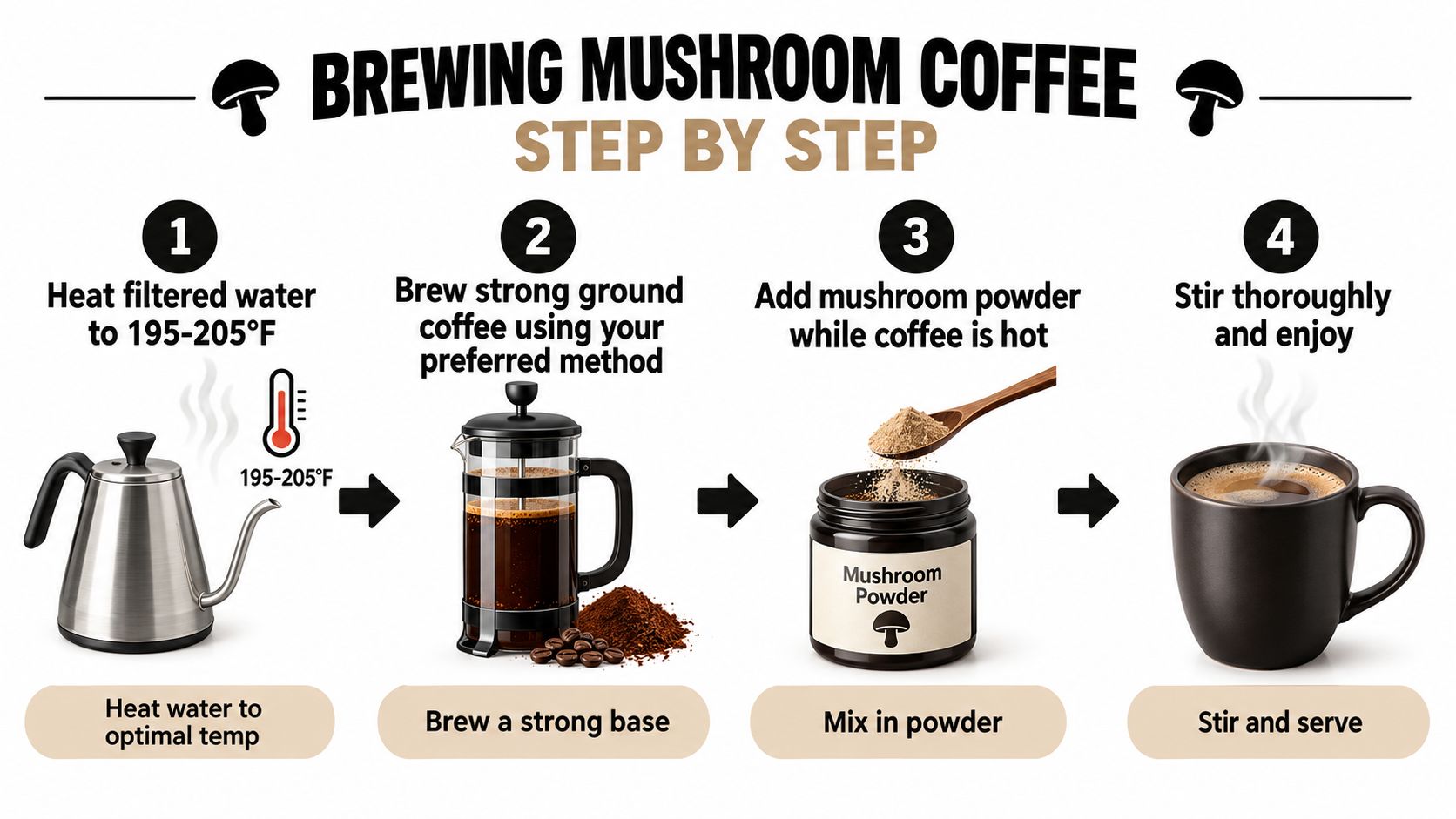
Start with a coffee base strong enough to carry the powder without tasting thin. Prepare the mushroom separately as a paste, a small step that prevents the clumps many quick recipes leave behind.
Phase one, brew the coffee
Heat filtered water to 195–205°F, then brew with your preferred method. A slightly concentrated coffee works better than a weak one because mushroom powder, milk, ice, or sweetener will dilute the finished drink. For standard drip-style brewing, use a 1:16 coffee-to-water ratio by weight as a repeatable starting point.
If you bought pre-blended mushroom coffee grounds, measure and brew them like ordinary coffee. Separate powder needs a different order. Brew the coffee first, then keep it hot while you prepare the paste.
Phase two, measure the powder
Measure 1/2 to 1 teaspoon of mushroom powder or extract per 8-ounce serving, unless the product label specifies another serving size. Place it in a small bowl, cup, or the bottom of your mug. A scale gives more consistent results when the powder is dense or unusually fine, while a spoon remains a practical kitchen measure.
Phase three, make the paste
Add about 1 teaspoon of warm water and stir until the powder forms a smooth paste. Melted butter also works when you want a richer drink, though warm water keeps the flavor cleaner and the process simpler.
Hydrating the particles before adding the full coffee volume improves dispersion. Adding dry powder straight to a large mug commonly leaves floating clumps. The paste gives you a concentrated base that blends more evenly.
Phase four, combine and finish
Pour the brewed coffee over the paste in stages, stirring after each addition. A fork, small whisk, or handheld milk frother can break up particles that remain. Add milk, cream, sweetener, or spices only after the powder has dispersed, then taste before adjusting the cup.
Overheated water can make the coffee taste harsh. Coffee that sits too long before mixing cools the paste and makes blending harder. Use this sequence: brew, paste, pour, whisk, then adjust. Keep the powder separate from the coffee until the paste is ready, and the texture will be easier to control.
Dosing Mushroom Powder Without Guesswork
Dose becomes easier to control when you track three things: grams of powder, teaspoons for visual measuring, and brewed coffee volume. Grams give the most consistent result because powders vary in density. A level teaspoon from one product may weigh differently from a full-looking teaspoon from another.
For a functional powder, start with about 1/2 teaspoon, or roughly 1 gram, per 250 ml cup. Pre-blended grounds are commonly measured like regular coffee, at about 2 tablespoons, or 10–12 grams, per 250 ml of water. These are practical benchmarks, not universal rules. The study on mushroom-added coffee products used 200 ml cups and added 2 grams of powdered Hericium erinaceus or Cordyceps militaris fruiting bodies to each test sample. That setup helps show how product format and coffee volume affect the calculation.
Use the label as your primary reference. The study also describes controlled extraction and infusion processes, so a finished extract should not automatically be treated as equivalent to raw mushroom powder.
A simple scaling example
If the label says 2 grams per serving and your mug holds 250 ml, weigh the full labeled serving. Without a scale, use a teaspoon only as an approximation. The practical benchmark places roughly 1 gram near 1/2 teaspoon, so a 2-gram serving may be approximately twice that amount. Powder density can shift the result, which is why spoon measurements are less dependable.
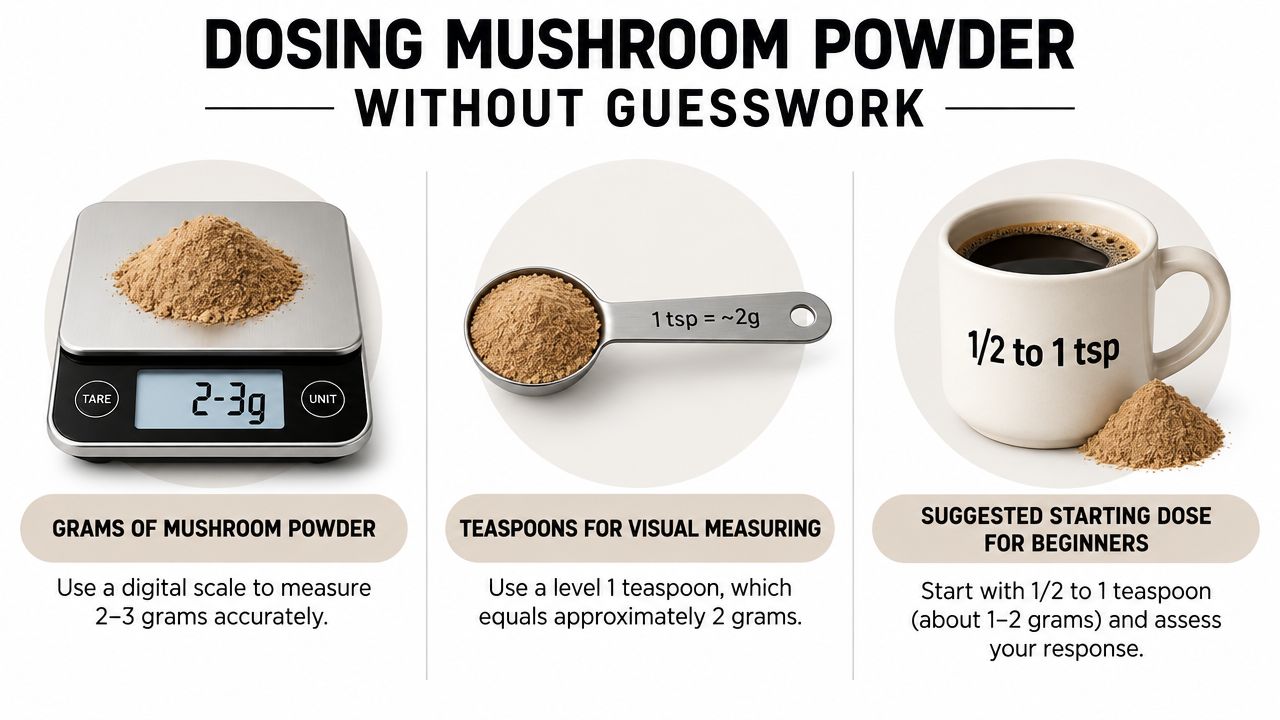
For infused powders, read the serving directions carefully before measuring. Each product and batch may differ. Start at the low end printed on the label, keep the coffee volume consistent, and avoid repeated adjustments in the same day. The mushroom dose calculator can organize the arithmetic, but it cannot replace the product's serving information or local guidance.
Tuning Flavor and Texture So It Actually Tastes Good
Most mushroom powders bring an earthy, umami-heavy note that can clash with bright or lightly roasted coffee. The fix isn't to bury the coffee under a pile of sweetener. It's to round the finish with a small, deliberate addition.
Start with fat if the cup feels thin or dusty. Oat milk gives a soft cereal-like sweetness, whole milk adds weight, coconut cream makes the drink richer, and a little MCT oil or grass-fed butter can create a fuller mouthfeel. For a 250 ml cup, use about 1 tablespoon of fat, then adjust according to the roast and powder.
Sweetener works best after the powder has been fully dispersed. Try 1 to 2 teaspoons of maple syrup, honey, monk fruit, or brown sugar. Maple syrup pairs especially well with darker roasts, while honey can make a strongly earthy blend taste rounder without turning it into dessert.
Match the add-in to the problem
- For bitterness: Add maple syrup, brown sugar, or a small amount of milk.
- For earthy flavor: Use cinnamon, vanilla extract, cocoa powder, or cardamom.
- For a muddy finish: Try a tiny pinch of salt, which can sharpen the surrounding flavors without making the coffee taste salty.
- For chalkiness: Make the powder paste with warm water before adding milk or cream.
A pinch of cinnamon is enough to redirect the aroma. Cocoa adds roasted depth, and vanilla softens the transition between coffee and mushroom. I'd avoid adding everything at once. Taste the base first, then make one adjustment so you know what helped.
Texture matters more than sweetness. A perfectly balanced sweetener can't rescue powder that was dumped into cold liquid and left floating in clumps.
Serving Variations Worth Trying This Week
The base method stays the same, but the serving format changes how the coffee tastes and travels. These three versions are useful because each one solves a different problem, iced refreshment, creamy texture, or portability.
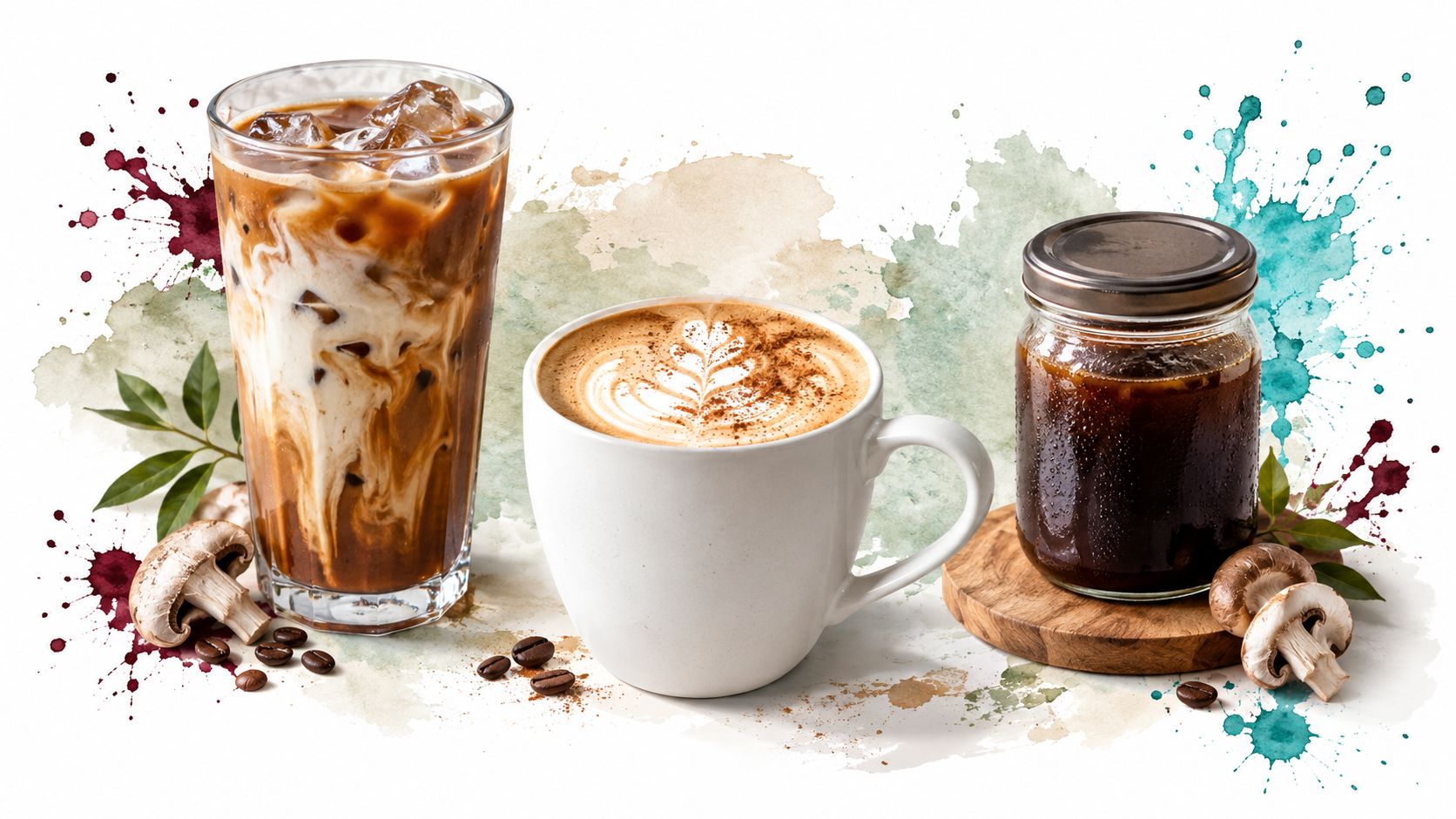
Iced mushroom coffee
Brew a double-strength cup, then pour it over a tall glass filled with ice. Stir the mushroom powder into a warm paste before adding it to the hot coffee, then add 60 ml of milk and a splash of maple syrup. The paste should go into the coffee while it's still hot, because cold ice water won't disperse the powder as cleanly.
This version needs stronger coffee because melting ice and milk soften the flavor. If the result tastes watery, increase coffee concentration rather than adding more mushroom powder.
Oat milk latte
Prepare the mushroom paste first, then brew the coffee over it. Froth 180 ml of oat milk, hold back the foam, and pour the liquid milk into the coffee. Finish with the foam and a dusting of cinnamon.
Oat milk is particularly useful when the powder has a woody or savory edge. Its natural sweetness rounds the drink without requiring much additional sugar, and the foam makes a small serving feel more substantial.
Cold brew travel bottle
For a portable version, blend the mushroom paste with cold brew, 1 teaspoon of honey, and a pinch of salt. Pour the mixture into a 350 ml bottle, seal it, and shake thoroughly.
The cold brew build tastes smoother and less acidic, while honey and salt keep the earthy notes from dominating. When scaling any variation, increase the coffee and milk together, but keep the mushroom dose tied to the label or your established gram measurement.
A visual demonstration of preparation and serving ideas is available below.
Quick Checklist for a Better Cup Every Time
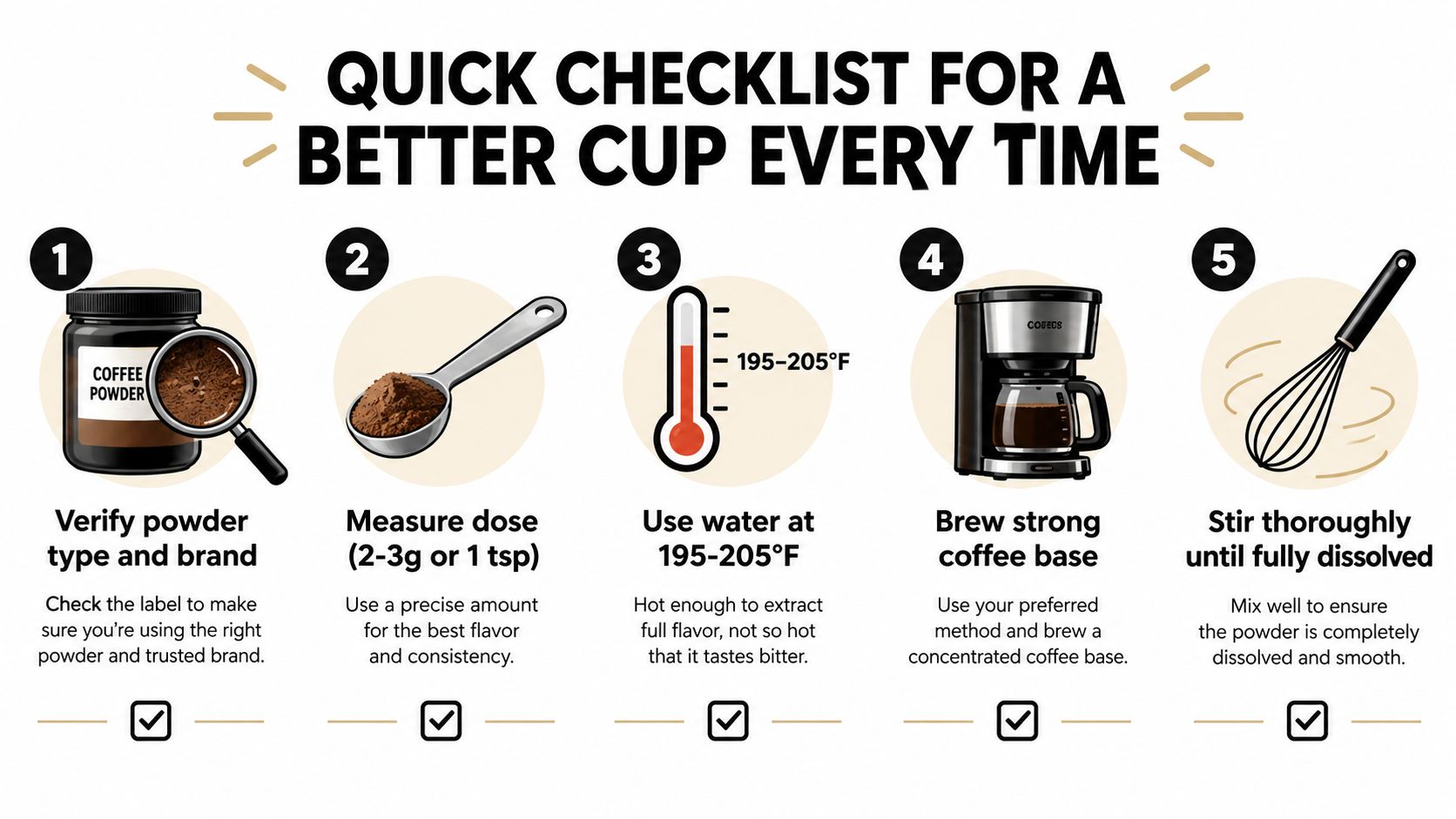
Use this checklist tomorrow morning and keep the variables steady until the cup tastes right.
- Verify the powder: Confirm whether you're using a functional mushroom powder, an extract, pre-blended grounds, or an infused product.
- Measure the dose: Use a digital scale when possible. If you use a teaspoon, treat it as an estimate and keep the same spoon level each time.
- Check the water: Heat filtered water to 195–205°F, then brew a coffee base with enough strength to handle dilution.
- Make the paste: Mix the powder with warm water or melted butter before adding the coffee.
- Pour gradually: Add coffee in stages while stirring, then use a fork, whisk, or frother to disperse the mixture.
- Taste before adjusting: Try the coffee before adding milk, sweetener, cocoa, cinnamon, or salt. Change one variable at a time.
- Keep the volume consistent: Use the same mug or measuring vessel while you're learning how much powder suits your cup.
- Record the result: Note the powder, coffee, dose, and add-ins so the next adjustment has a clear starting point.
- Scale carefully: For iced, latte, or bottled versions, change coffee strength and liquid volume before changing the mushroom serving.
- Store intelligently: Keep unused powder sealed away from moisture, heat, and light. Make only the amount of paste you plan to use rather than leaving a wet mixture sitting around.
Consistency matters more than chasing a perfect recipe on the first try. Keep the coffee volume and powder measurement stable, then make small changes to temperature, paste texture, milk, sweetness, or spice until the cup fits your routine.
The Magic Mushroom Delivery offers functional mushroom products, mushroom coffee, and infused options with product information designed to help adults compare formats before ordering. Visit The Magic Mushroom Delivery to browse the available categories and choose a measured coffee option that matches the preparation style you want to use.