
You're comparing glossy jars, instant sachets, and coffee bags covered with words like focus, natural, and organic. One label names four mushrooms but gives no quantities. Another lists a “proprietary blend” without explaining whether it contains fruiting bodies, mycelium, or a meaningful extract. The product may look trustworthy, yet the information needed to judge it is missing.
To buy mushroom coffee safely and confidently, treat the label as a verification exercise rather than a wellness promise. Check what kind of product you're buying, identify each mushroom species, confirm the extraction method, examine caffeine information, and ask for testing that connects the marketing language to measurable product details.
Understanding Your Mushroom Coffee Options
The phrase mushroom coffee covers more than one type of drink. Some products are ordinary coffee combined with powdered or extracted functional mushrooms. Others are coffee alternatives built from ingredients such as herbs, tea, or mushroom powders. The preparation method also changes what you are consuming, whether it is an instant blend, a whole food powder, or a product made with more than one extraction method.
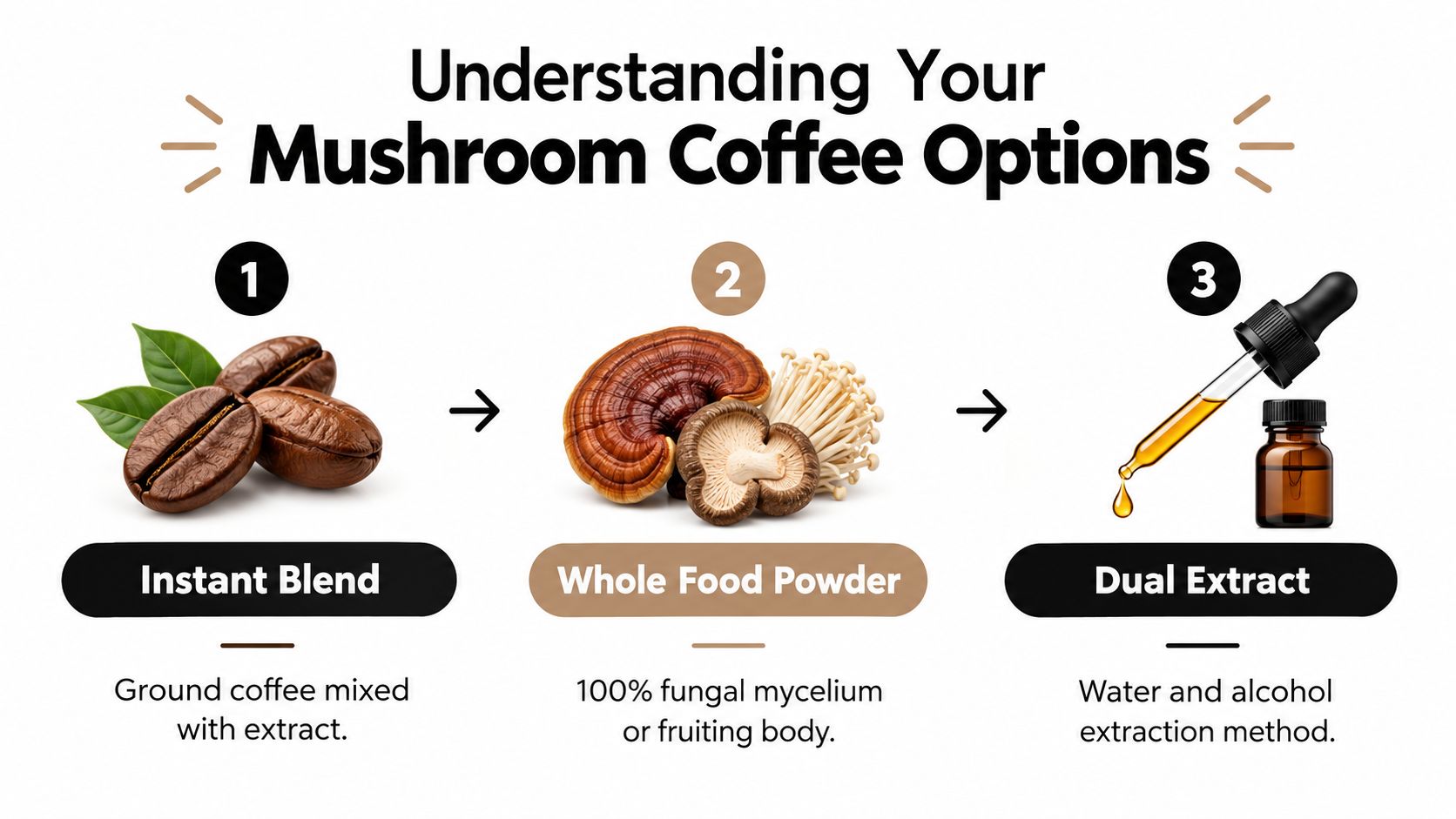
A shopper looking for a familiar morning cup may want coffee with a functional mushroom extract. Someone trying to reduce caffeine may prefer a coffee alternative, half-caf formula, or decaffeinated base. Those choices aren't interchangeable, and the front of the package often makes them look more alike than they are.
Start with the base beverage
Read the ingredient list before focusing on the mushroom names. Look for ground coffee, instant coffee, decaffeinated coffee, tea, chicory, or another base. A product can use the phrase “coffee” in its branding while delivering a very different caffeine experience from brewed coffee.
Functional formulas commonly feature lion's mane, chaga, reishi, or cordyceps, either individually or in a blend. The important question isn't whether the label names an impressive collection. It's whether the product tells you the species, the amount per serving, and the form used.
Coffee remains the context for this category, not a minor detail. The International Coffee Organization estimated consumption at approximately 175.1 million bags in 2024/25, with roughly 3 billion cups consumed daily worldwide, according to reported ICO coffee consumption figures. Mushroom coffee is positioned inside that established habit, so taste, convenience, caffeine expectations, and preparation deserve as much attention as the mushroom claims.
Practical rule: Decide whether you want coffee with mushrooms, a coffee substitute, or a lower-caffeine blend before you compare brands.
Functional Versus Psilocybin-Infused Products
The marketplace becomes easier to browse when you separate functional mushroom coffee from products containing psilocybin. Functional coffee usually combines a conventional coffee base with ingredients such as lion's mane, chaga, reishi, or cordyceps. It's sold as a daily beverage and is typically evaluated through coffee characteristics, ingredient disclosure, caffeine content, and supplement-style quality controls.
Psilocybin-infused products belong to a different product category and are intended for a different experience. They shouldn't be evaluated as though they're a stronger version of a functional coffee. A shopper who wants a normal morning beverage should verify that the product label describes functional mushroom extracts and clearly identifies the coffee base.
Compare the product page, not just the name
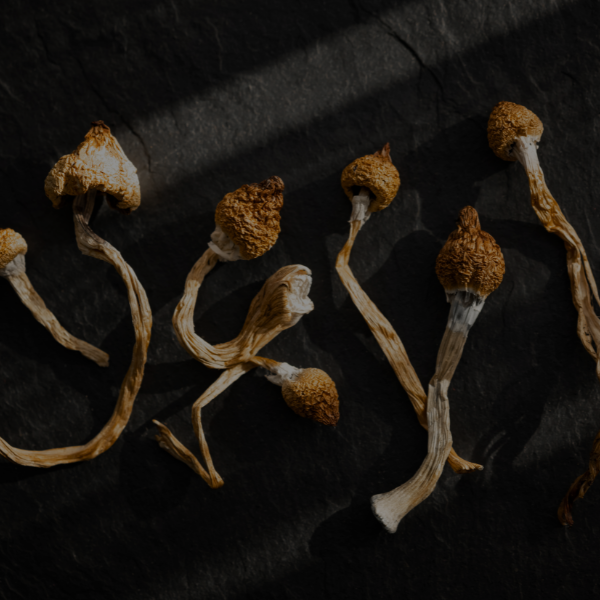
Retailers may place functional coffee alongside raw mushrooms, infused chocolates, gummies, and capsules. Those formats differ in ingredients, intended use, preparation, and dosing information. A product title containing the word “mushroom” doesn't tell you enough to make a purchasing decision.
Use the product page to answer four basic questions:
- What experience is the product designed to provide? Look for a clear category description rather than broad language about transformation or healing.
- Which ingredients are present? A complete species list is more useful than “mushroom complex.”
- How is it prepared? Instant coffee, brewed grounds, capsules, and infused foods require different label checks.
- What does one serving contain? The serving size should make sense alongside the coffee amount and the mushroom quantity.
The commercial category has expanded, but market size doesn't prove a health effect. One market estimate places global mushroom coffee at USD 2.71 billion in 2022, with a projection of USD 4.12 billion by 2030, a 5.5 percent compound annual growth rate, and North America representing 28.8 percent of demand, as summarized in market research on mushroom coffee. That measures commercial activity, not clinical effectiveness.
For functional options, shoppers can compare ingredient formats and product categories through functional mushroom products. Keep the category distinction clear throughout the purchase. A familiar coffee ritual and a psychoactive product may share mushroom-related language, but they aren't the same shopping decision.
Verifying Product Quality and Safety
A long mushroom list doesn't prove a formula is well made. The most useful buying habit is to cross-reference the label with the company's product documentation. If the information disappears after the marketing page, you don't have enough evidence to judge potency or consistency.
Follow the label in a fixed order
First, identify every species. The label should name lion's mane, chaga, reishi, cordyceps, or another specific species. “Mushroom blend” is too vague because it prevents you from knowing what you're buying or comparing.
Next, check the fungal material. Look for whether the product uses the fruiting body or mycelium. Don't treat those terms as interchangeable. The label should also identify the mushroom quantity per serving rather than only listing a blend somewhere in the ingredients.
Then, find the extraction information. Hot-water extraction is appropriate for beta-glucan-rich fractions. Some compounds associated with reishi, including triterpenes, are better addressed through alcohol extraction. A dual-extraction product may cover a broader range of compounds than a hot-water-only product, but that distinction doesn't establish a superior clinical result.
Finally, inspect the certificate of analysis. A useful certificate should connect to the product lot and include identity testing, beta-glucans, microbial contaminants, pesticides, aflatoxins, and solvent residues. Heavy-metal testing also matters because mushrooms can accumulate contaminants from polluted soil or growing substrates.

A peer-reviewed analysis found 2.03 percent beta-glucans in functional cordyceps coffee, compared with 3.79 percent in raw Cordyceps, showing why the finished beverage matters more than the raw ingredient headline. The same analysis of functional cordyceps coffee and glucans supports requesting documentation for identity, beta-glucans, microbial contaminants, pesticides, aflatoxins, and solvent residues.
Read the numbers in context
Don't confuse total polysaccharides with beta-glucans. Starch from grain-based growing substrates can inflate a total-polysaccharide result without showing how much of the fungal compound you intended to purchase. A certificate that reports only a large mushroom weight, without extraction details or beta-glucan content, leaves a significant gap.
The useful question isn't “How many mushrooms are in this blend?” It's “What was measured in the serving I'll actually drink?”
If a retailer provides accessible, lot-specific documentation, review the third-party lab testing information before ordering. If the company won't provide testing when you ask, choose a product with clearer evidence instead.
Understanding Dosing and Caffeine Content
A mushroom coffee can feel stronger or weaker than expected because the coffee base, not the mushroom name on the package, determines most of its caffeine. A blend with equal parts coffee and mushroom ingredients may contain less caffeine than a full coffee serving, but the amount cannot be calculated reliably without the formula and stated serving size.
The Mayo Clinic's caffeine reference lists approximately 96 milligrams in an 8-ounce serving of brewed coffee, 62 milligrams in 8 ounces of instant coffee, and 1 milligram in an equivalent serving of decaffeinated brewed coffee. The difference is large enough that two products served in the same mug may produce very different responses.
Use a measured trial
Start with the labeled serving, then adjust cautiously:
- Begin with half the labeled serving in 200 to 250 milliliters of water.
- Drink it before early afternoon, particularly if caffeine affects your sleep.
- Track your response for three to five days before increasing the amount.
- Record caffeine exposure, stomach or gastrointestinal effects, sleep quality, and perceived benefit.
Check how the label defines a serving. A product may list the total blend weight while leaving the mushroom extract amount unclear. Look for the named species, the extract ratio, and whether the stated dose refers to the extract itself or the original mushroom material. Cross-reference those details with any lot-specific third-party testing before treating a large mushroom figure as meaningful.
This routine helps separate the coffee base from the effects of the extract, sweetener, or creamer. It also gives you a clearer basis for comparing products with different formulas.
Timing deserves a separate check. Caffeine can remain active long enough to affect sleep after an afternoon drink, even when the product includes mushrooms. Count caffeine from coffee, tea, energy drinks, and supplements together rather than judging one cup in isolation.
The package should state caffeine per serving and serving size. Without both, comparison becomes guesswork. Avoid taking multiple servings to compensate for an undisclosed caffeine amount or a weak extract. That increases exposure without resolving the labeling problem.
Navigating the Purchase and Shipping Process
A careful purchase doesn't end with the ingredient panel. The checkout experience can reveal whether a retailer has built a clear process for age verification, payment, delivery, returns, and customer support.
Start by checking the product category and the seller's customer-service options. A legitimate online store should make it possible to ask pre-sale questions about species, serving size, caffeine, testing, and returns. If the company provides only a sales page and avoids basic product questions, that's useful information.
Check the practical terms before payment
- Age verification: Reputable retailers may verify that customers meet their minimum purchase age through checkout or another process. Read the requirements before entering payment details.
- Discreet packaging: If privacy matters, confirm whether the outer package displays product details. Don't assume discretion unless the retailer explains its packaging policy.
- Shipping choices: Look for tracked delivery, a stated service area, and a clear explanation of processing time. Fast shipping is less useful if tracking or customer support is missing.
- Payment security: Use a secure payment processor or a card with buyer protections. Avoid payment methods that leave you without a practical dispute route.
- Returns: Supplement and consumable return policies vary. Check whether unopened products can be returned, how refunds are handled, and whether subscriptions renew automatically.
- Support: Phone support or responsive pre-sale assistance gives you a way to resolve missing documentation before you order.
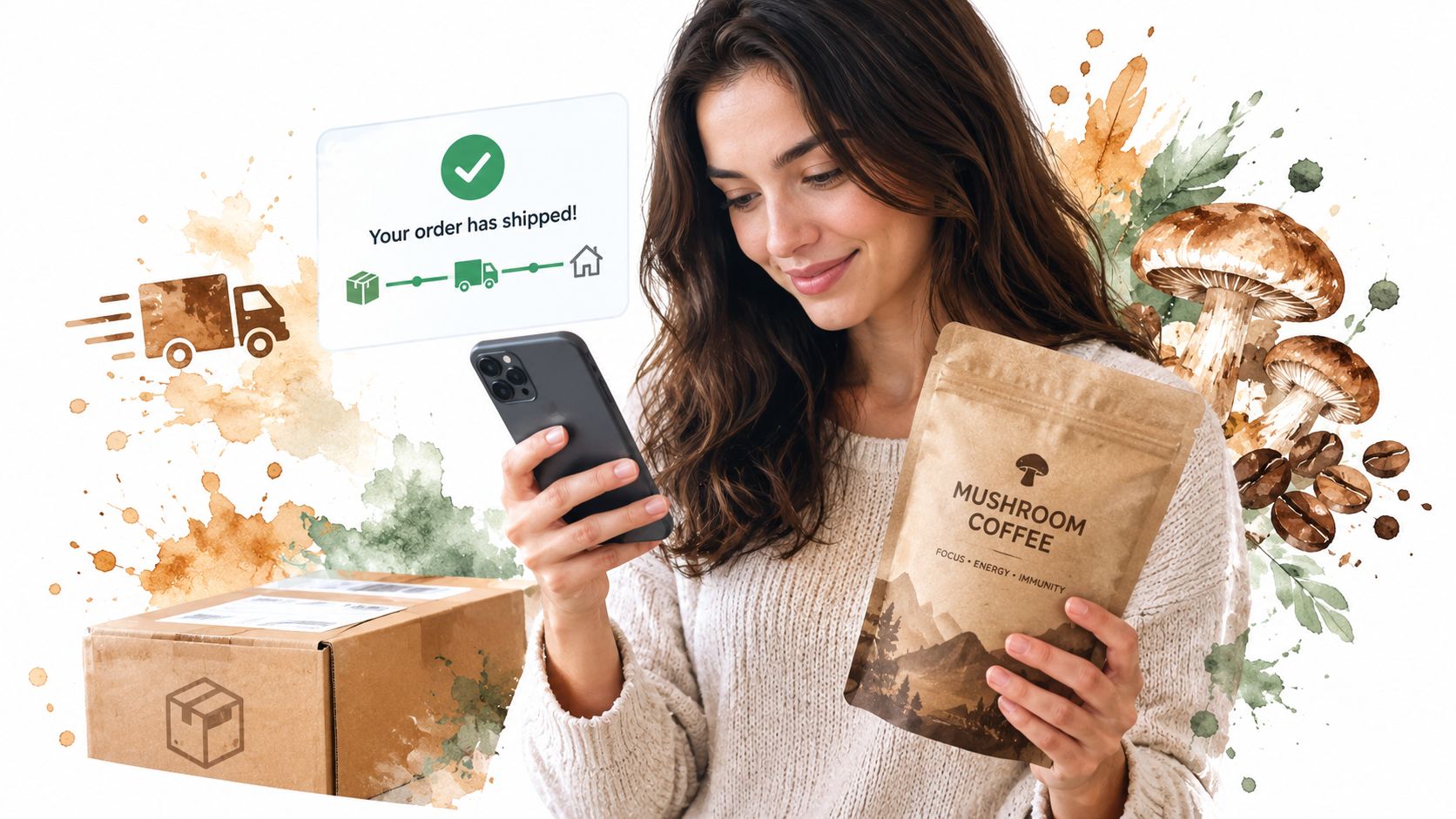
The best shipping page is specific without making promises it can't support. It should explain where the retailer ships, how tracking works, and what happens if a package is delayed. Review the discreet shipping information before you place an order, particularly if privacy is part of your buying decision.
Save the confirmation email, product page, lot information, and return policy. Those records make it easier to ask a precise question if the delivered package differs from the listing.
Red Flags to Avoid When Buying
“Organic,” “natural,” and “pure” sound reassuring, but they don't answer the questions that determine product quality. A trustworthy label still needs species identification, serving quantities, extraction details, caffeine information, and testing. Marketing language can support a purchase, but it shouldn't replace documentation.
Disease-treatment promises are an immediate warning sign. Dietary supplements aren't pre-approved by the FDA for safety or effectiveness before marketing, so a seller shouldn't present mushroom coffee as a cure or treatment for a medical condition. General wellness language is not the same as clinical evidence.
Treat vague claims as missing information
Walk away, or ask for clarification, when a product:
- Uses a generic blend name: “Mushroom blend” without species and quantities prevents meaningful comparison.
- Hides the serving mass: A large ingredient list can still contain small or undisclosed amounts of each mushroom.
- Omits extraction details: Without the extraction method, you can't interpret claims about beta-glucans or other compounds.
- Leaves out caffeine: This is a basic variable for anyone managing sleep, anxiety, reflux, or total caffeine intake.
- Shows no lot-specific testing: A logo or general statement about quality isn't the same as a certificate of analysis for the product you'll receive.
- Makes miracle claims: Promises about curing disease, replacing medication, or producing guaranteed cognitive effects go beyond what the evidence supports.
University of Illinois Extension explains that supplement ingredient amounts can vary between lots and that labels don't guarantee the claimed ingredients or quantities are present. Minnesota consumer guidance also recommends listing every mushroom species and displaying a Supplement Facts panel, as summarized in consumer guidance on mushroom supplements.
A long blend can be less useful than a short, transparent formula. More named mushrooms don't automatically mean more meaningful exposure, and “organic” doesn't tell you whether the product has been tested for heavy metals, pesticides, or microbial contamination.
Use the video as general education, not as a substitute for the product's own certificate of analysis. The label and lot documentation should still determine whether you buy.
Making Your Final Purchase Decision
A sensible mushroom coffee purchase is less about finding the most dramatic formula and more about matching the product to your actual routine. Start with the intended experience. If you want a conventional morning coffee, choose a product that clearly identifies its coffee base and functional mushroom ingredients. If you want less caffeine, look for a half-caf or decaffeinated base instead of assuming the mushroom blend will reduce it.
Use this final screen before checkout:
- Category: Does the product match the experience you want?
- Identity: Are every species, fungal material, and serving quantity disclosed?
- Extraction: Does the label explain whether the product uses hot-water, alcohol, or dual extraction?
- Testing: Can the seller provide lot-specific identity, beta-glucan, contaminant, pesticide, and solvent information?
- Caffeine: Is caffeine listed per serving, and does the serving fit your normal intake?
- Purchase terms: Are age verification, shipping, privacy, payment, and returns clear?
The evidence deserves realistic interpretation. Harvard Health notes that very little research on medicinal mushrooms has involved humans, and promising test-tube or animal findings may not translate to people. The available research also wasn't conducted on mushroom coffee itself, so processing and blending may not preserve effects observed in other preparations, as explained in Harvard Health's review of mushroom coffee.
That doesn't make the product pointless. Taste, convenience, a lower-caffeine formulation, and the consistency of a morning ritual can all be legitimate reasons to buy. Just don't pay for certainty that the label and evidence can't provide.
If you're ready to compare a functional mushroom coffee option with clear product information and discreet delivery, visit The Magic Mushroom Delivery. Review the product details, confirm the serving and caffeine information, and contact the retailer with any testing or shipping questions before placing your order.