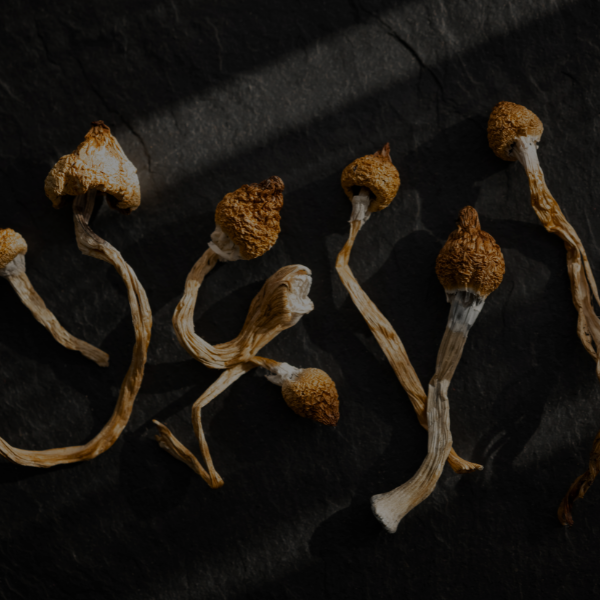
Psilocybin mushrooms have low, though not zero, addiction potential. They don't produce the compulsive daily-use cycle or physical withdrawal syndrome clinicians see with alcohol, nicotine, or opioids.
That answer usually triggers one of two flawed assumptions. One group hears "psychoactive fungus" and assumes the brain gets hooked the same way it does on stimulants or sedatives. Another group hears "low addiction risk" and concludes that mushrooms are functionally harmless. If you're asking are magic mushrooms addictive, you're really asking two separate questions: whether psilocybin creates physical dependence, and where the actual dangers sit when someone uses it.
Separating population-level survey data from supervised clinical trials clears up both misconceptions fast. The evidence shows exactly which standard addiction criteria psilocybin fails, why its rapid tolerance mechanics undercut compulsive daily consumption, and why behavioral caution still matters for specific people.
The Short Answer on Mushroom Addiction
Does psilocybin meet the clinical tests that turn a psychoactive drug into an addiction? Current evidence places it near the bottom of the dependence-liability scale, while still treating low risk as something other than zero risk. Clinicians do not define addiction by whether someone enjoys an altered state or feels curious to try it again. The U.S. National Institute on Drug Abuse states that research to date indicates psilocybin use does not typically lead to addiction, which requires persistent use despite harmful consequences. A peer-reviewed eight-factor assessment cited on that page found no documented physiological withdrawal syndrome in human or animal studies, rare daily psychological dependence, and abuse, emergency-department, and treatment-seeking rates substantially lower than those linked to many Schedule IV drugs. That assessment also estimated that doses linked to acute poisoning death could be roughly 1,000 times higher than the likely highest clinical dose. Acute toxicity numbers do not rule out psychiatric reactions, dangerous behavior, or misidentified mushrooms.
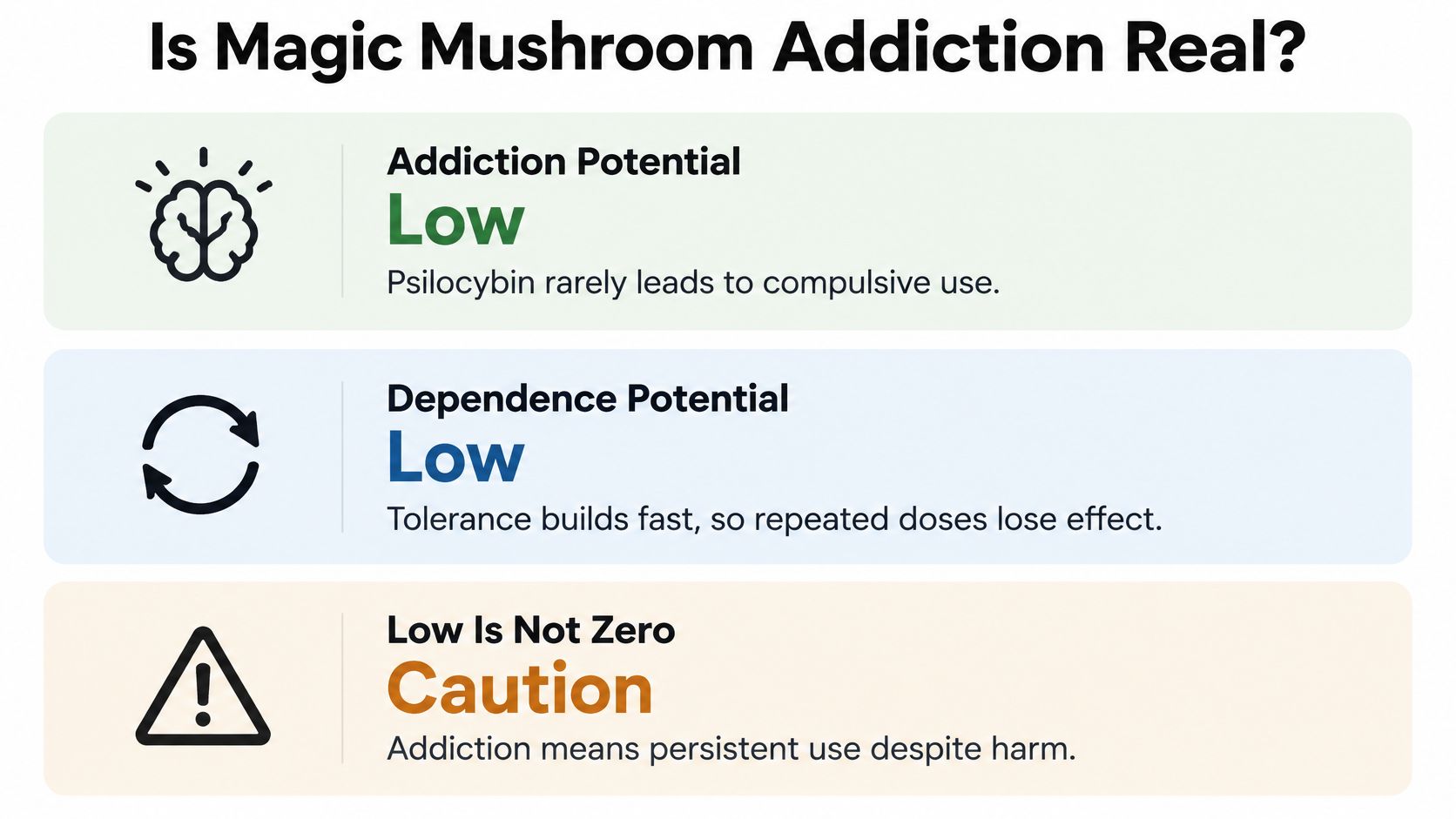
Addiction specialists look for three classic markers: compulsive escalating use, a recognizable withdrawal syndrome when use stops, and substantial treatment-seeking for dependence. Psilocybin scores low on all three. With no documented physiological withdrawal syndrome, stopping after a period of use does not trigger the tremors, sweats, or medical detox emergencies associated with heavy drinking or opioid dependence. The warning signs worth watching are behavioral rather than physical.
What Population Data Actually Shows
Lifetime exposure was already large a decade ago, which makes the gap between use and diagnosed disorder more telling. Federal U.S. survey records compiled by the National Center for Biotechnology Information show that about 22.8 million people aged 12 or older (8.5% of that population) had used psilocybin in their lifetime as of 2014.
Recent annual use shows that exposure on that scale still has not produced a parallel wave of physical dependence. In 2025, approximately 11 million U.S. adults used psilocybin during the past year, according to the RAND 2025 Psychedelics Survey. That pattern lines up with the assessment above: daily psychological dependence and treatment-seeking stay uncommon even after many people have tried the drug. Hallucinogen use disorder is also a broad category that includes substances beyond mushrooms, so a mushroom-only dependence problem would sit inside an already limited share of users.
Analytical takeaway: Wanting to revisit a meaningful or vivid experience is not the same as a substance-use disorder. Psychological interest can exist without the withdrawal, dose escalation, and treatment demand that define dependence.
The problems that show up are poor dosing habits, unsafe settings, and individual psychological vulnerability.
How Psilocybin Compares to Truly Addictive Drugs
Addiction is a behavioral and physiological pattern, not an automatic trait baked into every psychoactive compound. The fairest way to judge psilocybin's dependence liability is to stack it directly against alcohol, nicotine, and opioids across the exact criteria clinicians use to assess substance-use disorders.
| Criterion | Psilocybin | Alcohol | Nicotine | Opioids |
|---|---|---|---|---|
| Physiological withdrawal syndrome | Not documented in human or animal studies | Yes, can be medically dangerous | Yes, well documented | Yes, well documented |
| Compulsive daily use | Rare; rapid tolerance undercuts repeat dosing | Common | Very common | Common |
| Escalating dose pattern | Possible but uncommon; raises safety concerns | Common | Common | Common |
| Treatment-seeking for dependence | Substantially lower than many Schedule IV drugs | High | High | High |
| Dependence reported in supervised clinical trials | None reported across reviewed psilocybin trials | Well documented in clinical populations | Well documented in clinical populations | Well documented in clinical populations |
| Population-level disorder prevalence | Low across U.S. hallucinogen surveys | High among heavy drinkers | High among regular users | High among regular users |
Two rows in that grid carry the most analytical weight. The first is physiological withdrawal. Stopping heavy alcohol use abruptly can trigger seizures or delirium tremens, and stopping opioids or nicotine reliably brings on acute physical misery that drives immediate relapse. Psilocybin lacks that physical trap, which removes one of the strongest biological engines keeping people locked into daily consumption.
The second critical row is compulsive daily use. With nicotine or opioids, taking a dose every morning restores baseline comfort and reinforces the habit loop. With psilocybin, the body adapts so quickly that taking the same amount on back-to-back days produces noticeably muted effects, a pharmacological quirk explored in detail in our breakdown of how magic mushroom tolerance works. Rather than pulling a user into a morning-to-night routine, rapid tolerance actively pushes back against consecutive-day dosing.
Why Category Grouping Matters in Survey Data
Reading epidemiological numbers accurately requires noticing how national questionnaires classify psychedelics. A nationally representative U.S. analysis of the National Survey on Drug Use and Health found that 9.32% of people had used hallucinogens at some point in their lives, while 0.62% had used them during the previous 12 months. Even with this substantial lifetime exposure, the analysis estimated a low prevalence of hallucinogen use disorder and characterized the post-exposure risk of developing the disorder as low.
That survey grouped classic hallucinogens together instead of isolating psilocybin mushrooms in every estimate. Grouping cuts both ways for an analyst. On one hand, it prevents you from treating any category-wide figure as a pure mushroom-only rate, since LSD, DMT, and other compounds sit inside the same bucket. On the other hand, lumping all classic hallucinogens together makes the low disorder rate even harder to dismiss, because the combined category still produces far fewer dependence diagnoses at scale than alcohol, tobacco, or opioids do individually.
Why Psilocybin Does Not Hook the Brain Like Nicotine
Think of a classic addictive drug as a slot machine rigged to pay out a small reward on every pull. Nicotine, stimulants, and opioids trigger sharp dopamine spikes in the brain's reward circuitry, teaching the nervous system to repeat the motion dozens of times a day. Psilocybin behaves nothing like a slot machine. It's closer to a single intense, hours-long event that your brain immediately adapts to, making an instant replay physically underwhelming.

Two distinct biological mechanisms drive this difference. First, psilocybin is converted in the body to psilocin, which primarily activates serotonin 5-HT2A receptors rather than flooding the mesolimbic dopamine pathway the way cocaine, methamphetamine, or heroin do. That receptor profile explains why mushrooms shift perception, emotion, and introspection without generating the tight craving-and-relief cycle that sustains pack-a-day smoking.
Second, 5-HT2A receptors downregulate rapidly after a full session. If someone takes a moderate dose on Friday and tries the same amount on Saturday, the second session usually feels flat and blunted. Because chasing the same intensity over consecutive days is biologically self-defeating, most users naturally space sessions by at least several days, and often weeks or months. Recognizing that pattern as rapid tolerance rather than addiction keeps the mechanism clear: the brake is built into the pharmacology.
What Supervised Clinical Trials Observe
Controlled human studies back up the pharmacology. A systematic review of adverse-event reporting in supervised psilocybin clinical trials published in Therapeutic Advances in Psychopharmacology reported that no participants abused or became addicted to psilocybin across the reviewed studies. The same review documented no cases of prolonged psychosis, no cases of hallucinogen-persisting perception disorder, and no psychiatric hospitalizations required during the reported dosing sessions.
Trial participants are screened before dosing and supported by clinicians throughout the session, so controlled zero-addiction outcomes don't automatically translate to every unsupervised weekend setting.
Even with that clean clinical record, an honest assessment shouldn't oversimplify human motivation. Most participants in controlled dosing studies describe the acute effects as vivid or personally meaningful and report wanting to repeat the session within a month. Enjoying an experience doesn't equal clinical dependence, yet it proves that psilocybin can hold genuine psychological appeal. For a small subset of people chasing relief from stress or boredom, that appeal can turn into a habit of frequent dosing even when physical withdrawal never enters the picture.
The Real Risks Are Bad Trips and Bad Decisions
Treating "low addiction potential" as a synonym for "completely safe" is where most consumers get burned. With psilocybin, the realistic danger is rarely that you can't stop taking it; it's what happens during the hours you're acutely affected, or what's inside an untested product.
Clinical literature itself advises keeping risk in perspective rather than declaring total safety. A 2025 systematic review of psilocybin-assisted psychotherapy in the Australian & New Zealand Journal of Psychiatry reported no cases of psilocybin dependence across its included studies and echoed earlier findings that psilocybin hasn't been linked to subsequent compulsive drug-seeking or physical dependence. At the same time, the authors pointed out that trials didn't always state whether dependence was systematically tracked, reminding readers that low observed dependence in clinics can't eliminate every individual hazard outside them.
Acute Psychological and Behavioral Hazards
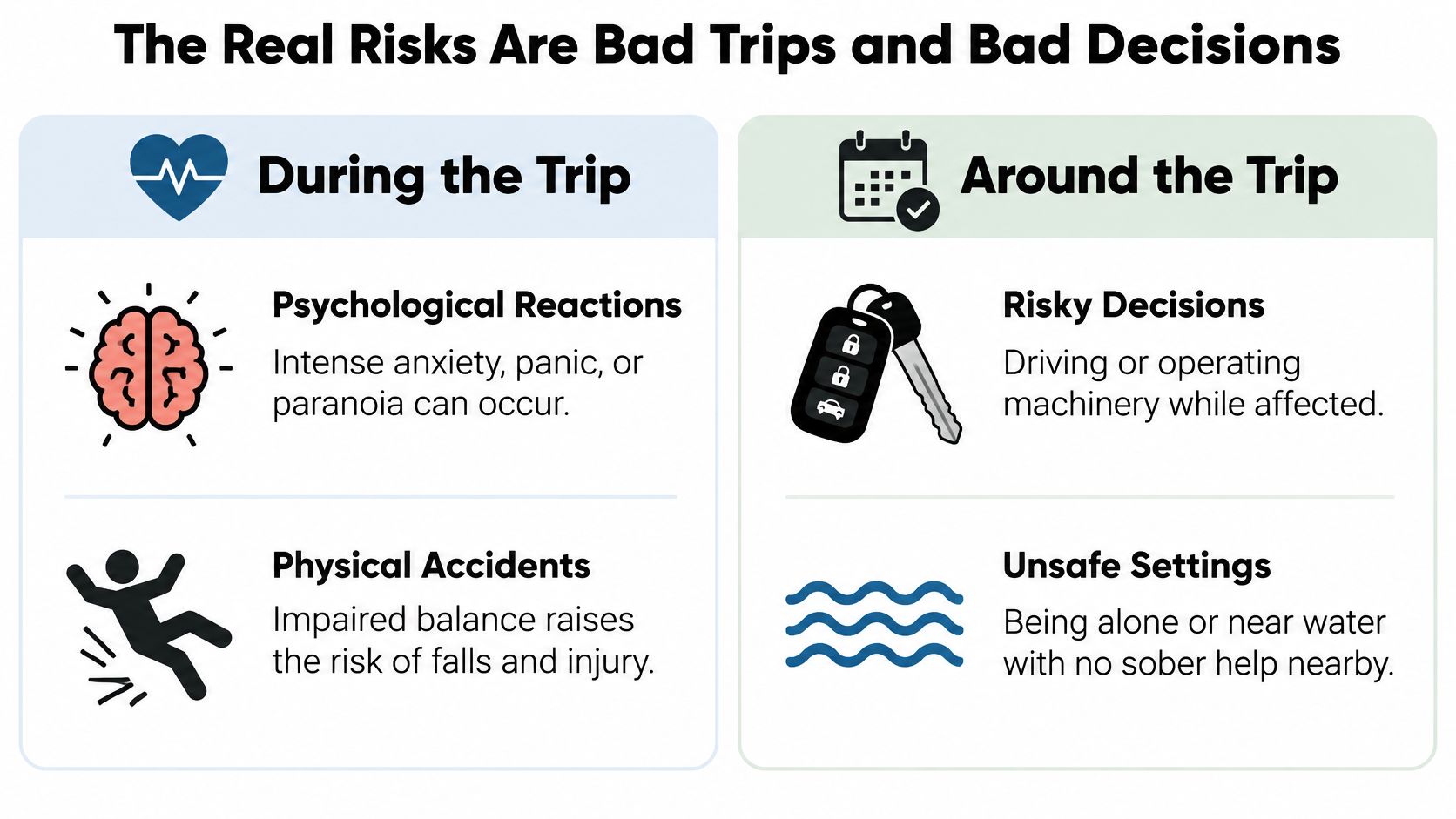
Four concrete risks account for almost all real-world problems with magic mushrooms.
Intense psychological reactions sit at the top of the list. High doses or stressful surroundings can trigger acute panic, paranoia, time distortion, and overwhelming fear. In people carrying a personal or family history of psychotic disorders or bipolar mania, a powerful psychedelic session can destabilize mood or precipitate severe psychiatric symptoms.
Impaired judgment and physical accidents follow closely behind. Altered depth perception, dizziness, and confusion make routine tasks hazardous. Getting behind the wheel, climbing ledges, swimming unsupervised, or wandering into traffic turns an otherwise temporary cognitive shift into an emergency, which is why having a trusted sober sitter changes the safety math dramatically.
Sourcing, Contamination, and Dose Escalation
The wide acute-toxicity safety margin estimated for pure, measured psilocybin offers zero protection against a misidentified wild mushroom. Toxic lookalike species found in the wild can cause severe organ damage or fatal poisoning, and unverified street edibles carry real risks of synthetic adulterants or inconsistent active compounds.
Product variability creates a quieter trap. A raw dried cap, a mushroom-infused chocolate bar, a gummy, and a ground capsule can differ sharply in concentration and absorption speed. Clinical trials work with standardized milligrams of pure psilocybin; commercial or homemade products without lab verification don't offer that uniformity.
Finally, there's the tolerance escalation error. Because back-to-back dosing feels weaker, some people double or triple their intake over a few days trying to force the same intensity. Pushing doses upward doesn't typically turn into chemical addiction, yet it dramatically raises the odds of a frightening psychological reaction, severe nausea, or a poor decision in an uncontrolled environment. Ask the right questions before dosing: focus on mindset, physical setting, verified potency, and sober company rather than worrying about classic detox.
Who Should Be Careful and What Warning Signs Look Like
Population averages tell you what happens across millions of adults; they can't predict how one specific nervous system will respond. Just as a low average flood rate doesn't protect a house built in a low-lying basin, a low addiction rate across national surveys doesn't mean every person faces the same personal odds.
Here's a quick visual way to frame individual vulnerability alongside broad risk estimates.

A detailed analysis of U.S. adults published via PubMed Central illustrates why clinicians still diagnose problematic use even when withdrawal is absent. In that national sample, 1.4% of all adults reported using at least one hallucinogen during the prior year, while 0.07% met criteria for hallucinogen abuse and 0.04% met criteria for hallucinogen dependence. Notably, the study used DSM-IV criteria for hallucinogen dependence, which didn't require physical withdrawal as a diagnostic condition. Those figures cover hallucinogens collectively rather than isolating psilocybin, yet they prove two facts at once: diagnosed disorders remain uncommon at the population level, and clinicians look at behavioral harm rather than withdrawal symptoms to spot them.
Profiles That Carry Higher Personal Risk
Four personal factors tilt the risk-reward balance sharply against unsupervised use:
- Personal or family history of psychosis or bipolar disorder: Classic psychedelics can trigger manic episodes or prolonged perceptual disturbances in vulnerable individuals, even after a single strong session.
- Active heavy use of alcohol or other drugs: Polysubstance habits blur judgment, increase unpredictable interactions, and raise the odds of chasing altered states to blunt stress.
- Using to escape persistent emotional pain: Approaching mushrooms as a weekly numbing tool rather than an occasional intentional experience increases the risk of psychological reliance.
- A habit of overshooting personal limits: Anyone who routinely doses more frequently or heavily than planned, or who ignores prior bad experiences, sits in a higher behavioral risk tier.
Behavioral Warning Signs to Watch
Because psilocybin doesn't trigger classic physical withdrawal, problematic patterns are remarkably easy to rationalize. Watch for these behavioral shifts instead:
- Escalating frequency or dose: You start dosing weekly, or taking larger amounts to push past tolerance, even after deciding you'd cut back.
- Emotional reliance between sessions: You feel flat, restless, or unable to cope with ordinary stress unless another trip is scheduled on the calendar.
- Solo dosing after difficult trips: You keep using alone despite previous bouts of panic, paranoia, or risky behavior.
- Eroding daily obligations: Work, sleep schedules, finances, or close relationships start absorbing the fallout from frequent sessions or long recovery days.
- Persistent distress afterward: Lingering anxiety, derealization, or feeling disconnected from normal life hangs on days after the acute effects fade.
For a deeper clinical perspective on how specialists distinguish healthy caution from substance misuse, watch the short overview below.
If two or more of those behavioral signs sound familiar, adjusting your dose or switching mushroom strains isn't the answer. Schedule a candid conversation with a physician or licensed therapist before planning another session.
The Paradox of Using Psilocybin to Treat Addiction
One of the sharpest contradictions in modern pharmacology is that researchers are actively investigating psilocybin not as a driver of addiction, but as a candidate therapy for breaking other addictions. A 2025 systematic review indexed on PubMed reported preliminary evidence of reduced alcohol consumption and improved smoking cessation outcomes across psilocybin studies, while emphasizing that results for other substance-use disorders remained mixed and larger randomized trials are still needed.
That emerging clinical record undercuts the simplistic assumption that any compound producing vivid psychoactive effects must behave like a habit-forming drug. It also raises a fair, practical question for everyday readers: if clinical teams are testing psilocybin for alcohol and nicotine dependence, does therapeutic benefit mean mushrooms are safe for self-treatment or casual substitution?
The evidence gives a firm no. Substituting unmeasured mushrooms for cigarettes or nightly drinks on your own isn't supported by clinical data, and treating emerging trial outcomes as a DIY prescription ignores everything that makes clinical protocols work.
Why Clinical Therapy Differs From Solo Use
Inside a research protocol, the molecule is only one piece of a tightly structured intervention. Participants undergo medical and psychiatric screening to rule out high-risk conditions, complete preparatory therapy sessions to clarify goals, receive standardized, lab-measured doses under continuous professional supervision, and return for structured integration counseling afterward. You can read more about how those structured frameworks operate in our overview of psilocybin therapy protocols.
Clinical boundary: Emerging trial results on measured psilocybin paired with psychotherapy don't prove that unsupervised use, or unstandardized retail chocolates, gummies, and capsules, will safely treat alcohol or nicotine dependence.
Product variability widens that gap even further. Whole dried mushrooms vary naturally in potency from cap to stem, and unverified infused edibles can deliver far more or less active compound than expected. Keeping clinical psychotherapy separate from solo experimentation protects you from stretching promising early research past what it can support.
How to Use Responsibly and Where to Start
Knowing that psilocybin carries low physical addiction risk shifts your focus to what keeps an experience safe: preparation, measured dosing, spacing, and verified sourcing. Whether you're evaluating mushrooms for the first time or revisiting your own habits, follow a clear five-step routine before any session.
Screen your health and medications first. Review your personal and family history for psychotic or bipolar conditions, evaluate whether you're currently drinking heavily or using other substances, and consult a healthcare provider before combining psilocybin products with any medications or supplements. Skipping this step is the single fastest way to turn a low-addiction compound into an avoidable medical problem.
Start low and respect the onset window. Begin with a small serving size and wait through the full onset window before even considering an adjustment. Magic Mushroom Chocolate, Magic Mushroom Gummies, and Magic Mushroom Capsules can take 30 to 60 minutes to take effect, and a typical magic mushroom trip lasts 4 to 6 hours, peaking within the first two hours before gradually tapering back to baseline. Redosing impatiently at minute forty is a classic mistake that stacks two waves on top of each other.
Control the setting and keep a sober sitter nearby. Choose a calm, familiar indoor environment free of unexpected interruptions, silence non-urgent obligations, and never drive or operate machinery while affected. Having a trusted sober friend in the room keeps minor anxiety from spiraling and prevents impaired decisions near stairs, water, or streets. For a deeper checklist covering preparation and trip-sitting practices, review our psychedelic harm reduction guide.
Space your sessions intentionally. Avoid consecutive-day dosing. Rapid tolerance dulls the experience on day two anyway, and escalating the dose to push past blunted receptors raises psychological and physical discomfort without adding meaningful benefit. Treating sessions as occasional events spaced weeks apart keeps both tolerance and behavioral habits in check.
Choose tested, clearly labeled products and check local rules. Measured, lab-tested options eliminate the wild-foraging misidentification hazard and reduce contamination worries. At The Magic Mushroom Delivery, we require 21+ age verification, test our mushrooms to ensure they're free from DMT and any other contaminants, and offer organic options across raw magic mushrooms, infused chocolate, psilocybin Magic Mushroom Gummies, capsules, and coffee (with 5-gram gummies at $70.00, 5-gram capsules at $75.00, and 7-gram raw packs at $95.00), while reminding every customer to confirm the possession and use rules in their location before placing an order.
When to Pause Instead of Dosing
Even the cleanest sourcing and calmest living room won't fix a strained mindset. If you notice yourself reaching for mushrooms to numb ongoing distress, pushing past your planned schedule, or feeling unsettled between sessions, pause and talk with a qualified healthcare clinician before taking another dose. Responsible use starts with knowing when to step back.
If you've confirmed the possession and use rules in your area and want clearly labeled, tested options for a measured experience, explore The Magic Mushroom Delivery. We carry organic raw magic mushrooms, infused chocolates, psilocybin gummies, capsules, and mushroom coffee, all tested to be free from DMT and other contaminants and backed by 21+ age verification and discreet delivery. Visit our catalog and educational guides to compare serving formats and plan a calm, informed session.