

You're staring at a small jar or paper bag and wondering if the mushrooms inside are worth trusting. They look dry, they smell earthy, and someone told you they're “strong,” but that's exactly where uncertainty starts, because dry liberty caps aren't something to treat casually or by guesswork. Their power, storage needs, and dose ranges all depend on how well they were dried, where they came from, and how you handle them after harvest.

The simplest way to approach them is step by step. First, learn what a high-quality dried specimen looks and feels like. Then understand why the species has a reputation for potency, how dose ranges translate into real-world intensity, and what storage practices protect that potency over time. If you want a broader species overview, the magic mushroom types and effects guide gives helpful context without assuming you already know the basics.
The Enduring Allure of Liberty Caps
Liberty caps have a reputation that reaches far beyond their size. Psilocybe semilanceata is described as one of the most widely distributed psilocybin mushrooms in nature and among the most potent, which helps explain why people keep coming back to the topic with a mix of curiosity and caution. In grassland settings, independent field guidance links fruiting to soil pH around 4.0–6.0, organic carbon of 5–15%, bulk density of 0.8–1.0 g/cm^3, and a two-week weather window averaging 11.5°C with a suitable range of 8.5–14°C and a diurnal temperature range below 6.5°C (Psilocybe semilanceata).
That mix of ecology and reputation gives the mushroom its mystique. It's not just “another mushroom,” it's a species people tend to discuss with respect because small differences in handling can matter a lot once it's dried. Dried material is where this becomes practical, because the water is gone and the active compounds are concentrated.
Why dried form changes the conversation
Drying changes both storage and dose density. A mushroom that looks modest when fresh can become much more concentrated per gram once moisture is removed, which is why weighing dried material matters far more than estimating by eye. The key idea is simple, but easy to miss, potency isn't static, and the dried form makes that obvious.
Practical rule: if you're evaluating liberty caps, don't think in “looks small, so it must be mild.” Think in grams, texture, and dryness.
A careful mindset matters here because people often mix up appearance with strength. Liberty caps are famous precisely because their reputation comes from chemistry and drying behavior, not from how impressive they look in a photo.
Identifying High-Quality Dry Liberty Caps

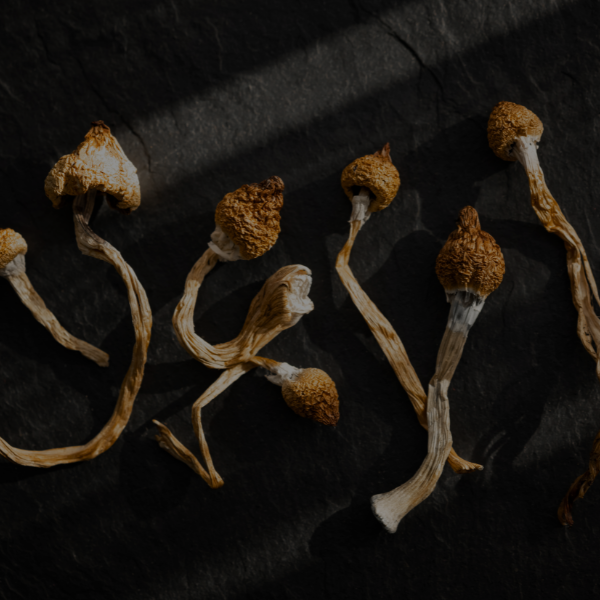
A good dried specimen still carries the shape of the original mushroom. Even after dehydration, the conical or bell-shaped cap with its small nipple-like umbo usually remains visible, along with the slender stem that often looks delicate rather than thick. The gills and spore color are harder to judge on a fully dried piece, but the overall structure should still read as intact, not crushed or collapsed.
What to look for first
Start with the body of the mushroom, not the color alone. A reliable dried liberty cap should be crispy, structurally intact, and free from soft spots. The stem should snap rather than bend, because bendiness usually means residual moisture is still trapped inside.
The safest visual checklist is straightforward:
- Distinct shape: A bell-like cap with the familiar pointed top or nipple-like tip.
- Even drying: The surface should look uniformly dry, not glossy or damp.
- Clean texture: Cracking or brittleness is normal, mushiness is not.
- No fuzzy growth: White, green, or gray fuzz points to contamination concerns.
- Earthy smell: A natural mushroom scent is expected, while sharp chemical or moldy odors are not.
The species itself adds context. Psilocybe semilanceata, commonly called the liberty cap, is one of the most widely distributed psilocybin mushrooms and is recognized for its high potency. It typically fruits in grasslands with a soil pH of 4.0–6.0 and flourishes when the average temperature over two weeks is around 11.5°C (Psilocybe semilanceata).
A short video can help you compare shape and texture against a reference specimen. Watch the visual guide below after you've inspected the basic features on your own.
How to separate quality from poor preservation
Poorly dried mushrooms often look tired rather than crisp. They may slump, bend, or feel leathery, and those are warning signs that the drying process didn't fully finish. Once moisture lingers, the risk isn't just lower quality, it's spoilage.
The best habit is to trust texture first, then appearance, then smell. If any one of those feels off, treat the specimen as questionable until you can verify that it's completely dry and intact.
Understanding Potency and Chemical Profile
Dry liberty caps are unusually concentrated. Lab testing from Miraculix Lab reports 0.8%–1.8% psilocybin by dry weight, and notes that psilocin is usually absent while baeocystin appears in smaller amounts (Miraculix Lab). That profile matters because the main driver of the effect is psilocybin, not fresh-mass water content.
A wet sponge and a dry sponge can weigh very differently even if they're the same size. Once the water is gone, what remains is the actual concentrated material, and that's why two mushrooms that look similar can behave very differently after drying.
Why concentration changes the experience
Drying does more than preserve the mushroom. It changes how much active compound you're holding in each gram. That's why people who weigh fresh material and dried material as if they're interchangeable can misjudge the strength badly.
The chemistry also explains why dry liberty caps have a reputation for being so strong relative to size. The active profile is not spread out in a large, watery body. It's compressed into a much smaller, denser form, which makes measurement and storage much more important.
For readers who want a deeper chemical comparison, the psilocin and psilocybin explainer gives useful background on how those compounds differ in practical terms.
Dry weight is the number that matters most once water is gone. If you ignore that, you can't really judge potency with any confidence.
Why small differences matter
Even a small change in mass can shift the experience noticeably because the species is so concentrated on a dry-weight basis. That's the central reason dosing needs care. A mushroom that seems only a little heavier can mean a very different outcome once the compounds are active.
This is also why “rough eyeballing” is a bad habit with liberty caps. The dried form rewards precision, not intuition.
A Practical Guide to Dosing Dry Liberty Caps
For dried liberty caps, dose ranges are commonly grouped from microdose to heroic dose, and the gaps between them matter because the mushrooms are potent on a dry-weight basis (Liberty cap dosing guide). The safest approach is to treat every new batch as its own material, because potency can vary with environment and genetics.
| Dry Liberty Cap Dosing Guide | Dry Weight (grams) | Expected Effects |
|---|---|---|
| Microdose | 0.065 to 0.325 | Very light, sub-perceptual or subtle |
| Threshold dose | 0.325 to 0.65 | Noticeable change, still relatively restrained |
| Museum dose | 0.65 to 1.3 | Mild to moderate experience |
| Standard dose | 1.3 to 3.3 | Full experience range |
| Heroic dose | Above 3.3 | Very intense experience |
Start low, then reassess
The label on the dose range doesn't tell you how your body will respond. It only tells you where the material sits on the scale. Since liberty caps are often described at around 0.5%–1.0% psilocybin by dry weight, very small differences in weight can significantly alter the experience (Liberty cap dosing guide).
That's why a cautious first measurement matters. A person who assumes “just a little more” is harmless can cross from one experience band into another quickly.
Practical dosing habits that reduce mistakes
- Weigh every batch: Dried liberty caps are too concentrated for guesswork.
- Treat new material as unique: Potency can vary with environment and genetics.
- Avoid stacking uncertainty: Don't combine an unknown batch with another unknown batch.
- Respect the upper ranges: The jump from standard to heroic is not subtle.
A simple rule helps here, dose for the mushroom you have, not the mushroom you hope it is.
Navigating the Liberty Cap Experience
The experience usually unfolds in three broad stages. Initial effects often begin within a half hour to an hour, the middle portion can feel more immersive and emotionally open, and the comedown usually softens gradually rather than cutting off abruptly. That arc is easier to manage when the room is calm, the schedule is clear, and the person taking them isn't trying to multitask.

Set and setting shape the tone
Mindset and environment do a lot of work here. The same dried material can feel manageable in a quiet, familiar space and overwhelming in a chaotic one. That's why preparation isn't just about weighing mushrooms, it's about deciding where you'll be, who you'll be with, and what responsibilities can wait.
People often expect the material to determine everything. It doesn't. Stress, noise, unfamiliar company, and the feeling of being rushed can all make the experience harder to manage.
Keep the setting simple, predictable, and low-pressure. That choice usually helps more than any elaborate plan.
What the arc can feel like
At onset, people may notice a shift in body awareness or perception. During the peak, thoughts can become more fluid, colors and patterns may feel more vivid, and attention can turn inward. After that, the intensity often eases into a gentler state where conversation, rest, or quiet reflection feels more natural.
The important part is to stay oriented, hydrated, and unhurried. A calm environment gives the person room to respond to the experience instead of reacting to it.
Proper Handling Storage and Preparation
Drying isn't finished just because the mushroom looks small and light. A perfectly dried liberty cap should be crispy enough that the stem snaps easily without bending, and that texture is the clearest sign that moisture has been reduced enough for stable storage (Tripsitter preparation guide).
Why storage quality matters
Residual moisture is the enemy here. If a dried mushroom still flexes, it can hold enough water to increase mold risk during storage, and that's the kind of mistake people often discover too late. Dry material also keeps the active compounds more concentrated, so careful drying directly affects both preservation and dose consistency.
For storage details, the guide to storing dried mushrooms is useful for understanding container choices and moisture control.
Simple handling habits that protect quality
- Use an airtight container: It helps keep moisture and outside odors out.
- Keep it away from light: Light exposure can slowly degrade stored material.
- Avoid heat: Warm storage conditions are harder on potency and freshness.
- Check texture before sealing: If it bends, it's not ready.
- Handle gently: Crushed pieces are harder to judge and store well.
The reason this works is physical, not mysterious. Once the water is out, the compounds are denser, so the mushroom is more potent per gram than it was fresh. That's also why a careful weigh-in of dried material tells you much more than any fresh comparison ever could.
Preparation choices people commonly consider
Some people prefer tea because it's simple and easy to measure. Others like capsules because they're discreet and reduce the taste issue. Either way, the starting point is the same, the material has to be fully dry, intact, and stored well before anyone tries to prepare it.
If the mushrooms spent time in damp grassland or were picked after wet weather, extra caution makes sense because drying needs can vary with harvest conditions. That regional and weather-driven variability is part of what makes handling dry liberty caps different from treating them like any generic kitchen ingredient (Magic Mushroom Map field guide).
Frequently Asked Questions About Dry Liberty Caps
Are dry liberty caps stronger than fresh ones
Yes, because drying removes water and concentrates the active compounds per gram. That's why dry weight is the number that matters when you're trying to judge potency. Fresh and dry mushrooms should never be treated as equal measurements.
What's the safest way to think about dose size
Use the lowest meaningful dose range for the effect you want and treat every batch as distinct. The tiers from microdose through heroic dose exist because small weight changes can shift the outcome more than people expect. Precision matters more than confidence here.
Why do some dried mushrooms feel different from others
Weather, harvest conditions, and drying quality all play a role. Mushrooms gathered after wet spells can need more careful drying than ones collected from drier conditions, and that can affect both preservation and consistency (Magic Mushroom Map field guide).
A few common mistakes cause most of the problems: storing mushrooms before they're fully dry, guessing at weight, and assuming every batch behaves the same. If you avoid those three habits, you're already ahead of the average beginner.
If you want a dependable source of mushroom education and products in one place, visit The Magic Mushroom Delivery and explore its current mushroom guides and offerings with the same careful, informed approach you'd use when handling dry liberty caps.