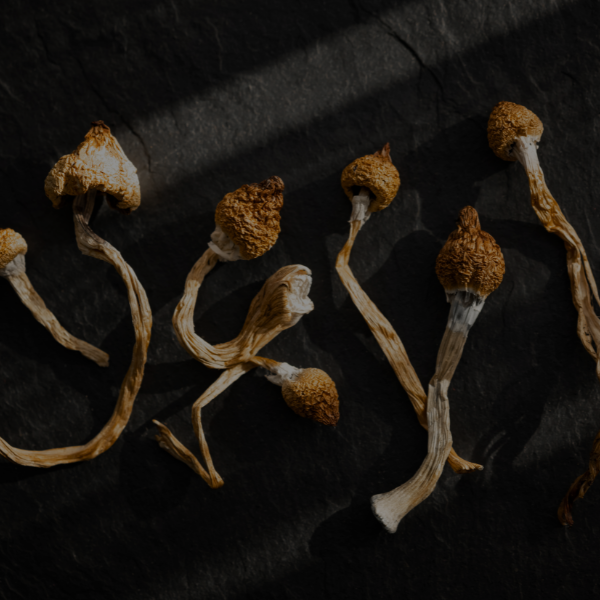

A standard therapeutic dose in clinical research is typically 25 mg of psilocybin, approximately 2.5 g of dried Psilocybe cubensis. That comparison is a clinical benchmark, not a guarantee, because dried mushrooms can differ substantially in potency from one batch to another.
You may be standing in a kitchen with a bag of dried mushrooms, a small scale, and a basic question: how much is enough, and how much is too much? The answer depends on the product's actual psilocybin content, your sensitivity, your purpose, and the environment in which you'll take it. Learning how to dose magic mushrooms responsibly starts with separating measured psilocybin amounts from rough gram estimates, then building a plan that leaves room for variability.
Understanding the Importance of Accurate Dosage
Dried mushrooms look simple to measure, but appearance isn't a reliable guide to strength. Two mushrooms of similar size can contain different amounts of psilocybin, and the usual conversion from milligrams to dried mushroom weight assumes approximately 1% psilocybin in dried Psilocybe cubensis, an assumption discussed in this review of fixed-dose and weight-based psilocybin dosing. That makes a gram estimate useful as a rough reference, not a precise result.
Why visual estimates fail
A cap count, pinch, or handful tells you almost nothing about the active compound. A mushroom's species, growing conditions, maturity, storage, and distribution of material within the fruit can all affect potency. Powdering improves consistency within one batch because it blends pieces together, but it doesn't tell you how strong that batch is.
A kitchen scale usually isn't sensitive enough for small amounts. Use a scale designed for milligram measurements, place it on a stable surface, and check that it reads zero before adding material. Never rely on a photo, a scoop, or a seller's informal description as a substitute for a measured amount.

Build a repeatable process
Start by identifying the format and any available laboratory information. Independent analysis can offer a better estimate of potency than appearance alone, so review third-party lab testing information before deciding how to interpret a product label.
Then write down the product, form, intended amount, date, and expected setting. That simple record prevents accidental redosing and helps you distinguish a weak product from a delayed onset. Clinical methodology favors a fixed oral dose, pre-session screening, and avoiding incremental redosing because effects are delayed and whole-mushroom potency varies, as described in this clinical methodology review.
Practical rule: If you can't identify the product, measure it accurately, or explain your plan to another sober adult, you don't have enough information for a confident dose decision.
Accurate dosing doesn't eliminate risk, but it reduces one major source of uncertainty. The more variable the product, the more conservative your interpretation should be.
Choosing Your Mushroom Product and Format
The product format determines what you can measure. Whole dried mushrooms provide a direct weight, while capsules, chocolates, gummies, and tinctures may offer convenience but depend heavily on accurate labeling and even distribution.

Raw dried fruits
Whole dried fruits are the easiest format to inspect and weigh. You can see whether the material is intact, grind it into a uniform powder, and measure the dry weight directly. The weakness is that weight still doesn't reveal the exact psilocybin content, and pieces from the same package may not be equally potent.
Grinding a batch before portioning can make each portion more similar than selecting individual caps. Store the powder in a sealed, clearly labeled container and avoid mixing different species or batches. A label that says “strong” isn't a laboratory measurement, so treat it as a warning about uncertainty rather than a dosing value.
Powder and capsules
Powdered mushrooms are practical for repeatable portioning. Capsules can reduce taste and make storage easier, but the capsule size alone doesn't establish potency. You need to know the amount of mushroom material inside and, ideally, the product's measured active content.
Capsules also create a redosing hazard because several identical-looking units can feel deceptively manageable. Count your planned amount before beginning, put the remainder away, and record what you took.
Chocolate and gummies
Infused edibles can be convenient, especially when the label states the amount per piece and the product has credible testing. Their main challenge is delayed onset, which can tempt someone to take more before the first serving has fully developed. That problem is especially important when the edible contains a blend or doesn't clearly distinguish mushroom weight from psilocybin content.
Chocolate and gummies may also be harder to divide accurately if the active ingredient isn't evenly distributed. Don't assume that breaking a piece in half creates two equal doses unless the manufacturer provides evidence for uniformity.
Tinctures
Liquid products can support measured drops when the bottle provides a clear concentration and a calibrated dropper. “One dropperful” isn't a meaningful dose unless the label defines the volume and active content. Tinctures may feel easier to adjust, but the same delayed-effect problem can still apply.
Choose the format that gives you the clearest answer to one question: how much active material is in the portion I'm taking? If the label only gives vague blend language, treat the product as less predictable than a tested, quantified preparation.
Navigating the Three Primary Dose Ranges
Dose categories are useful for orientation, but they aren't interchangeable. A microdose, a light or threshold amount, and a full experiential dose create different expectations, and the evidence behind each category isn't equally strong.
Microdose
A microdose is intended to produce subtle effects rather than pronounced perceptual changes. Reviews describe the evidence for microdosing as mostly observational, with sparse and inconsistent clinical findings and wide variation in dose ranges, support protocols, and administration schedules, as summarized in this review of microdosing research.
That means there isn't a universally validated microdose that reliably improves focus, mood, or pain for everyone. A useful record should track sleep, baseline mood, concentration, physical discomfort, and any unwanted effects. If you feel clearly intoxicated, the amount wasn't subtle for you, regardless of what a label or online table calls it.
Low or threshold dose
A low dose sits near the point where effects become noticeable. You might experience changes in sensory attention, mood, body perception, or thought patterns without the intensity associated with a full psychedelic session. The threshold varies with product strength, personal sensitivity, food, stress, and expectations.
Clinical research generally measures psilocybin directly rather than relying on mushroom weight. An overview of oral dosing describes effective doses broadly in the 6 to 20 mg range and identifies approximately 40 micrograms per kilogram as a minimum intoxication threshold, although those figures describe dose mechanics and shouldn't be treated as a personal prescription. This clinical overview provides that reference point.
Standard and higher clinical ranges
The clearest modern benchmark comes from the phase 2 COMP360 trial in treatment-resistant depression. 233 adults were randomized to a single supervised dose of 25 mg, 10 mg, or 1 mg psilocybin. The 25 mg group showed the clearest benefit at week 3, while the 10 mg group didn't separate meaningfully from the 1 mg control, according to the COMP360 trial report.
Clinical summaries commonly describe 25 mg as standard, 35 mg as high, and 50 to 60 mg as supra-therapeutic. For dried Psilocybe cubensis, those are often approximated as 2.5 g, 3.5 g, and 5 to 6 g, respectively, but the conversion remains approximate. A 2021 pharmacotherapy paper also describes fixed-dose trials using about 25 mg, with a 23 to 27 mg range selected for comparison with weight-based dosing, as reported in this dosing-methodology paper.
Higher isn't automatically better. In COMP360, adverse effects including headache, nausea, and dizziness occurred in 84% of the 25 mg group, 75% of the 10 mg group, and 72% of the 1 mg group over 12 weeks, showing that greater intensity can bring greater tolerability concerns without a proportional improvement in every outcome.
Mastering Accurate Measurement Techniques
Accurate weighing begins with the right instrument, not with a better guess. A milligram scale is designed for small quantities, while a household kitchen scale may round away the amount you're trying to measure. Keep the scale on a level, vibration-free surface and use a clean weighing tray or paper.
A careful weighing sequence
Check the scale. Turn it on, select the appropriate unit, and confirm that the display returns to zero. If the reading drifts, replace the batteries or move the scale before weighing anything.
Use a container. Place a dry tray on the platform and use the tare function to subtract its weight. Don't weigh mushrooms directly on a surface that may retain residue from earlier portions.
Prepare the material. Dried mushrooms should be free of obvious moisture. If you're working with a batch, grinding it into a consistent powder can distribute stronger and weaker pieces more evenly, though it won't make the batch chemically uniform.
Add material gradually. Place small pieces on the tray until you reach the planned dry weight. Avoid pressing or crushing material on the platform, which can cause movement and unstable readings.
Record the result. Write down the weight, product identity, batch, and date. If you're preparing multiple portions, label each one and keep the original package separate.
For conversions, 1 g equals 1,000 mg, and 0.1 g equals 100 mg of mushroom material. Those are unit conversions, not conversions of mushroom material into psilocybin. The active content still depends on potency, which is why gram-to-milligram comparisons should be treated as estimates.
A suitable scale should resolve the size of portion you plan to measure. This milligram-scale resource can help you compare tools, but no scale can compensate for an unknown or uneven product.
Weighing answers “how much mushroom material?” Laboratory analysis is what can answer “how much psilocybin?”
A cap count is an inferior fallback. Caps and stems vary in size, and one cap doesn't represent a standardized amount of active compound. If you can't weigh the material, you can't claim the same precision as a measured portion.
Use the visual demonstration below as a reminder that careful handling matters, but follow the product's verified information and your own safety plan rather than copying an example amount.
Optimizing Set, Setting, and Safety
A measured dose can still become overwhelming in a chaotic environment. Set means your current mental and physical condition. Setting includes the room, people, sensory inputs, access to help, and expectations surrounding the experience. These factors influence how you interpret unfamiliar sensations and emotions.
Choose a calm, familiar space where you won't need to drive, work, supervise children, cook, or manage unexpected visitors. Keep water available, reduce avoidable hazards, and let a trusted sober person know what you've taken and when. A sober sitter can provide reassurance, observe changes, and contact emergency help if a serious problem develops.
Screen health before dosing
People with a personal or family history of psychotic disorders, mania, or severe bipolar symptoms should speak with a qualified clinician before considering psychedelic exposure. Anyone taking psychiatric medication, cardiovascular medication, or other prescription drugs should review potential interactions with a doctor or pharmacist rather than relying on an online dosing chart.
Postpone the experience if you're acutely distressed, sleep-deprived, physically unwell, or trying to escape a crisis. A higher dose can amplify fear, confusion, nausea, dizziness, anxiety, or paranoia. A 2024 systematic review found that therapeutic-dose adverse effects were generally tolerable and typically resolved within 24 to 48 hours, but common acute reactions still included nausea, headache, increased blood pressure, and anxiety or paranoia, as described in this systematic review and meta-analysis.
Have an escalation plan
Keep your phone charged, know where you are, and make sure the sitter knows the measured amount and product type. Seek urgent medical help for chest pain, difficulty breathing, seizure, loss of consciousness, severe agitation, dangerous behavior, or symptoms that don't settle as the effects wear off.
Controlled research reported dose-related acute anxiety, affecting 7% at 15 mg, 6% at 20 mg, 38% at 25 mg, and 21% at 30 mg, while single doses up to 30 mg were considered safe for acute psychological and physical harm in healthy participants under controlled conditions. Those findings don't establish safety in an unsupervised home setting, especially for someone with a health condition or an interacting medication.
Aftercare and Adjusting Your Dose Over Time
The period after an experience provides useful information, but it isn't a reason to rush into another session. Give yourself time to sleep, eat normally, hydrate, and notice whether your mood and body return to baseline. If anxiety, confusion, insomnia, or perceptual changes persist, contact a healthcare professional.

Record what actually happened
Write soon after the experience, then review the notes later when you feel rested. Record the product, measured weight, approximate time, food, sleep, setting, emotional state, onset, strongest effects, difficult moments, and after-effects. Separate observations from interpretations. “Music felt unusually detailed” is more useful than writing “strong trip.”
A simple review can answer questions that memory often distorts:
- Did the effect match the intended intensity?
- Did the product take longer to develop than expected?
- Were nausea, anxiety, dizziness, or headache present?
- Did the setting help you feel secure?
- Would a clinician need to know about any reaction?
Adjust cautiously
Don't increase a dose because the first effects seem slow. Delayed onset is one of the main reasons people accidentally stack portions. Don't change several variables at once, either. If you alter the product, format, setting, and amount together, you won't know what caused the difference.
Clinical studies favor measured fixed doses, while consumer products may vary more widely. That's why a cautious adjustment means reviewing the product's tested content, preserving a consistent format, and changing only one factor after you've had enough time to understand the previous experience. A structured psilocybin microdosing schedule resource can help organize observations, but it can't replace medical advice or establish a universally effective regimen.
Integration matters: A useful experience isn't defined only by intensity. What you learn from your notes, your recovery, and your behavior afterward is part of evaluating whether the approach suits you.
Avoid using repeated dosing to chase a particular emotional state. If the experience was frightening, physically uncomfortable, or difficult to integrate, pause rather than escalating. Bring your records to a qualified healthcare professional, especially if you're managing depression, anxiety, bipolar symptoms, psychosis risk, cardiovascular concerns, or prescription medications.
The Magic Mushroom Delivery offers raw mushrooms, infused chocolates, gummies, capsules, and mushroom coffee, along with educational resources covering effects, duration, and dosing considerations. Visit The Magic Mushroom Delivery to review product formats and learning materials, then use measured information and a deliberate safety plan before making any decision.