Blue Monster strain is not one scientifically standardized mushroom. The two-identity table below separates the organisms sold under this nickname, because a reputation for strength isn't proof of what's in a package.
The common advice to choose a mushroom by its strain name skips the most important question: which species does the seller mean? A colorful label can make a product sound familiar while leaving its actual identity unresolved.
What the Blue Monster Strain Name Covers
Two mushrooms behind the Blue Monster label
| Organism | Naming status | Typical setting | Documented history | What the nickname proves |
|---|---|---|---|---|
| Psilocybe cubensis line | Informal cultivar, not a formal species name | Warm grassland | Reportedly entered North American spore catalogs; provenance poorly documented | Trade name only; no fixed chemical profile |
| Panaeolus cyanescens | Formally described species, also called Blue Meanie | Tropical or subtropical dung | Separate genus, historically called Copelandia cyanescens | A different organism; strength still needs a batch test |
The naming distinction described in DoubleBlind's guide to Blue Meanies includes a reported cubensis catalog history in the 2000s, alongside the formal description of Panaeolus cyanescens as Agaricus cyanescens by Berkeley and Broome in 1871 and its transfer to Panaeolus by Saccardo in 1887.
Those histories aren't equivalent. A formal species description establishes a scientific identity; a catalog appearance establishes that someone offered material under a particular name.
A species name and a sales name do different jobs
Psilocybe cubensis identifies a species. Blue Monster, when attached to a cultivated cubensis line, is an informal label within that species, without an equivalent formal species-level publication or universally accepted genetic registry entry.
Some accounts connect that cultivated line with Australian specimens. However, the collector, isolation history, and records showing how growers maintained the line aren't well documented.
That doesn't prove every seller's material is misidentified. It means the nickname alone doesn't establish a documented lineage.
Think of a handwritten library label
Suppose someone writes the same nickname on the covers of unrelated books. The label may help regular visitors recognize a shelf, but it doesn't establish the author, edition, or contents.
Blue Monster and Blue Meanie can work like those handwritten labels. Shops may use them interchangeably even though Psilocybe cubensis and Panaeolus cyanescens belong to different genera and have different biological identities.
Identification rule: A product page that never names the scientific species hasn't adequately identified the mushroom.
A useful description should distinguish the scientific species, the informal cultivated-line name, and any documented origin. Those details let a reader separate an organism from the story attached to it.
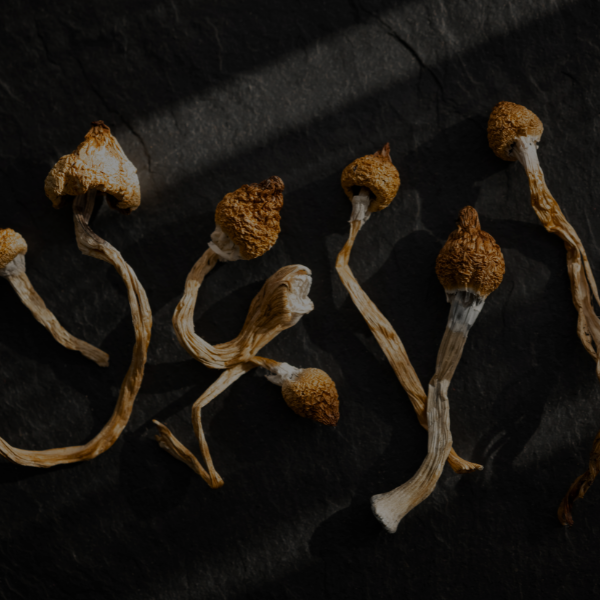
Appearance doesn't close that gap. A photograph may help describe the material, but an attractive mushroom image isn't provenance, and it doesn't establish a chemical profile.
The practical conclusion is narrow but important: Blue Monster is a starting point for questions, not an answer about identity or strength. Until the species is clear, comparisons with another product carrying the same nickname may compare different organisms altogether.
How One Label Landed on Two Mushrooms
Say an adult opens two product pages. Both say Blue Monster, but one describes a cultivated cubensis line while the other uses Blue Meanie language associated with Panaeolus cyanescens.
The pages may look compatible because their headings share familiar words. Biologically, they aren't describing interchangeable categories.
Cultivar, species, and nickname
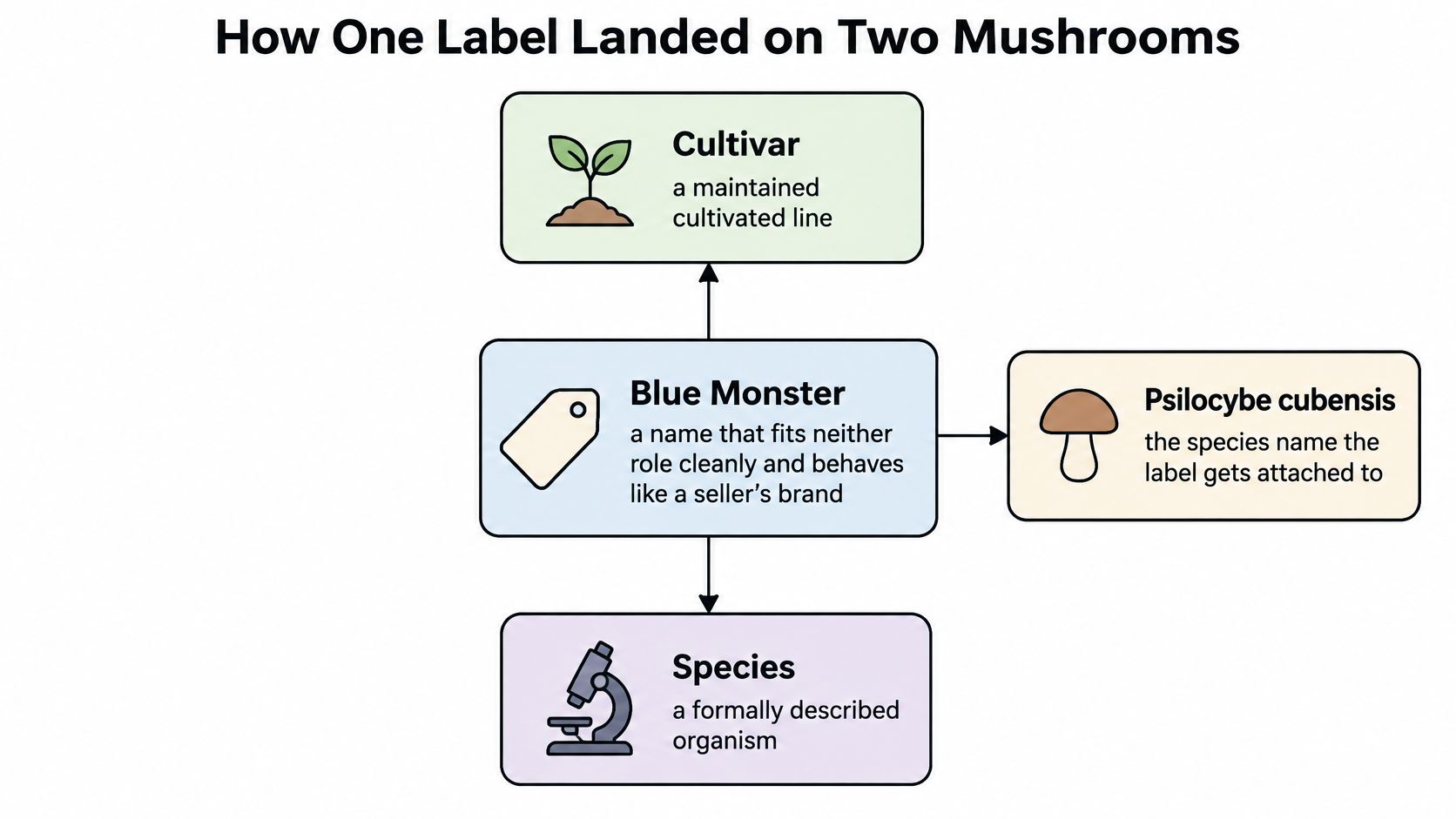
A cultivar is a maintained cultivated line. A species is a formally described biological category, while a trade nickname is language sellers use to distinguish or market material.
Blue Monster doesn't fit neatly into the first two categories. Without supporting records, it behaves more like a seller's brand than a dependable scientific designation.
Catalog shorthand helps explain how readers encounter the confusion. A heading emphasizes memorable blue-themed wording, a description borrows a familiar common name, and the scientific identification becomes a small detail or disappears.
There isn't a sufficiently documented naming history to reconstruct every handoff between sellers. A tidy story about who invented Blue Monster would suggest more certainty than the available record supports.
The poster isn't the performer
Think of unrelated bands booked under the same poster name. Recognizing the poster doesn't tell you who will be onstage; you need the actual performers' names.
The same distinction applies when reading a mushroom listing. A seller may preserve a nickname while changing the material behind it, or use a nickname differently from another seller.
Look for these distinctions in the description:
- Scientific identity: The full name should say Psilocybe cubensis or Panaeolus cyanescens, rather than only a shortened marketing label.
- Origin language: An origin story should distinguish documented provenance from an account passed between catalogs.
- Cultivated-line status: If a page presents a line as stable or distinctive, it should explain what records support that description.
A geographic reference isn't a substitute for those details. Saying that material has Australian origins doesn't establish who collected it, how it was maintained, or whether a current package descends from that material.
For a reader, the useful question isn't whether the nickname sounds authentic. It's whether the description separates what the organism is from what the seller calls it.
Even a satisfactory answer to that question leaves strength unresolved. Correct naming is necessary for a meaningful comparison, but it isn't a potency measurement.
Reported Traits and Potency You Cannot Lock In
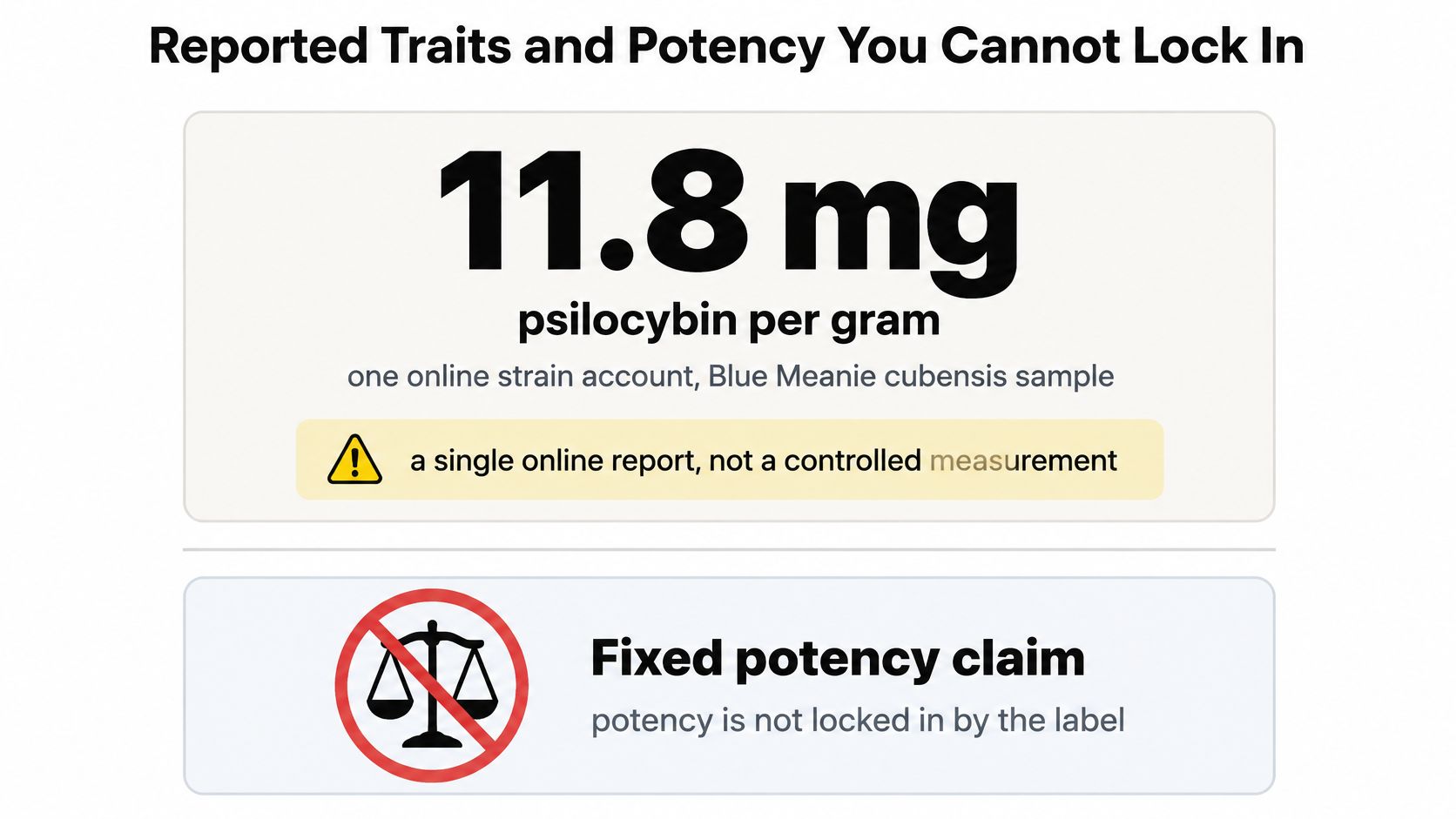
One StrainCompass account of Blue Meanie cubensis reports 11.8 milligrams of psilocybin per gram, equivalent to approximately 1.18% by mass, for a reported sample, not every mushroom sold as Blue Monster or Blue Meanie.
That qualification belongs beside the number. Moving a sample result into a strain-wide promise changes what the evidence says.
What a concentration actually describes
A concentration describes the tested material under the laboratory's stated method. It doesn't automatically describe another harvest, another seller's material, or every individual mushroom carrying that name.
Several factors can change the measured result:
- Genetics and substrate: Starting material and growing conditions can influence the chemical profile.
- Harvest maturity: Material collected at different developmental stages may not produce matching measurements.
- Drying and storage: Handling after harvest can affect the compounds present when testing occurs.
- Analytical scope: A psilocybin-only result isn't the same measurement as a report that includes psilocin and related compounds.
This is why a percentage without its context can mislead. A reader needs to know both what was measured and which material the measurement belongs to.
The species ambiguity adds another problem. Panaeolus cyanescens has a reputation for greater potency than typical cubensis material, so a potency claim attached only to Blue Monster may not even refer to the organism the reader assumes.
Reputation isn't a result
Blue-bruising descriptions and reports of variable intensity may be part of a strain's reputation. They aren't replacements for analytical measurements, and they don't justify promises of euphoria, relaxation, or a predictable experience.
A number copied from a strain page is background information until a matching batch report connects it to the actual material.
A meaningful potency report identifies the species, tested compounds, units, analytical method, and batch. Without those details, placing products into a strongest-to-weakest ranking creates precision that the label hasn't earned.
The broader guide to magic mushroom potency can help readers distinguish a concentration claim from a general strength description. The distinction to keep is simple: a reputation describes what people say; a laboratory report describes a tested sample.
File an isolated milligram figure under reported background, not a guarantee. Don't use it as a substitute for evidence about an unfamiliar batch.
Why Matching Labels Still Feel Different
How strong is Blue Monster? The defensible answer isn't a fixed ranking, because the label doesn't establish a validated chemical profile.
A controlled study of cubensis strains examined 14 strains and found total tryptamine concentrations from 2.62 to 20.65 mg/g, more than a 7.8-fold difference, under standardized cultivation conditions; it also reported 12.81%–23.39% variation among individual mushrooms within a strain.
These measurements describe the study's material. They don't establish a Blue Monster-specific concentration, and total tryptamines shouldn't be relabeled as psilocybin alone.
Variation remains after growing conditions are controlled
Consider bread made from a recipe. Changing the flour or oven can change the loaf, but even careful bakers don't produce perfectly identical results every time.
With informal mushroom names, there's another complication: the recipe name itself may never have been standardized. Matching words on packaging therefore offer less assurance than readers may expect.
The controlled findings matter because they challenge an easy explanation. Differences don't arise only because one grower handled everything poorly while another followed a consistent process.
Biological material can differ even when people work to hold conditions steady. A shared name doesn't remove that uncertainty.
Two situations that a matching sticker can hide
Different organisms, matching branding. One vendor uses Blue Monster for cubensis material, while another applies it to a different species. Comparing their customer ratings as if they describe the same mushroom starts with a false match.
Matching species, different handling. Both packages identify cubensis and use the same nickname, but their harvest maturity, drying, or storage differs. The measured chemical profiles may consequently diverge.
Neither situation requires assuming that a reviewer was dishonest. A person can accurately describe their experience without providing a reliable forecast for someone else's package.
For a useful comparison, prioritize:
- Batch identity: Confirm that each result belongs to the material being compared.
- Harvest and handling notes: Look for a clear account rather than an origin story alone.
- Independent chemical measurements: Compare psilocybin with psilocybin and psilocin with psilocin, using matching units.
Star ratings and trip stories answer different questions. They may describe satisfaction or an individual experience, but they don't determine concentration, onset, duration, or how another person will feel.
Matching labels can accompany different experiences. That possibility is a reason to demand better identification, not to search for a more confident strain slogan.
Proof a Batch Is What the Label Claims
A mushroom photograph doesn't establish what's inside a chocolate, gummy, capsule, or bag. Verification becomes especially important when processing makes the original material impossible to inspect.
A 2025 JAMA Psychiatry perspective calls for stronger harm reduction, product testing, and age-specific safety research, citing more than 20-fold potency variability in testing data from decriminalized regions and discussing California Department of Public Health findings of a synthetic psilocin analogue and other synthetic psychoactive drugs in tested mushroom-branded chocolates.
Those findings concern tested products, not every mushroom edible. They do show why mushroom branding can't establish ingredient authenticity.
Read the report beside the package
A certificate of analysis, often shortened to COA, should connect a named sample to defined laboratory results. A downloadable PDF isn't useful merely because it looks technical.
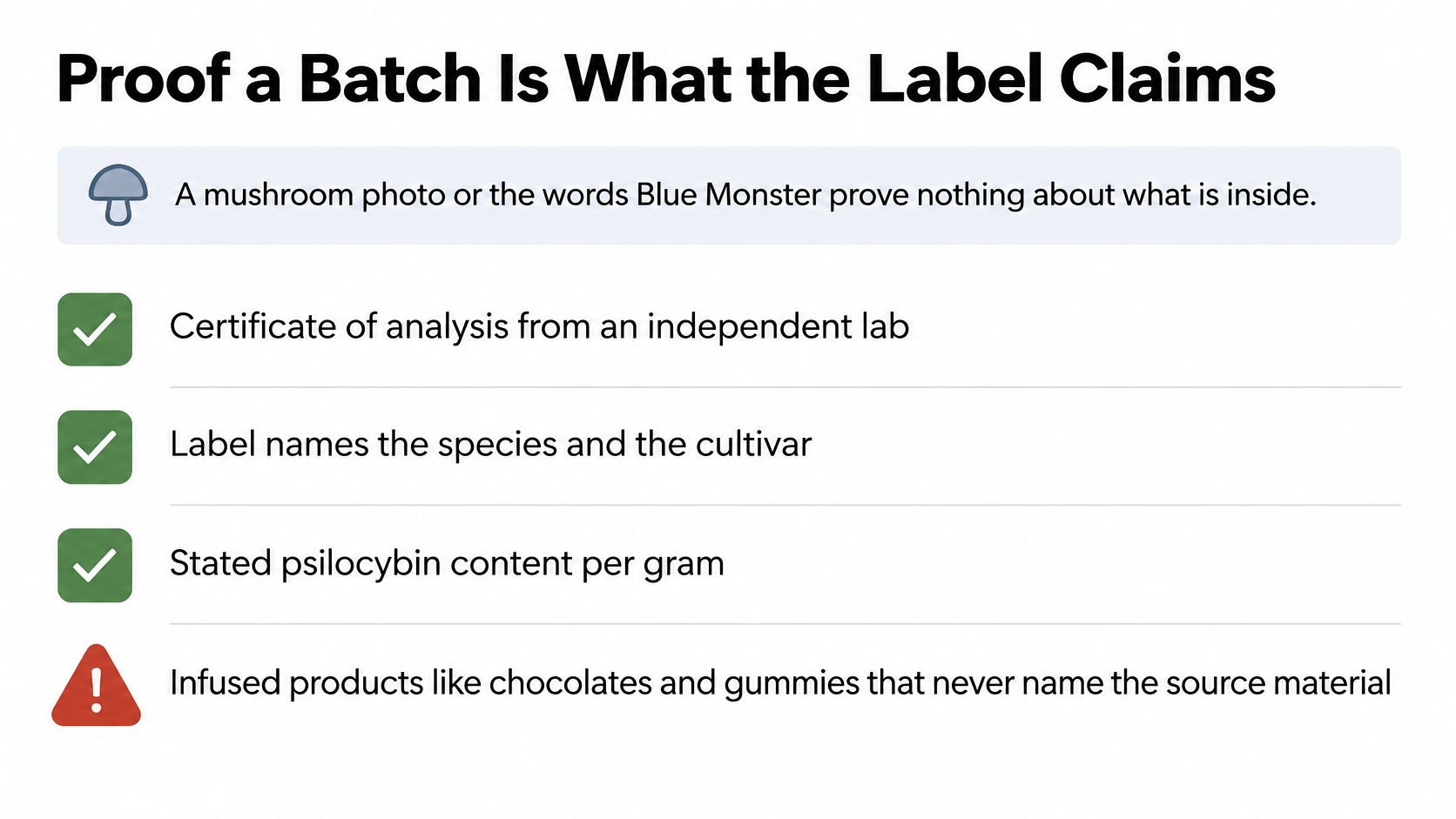
Use this checklist while reading:
- Species or material tested: The document should identify whether the sample was raw mushroom material, an extract, or a finished edible.
- Sample and batch identity: The report's identifier should match the package, rather than a different product with similar branding.
- Psilocybin and psilocin amounts: Look for separate results and clear units, not an unexplained strength badge.
- Test date and method: These identify when the laboratory examined the sample and how it performed the analysis.
- Contaminant screening: Check which substances were included in the panel and what the results say.
Species identification may require evidence beyond the chemical assay. A laboratory finding psilocybin doesn't, by itself, prove which mushroom species supplied it.
Finished edibles need finished-product evidence
A raw-mushroom report doesn't automatically cover chocolate manufactured later. Processing, added ingredients, and the identity of the finished batch create separate verification questions.
Paperwork check: Match the product form and batch identifier before treating any laboratory result as relevant.
A nondetect result also needs context. It means the laboratory didn't detect the specified substance under its method and reporting limits, not that it tested for every possible compound.
The certificate of analysis guide offers a useful companion for interpreting report fields. If the batch match, method, or relevant testing is missing, treat the document as incomplete evidence rather than letting polished packaging fill the gap.
A Careful Plan for Adults Who Choose to Try
For adults 21 and older, choosing whether to use a psychedelic mushroom is a personal health decision, not a challenge to meet. Waiting or deciding against it remains a reasonable outcome.
Treat unfamiliar material as unfamiliar, even when a friend liked another package with the same sticker. Think of checking the weather forecast: useful information helps you prepare, but it doesn't eliminate the need for a plan if conditions change.
Make room for uncertainty
Choose a calm day and a familiar place without demanding obligations. Don't drive, operate equipment, or take on responsibilities that require full attention.
Avoid combining the product with alcohol or other substances. Arrange for a trusted sober person to be nearby, and agree beforehand on how to keep the setting quiet and how to obtain help if needed.
A practical plan includes:
- A comfortable setting: Reduce noise, interruptions, and pressure from other people.
- A sober support person: Choose someone who can remain calm and respond to distress.
- An unhurried ending: Leave room for rest rather than scheduling travel or important decisions.
Dried mushrooms, tea, and infused foods can differ in timing. Past experience with one form is a poor basis for assuming how another will unfold, and uncertainty isn't a reason to take more.
Talk about health before experimenting
Speak with a healthcare professional first, especially if you take medication, have a mental health history, or are pregnant. Don't stop prescribed medication to accommodate mushroom use.
Individual metabolism, mindset, and surroundings also influence experience. A chemical measurement can reduce uncertainty about composition, but it can't predict a person's emotional response.
The psychedelic harm reduction guide provides additional preparation considerations. If someone develops severe confusion, becomes unresponsive, has trouble breathing, or poses an immediate danger to themselves or others, seek emergency help.
Relaxation, wonder, anxiety, and nausea are all reported across mushroom experiences generally. None is promised or ruled out by this nickname.
The useful decision isn't whether to chase a strain's reputation. It's whether the available evidence and your health circumstances justify proceeding at all.
Pick a Named Product and Verify the Batch
A nickname works like a sticker on a moving box: it can suggest what someone hoped was inside, but it cannot weigh the contents. Blue Monster is especially loose because the same label has been attached to different mushrooms, so strength is settled by species and batch testing rather than by strain folklore.
Separate the decision into identity, composition, and personal suitability. A clear answer in one category does not settle the others.
Use a pass-or-pause standard
| Question | Evidence that helps | Reason to pause |
|---|---|---|
| What organism or material is this? | Scientific species and an accurate description of the product form | Nickname or mushroom image alone |
| Does the report cover this package? | Matching sample and batch identifiers | Generic report with no package connection |
| What did the laboratory measure? | Named compounds, units, method, and relevant screening | An unexplained potency percentage |
| Is this appropriate for me? | A health discussion that considers medication and personal history | Promises of guaranteed wellness effects |
This also separates functional mushroom products from psychedelic ones. A calm design or gentle name does not establish whether psilocybin is present. Gummies made from psilocybin remain active even when the format feels like candy, and a microdose-only capsule such as Magic Caps Penis Envy 5 Grams is not intended for a trip.
Where a product is described as non-detect, read the laboratory scope and reporting limits for that batch. The stronger claim is narrow: psilocybin is not present in the tested sample within stated limits, and an independent laboratory has verified it batch by batch. Where a product is described as psychedelic, do not mistake raw ingredient weight for a measured amount of an active compound.
Keep wellness claims separate from verification
Testing can answer defined questions about a sample. It cannot establish that a product will relieve stress, improve mood, treat pain, or suit an individual health history. A balanced wellness routine and advice from a healthcare professional sit outside branding, testimonials, and evocative names.
The practical conclusion is simple: a familiar label may lower hesitation, but it cannot measure what is in the package. If the species, product form, batch identifier, measured compounds, and screening do not line up, pause.
Before ordering from The Magic Mushroom Delivery, pick one exact named item, open its product page, and place the package description beside the current batch report. Match species, form, batch identifier, measured compounds, and screening. Bring unresolved ingredient or health questions to a qualified healthcare professional, and do not proceed on the strength of the Blue Monster name alone.