
You're crouching beside a trail, turning over a small brown mushroom that looks ordinary at first glance. The cap is familiar, the stem is pale, and a faint blue-green mark appears where it was handled. The question comes quickly: what do magic mushrooms look like, and could this be one?
The honest answer is that there isn't one universal “magic mushroom” shape. Psilocybin mushrooms belong to several species and genera, and their appearances can overlap with harmless or dangerous mushrooms. Reliable identification comes from reading several features together, especially the cap, gills, stem, habitat, and spore print.
Why Visual Identification Matters for Magic Mushrooms
A mushroom can look convincing from the top and still be impossible to identify safely without examining its underside and stem. Small brown mushrooms are particularly difficult because unrelated species may share a rounded cap, darkening gills, and similar growing conditions. Ordinary mushrooms in the genera Galerina, Conocybe, and Inocybe can resemble small psilocybin mushrooms in lawns, wood-chip beds, and woodland margins, according to this overview of magic mushroom look-alikes and identification risks.

A beginner may notice blue staining and stop there. That shortcut is unreliable. Blue bruising can support an identification, but it can't confirm that a mushroom is safe or psilocybin-containing. Some toxic mushrooms can share superficial traits, and color changes can also result from age, weather, handling, or tissue damage.
Read the mushroom as a complete structure
Experienced mushroom observers don't treat identification like matching a single photograph. They build a profile by asking:
- Cap: Is it pointed, bell-shaped, rounded, flat, or marked by a central bump?
- Gills: What color are they, and how do they attach to the stem?
- Stem: Is it hollow, fibrous, brittle, thick, thin, pale, or ringed?
- Spore print: Does it produce a dark purple-brown print, or something lighter?
- Habitat: Is it growing in grass, dung-rich soil, moss, wood chips, or decaying material?
Psilobase's identification guide emphasizes that visible features should be considered together. Its examples also show why size alone doesn't work. Psilocybe aztecorum may have a cap only 1.5–2 cm across and a stem 5.5–7.5 cm long and 3–4 mm thick, while other psilocybin species are much broader or more substantial.
Practical rule: Treat blue bruising as one clue in a larger checklist, never as a safety test.
Key Physical Features of Psilocybin Mushrooms
On a damp woodland walk, a mushroom's cap may catch your eye first. Identification becomes more reliable when you examine the entire fruiting body, from the cap surface to the gills, stem, veil, and any bruising.

Cap shape and surface
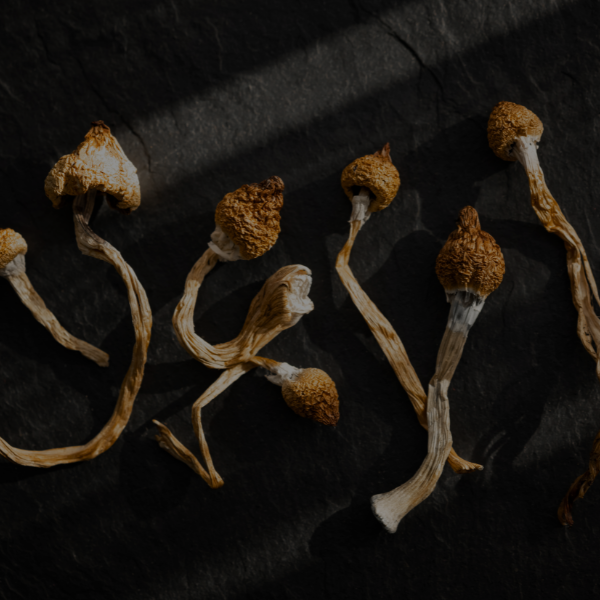
Young psilocybin mushrooms may be conical or bell-shaped, like tiny pointed hats. With age, some become convex, broadly expanded, flat, or slightly umbonate, meaning a small central bump remains. The cap can change substantially as it opens, so young and mature specimens of one species may look surprisingly different.
Psilocybe cubensis commonly develops a cap about 1.5–8 cm wide. It often starts cone-shaped or bell-shaped, then flattens as it matures. Early colors may be pale or white, shifting toward golden, ochre-brown, or yellow-brown, as described in this morphology guide to Psilocybe cubensis.
Inspect the margin as well. Radial lines, known as striations, may become visible when moisture or dryness makes the gills beneath easier to see. A smooth surface, lined margin, or central nipple can contribute to an identification, but no single cap feature is decisive.
Gills and attachment
Turn the mushroom over carefully. Gills are the thin, blade-like structures beneath the cap where spores develop. In many psilocybin mushrooms, young gills begin pale gray or olive-gray and darken as spores mature, becoming deep purple-brown to nearly black.
Their attachment to the stem also matters. Gills may meet the stem directly, run down it, or connect in another arrangement. This junction can distinguish mushrooms that appear nearly identical from above, so observe it before handling the specimen further.
Stem, veil, and bruising
Stems differ in thickness, texture, color, and flexibility. A typical Psilocybe cubensis stem is often 2–8 cm tall, hollow, and yellowish, with blue-green bruising sometimes developing after damage. Other psilocybin mushrooms have slender, fibrous stems that bend, while some are thicker and more substantial.
A partial veil may leave a ring or ring-like remnant around the stem, marking the temporary layer that enclosed the developing gills. Its position, form, and persistence can help separate similar-looking mushrooms.
Blue staining can occur where the stem, cap, or gills have been cut or handled. Azarius' field identification reference describes blue bruising as a common clue across many Psilocybe species. It remains supporting evidence only. A mushroom that bruises blue can remain unidentified and unsafe.
Common Psilocybin Species and Their Distinct Appearances
There is no single magic mushroom look. A thick, golden-capped cultivated specimen and a tiny pointed grassland mushroom may both belong to the psilocybin group while appearing completely different in the field.

Psilocybe cubensis
This is one of the most recognized psilocybin mushrooms. Its cap is generally 2–8 cm wide, conical or bell-shaped when young, then convex or broadly expanded later. A small central bump may remain visible. The surface is usually smooth and dry, with colors ranging from yellow-brown to golden-brown, and damaged areas may develop blue-green patches, according to Psilocybe cubensis visual characteristics.
The gills begin pale and become darker as spores mature. The stem is commonly hollow and yellowish, and a partial veil can leave a noticeable ring or ring zone. The overall impression is often a comparatively sturdy mushroom with a broad cap and substantial stem, though growing conditions can change its proportions.
Psilocybe semilanceata
Often called the Liberty Cap, Psilocybe semilanceata is much smaller and more delicate. Its cap measures about 0.5–2 cm across, with a cream-colored surface, pronounced striations, and a distinctive central umbo that gives it a pointed, nipple-like profile.
Its gills begin olive-gray and turn purple-black as the spores mature. The stem is slender, cream-colored, fibrous, and 4–10 cm tall, sometimes showing blue coloration near the base. First Nature's description of Psilocybe semilanceata is useful for visualizing the contrast between its tiny cap and relatively long, fine stem.
Other forms in the psilocybin group
Other recognized types include Psilocybe cyanescens, often known as Wavy Caps, and Psilocybe azurescens. Their appearance can vary with age and moisture, and common names may be used loosely, so a nickname isn't a dependable identification.
Some references also discuss Panaeolus cyanescens, often described as having a darker cap, a white stem, and blue bruising. The important lesson is comparison, not memorization. For broader background on named types and their visible differences, see this guide to types of Psilocybe.
The video below offers a visual supplement for comparing mushroom structures and identification features:
Dangerous Look-Alikes and How to Tell Them Apart
A small brown mushroom beside a lawn, wood-chip bed, or forest edge can resemble a psilocybin species at first glance. Galerina, Conocybe, and some Inocybe species may share a similar cap-and-stem outline, so size and color provide only an initial clue. Their poisonous traits can remain hidden behind an ordinary appearance.
The table below helps organize observations. It is a screening framework, not a basis for eating an unknown mushroom.
Magic Mushrooms vs Common Toxic Look-Alikes
| Feature | Psilocybin Mushrooms | Toxic Look-Alikes, Galerina and Conocybe |
|---|---|---|
| Cap shape | May be conical, bell-shaped, convex, flat, or umbonate | Can show similar small, brown, conical, bell-shaped, or rounded caps |
| Cap color | May range from cream and pale tones to golden, ochre-brown, or darker brown | Often brown or tan, sometimes with changing shades as the mushroom ages |
| Gills | Commonly darken toward purple-brown or nearly black as spores mature | May also become dark, making color alone insufficient |
| Stem | Often white to pale yellow, with some species hollow or fibrous; a veil ring may appear | Can also have slender pale stems and veil remnants |
| Bruising | Many Psilocybe species develop blue staining after damage | Superficial color changes or bruising can mislead observers |
| Spore print | Commonly dark purple-brown to nearly black | A white, pink, rusty, or brown print points away from psilocybin species, though identification still requires care |
| Habitat | May occur in grassland, dung-rich soil, moss, or wood-chip environments depending on species | Can occupy lawns, wood chips, forest edges, and other overlapping settings |
A spore print often provides the strongest field clue, but it is one piece of a larger profile. Compare the cap surface, gill attachment, stem texture, veil remnants, and growing substrate. A dark print does not establish identity, and blue staining is not a safety test. Healing Maps' identification guidance also cautions against judging a mushroom from appearance or bruising alone, since dangerous look-alikes may share several of those features.
A similar cap and darkening gills do not establish identity. If the full profile does not match, leave the mushroom alone.
Never taste an unknown mushroom. A field photograph can miss gill attachment, stem details, scale, and spore color, so it cannot serve as definitive evidence. When a mistaken identification could cause severe harm, uncertainty is the reason to stop.
Habitat and Seasonal Clues for Identification
A mushroom's surroundings provide important context. They cannot identify a specimen alone, but they can make a visual hypothesis more or less plausible. Begin by recording the exact substrate and then compare that setting with the cap, gills, stem, and other morphological markers.
Psilocybe cubensis is associated with warm, dung-rich pasture environments. Psilocybe semilanceata commonly occurs in mossy grasslands, where its small pointed cap can disappear among short vegetation. Psilocybe cyanescens, the Wavy Cap, is associated with wood-chip mulch and similar woody material. These habitat patterns help build a comparison, not a conclusion.
Read the ground beneath it
Note what the mushroom is growing from, rather than only what surrounds it. Check whether the stem rises from soil, a lawn, manure-rich ground, moss, buried wood, or a visible layer of chips. A specimen rooted in wood chips belongs in a different comparison group from a grassland mushroom with a similar cap.
Growth pattern adds context. Clusters may reflect favorable moisture or a shared food source, while a solitary mushroom may be the first fruiting body to appear. Neither pattern confirms identity.
Use weather as context, not proof
Rain often makes mushrooms visible because moisture supports fruiting and highlights cap surfaces. Other species appear during cooler or wetter periods, while some favor warmer conditions. A small brown mushroom on wet wood chips may fit several possibilities. The same appearance in a dry lawn or mossy field changes the comparison set.
Season, rainfall, and substrate can narrow the search. They cannot settle the identification. Habitat narrows the search, but the cap, gills, stem, and spore print decide whether the profile holds together. Keep those features connected, especially when a dangerous look-alike shares the same general setting.
Using Spore Prints for Definitive Identification
A spore print reveals the color of the microscopic reproductive dust released by a mushroom's gills. Cap shape and habitat can overlap among unrelated species, so this test adds a useful layer to visual identification.
Many Psilocybe species produce a dark purple-brown to nearly black spore print. White, pink, rusty, or ordinary brown deposits point away from that group. Use a field guide to identifying magic mushrooms to compare this clue with the specimen's other features.

A simple print-making method
- Choose a mature cap: Remove the cap cleanly from the stem. Open gills are more likely to release a visible deposit.
- Place it gill-side down: Set the cap on paper. Use both white and dark paper when possible, since contrast can reveal subtle colors.
- Cover and wait: Place a bowl or cup over the cap and leave it undisturbed for several hours.
- Inspect the deposit: Lift the cover and cap carefully. Examine the color and the pattern formed by falling spores.
A dark print supports a possible Psilocybe identification, but it cannot confirm the species or establish safety. A light or rusty print may exclude many candidates, while the final comparison still requires the cap, gills, stem, habitat, and other traits.
For readers learning cultivation terminology and species documentation, psilocybin mushroom spores offer an educational reference point. A spore print is a diagnostic clue, not a substitute for experienced identification.
Safe Sourcing and Responsible Identification Practices
The safest approach is to avoid consuming a wild mushroom unless a qualified identifier has confirmed it through multiple features. Use clear photographs, examine the underside, record the habitat, and make a spore print when appropriate. If you're buying packaged products, look for transparent labeling and product information rather than relying on a familiar strain name or attractive appearance.
Adults researching products should also learn how to recognize misleading packaging and inconsistent descriptions through this guide to identifying counterfeit mushroom products. The Magic Mushroom Delivery is one online retailer that presents product categories and educational material for adults exploring mushroom products, so compare its information with independent identification resources and make decisions carefully.
The Magic Mushroom Delivery offers online access to raw mushrooms and mushroom products alongside educational resources about identification and responsible use. Visit The Magic Mushroom Delivery to review its product information and learning materials before making an informed choice.