
You pick up a mushroom, turn it in the light, and notice a blue mark where your fingers pressed the stem. Then the questions start. Is that normal? Is it a sign of strength? Does the blue mean it's fresh, damaged, or something else entirely?
That moment trips up a lot of people because blue color can mean two different things at once. Sometimes it's a real bruising reaction in the mushroom. Other times it shows up in product names like Blue Meanie or Blue Angel, which may be a species name, a strain nickname, or just branding. If you don't separate those ideas, it's easy to make the wrong call.
This guide keeps it simple. You'll learn what blue bruising is, why it happens, why it doesn't work as a potency score, and how to tell the difference between chemistry and marketing so you can inspect mushrooms with a calmer, sharper eye.
The Mystery of the Blue Bruise
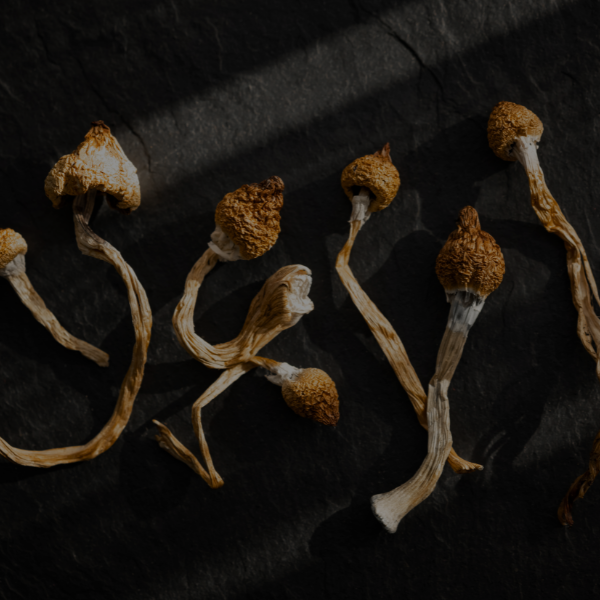
The first time someone sees magic mushrooms blue up after handling, it can feel strange. A cap looks tan or cream at first, then a thumbprint darkens into blue along the edge. A stem gets squeezed in a bag and suddenly carries navy streaks. It looks dramatic, which is why people often assume it must mean something dramatic too.
In most cases, that color change is a bruise response, not a dye, not mold, and not a special “blue strain” by default. Mushrooms can mark up when they're pressed, cut, packed too tightly, or dried with a bit too much rough handling. That's why a batch may look more blue after shipping than it did when it was first harvested.
Why people get confused
Part of the confusion comes from how mushrooms are sold and discussed. One person means “my mushrooms bruised blue.” Another means “I bought something with Blue in the name.” Those are not the same thing.
A second problem is that blue bruising can look alarming if you've never seen it before. New buyers sometimes worry they're seeing spoilage. If you're trying to learn the difference between harmless bruising and actual contamination, this guide on black mold on mushrooms helps clarify what warning signs deserve more caution.
Blue bruising is one of the most recognizable features people talk about, but it's also one of the most misunderstood.
What blue usually tells you
The useful way to think about it is this:
- It often appears after contact. Handling, trimming, and compression are common triggers.
- It's a reaction, not a paint job. The mushroom changes color because of internal chemistry.
- It isn't a grading system. Darker blue doesn't automatically mean “better.”
That last point matters. People often chase the deepest blue they can find, as if they're shopping by color chart. That shortcut sounds easy, but it misses what the blue represents.
The Chemical Reaction Behind the Blue Color
Blue bruising isn't random. It's a specific chemical response that scientists have studied directly. The short version is that when the mushroom is injured, compounds tied to its psychoactive chemistry start changing, and some of the byproducts appear blue.

A simple way to picture it
Think about cutting an apple or avocado. Once the inside is exposed and the tissue is disturbed, the surface changes color. Mushrooms that bruise blue are doing something similar in principle. Damage sets off a chain of reactions.
With psilocybin mushrooms, the chemistry is more specialized than a piece of fruit browning, but the everyday analogy helps. The tissue gets disrupted, enzymes become active, and oxidation leads to visible color change.
A good primer on the compounds involved is this guide to psilocin and psilocybin, because those names come up constantly when people try to understand why magic mushrooms blue.
What researchers actually found
In a 2020 study, researchers reported that injury-triggered blueing in Psilocybe mushrooms is initiated by the enzymes PsiP and PsiL, which degrade psilocybin and generate blue-colored oxidation products. The same study reported that mass spectrometry and NMR showed the pigments are mainly quinoid psilocyl oligomers, as described in the peer-reviewed paper on mushroom blueing chemistry.
That finding matters because it moved the topic out of rumor and into defined chemistry. Blue bruising isn't just folklore from growers and users. Scientists identified a pathway and described the pigments involved.
Later coverage of the discovery also connected that chemistry to a broader evolutionary story. A summary in Chemistry World described the blue substances as psilocybin-derived oxidation products and noted a genomic study of 52 Psilocybe specimens, with the genus estimated to have arisen about 65 million years ago, alongside 4 to 5 later horizontal gene transfers to other mushrooms occurring roughly 40 to 9 million years ago, according to the Chemistry World report on the blue pigment discovery.
Here's a quick visual walkthrough of the idea in video form.
What that means in plain English
You don't need to memorize enzyme names to use this information well. The practical takeaway is simpler:
- The mushroom gets injured
- Its internal chemistry reacts
- Blue-colored oxidation products form
- You see the bruise appear after handling, cutting, or pressure
Practical rule: Blue bruising is a chemical fingerprint of a reaction. It's not just surface color and it's not proof of a specific dose.
That's why the blue often shows up after harvest or packaging rather than only when the mushroom is growing undisturbed.
Does Bluer Mean Stronger A Common Myth
This is the myth that causes the most bad assumptions: the bluer the mushroom, the stronger it must be. It sounds logical at first, but it doesn't hold up well.
Blue bruising is better understood as an oxidation marker, not a direct potency meter. Handling, cutting, and oxygen exposure can activate the pathways that oxidize psilocin, and the blue color is associated with degradation of part of that psychoactive pool, as explained in this overview of blue bruising as an oxidation marker.

What blue can tell you
Blue bruising can still be useful. It often tells you that the mushroom contained the chemistry associated with psilocybin and psilocin at some point. In that sense, it can be a reassuring sign that you're looking at a real bruising response and not just a random discoloration.
But that's different from saying it gives you a potency score.
A mushroom can bruise heavily because it was bumped around in a bag. Another can show only light bruising because it was handled gently. Those visual differences don't give you a clean, linear read on strength.
Why color fails as a potency test
Potency varies for reasons that blue alone can't capture. Genetics matter. Growing conditions matter. Post-harvest storage matters. Age matters. How much pressure the mushroom went through matters too.
That means two mushrooms with similar blue marks may not be equally potent, and two mushrooms with very different-looking bruising may still be closer in strength than people expect.
If you want a better framework for evaluating strength, it makes more sense to start with species and product details than with color. That's why educational guides on magic mushroom potency are more useful than any “bluer equals stronger” rule of thumb.
More bruising can mean more handling and more oxidation. It doesn't function like a proof stamp for maximum potency.
A better way to read the bruise
Use blue as a context clue, not a verdict.
| What you see | What it may suggest | What it does not prove |
|---|---|---|
| Light blue at pressure points | Normal handling response | Exact strength |
| Dark blue where stems were compressed | More injury or oxidation | Premium quality by itself |
| Very little blue | Gentle handling, species variation, or less visible bruising | Weakness |
That approach is calmer and more accurate. You're not ignoring the blue. You're just putting it in the right category.
Blue Strains Versus Blue Bruises
Buyers frequently become entangled. The word “blue” can refer to a bruise reaction, a species nickname, or a marketing label. If you don't sort those apart, the product name starts doing too much work.

Three different meanings of blue
Here's the simplest breakdown:
- Blue as bruising means the mushroom changed color after damage or pressure.
- Blue as species reputation can refer to mushrooms known for strong staining or a well-known nickname.
- Blue as branding may just be a product or strain name chosen for recognition.
Those categories overlap in practice, which is why names alone can mislead.
Why names like Blue Meanie confuse people
Consumers often mix up names like Blue Meanie and Blue Angel with the bruising phenomenon itself. The confusion gets worse because Blue Meanie can refer to the potent Panaeolus cyanescens or be used as a brand name for a Psilocybe cubensis strain, as noted in this discussion of Blue Angel naming and blue mushroom branding confusion.
That means the same label can point to very different mushrooms depending on who's using it.
A product called Blue Angel might not tell you the species clearly. A product called Blue Meanie might mean one thing in one shop and another somewhere else. The blue in the name doesn't automatically tell you whether you're dealing with a bruised mushroom, a taxonomic identity, or a cultivated nickname.
Questions worth asking instead
When a product name includes blue, these are better questions than “How blue is it?”:
- What species is it? Species tells you more than branding does.
- Is blue in the name a nickname or a technical identifier? Many names aren't standardized.
- Are the blue marks natural bruising, or is blue just part of the label?
- How was it handled and stored? Bruising often reflects that history.
If a seller can explain the species clearly, you're getting better information than a color-themed name alone can provide.
That's the key habit. Look past the headline name and ask for the underlying identity. A mushroom named with “blue” in the title isn't automatically stronger, rarer, or more authentic than one without it.
How to Handle and Store Your Mushrooms
You get home, open the package, and notice a few blue spots on the stems. That moment can make people overhandle the mushrooms right away. They squeeze, rotate, and inspect every cap, which often creates more bruising than they started with.
Gentle handling protects appearance and helps you judge quality more accurately. Blue marks can come from ordinary pressure, so the goal is to reduce extra stress rather than chase a perfectly spotless look.
Handle them like delicate dried herbs
Mushrooms bruise more like soft plant tissue than a hard snack. Even dried ones can crack or discolor at pressure points if they are pinched, packed too tightly, or bounced around in a bag.
A few simple habits make a big difference:
- Use light pressure. Pick them up by the stem with a gentle grip.
- Avoid repeated checking. Every squeeze and reshuffle can leave new marks.
- Do not overpack containers. Crowding crushes caps and edges.
- Use a clean, sharp blade if you need to portion them. Tearing creates more damaged surface area.
If you want a simple rule, handle them once, store them well, and leave them alone.
Store for dryness first
For storage, dryness matters most. Moisture invites the problems that blue bruising does not. Blue from bruising is a color change linked to handling. Dampness, stale odors, or fuzzy growth point to a different issue.
A good setup is simple:
- A dry, sealed container
- A cool, dark place
- As little reopening as possible
Light and warmth can wear down quality over time. Humidity is the bigger enemy because it changes texture and raises the chance of spoilage.
What blue means in storage, and what it does not
A mushroom that shows some blue after storage may just be showing the history of how it was handled. It does not mean the mushroom belongs to a strain with "Blue" in the name, and it does not confirm anything special about potency.
That distinction matters. A label such as Blue Meanie is a name. A blue patch on the stem is a physical reaction. One is marketing or identification language. The other is bruising.
When you check stored mushrooms, give more weight to condition than color:
- Dry texture
- Clean, earthy smell
- No slime, wet spots, or fuzzy growth
- No signs of contamination that look black, green, or unusually patchy
Keep the goal realistic
Good handling and storage help preserve quality. They do not keep every mushroom perfectly pale.
A few blue marks can be normal. What you want is a batch that stays dry, smells clean, and has not been beaten up by too much touching, pressure, or moisture.
What to Look For When Buying
When people shop for magic mushrooms blue often gets too much attention and the basics get ignored. A smart buying decision uses blue bruising as one clue among several, not the whole test.

Are heavily bruised mushrooms bad
Not automatically. Heavy bruising often tells you they've been handled, compressed, or stored in a way that caused more oxidation. That can affect appearance and may reflect some degradation, but blue alone doesn't equal “bad.”
What matters is whether the mushrooms still look clean and properly kept.
Should you only buy mushrooms with no blue at all
No. A little bruising is common and often normal. If you insist on perfectly pale mushrooms every time, you may reject batches that were merely real, authentic mushrooms handled in ordinary ways.
The better question is whether the blue appears consistent with bruising rather than spoilage.
What signs deserve more weight than color
Use a checklist mindset:
- Smell first. Clean and earthy is reassuring. Sour, rotten, or moldy is not.
- Check texture. You want proper dryness, not dampness or slime.
- Inspect the surface. Bruising is one thing. Fuzzy growth, rot, or obvious contamination is another.
- Ask the species. Species knowledge tells you far more than a name with “blue” in it.
Why species matters so much
Many buyers grapple with a fundamental distinction. A blue-staining mushroom is not automatically in the same potency range as another blue-staining mushroom.
For example, high-potency blue-staining species like Panaeolus cyanescens can contain around ~2.5% psilocybin, and broad guidance notes typical recreational dry doses of 1 to 5 g, with effects usually beginning within about 30 minutes and lasting 4 to 6 hours, according to the reference summary for Panaeolus cyanescens. That's why species knowledge matters more than visual bruising alone.
The buyer mindset that works best
Don't shop by color drama. Shop by clarity.
Ask for the actual species. Look at condition. Use smell and storage clues. Treat product nicknames as labels, not scientific answers. If a mushroom bruises blue, understand what that likely means. If a product is called Blue Meanie or Blue Angel, ask what that name refers to before drawing conclusions.
That approach turns blue from a mystery into a useful clue.
If you want a source that combines products with practical education, The Magic Mushroom Delivery offers mushrooms, edibles, capsules, and blog content that can help you compare product types, handling basics, and common questions before you buy.