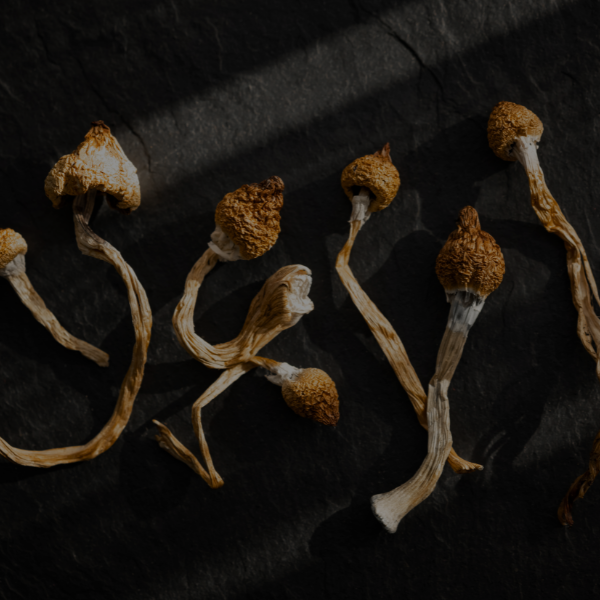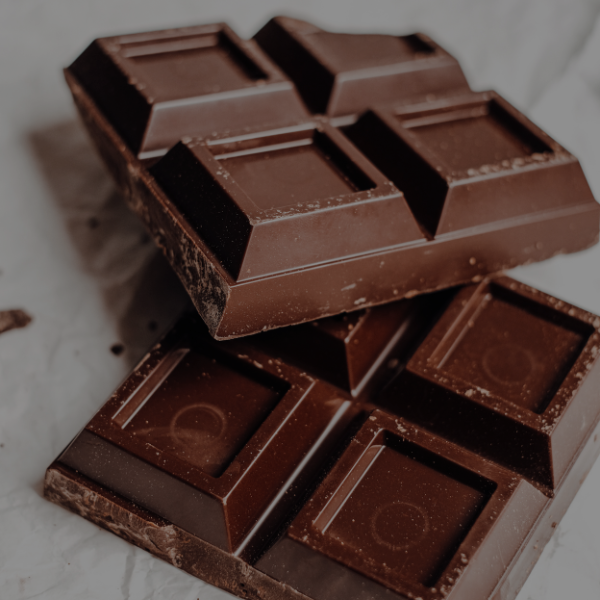

You've melted the chocolate, your mushroom powder is ready, and the silicone mold is waiting. The tempting shortcut is to stir everything together, pour quickly, and hope each square carries the same amount. That's where homemade edibles become unpredictable. A reliable chocolate mushroom recipe depends on two separate disciplines: professional tempering for a stable confection and careful homogenization for consistent distribution.
This guide focuses on functional and psychoactive mushroom preparations as distinct categories. Ingredient identity matters, analytical verification matters, and a finished square should never be treated as automatically uniform just because the mold cavities look identical. Work with dry equipment, measured ingredients, clear labels, and a conservative mindset throughout.
The Evolution of Cacao and Mushroom Confections
Cacao has an ancient history, but modern mushroom chocolate demands a level of precision that early cacao users never needed to consider. Archaeological evidence cited by the Smithsonian identifies cacao residue on pottery from Honduras dating to approximately 1400 BCE, and by the 16th century cacao functioned as currency in Mesoamerica, where 100 beans could purchase a turkey hen. The historical record is documented in this academic review of cacao's development.
Chocolate changed substantially after that. In 1847, Fry and Sons combined cocoa butter, chocolate liquor, and sugar to create sweet eating chocolate, establishing the basic structure used in many modern bars and molded confections. Milk chocolate followed after Daniel Peter added dried milk in 1876. Each change shows cacao acting as a flexible carrier, adapting to new ingredients, textures, and occasions.
Why cocoa butter works as a carrier
Cocoa butter gives chocolate a useful physical contradiction. It solidifies at room temperature but melts near body temperature, so a well-made mixture can be molded, stored, and eaten as small pieces that soften naturally in the mouth. That behavior makes chocolate convenient for carrying dry culinary or functional mushroom powders, provided the powder is properly identified and dispersed.
The carrier itself doesn't make an infusion accurate. A smooth chocolate base can still contain concentrated pockets if the mushroom material clumps or settles before molding. Tempering controls the cocoa-butter crystal structure, while homogenization controls the ingredient distribution. You need both.
Practical rule: A polished surface and clean snap tell you about the chocolate's structure, not the consistency of its mushroom content.
A chocolate mushroom recipe therefore belongs to a long tradition of adapting cacao into purpose-driven formats, but psychoactive or medicinal ingredients introduce responsibilities ordinary confectionery doesn't. A recipe should distinguish culinary mushrooms, functional mushroom extracts, and psychoactive preparations rather than treating the word “mushroom” as a complete ingredient description.
Verifying Ingredients and Avoiding Contaminants
The most dangerous assumption in this category is that a product's name tells you what it contains. Testing of 33 mushroom-branded products in California found that 40% contained no psilocybin, and some contained 4-AcO-DMT or other compounds absent from their labels, according to the published laboratory analysis in this research report on mushroom-branded products.
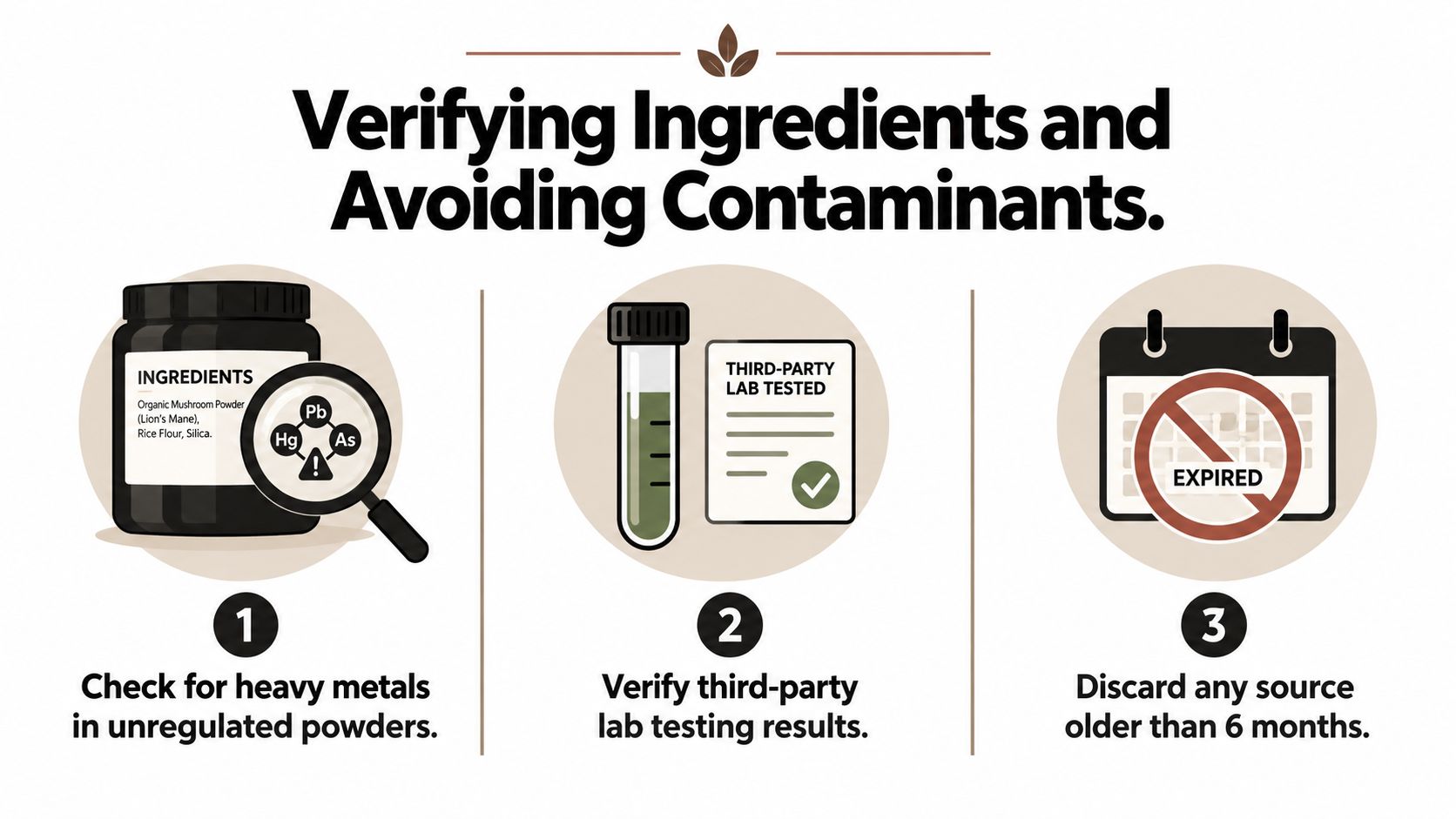
That result makes a Certificate of Analysis more than a marketing accessory. A useful COA should identify the tested batch, name the species or active compound, show the laboratory's analytical method, and state whether contaminants were assessed. Look for testing that addresses heavy metals, microbial contamination, pesticides where relevant, and undeclared psychoactive compounds.
Read the ingredient identity before the recipe
A dried mushroom mass and an active-compound measurement aren't interchangeable. A powder labeled by weight tells you how much material is present, while an analytical result for a compound describes a different measurement entirely. A proprietary blend creates another problem because the reader may not know how much of each constituent is present.
Use this verification checklist before opening the chocolate:
- Species or compound: Confirm whether the ingredient is a culinary mushroom, a named functional species, an extract, or a psychoactive preparation.
- Batch documentation: Match the COA's batch identifier to the container you have.
- Contaminant screening: Check whether the report addresses heavy metals and other relevant contaminants.
- No vague blends: Treat “proprietary blend” and dramatic serving language as insufficient for precise homogenization.
- Fresh, traceable stock: Don't use material with unclear storage history, damaged packaging, or an unverifiable source.
The same caution applies to pre-made mushroom chocolates. A glossy wrapper can conceal a formulation that differs from the label. If you can't establish what the powder or finished product contains, don't use it in a recipe that promises predictable portions.
Mastering the Double Boiler Tempering Sequence
Tempering isn't just melting chocolate and letting it cool. It melts existing cocoa-butter crystals, encourages stable crystals to form, and then brings the chocolate back into a workable range. That structure creates gloss, snap, smoother texture, and better resistance to fat bloom.
Start with chocolate chopped into small, even pieces. Place it in a completely dry bowl over barely simmering water. The bowl must sit above the water rather than touching it, and steam must not reach the chocolate. Even a small amount of water can make chocolate seize into a thick, rough mass.
The three thermal stages
For a practical double-boiler method, use a thermometer rather than visual judgment alone:
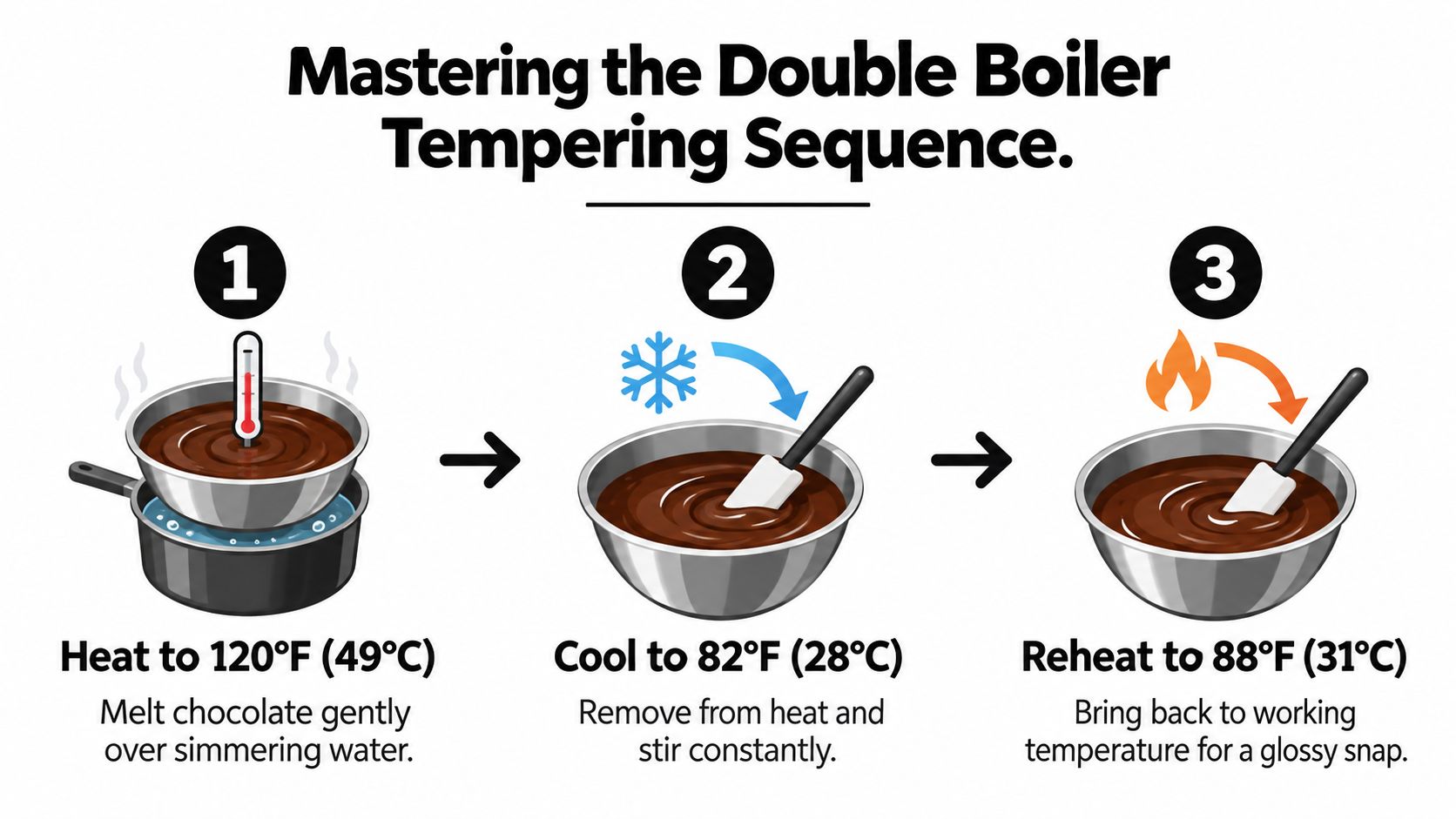
- Melt: Heat gently to approximately 105–115°F, following Cargill's chocolate tempering guidance. Stir frequently so the pieces melt evenly.
- Cool: Remove the bowl from the heat and stir while the chocolate cools. Dark chocolate should reach about 92–93°F, while milk and white chocolate should reach about 91–92°F.
- Work: Keep the chocolate within its working range as you add the dry mushroom powder and deposit it into molds.
A second published double-boiler procedure uses a higher initial heating point, cooling to about 86°F, and brief reheating, with milk and white chocolate brought to no more than 88°F and dark chocolate raised to about 90°F. These variations reflect differences in method and chocolate formulation, so use one documented sequence consistently rather than mixing temperature targets casually. The double-boiler tempering instructions also recommend small, uniform pieces and short reheating intervals.
Add the powder without creating hot spots
Sift the completely dry mushroom powder before adding it. Clumps are the enemy of even distribution. Fold the powder into the melted chocolate only after the chocolate has reached its working range, using a flexible spatula and deliberate strokes that scrape the bowl's base and sides.
Avoid whipping air into the mixture. Excessive agitation can create bubbles, while waiting too long can allow thicker particles to settle. If you need a practical visual reference for the broader preparation, this mushroom chocolate making guide covers the general workflow, but the critical control remains your thermometer, dry tools, and mixing discipline.
A useful sequence is to premix the powder with a small amount of melted chocolate until smooth, then fold that concentrate into the remaining chocolate. This can reduce dry clumps, but it won't replace thorough mixing. Scrape from the bottom upward, rotate the bowl, and keep the mixture moving until the color and texture appear uniform.
For a demonstration of the physical workflow, use the following video as a visual companion:
Calculating Doses and Molding Uniform Squares
Dose consistency begins before the mold. First establish the total measured active weight represented by your verified ingredient, then divide that amount by the number of finished cavities. The arithmetic is simple, but the result is only meaningful if the ingredient identity is clear and the mixture remains evenly suspended during depositing.
Use this formula:
Dose per square = total active weight in milligrams ÷ number of mold cavities
The matrix below is a calculation framework, not a recommendation for intensity. The intensity label should reflect your verified formulation and personal risk assessment, not a dramatic marketing term.
| Total Active Weight (mg) | Mold Cavities | Dose Per Square (mg) | Intensity Level |
|---|---|---|---|
| 10 | 10 | 1 | Conservative reference |
| 20 | 10 | 2 | Conservative reference |
| 50 | 10 | 5 | Requires careful verification |
| 100 | 20 | 5 | Requires careful verification |
Each example is arithmetic. It doesn't establish a universal serving level because mushroom species, extracts, active compounds, individual sensitivity, and laboratory accuracy can differ.
Prevent settling during deposit
Use a mold with consistent cavity sizes and place it on a stable tray before filling. Deposit steadily rather than filling one cavity completely and leaving the rest for later. If the mixture thickens, pause briefly, stir from the bottom, and resume. The goal is to keep suspended solids moving without incorporating unnecessary air.
Once deposited, vibrate the mold for roughly 2–3 minutes to release trapped bubbles. Purdue's chocolate tempering guidance connects this process with a glossy finish, clean snap, and improved resistance to fat bloom. The same guidance notes that stable form-V cocoa-butter crystals melt near 30–34.5°C.
Cool the filled mold at approximately 18–20°C and allow the chocolate to solidify for up to 24 hours before demolding. Keep the mold level, protect it from moisture, and don't rush removal while the centers are still soft. For a calculation aid, use the mushroom dose calculator, then verify the result against your own batch records and laboratory information.
Allergen Labeling and Secure Storage Practices
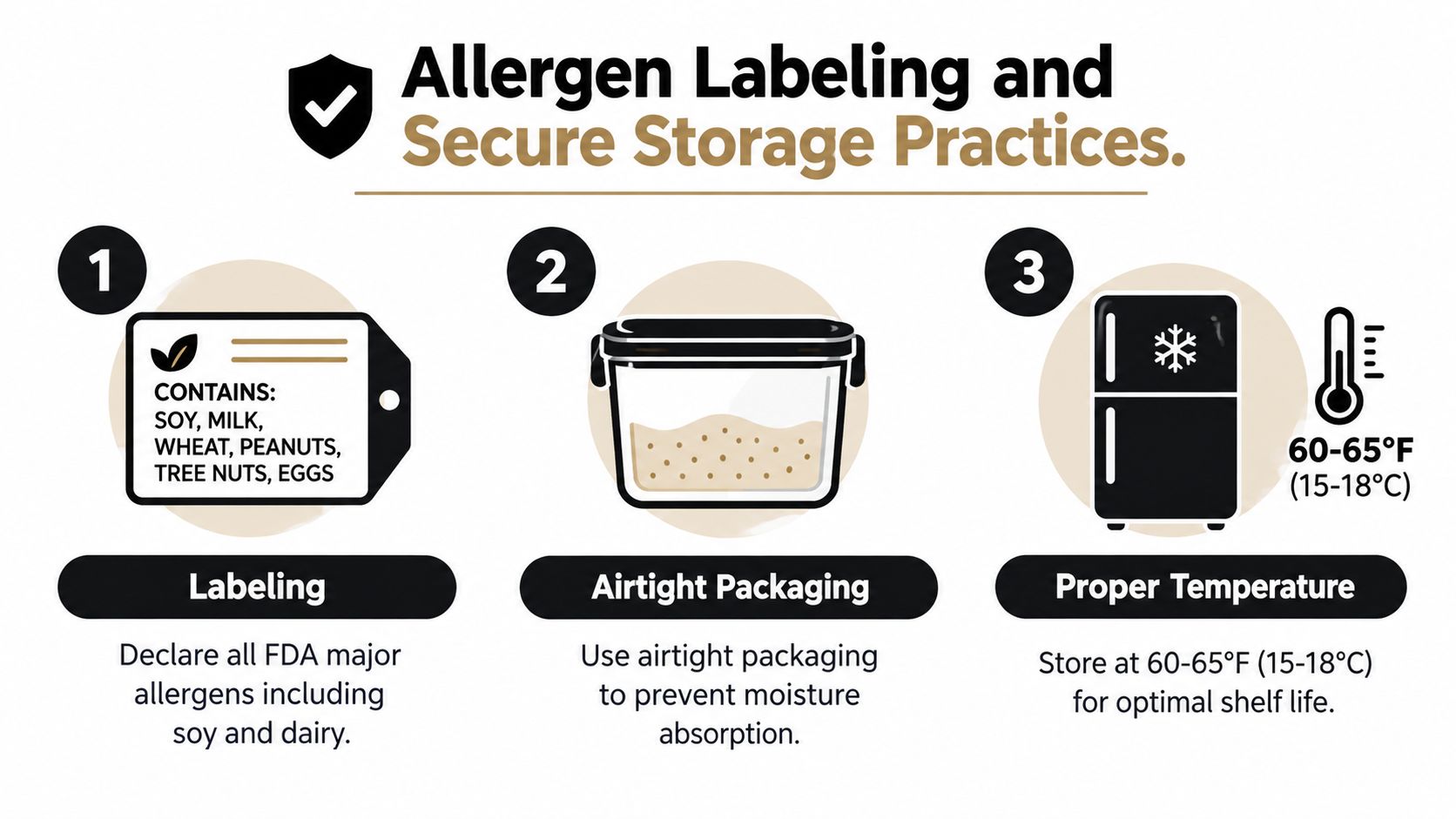
A homemade chocolate can still create a serious allergen problem when it changes hands. The FDA identifies nine major food allergens, including milk, tree nuts, peanuts, wheat, and soybeans, and requires packaged foods to identify the allergen's food source in the ingredient list or in a separate “Contains” statement. The full list and labeling guidance appear in the FDA food allergy resource.
Label the complete formulation
Check the chocolate wrapper, inclusions, toppings, and emulsifiers. Milk chocolate may contain milk, soy-derived lecithin can introduce soy, and nut toppings or nut butters can add tree nuts or peanuts. Cookie crumbs can introduce wheat, while shared manufacturing equipment may create additional warnings that deserve attention.
A practical label should include:
- Ingredient list: Name the chocolate, mushroom material, sweeteners, fillings, and toppings.
- Allergen statement: Identify the recognizable food source, not just a technical ingredient name.
- Batch identity: Record the preparation date and a simple batch code.
- Per-piece information: State the calculated amount and identify that it depends on the verified source material.
- Storage warning: Tell recipients to keep the product away from children and pets.
Don't call the finished chocolate allergen-free unless every ingredient and manufacturing surface supports that claim. “Mushroom” doesn't automatically mean safe for someone with a chocolate, dairy, nut, soy, or other ingredient sensitivity.
Protect texture and prevent accidental access
Airtight packaging protects chocolate from humidity and odor transfer, while a cool, stable environment helps preserve the tempered structure. Use opaque, clearly marked packaging that can't be mistaken for ordinary candy. Secure storage matters even more when psychoactive or concentrated ingredients are involved. Children and pets shouldn't have access to the product, and recipients should know exactly what it is.
For additional storage considerations, see this practical guide on how to store edibles. Keep finished pieces separate from everyday snacks, avoid unmarked containers, and don't transport them loose in a bag or pocket where another person could consume one accidentally.
If someone consumes an unidentified product or develops severe symptoms, contact emergency services or poison control promptly. A label with the ingredient list, batch information, and approximate per-piece calculation gives responders useful context.
Embracing the Mindful Edible Experience
The best chocolate mushroom recipe creates more than a neat row of squares. It creates a record of what you used, how you mixed it, how you portioned it, and how you stored it. That chain of custody changes the experience from casual guesswork into deliberate preparation.
Start by setting an intention that matches the ingredient. A functional mushroom chocolate may be approached as a measured food, while a psychoactive preparation calls for a calm environment, trusted company when appropriate, and enough time to observe the experience without rushing. Don't combine psychoactive ingredients with alcohol or other drugs, and don't assume a familiar-looking chocolate behaves like ordinary confectionery.
A mindful edible begins with a clear label and ends with an equally clear decision about whether, when, and where to consume it.
The craft also rewards patience. Tempering asks you to watch temperature rather than chase speed. Homogenization asks you to stir thoroughly rather than trust appearances. Molding asks you to accept that a uniform result comes from controlled movement, not from the mold alone. Those habits reinforce respect for the ingredient and reduce the temptation to treat each square as interchangeable without evidence.
Keep a batch note with the source, preparation method, calculated amount, and any observations. If the source is uncertain, the mixture is visibly uneven, or the label can't explain the contents, discard the batch rather than testing it through consumption.
The Magic Mushroom Delivery offers online access to raw mushrooms, infused chocolates, gummies, capsules, and mushroom coffee, along with educational resources on dosing, effects, storage, and responsible use. Visit The Magic Mushroom Delivery to review its product categories and learning materials before choosing a verified mushroom preparation.