
You've searched “where to get shrooms online,” opened several storefronts, and found a confusing mix of dried mushrooms, chocolates, gummies, capsules, coffee, vague strain names, and promises of discreet delivery. One site looks like a wellness shop, another resembles a marketplace, and a third provides almost no information beyond a checkout button. For a first-time buyer, the hardest part isn't finding a product page. It's deciding whether the page deserves your trust.
Online mushroom shopping works best when you approach it like any other wellness purchase. Look for clear ingredients, credible sourcing, useful customer support, transparent policies, and fulfillment details that match what the seller promises. Adults 21 and older should also separate functional mushroom products from products marketed for psychedelic experiences, because the names and formats can look deceptively similar.
The right question isn't just, “Which store sells shrooms?” It's, “What exactly is this product, who made it, how is it documented, and what should I expect after ordering?” The guide below follows that decision in a practical order, from product formats and seller types to vendor vetting, privacy, shipping, and responsible-use considerations.
Introduction to Finding Shrooms Online Today
A first-time shopper might start by searching for “magic mushroom delivery,” then compare three tabs at once. One offers raw mushrooms, another promotes infused sweets, and a third sells capsules labeled for microdosing. The shopper may understand coffee or vitamins, but mushroom products introduce unfamiliar questions about ingredients, strength, storage, delivery, and seller reliability.
That uncertainty is normal. Online storefronts compress important differences into short product titles, so two items that look similar may have very different ingredients and intended uses. A chocolate bar, for example, may contain a clearly listed mushroom ingredient, while another product may use a proprietary blend without explaining how much of each component it contains.
Start with the product, not the promise
A dependable shopping decision begins with identification. Confirm whether the item is a functional mushroom product, a non-psychoactive wellness product, or a product marketed for a psychedelic experience. Then check the format, ingredient list, serving information, sourcing language, and available testing documentation.
The online market is broad. The global functional mushroom market was valued at USD 33.72 billion in 2025 and is projected to reach USD 75.06 billion by 2034, according to Fortune Business Insights' functional mushrooms market analysis. That scale means shoppers will encounter both established wellness brands and low-information storefronts competing for attention.
Practical rule: If a product page creates urgency but doesn't answer basic questions about ingredients, fulfillment, or support, slow down rather than speeding up.
This guide is for adults who want a calm way to compare online mushroom retailers. It doesn't require specialist knowledge or a particular shopping style. You can use it whether you're exploring functional mushroom coffee, comparing capsule products, or trying to understand how online sellers describe dried mushrooms and infused formats.
The safest purchasing mindset is simple: learn the category, inspect the seller, read the policies, and avoid making a decision based only on attractive packaging or bold claims.
Understanding What You Can Get Online
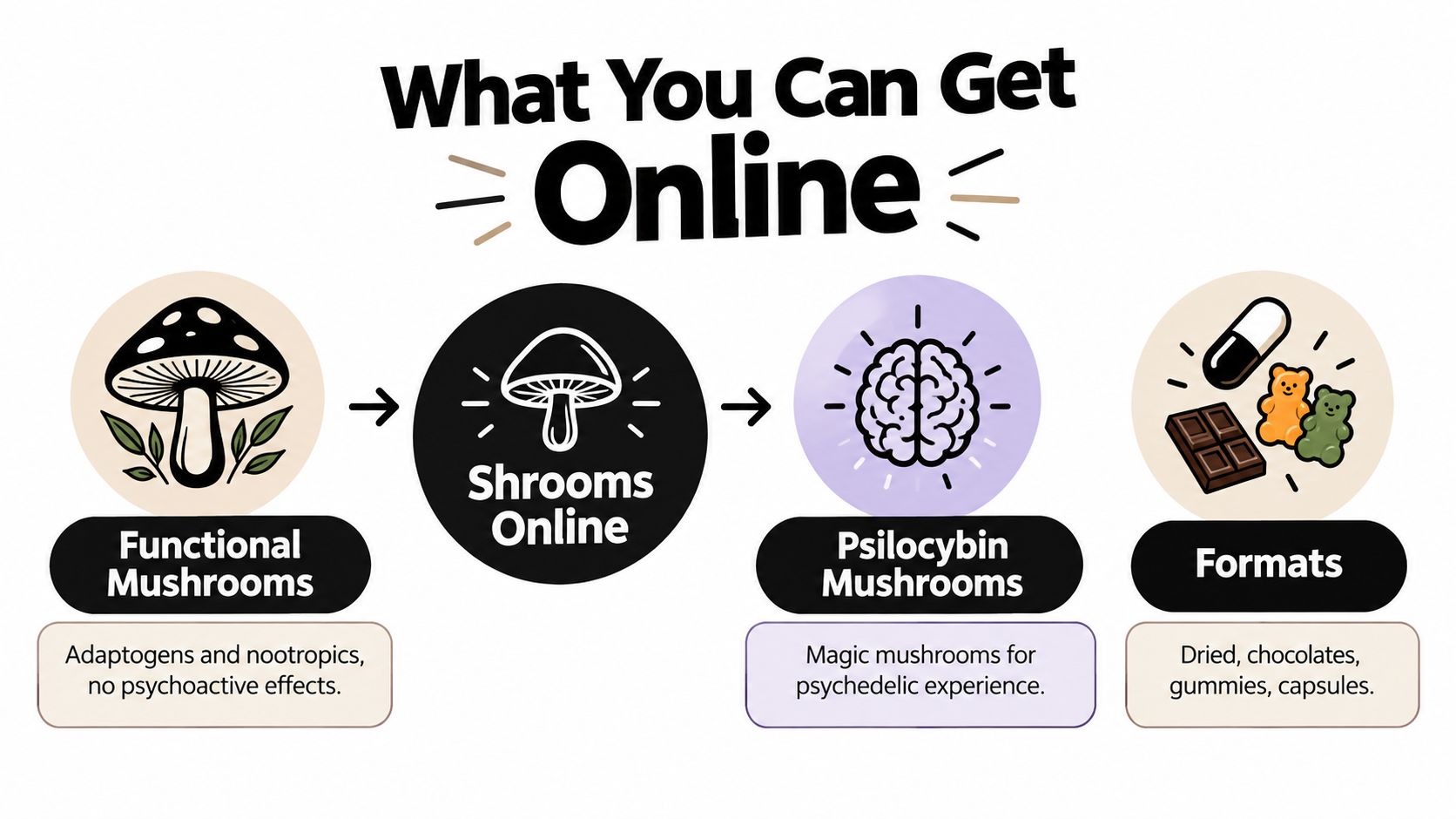
Online, “mushrooms” describes several product families, much as “coffee” can mean beans, instant powder, espresso, or a ready-to-drink can. The format affects convenience, measuring, and how clearly you can identify the contents. Begin by separating functional products from items marketed for psychedelic experiences.
Functional mushrooms
Functional mushrooms appear in coffee, powders, capsules, and food or beverage blends. Product pages may mention focus, stress support, mood, or general wellness. These items are not intended to produce a psychedelic experience, making them a familiar starting point for wellness-focused shoppers.
Read the label for specific mushroom names, rather than relying on a broad phrase such as “mushroom complex.” A clear listing should say whether the formula uses an extract, powdered mushroom, or both. It should also identify other ingredients, allergens, serving guidance, and storage instructions.
The format gives useful clues. Mushroom coffee is coffee with a mushroom ingredient, not the same thing as a standalone mushroom product. Capsules provide a measured supplement format. Powders offer more flexibility, but the buyer must measure and mix them consistently.
Products marketed for psychedelic experiences
Online shops may present dried mushrooms, chocolates, gummies, and capsules as separate ways to consume products associated with a psychedelic experience. Dried mushrooms are closest to a raw product. Infused chocolates and gummies combine mushroom material or an extract with food, so the ingredient list deserves close attention.
Capsules marketed for microdosing emphasize convenience and repeatability. That format alone does not establish predictable contents. Check whether the seller explains what each capsule contains, provides serving guidance, and makes testing information available.
Canadian online storefront research shows how widely these formats can vary. A 2025 cross-sectional study identified 57 operating dispensaries, with 52 stores, or 91.2%, maintaining an online presence. It reported dried mushrooms on 100.0% of websites, microdosing capsules on 97.8%, infused chocolate on 91.3%, and infused gummies on 93.4%. These figures appear in the market report covering the Canadian dispensary landscape.
A familiar format does not guarantee a familiar product. Review every listing as its own formulation, then compare the ingredients, sourcing details, testing records, and fulfillment information. That approach helps you assess an online vendor like any wellness retailer, rather than trusting packaging or assuming a gummy, capsule, and chocolate share the same characteristics as dried material.
Where Adults Shop for Shrooms Online
Choosing an online mushroom storefront is similar to choosing a wellness retailer. Start by identifying how the seller operates, then check whether its product information, sourcing details, customer feedback, and fulfillment practices are clear.
Dedicated retailers manage a focused catalog and usually provide one checkout and one support channel. Curated platforms collect products or sellers in one marketplace, making comparison easier but leaving the buyer responsible for reviewing each listing. Direct growers sell through their own websites or personal channels. They may provide useful cultivation details and direct communication, though documentation and shipping processes can vary.
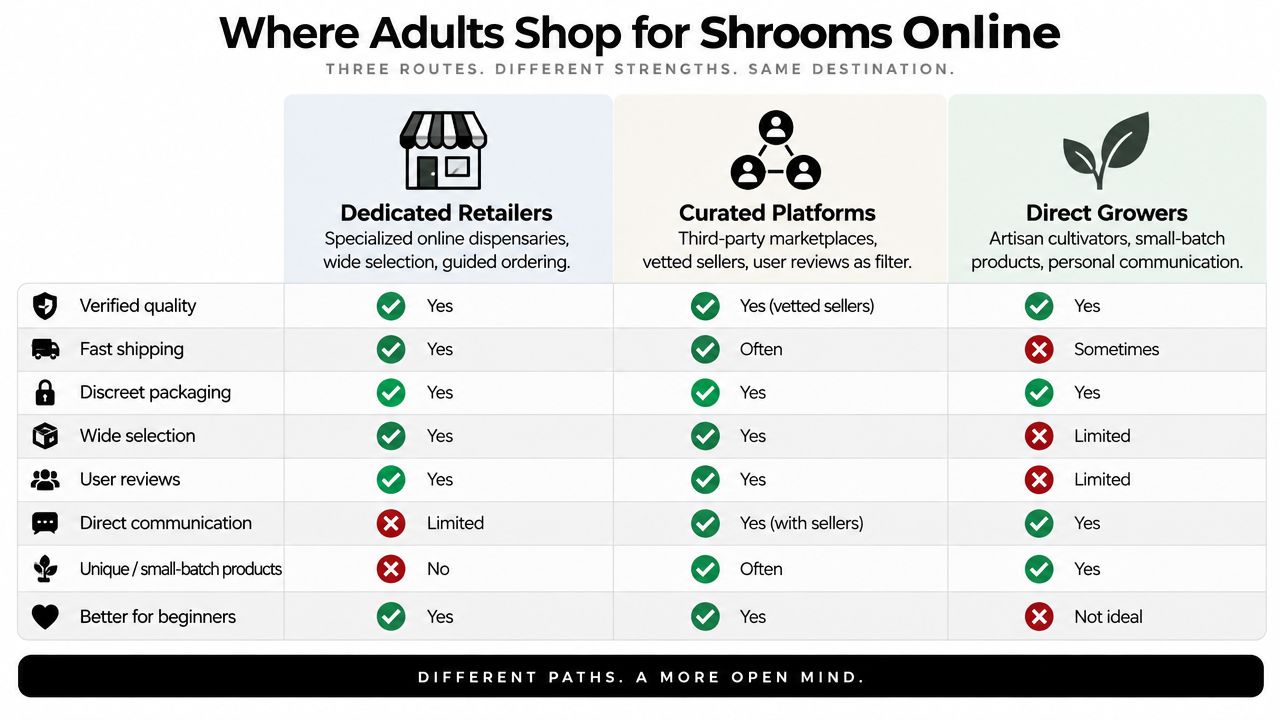
A dedicated retailer can work well for someone who wants clear categories and consistent customer service. A curated platform may suit shoppers comparing seller profiles and reviews. Direct growers can appeal to experienced buyers who value small-batch sourcing. In every case, reviews are only one piece of the picture. Read them alongside ingredient information, testing records, seller policies, and shipping terms.
Online retail is now a significant route for mushroom purchases. One 2026 industry estimate placed e-commerce at 41% of the global functional mushroom market in 2025, while another estimated online retail stores represented 38.4% of global distribution in 2025. These estimates appear in Strategic Market Research's psychedelic mushroom market report. Because the methods differ, the figures should not be treated as interchangeable. They do support a practical conclusion: many buyers compare products and arrange fulfillment through websites.
| Channel Type | Best For | Selection Range | Fulfillment Style |
|---|---|---|---|
| Dedicated Retailers | Buyers who want guided categories and one support channel | Focused to broad, depending on the catalog | Centralized checkout, shipping, and tracking |
| Curated Platforms | Shoppers who want multiple sellers and review filters | Broad and varied | Seller-dependent fulfillment |
| Direct Growers | Experienced buyers interested in small-batch sourcing | Usually narrower and seasonal | Direct communication and operator-managed shipping |
A newcomer may prefer educational pages, clear categories, and a single support contact. An experienced shopper may care more about cultivation information or a particular format. The useful question is whether the storefront explains what each listing contains, who supplies it, and how the order will be handled.
The embedded video below offers another perspective on comparing online shopping channels and retailer models.
A large catalog does not automatically mean better shopping. A smaller catalog may offer more product-specific information. Compare the quality of the evidence, not just the number of listings.
How to Vet a Trusted Online Vendor
A first-time buyer may see polished photos, broad claims, and a short checkout path, yet still know little about the product or seller. Treat an online mushroom retailer like any wellness shop: check the label, trace the sourcing, read customer experiences, and confirm how the business handles questions and fulfillment.
Use a practical trust checklist
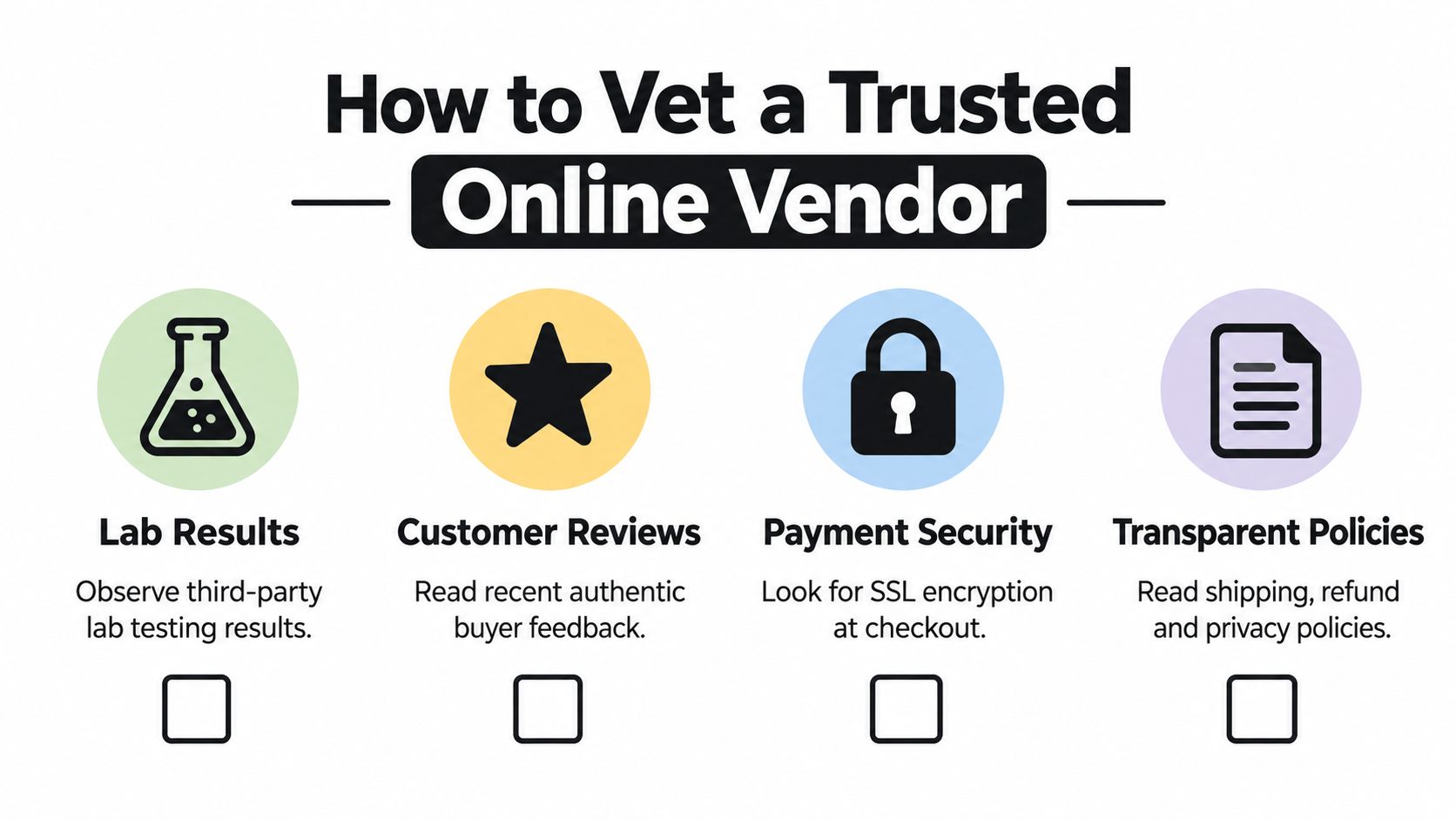
Ingredient clarity: The product page should name the mushroom ingredient and list other contents. Terms such as “premium blend” or “proprietary formula” offer little help when shoppers cannot identify what is included.
Sourcing details: Look for concrete information about cultivation, extraction, origin, or ingredient standards. Organic or non-synthetic badges carry more weight when the page explains the product behind them.
Testing access: If a seller mentions third-party testing, the site should state what was tested and show how to view the relevant results. A report that is easy to locate gives buyers something specific to examine.
Age verification: A storefront serving adults should explain its age policy and apply it consistently. Age checks are only one trust signal, but a site that ignores them may also be careless about other operating details.
Customer feedback: Read recent reviews for repeated details about product condition, listing accuracy, packaging, delivery communication, and support. Specific experiences are more useful than identical praise or comments focused only on discounts.
Support access: A working email, phone option, or responsive contact form matters. Send a basic question before ordering. A direct, respectful, product-specific answer shows more than a decorative contact page.
Policy transparency: Read shipping, refund, privacy, and replacement policies before entering payment details. The retailer should explain what happens if a parcel is delayed, damaged, or incorrectly fulfilled.
For a fuller background check, use this company background research resource while comparing the business, its operators, and its public information.
Spot low-trust signals
Be cautious if a site hides its business identity, gives conflicting product descriptions, or makes guaranteed health promises. Countdown timers, unexplained “limited” stock notices, and aggressive discounts can draw attention away from missing documentation.
Privacy belongs on the same checklist. Discreet packaging can be useful, but it should sit alongside clear information about packing, tracking, customer-data handling, and support communication. A retailer that explains these steps lets buyers judge the process before placing an order.
A professional storefront answers ordinary questions before you have to ask them.
Judge the evidence rather than the design. A polished layout is easy to copy. Clear labels, accessible policies, believable reviews, and responsive support show sustained attention to the customer experience. When those details line up, the seller becomes easier to assess, much like a wellness retailer whose label and service practices can be checked before purchase.
Ordering Shipping and Privacy Tips That Matter
Once you've selected a retailer, checkout should feel predictable rather than mysterious. Start by confirming the product, quantity, ingredient information, and any available serving guidance. Review the final cart carefully, especially if several products use similar names or packaging.
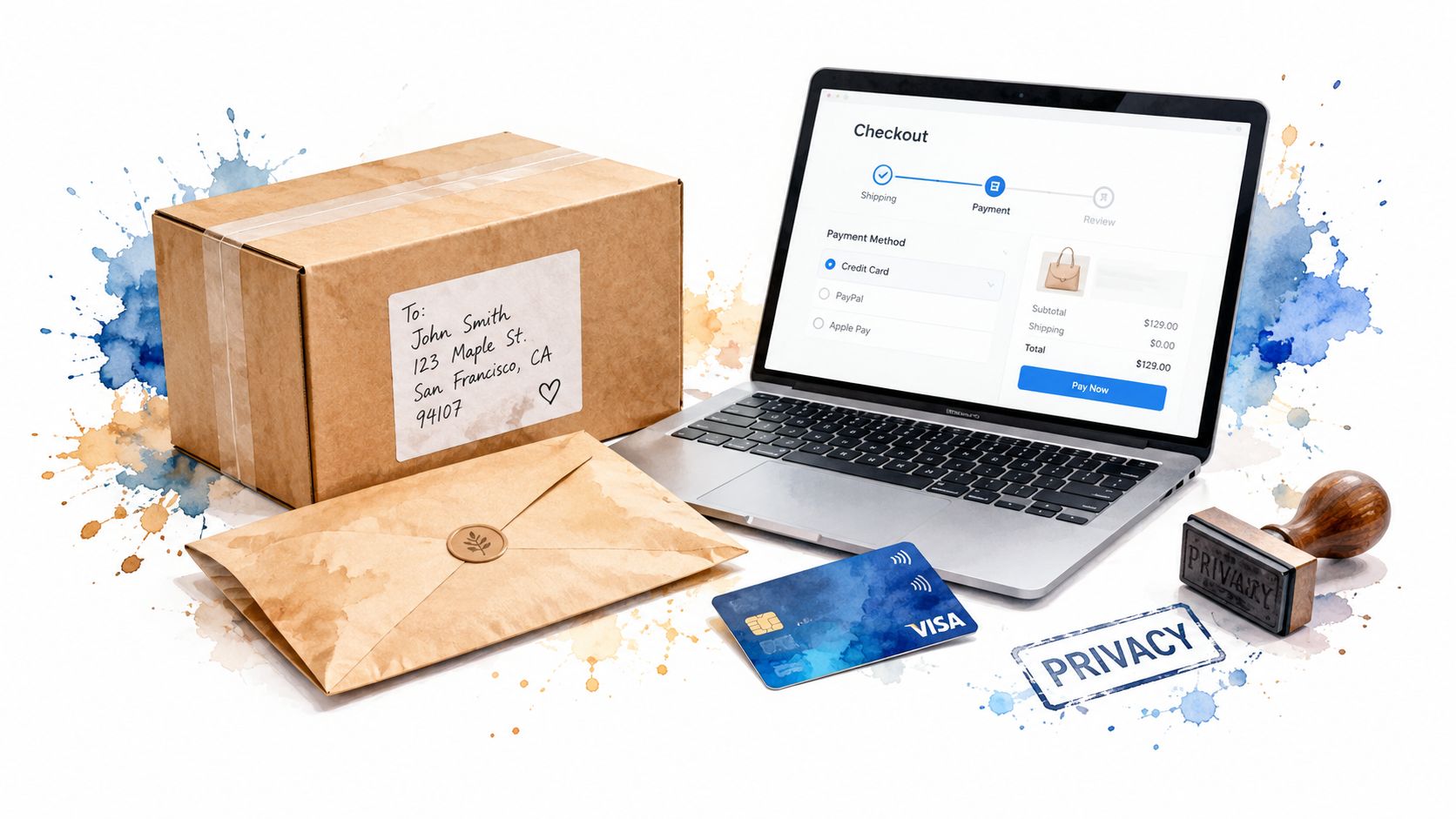
Check the checkout details
Before paying, verify:
- The delivery address: Use an address where you can reliably receive the package and monitor delivery.
- The shipping option: Check whether standard, tracked, next-day, or 2-day service is available for your location.
- The total cost: Review product price, shipping charges, taxes where applicable, and any discount conditions.
- The confirmation process: Make sure the site explains whether it will send an order receipt, tracking notification, or support message.
Some retailers advertise next-day, 2-day, and tracked nationwide shipping, but delivery claims vary by product, destination, carrier, and ordering time. Treat those options as service descriptions to verify at checkout, not as a guarantee that applies to every order.
Payment security deserves attention. Look for a secure checkout connection, familiar payment handling, and a clear privacy policy. Don't send card details through an informal message channel just because a seller promises faster service.
Understand discreet fulfillment
Discreet packaging usually means the exterior doesn't identify the product category. Ask whether the parcel uses plain packaging, whether the sender name is neutral, and whether tracking appears in the order account or confirmation email. These details matter for privacy and for knowing when to expect delivery.
The shipping and tracking information should answer practical questions about processing, carrier handoff, tracking updates, delays, and delivery support. If a policy says little more than “fast shipping,” you may not have enough information to plan around the order.
Keep your order confirmation and tracking details private. Use a personal email account, avoid sharing account credentials, and review the seller's privacy language before creating an account. If a package arrives damaged, opened, or inconsistent with the order, photograph the exterior and contact support promptly rather than consuming the contents.
Normal professional service includes a confirmation, a stated fulfillment process, and an accessible way to resolve problems. Missing confirmations, unexplained payment requests, or sudden changes in delivery terms are reasons to pause.
Safe Use Dosing Guidance and Functional Alternatives
Shopping carefully is only one part of responsible decision-making. Product format, ingredient transparency, personal expectations, environment, and support all influence how comfortable an experience may feel. A cautious mindset avoids treating a product page as a substitute for personal judgment.
Start with the seller's serving guidance and avoid taking more because the effects aren't immediate. Products can vary, and infused formats may make it harder to judge how much mushroom material is present. Don't combine unfamiliar products, alcohol, or other substances, and don't drive or operate equipment after using anything that could alter perception or judgment.
Plan the setting before the product
Choose a calm, familiar environment and have a trusted sober person available if you're inexperienced or uncertain. Avoid making a decision while distressed, sleep-deprived, or pressured by friends. If someone develops severe confusion, loses consciousness, has a seizure, experiences breathing difficulty, or may have consumed an unknown mushroom, seek urgent medical help.
Medical research also emphasizes that psychedelic compounds remain an area of active investigation. NIDA's discussion of psychedelics and neuroplasticity describes potential therapeutic interest alongside major unanswered questions about safety, administration, and treatment protocols. Research settings use controlled environments and trained clinical teams, which isn't the same as ordering a consumer product online.
Consider functional options
Some shoppers aren't seeking a psychedelic experience at all. They may want a coffee blend, capsule, or powder that fits a daily wellness routine. Functional mushroom products can be easier to integrate because they're sold as non-psychoactive food or supplement formats, but buyers should still inspect the label and avoid assuming that every “mushroom complex” has the same ingredients.
A practical decision filter is:
- If your goal is routine wellness, start with a clearly labeled functional product.
- If your goal involves a psychedelic experience, prioritize education, personal readiness, support, and careful product verification.
- If you're unsure what a listing contains, don't rely on the product name. Ask the seller for clarification before purchasing.
For more detailed education, review this magic mushroom dosing guide and use it as reading material, not as a reason to ignore product-specific information or professional medical advice.
Making Your Best Choice for Shrooms Online
The best answer to “where to get shrooms online” is a method you can repeat. Start by defining your goal and preferred format, then check whether the listing describes a functional product or one marketed for a psychedelic experience. Review the ingredients, sourcing details, available testing information, customer feedback, shipping terms, and privacy policy before creating an account.
Treat each vendor like a wellness retailer. Clear labels are the product map, while testing access and sourcing information show how much of the route the seller is willing to reveal. Reviews can describe real customer experiences, but they should support, not replace, documentation and direct answers from customer service.
A reliable comparison also includes the practical details. Check whether support is reachable, packaging and tracking information are specific, and age verification is explained. The Magic Mushroom Delivery presents raw mushrooms, infused chocolates, gummies, capsules, and mushroom coffee, alongside educational resources, customer reviews, age verification for customers 21 and older, and discreet shipping information. Compare those details with other retailers rather than treating any single feature as proof of quality.
Your next action can be simple: open two vendor tabs side by side and record what each site says about ingredients, testing, packaging, tracking, and support. Remove any seller that leaves basic questions unanswered, then choose the option whose information and policies match your goals and comfort level.