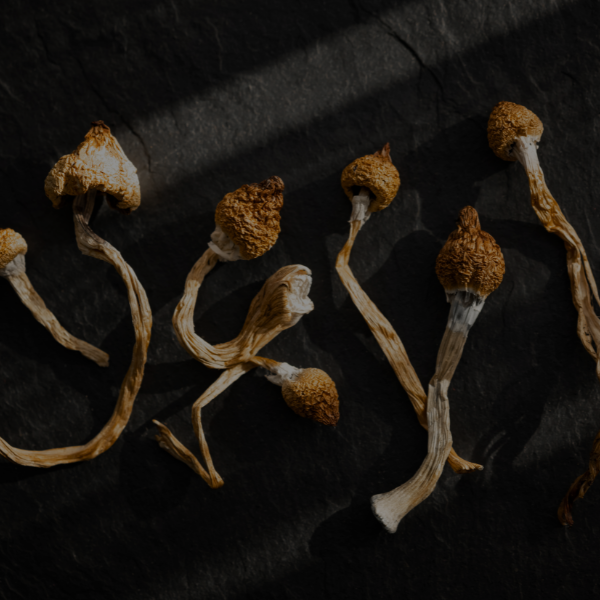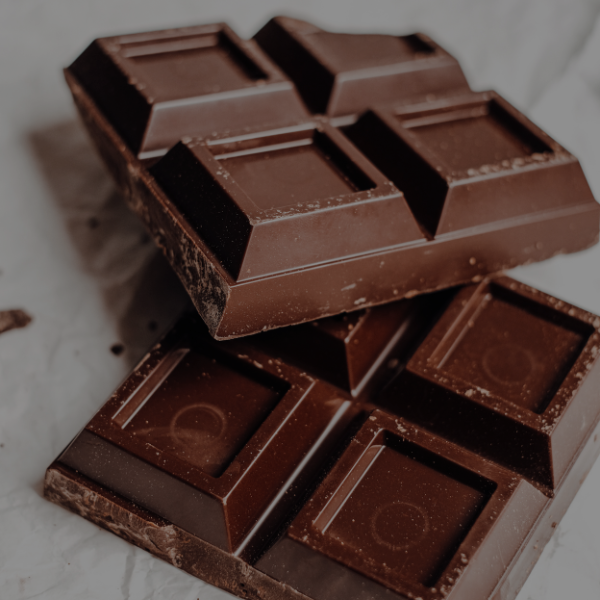

You're probably here because raw mushrooms feel like a hurdle. Maybe it's the earthy taste, the chewy texture, or the simple fact that a chocolate bar sounds far more approachable than a bag of dried caps.
That's exactly why Magic Mushroom Chocolate has become such a popular format. It feels familiar. You can portion it more easily, store it more neatly, and approach the experience with a little more intention. For many adults, that lowers the intimidation factor right away.
There's also a practical reason to learn before you buy. Recent product analysis found that retail “magic mushroom” edibles can vary sharply from what their labels suggest. In a JAMA Network Open analysis of 12 retail products, researchers did not detect psilocybin in any sample, and the single chocolate product contained psilocin instead. Oregon State researchers also reported that many products sold as “magic mushroom” edibles appeared to contain no psilocybin and instead included undisclosed ingredients such as caffeine, hemp, kava, or synthetic tryptamines, according to the Oregon State University summary.
So this guide won't just talk about effects. It will help you think like a careful consumer, so you can understand what Magic Mushroom Chocolate is, what the experience may feel like, and how to recognize a product that looks transparent rather than mysterious.
What Is Magic Mushroom Chocolate
Magic Mushroom Chocolate is a chocolate edible made with psychoactive mushroom material or mushroom-derived compounds blended into a bar, square, truffle, or similar treat. In simple terms, it combines the familiarity of chocolate with the active compounds associated with psychedelic mushrooms.
For a lot of first-time users, the appeal is obvious. Chocolate masks the earthy taste that many people dislike in dried mushrooms. It also turns the experience into something easier to portion. Instead of eyeballing plant material, you can often break a bar into clearly marked pieces.

Why people choose chocolate
Some people want a gentler entry point. Others want a format that feels tidy and familiar. A chocolate bar can feel less clinical than capsules and less rustic than dried mushrooms.
A good mental model is this. Raw mushrooms are like loose-leaf tea. Chocolate is like a tea bag. Both may point to the same general experience, but one format often feels easier to handle.
If you're exploring different edible formats, this overview of edible psychedelic mushrooms can help you compare bars, gummies, and other options.
Where confusion starts
Many shoppers assume every bar labeled “mushroom chocolate” contains a predictable active ingredient profile. That assumption can be risky. Some products are made carefully and labeled clearly. Others use vague branding, unclear ingredient lists, or lab claims that are hard to verify.
A chocolate bar can look polished and still be poorly labeled. Packaging design is not the same thing as product transparency.
That's why the smartest way to approach Magic Mushroom Chocolate is to treat it as both an experience product and a quality-control question. Taste matters. So does trust.
The Experience Timeline Unpacked
The experience often feels less mysterious when you think about it like a flight. You don't jump from standing still to cruising altitude in one second. There's a takeoff, a steady middle, and a gradual return.
That simple timeline matters because many people make their biggest mistake early. They don't feel much right away, assume the product is weak, and take more too soon.

Takeoff
With a chocolate edible, onset can feel gradual. You may first notice a subtle body shift, a change in focus, or a mild emotional softening. Some people describe it as the room feeling a little different before they can explain why.
Food in your stomach, your metabolism, and the composition of the bar can all influence how quickly things unfold. Chocolate adds fat and sugar to the experience, which can make the delivery feel smoother for some people, though not necessarily faster.
A useful rule is to be patient during this stage. Oral products need time.
Practical rule: Once you take an initial portion, wait before deciding it “isn't working.”
Cruising altitude
The middle portion of the experience is where effects usually become more obvious. Thoughts may feel more fluid. Music may seem richer. Emotional material may feel closer to the surface.
This is also where setting matters most. A comfortable room, low social pressure, and a calm mindset can make the peak feel more navigable. A noisy environment can do the opposite.
For readers who want a broader look at how altered states can unfold, this guide to the stages of being high gives useful context across different phases of the experience.
Here's a visual explanation of that journey:
Descent and landing
The later stage often feels quieter and more reflective. Visual intensity usually eases. The mind may still feel open, but less swept up in the peak.
A 2024 poison-center case series reported that effects from psychedelic mushroom-containing chocolate products typically lasted 3 to 24 hours in 81% of cases, with mental-status changes among the most common effects, according to the published case report on PubMed. That doesn't mean every experience lasts that long at full intensity. It means you should plan for the day to have a wide runway.
Why the timeline matters
Think of the whole experience like a long movie, not a short clip. If you schedule too tightly, stack responsibilities on top of it, or rush your dosing decisions, you create avoidable stress.
A little patience changes everything. When you know there's a takeoff, a peak, and a landing, you stop asking “Why isn't this happening yet?” and start paying attention to what your body is already telling you.
A Guide to Dosing and Microdosing
Dosing is where confidence comes from. Not confidence in the sense of taking more. Confidence in the sense of knowing exactly what you're doing.
With Magic Mushroom Chocolate, the biggest practical advantage is portioning. A bar can be divided into squares, and that makes deliberate use easier than guessing from loose material. But that advantage only exists if the label is clear. If the package doesn't tell you the total amount in the bar and the amount per piece, you're working with fog.
Start low and stay observant
The simplest rule is still the best one. Start low, then wait, then decide.
This matters even more with chocolate because it tastes like a treat. That sounds minor, but it isn't. When the delivery format feels familiar and pleasant, it's easier to forget that each extra square may change the experience in a meaningful way.
A careful beginner often does better with a light first session than with an ambitious one. The goal of a first try isn't to prove anything. It's to learn how your body and mind respond.
How to read a chocolate label
Look for these details before you even think about serving size:
- Total active amount per bar: You need to know what the entire bar contains.
- Amount per square or piece: This is what makes portioning practical.
- Ingredient list: It should be readable and specific, not vague.
- Lot or batch information: That suggests the maker treats the product like a measured item, not novelty candy.
- Testing information: More on that in the quality section below, but this belongs on your checklist from the start.
If you want more context on how people think about intake ranges and session planning, this psilocybin dosage guide is a useful companion read.
Magic Mushroom Chocolate dosage guidelines
Because product formulations vary so much, it's safer to think in experience tiers rather than pretend one chart can guarantee a specific outcome from every bar.
| Dose Level | Typical Psilocybin Amount | Potential Effects |
|---|---|---|
| Microdose | Product-specific and should be clearly labeled per piece | Often intended to be subtle or sub-perceptual |
| Low dose | Product-specific and should be clearly labeled per piece | May feel lighter, more social, or gently mood-shifting |
| Moderate dose | Product-specific and should be clearly labeled per piece | Can bring stronger sensory, emotional, and introspective effects |
| High dose | Product-specific and should be clearly labeled per piece | May feel immersive, intense, and harder to navigate without preparation |
This table is intentionally qualitative. The reason is simple. If the product itself isn't verified, the number on the wrapper may not tell the full story.
Why precision matters more than bravado
A 2024 poison-center series found 164 exposure reports involving psychedelic mushroom-containing chocolate products, with 36 cases meeting study criteria. The median age was 17 years, 64% of exposures were intentional, and the most common clinical effects included mental-status changes in 76%, paranoia or hallucinations in 28%, dysrhythmias in 19%, and gastrointestinal distress in 17%. In that series, effects typically lasted 3 to 24 hours in 81% of cases, according to the poison-center study abstract.
That kind of data doesn't tell you to avoid chocolate. It tells you to respect it. Edibles can be deceptively easy to overconsume, especially when taste masks the active material.
The more delicious the format, the more important the label becomes.
A simple decision method
If you're holding a bar and trying to decide what to do, use this sequence:
- Read the whole package first. Don't rely on memory from the product page.
- Identify the amount per piece. If you can't, don't guess.
- Choose your intention. Subtle, exploratory, or immersive.
- Take your planned portion only.
- Wait and observe. Let the experience declare itself before adding more.
That approach sounds modest. It's what keeps the experience manageable.
Common Effects and Sensations
The felt experience can be hard to describe because it doesn't land in just one category. It can change perception, mood, and thought patterns at the same time. The easiest way to understand it is to separate those layers, while remembering that real experiences often blur them together.

Perceptual changes
Some people first notice that ordinary things seem more vivid. Colors can feel richer. Music may seem more textured. Light patterns, shadows, or movement in the environment may draw more attention than usual.
This doesn't always mean dramatic visuals. Sometimes it's as simple as a candle flame seeming unusually beautiful or a song feeling physically present.
Emotional shifts
Chocolate can make the format feel cozy, but the emotional range still varies. A person may feel warmth, laughter, tenderness, curiosity, or introspection. Another person may feel more exposed to whatever they've been carrying under the surface.
That doesn't automatically mean something has gone wrong. It often means the emotional volume is turned up. If you walk into the experience tense, the experience may amplify tension. If you walk in settled, it may amplify openness.
Some of the most meaningful moments are quiet ones. A sense of gratitude, a softened inner critic, or a surprising wave of compassion can be just as significant as any visual effect.
Cognitive effects
Thoughts may become less linear. You might make unusual connections, revisit old memories with fresh perspective, or feel drawn toward big-picture questions. Many users describe a temporary shift from problem-solving mode to pattern-seeing mode.
That can feel insightful. It can also feel slippery if you're trying too hard to stay in control. It helps to let thoughts pass through rather than pinning each one down.
When effects feel less pleasant
Not every sensation is comfortable. In the outbreak linked to mushroom-containing chocolate products identified by the CDC in 2024, 180 cases of severe illness were reported across 34 states. Among cases with known outcomes, 43.7% required hospitalization, 23.2% needed intensive care, 17.5% required intubation, and 1.1% died. The most common symptoms included confusion in 66%, drowsiness in 47%, and agitation in 45%, according to the CDC outbreak report.
That report is a strong reminder that product composition matters. If a bar contains something other than what the buyer expects, the experience may move far outside the range of ordinary psychedelic effects.
How to Choose Quality Mushroom Chocolate
You are standing in front of two mushroom chocolate bars. One has polished branding and bold promises. The other gives you plain, specific details about ingredients, serving size, and testing. For a careful buyer, the second bar is usually the better sign.
A quality product should answer basic questions before you ever open the wrapper. If the label leaves you guessing, the risk starts there.

The checklist that matters
Use this list before you buy:
- Clear active-content labeling: The package should explain how much is in the full bar and how much is in each square.
- Specific ingredients: Look for a full ingredient panel. Terms like “proprietary blend” make it harder to judge what you are consuming.
- Third-party testing information: Independent lab testing helps confirm identity and consistency.
- Professional packaging details: Lot numbers, serving guidance, storage notes, and contact information suggest the product was prepared with care.
- Chocolate quality: Better cacao and fewer filler ingredients often point to more thoughtful formulation overall.
Why authenticity matters so much
Product quality is not just about taste or appearance. It is about knowing that the bar matches the label.
Earlier reporting on mushroom edibles noted that some products sold outside regulated channels appeared to contain undisclosed substances rather than psilocybin. That kind of mismatch changes the experience at the most basic level. You are no longer choosing dosage or format with confidence. You are guessing.
Third-party lab testing matters for that reason. It works like an ID check for the product. It does not guarantee perfection, but it gives you a way to verify that a seller is offering something measurable rather than vague claims.
If a seller spends more time on branding language than on testing, ingredients, and serving details, treat that as a warning sign.
What a reliable product page should show
A careful retailer usually makes the basics easy to find. You should not have to dig through fine print or send a message just to learn what is in the bar.
| What to check | Why it matters |
|---|---|
| Serving breakdown | Helps you portion accurately |
| Full ingredient list | Shows additives, allergens, and unclear blends |
| Testing or verification details | Supports identity and batch consistency |
| Storage guidance | Shows the product is treated as a measured edible |
| Customer support path | Gives you a way to ask practical questions |
That kind of transparency reflects a bigger idea. Premium mushroom chocolate is less like candy from a checkout shelf and more like any other measured wellness product. The clearer the information, the easier it is to make a smart decision.
Don't let strain names distract you
Strain names, flavor notes, and glossy packaging can be interesting. They are not the first filter.
Start with the fundamentals. What is in the bar? How much is in each piece? Is there testing information? Can the seller support what the label claims?
Once those questions are answered clearly, details like cacao origin, texture, and strain identity become useful extras instead of distractions.
Safety and Responsible Enjoyment
A positive experience starts before you take a single bite. It starts with set and setting, which is just a simple way of saying your mindset and your environment shape the tone of the journey.
If you feel rushed, emotionally overloaded, or unsure of your surroundings, even a small amount can feel less comfortable. If your space feels calm and your expectations are realistic, the experience is usually smoother.
A simple preparation checklist
- Clear your schedule: Give yourself enough space so you're not checking the clock.
- Choose a familiar room: Comfortable surroundings reduce unnecessary friction.
- Keep water nearby: Simple physical comfort goes a long way.
- Prepare light snacks: Gentle food can help later in the day.
- Have one trusted person available: Some people prefer a sitter in the room. Others just want someone reachable.
- Store the rest securely: Put remaining pieces away before the session starts.
Responsible storage matters
Chocolate is easy to mistake for ordinary candy. That's part of the appeal and part of the risk.
Store it in a cool, dark place and keep it secured away from children, pets, and any adult who might grab it casually without knowing what it is. Child-resistant storage is a smart move, especially because edible formats can invite accidental overconsumption when taste masks the mushroom content.
If the experience turns uncomfortable
The first move is to reduce stimulation. Lower the lights, soften the music, and sit or lie somewhere steady. Sip water. Breathe slowly. Remind yourself that the experience is time-limited.
Don't argue with every thought. Let it pass. A calm voice, a blanket, and a quieter room often help more than trying to “fix” the moment.
Your Questions Answered
Does chocolate feel different from dried mushrooms
Many people find chocolate easier to take because it masks taste and offers cleaner portioning. The core experience may overlap, but the format can feel gentler psychologically because it's more familiar and easier to dose deliberately.
Can I save part of a bar for later
Yes, if it's stored properly. Keep leftover portions sealed, cool, dark, and clearly labeled so no one mistakes them for regular chocolate. Pre-portioning before storage can make future use simpler.
What if I don't feel anything at first
Wait. Edibles can unfold slowly, and impatience is one of the most common ways people overshoot their intended experience. Give the first portion time before making any adjustment.
What if I feel overwhelmed
Reduce sensory input and return to basics. Sit somewhere comfortable, breathe slowly, sip water, and remind yourself that the feeling will pass. If you're with someone trusted, let them know you want a calmer environment rather than more conversation.
If you want to explore Magic Mushroom Chocolate with more clarity around formats, labeling, and product education, The Magic Mushroom Delivery offers a catalog of mushroom products alongside guides that can help you compare options and make more informed choices.