
You're probably here because you saw magic mushroom powder on a menu, in a product listing, or inside a capsule description and thought, “Okay, but what is this, and how do I make sense of it?”
That reaction is normal. Powder sounds simple. In practice, it raises a lot of questions fast. Is it the same as dried mushrooms, just ground up? Is it easier to measure? Does one scoop equal another? How do you know whether what you bought even contains what the label says?
Interest in psilocybin products has grown well beyond a small niche. In the United States, a large 2024 survey analysis estimated that 2.8% of residents age 12 and older, about 8 million people, used psilocybin in the past year, while in Australia 1.8% of people reported using magic mushrooms in the previous 12 months, a figure that doubled since 2019, according to the UNSW magic mushrooms fact sheet.
What most new buyers need isn't hype. They need a calm, practical guide. That means understanding what powder is, why potency varies, why weight alone can be misleading, how people use it, and why lab testing matters more than most labels suggest.
Welcome to the World of Magic Mushroom Powder
A lot of first-time readers arrive with the same mix of curiosity and caution. They've seen whole dried mushrooms before, but powder feels more modern and more confusing at the same time. It shows up in capsules, teas, chocolates, blended foods, and standalone jars or bags. That versatility is part of the appeal.
Powder can also create a false sense of precision. People often assume that because it looks uniform, it must behave like a standardized supplement. That isn't how this category works. The material may be finely ground, but the underlying mushroom content can still vary by strain, harvest, drying, storage, and how the batch was prepared.
Why powder gets so much attention
Powder fits into everyday routines more easily than whole mushrooms. You can weigh it, mix it, encapsulate it, or stir it into a drink. For many adults, that feels less awkward than chewing dried material.
At the same time, the growing popularity of psilocybin use means more people are shopping with very different levels of knowledge. Some want a mild, controlled experience. Others are trying to avoid taste. Some are comparing products and assuming labels tell the full story.
Practical rule: Treat magic mushroom powder less like a packaged vitamin and more like a variable agricultural product that needs verification.
That mindset helps you make better choices from the start. It shifts your attention away from marketing language and toward the things that matter: strain information, consistency, storage, and testing.
The questions worth asking first
Before you buy or use any powder product, ask yourself:
- What mushroom was used: A named strain or species tells you more than vague branding.
- How was it processed: Drying, milling, and storage affect quality.
- Has it been tested: If there's no meaningful verification, you're relying on trust alone.
- How will you take it: Tea, capsules, and food all create different user experiences.
Those four questions will carry you much farther than flashy packaging.
What Exactly Is Magic Mushroom Powder
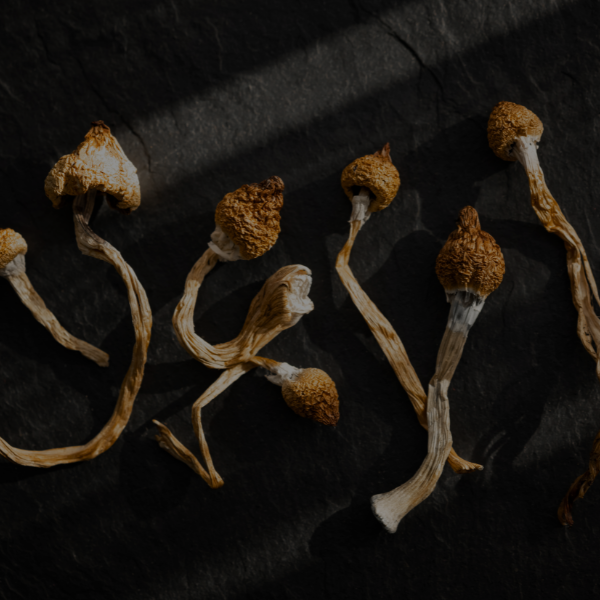
Think of magic mushroom powder like ground coffee. Whole beans and coffee grounds come from the same source, but grinding changes how easy they are to measure, brew, and blend. Magic mushroom powder works the same way. It's typically made by taking dried mushrooms and milling them into a finer, more uniform material.
That sounds straightforward, but the science underneath matters. The main active compounds people talk about are psilocybin and psilocin. These compounds don't behave identically, and the way mushrooms are dried and processed can affect how much remains stable in the finished powder.

Why the powdering step matters
Researchers examining psilocybin mushroom stability found that dried fungal bodies generally extract better once powdered due to increased surface area, while fresh material behaves differently. The same review notes that dried biomass tends to retain more stable psilocybin, while fresh mushrooms contain more psilocin, which is less stable, as described in the Oregon psilocybin stability document.
That's a mouthful, so here's the plain-English version. When you grind dried mushrooms, you expose more surface area. That can make the material easier to mix or extract. But powder isn't automatically “better.” If the product was poorly dried, exposed to moisture, or stored carelessly, grinding won't fix that.
What powder is and isn't
Magic mushroom powder isn't a single standardized ingredient. It's a preparation format.
That distinction clears up a lot of confusion. Two products can both say “powder” and still differ in important ways:
- One may come from a stronger strain
- One may include stems, caps, or mixed fungal material in different proportions
- One may have been stored carefully
- One may be fresher or more degraded
Why people choose powder
People usually prefer powder for one of three reasons:
Easier measuring
A scale can read powder more neatly than irregular dried pieces.Flexible use
Powder can go into tea, capsules, smoothies, or chocolate recipes.Taste management
Many people find it easier to mask the earthy flavor when it's blended into something else.
Powder changes the format, not the need for caution.
That's the key idea to hold onto. A fine grind may look consistent, but visual uniformity doesn't guarantee chemical uniformity. If you understand that early, you're much less likely to assume a scoop tells the whole story.
Understanding Strains and Potency Levels
If magic mushroom powder were like flour, every bag would bake roughly the same way. It isn't. A better analogy is chili peppers. Two peppers can look similar on the outside and produce very different heat levels. Mushroom strains work similarly. The name on the product matters because potency can differ a lot from one source to another.

Some shoppers recognize names like Golden Teacher or Penis Envy and assume that's just branding. Sometimes those names do reflect meaningful differences in expected strength and character. In general conversation, Golden Teacher is often treated as a more moderate option, while Penis Envy is commonly described as stronger. The important point isn't the lore around names. It's that strain identity affects expectations.
What lab analysis shows
Laboratory analysis found that psilocybin concentrations ranged from 0.858% to 1.717% (w/w) across several strains, according to the Sigma-Aldrich technical analysis of psilocybin and psilocin in magic mushrooms. In practical terms, that means some strains can be effectively about twice as potent as others.
That's why “just take a gram” is shaky advice when the product source is unclear. A gram by weight sounds exact, but if the alkaloid content differs sharply, the actual experience may not line up with the number on the scale.
Why labels alone don't solve the problem
A label that lists a strain is better than one that doesn't. But it still doesn't answer everything. Potency can shift with growing conditions, drying, milling, storage, and whether the batch includes more or less inactive fungal material.
Use this quick filter when reading a product page:
- Named strain listed: Better than generic “mushroom blend”
- Batch or testing info available: A strong sign the seller understands variability
- Clear format disclosure: Loose powder, capsule fill, or blend with other ingredients
- Storage guidance provided: Suggests the seller expects the product to retain quality over time
If you don't know the strain, and you don't know whether the batch was tested, you don't really know what the weight means.
That one sentence explains why experienced users pay so much attention to sourcing.
A Practical Guide to Dosing and Conversions
Most confusion about magic mushroom powder comes from one assumption: that powder makes dosing exact. It can make measuring easier, but it doesn't remove variability. Weight tells you how much material you have. It doesn't guarantee how much active content is inside that material.
Start with the simplest conversion first. Powder is just ground dried mushroom material, so if the powder is pure and unblended, the weight of the powder corresponds to the weight of the dried mushrooms it came from. In plain terms, 1 gram of pure mushroom powder comes from 1 gram of dried mushrooms. The challenge is potency, not arithmetic.

A good scale matters more than most people think. If you're weighing fine material at home, use a tool built for small measurements, such as a 1 gram scale for mushroom dosing.
A simple way to think about dose levels
Instead of chasing rigid labels, think in bands of intensity. Your body, the setting, and the product itself all shape the result. Public health sources note that effects are influenced by dose, setting, and product identity, and that when eaten, effects usually begin within about 30 minutes and last around four to six hours, based on the analysis summarized in the earlier linked source on mushroom composition and timing.
Here's a practical framework:
| Magic Mushroom Powder Dosing Guide | ||
|---|---|---|
| Dose Level | Powder Weight | Expected Effects |
| Microdose | Small measured amount | Subtle or near-subtle effects, often chosen for minimal perceptual change |
| Low Dose | Larger than a microdose, still cautious | Noticeable shift in mood, sensory tone, or thought flow |
| Moderate Dose | A clearly intentional amount | Distinct psychedelic effects and stronger introspection |
Because potency varies, the safest approach is to think in relative tiers, not fixed promises.
What conversions do and don't tell you
People often ask for a neat chart that converts whole mushrooms into powder. That part is easy:
- Whole dried mushroom to powder: same dry weight if nothing else is added
- Capsule to powder: depends on how much powder each capsule holds
- Blend to powder equivalent: only valid if you know what else is in the mix
The hidden issue is product composition. A capsule may contain pure powder, a blend, or additional inactive ingredients. A scoop from a premixed product may not equal a scoop of standalone mushroom powder.
Here's a short video overview many readers find helpful before weighing anything:
The best beginner habit
Measure carefully, then start lower than your confidence suggests.
That habit protects you from the biggest dosing error: treating an agricultural product like a standardized tablet.
Creative Ways to Use Magic Mushroom Powder
Powder's biggest advantage is flexibility. You're not locked into chewing dried material. You can build a routine around taste, texture, and convenience.

Some people want the cleanest measuring method. Others care most about masking flavor. Some want a format that feels familiar, like tea or capsules. Powder works across all three.
Tea for a simple, familiar format
Tea is often the first format people try because it feels approachable. You're making a warm drink, not forcing yourself to chew something fibrous.
Basic method:
- Measure your powder carefully
- Heat water until hot, not aggressively boiling
- Steep the powder in the water
- Strain if you prefer a smoother drink
- Sip slowly instead of rushing it
Many people also add ginger, honey, or lemon for taste. If you want more ideas, this collection of magic mushroom tea recipes gives examples of different preparation styles.
Capsules for taste-free measuring
Capsules remove most of the flavor issue. They're useful for adults who want a cleaner routine and more repeatable portions. The tradeoff is prep. Filling your own capsules takes time, patience, and a good scale.
Capsules are especially helpful when you want:
- Less taste: no earthy flavor in the mouth
- Cleaner handling: less loose powder on surfaces
- More consistency: each capsule can hold a repeatable amount if filled carefully
Some people don't need a better product. They need a better format.
That's often true with powder. A person who dislikes tea may do perfectly well with capsules. Someone who hates swallowing capsules may prefer a smoothie.
Food and drink mixing
Powder also blends into familiar foods. Common choices include smoothies, yogurt, chocolate mixtures, or nut-butter-based snacks. The goal is usually flavor masking, not chemistry.
A simple smoothie approach works well:
- Start with a thick base: banana or yogurt helps
- Add a strong flavor: cocoa, berries, or peanut butter can cover the earthy note
- Blend thoroughly: this improves texture
- Drink steadily: don't treat it like an ordinary breakfast shake if you're using a meaningful amount
The main caution is consistency. If the powder isn't mixed evenly, one sip or bite can contain more than another. Stir or blend thoroughly, especially in homemade recipes.
Guidance on Safety Storage and Responsible Use
A positive experience usually starts long before consumption. It begins with your environment, your mindset, and your confidence in the product itself. People often focus on dosage first, but context matters just as much.
If you're tired, anxious, rushed, or in a chaotic setting, that can shape the entire experience. Public health guidance notes that the effects of psilocybin mushrooms are influenced by dose, setting, and product identity, which is a useful reminder that safety isn't one thing. It's a chain of decisions.
Set, setting, and basic preparation
Keep the setup simple:
- Choose a calm environment: familiar, low-pressure, and not full of interruptions
- Be honest about your headspace: if you already feel mentally stretched, waiting may be the better call
- Avoid mystery combinations: taking unknown products together adds uncertainty fast
- Keep plans light: don't build a demanding schedule around the experience
A lot of unpleasant experiences come from preventable friction. Noise, crowds, stressful conversations, and poor timing can all become bigger than expected.
How to store powder well
Storage is less glamorous than dosing, but it matters. Powder has much more exposed surface area than whole dried material. That makes moisture, heat, and light more important.
Good storage usually means:
- A dry container: moisture is the enemy
- A cool place: avoid heat exposure
- Limited light: darker storage is better than leaving it out
- A sealed package or jar: reduce repeated air exposure when possible
If you want a practical walkthrough, this guide on how to store shrooms covers the basics in an easy format.
Why unknown products are a real risk
A 2024 CDC-linked summary noted 180 emergency cases tied to magic mushroom products across 34 U.S. states, according to local reporting on magic mushroom product emergencies. The important takeaway isn't panic. It's that real-world problems often involve mislabeled or adulterated products, not just classic mushroom material.
That changes how you should think about safety. Responsible use isn't only about how much you take. It's also about whether you know what you're taking in the first place.
Safety starts before the first dose. It starts with verification.
Finding Quality Powder Lab Testing and Buying Tips
The hardest part of buying magic mushroom powder isn't usually learning what the product is. It's learning whether the product is what it claims to be.
That sounds obvious, but the market gives buyers plenty of reasons to be careful. An Oregon State University-led analysis of commercially sold “magic mushroom” edibles found that many contained no psilocybin at all and instead included undisclosed ingredients such as synthetic psychedelic compounds, as reported in the Oregon State University summary of analyzed magic mushroom edibles.
What trustworthy product information looks like
A serious seller should make it easier, not harder, to answer basic questions.
Look for these signals:
- Strain transparency: the listing should identify what mushroom material is being sold
- Format clarity: powder, capsules, gummies, chocolates, or blends should be clearly separated
- Testing mindset: even if a page doesn't publish a full certificate, the seller should show that verification matters
- Ingredient honesty: blended products should disclose what else is inside
- Storage and usage guidance: educational support usually signals a more careful operation
If a listing relies mostly on fantasy branding and avoids specifics, that's not a good sign.
How to judge a provider without guessing
You don't need to become a chemist. You do need to read like a careful buyer.
Ask:
- Do they explain what's in the product?
- Do they identify the form clearly?
- Do they offer educational material on dosing, storage, or effects?
- Do they handle ordering in a structured way, including age verification for adults 21+ if that's part of their process?
- Do reviews talk about consistency and fulfillment, not just hype?
One example in this space is The Magic Mushroom Delivery, which offers multiple mushroom product formats, educational content, age verification for customers 21+, and discreet shipping. That doesn't replace your own judgment, but it shows the type of operational detail a buyer should look for.
The buying mindset that helps most
Don't shop for powder the way you'd shop for candy.
Shop for it the way you'd shop for a product where identity, handling, and consistency matter. The safest and most predictable experience usually comes from choosing a provider that respects variability instead of pretending it doesn't exist.
When buyers understand that, they stop asking only “How much should I take?” and start asking the better question: “How do I know what I have?”
If you want a provider that combines product variety with educational support, The Magic Mushroom Delivery is a practical place to start. The site offers raw mushrooms, capsules, chocolates, gummies, coffee, discreet shipping, and guidance for adults who want clearer information before they order.