
Fresh magic mushrooms have not been permitted for sale in Amsterdam since December 1, 2008, but magic truffles are still legally sold in smartshops. If you're trying to figure out whether are shrooms illegal in amsterdam, the key point is that most visitors are mixing up mushrooms with truffles, and that distinction changes everything.
That confusion is normal. Travelers land in Amsterdam expecting one simple rule, then hear three different versions from blogs, friends, and social media. Some say “yes,” some say “no,” and some talk about “truffles” as if they're a different drug entirely.
They're not a different experience in the usual sense. What matters for visitors is that Amsterdam's current system treats one fungal form differently from the other. Once you understand that split, the city's psychedelic rules start to make sense, and you can make better choices about where to buy, what to ask, and how to stay safe.
Amsterdam's Psychedelic Paradox Explained
You're probably here because you typed something like “are shrooms illegal in amsterdam” after seeing a smartshop online or walking past one in the city center. That's the exact moment most travelers get stuck. They see products in shop windows, hear people casually mention truffles, and assume mushrooms must still be available too.
They aren't.
Amsterdam operates with a legal distinction that feels strange at first but is easy to grasp once you strip away the hype. Magic mushrooms were removed from open sale years ago. Magic truffles remain available in licensed smartshops, and that's why visitors still associate Amsterdam with psychedelic tourism.

What travelers usually get wrong
Many people assume “shrooms” is the catch-all term for anything psychedelic sold in a smartshop. In practice, staff are usually talking about truffles, not the classic mushroom caps and stems people picture.
That's why two statements can both seem true at once:
- “Shrooms aren't sold.” This refers to the banned mushroom fruiting bodies.
- “You can still buy them in Amsterdam.” This usually refers to legal truffles.
- “The effects are similar.” For most travelers, that's the practical takeaway.
Simple rule: If a shop is operating openly in Amsterdam, it's selling truffles, not fresh magic mushrooms.
What this means for your trip
If you want clarity before you walk into a shop, keep it this simple. Amsterdam is not a free-for-all. It's a place with a narrow, very specific allowance that grew out of Dutch law and politics.
That matters because the visitor who understands the difference usually has a better experience. They ask smarter questions, they buy from the right kind of shop, and they don't assume every psychedelic-looking product on a shelf is the same.
The Difference Between Magic Mushrooms and Truffles
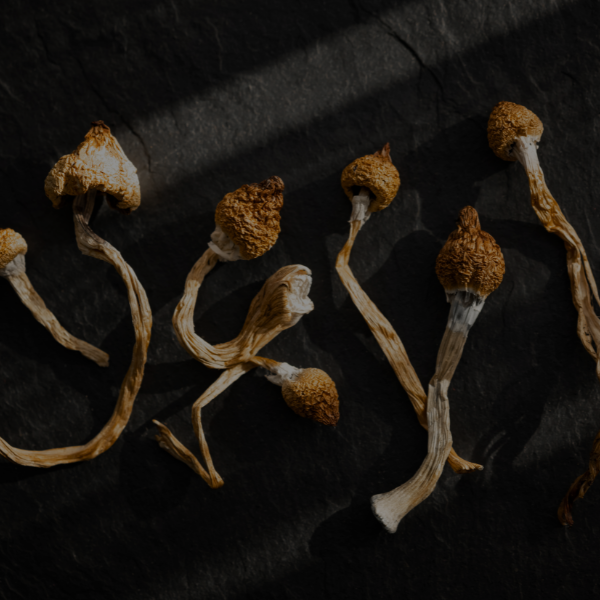
The easiest way to understand the difference is to think about a fungus the way you'd think about a plant. The mushroom is the visible, above-ground part. The truffle in this context is the dense underground structure called sclerotia.
That sounds technical, but the idea is simple. One grows where you can see it. The other forms underground as a compact survival structure. Dutch law ended up treating those two forms differently.

A plain-English analogy
It's similar to this:
| Form | What it is | How travelers usually encounter it |
|---|---|---|
| Mushroom | The above-ground fruiting body | The classic cap-and-stem “shroom” image |
| Truffle | The underground sclerotia | Vacuum-sealed packs sold in smartshops |
That physical distinction became a legal one. When Dutch lawmakers targeted “paddos”, they focused on the above-ground mushroom form. Truffles stayed outside that wording, which is why they remained on sale.
Why this matters more than the biology lesson
For visitors, the practical point isn't botanical trivia. It's that you can't walk into a smartshop and ask for “mushrooms” and expect the old pre-2008 market. What you'll usually be shown instead are packaged truffles with brand names or strain names.
If you want a deeper visual comparison, this guide on magic truffles vs mushrooms lays out the distinction in a way first-timers can grasp quickly.
Truffles and mushrooms may look different on the shelf, but the legal difference in Amsterdam comes down to which part of the fungus the law targeted.
Why the confusion persists
Most tourists don't care whether they're looking at a fruiting body or a sclerotium. They care about the experience. That's why the language stays messy. People keep saying “shrooms” even when they mean truffles.
Smartshops know this. Travelers know this. But if you're trying to stay accurate and avoid misunderstandings, it helps to use the local language correctly. In Amsterdam, truffles are the word you'll hear in legitimate retail settings.
Why Magic Mushrooms Were Banned in 2008
A traveler hears that Amsterdam is permissive, walks into the city expecting old-school magic mushrooms, and then runs into a rule that feels oddly specific. That rule came from a very specific moment in Dutch politics.
Fresh magic mushrooms were banned in the Netherlands on December 1, 2008, after a fatal incident involving a teenage tourist in 2007. A useful summary of that shift appears in this report on why magic mushrooms were banned in the Netherlands in 2008.
The event that pushed the ban through
On July 28, 2007, a French teenager in Amsterdam jumped from a bridge after taking magic mushrooms along with alcohol, with reports also pointing to pre-existing psychological issues. The case received heavy media coverage and quickly became the story lawmakers could point to when calling for tighter controls.
That distinction matters.
The incident was not just framed as a question about one substance. It involved mental health, alcohol, supervision, and the wider issue of how unprepared visitors sometimes use psychedelics in unfamiliar settings. But public debate often compresses complicated events into one simple target. In this case, mushrooms became that target.
What experts were saying at the same time
According to the same Primal Focus summary, the 2007 Trimbos Institute and CAM risk report described mushrooms as having low physical toxicity and low dependence risk. The same source also notes the contrast often raised in Dutch drug-policy debates, namely that alcohol causes far greater public-health harm.
That helps explain the paradox. The ban did not come from a clear expert consensus that mushrooms were uniquely dangerous. It came from a politically charged moment, where a visible tragedy carried more weight than a narrower risk assessment.
A good way to understand it is to compare lawmaking to airport security after a headline incident. Rules often tighten around the thing the public has just seen, even if experts are discussing a broader set of causes.
Historical takeaway: Amsterdam's current psychedelic rules make more sense once you see them as a response to public fear and political pressure, not as a neat scientific sorting of which psilocybin products are risky.
Why this matters for travelers now
The 2008 ban explains why visitors still get confused today. People hear that psilocybin is somehow still around in Amsterdam, then assume the old mushroom market must have survived in its original form. It did not.
What survived was the part the law did not clearly capture. That legal split is why Amsterdam developed a truffle market instead of keeping fresh magic mushrooms on ordinary sale. Understanding that history helps you read the city correctly. The rule is narrow, the background is messy, and the retail reality changed fast after the ban.
A Guide to Amsterdam's Smartshops
A smartshop is the kind of store travelers usually mean when they talk about buying truffles in Amsterdam. These aren't coffee shops. Coffee shops are associated with cannabis. Smartshops are where you'll usually find truffles, along with supplements, herbal products, and other wellness-adjacent items.
Post-2008, Amsterdam's smartshops pivoted toward legal truffles, and that market is now worth over €20M annually, according to Beckley Retreats' overview of the Netherlands truffle market and DIMS testing. The same source says the Drugs Information and Monitoring System (DIMS) analyzes 18,000 samples a year for purity and adulterants, with zero reported fatalities from regulated truffle sales.

What you'll see on the shelf
Most truffles are sold in sealed packs. The packaging often includes a product name, a suggested intensity, and basic usage guidance. You may also see names such as Atlantis or Tampanensis, which are commonly used to distinguish varieties.
That doesn't mean every package will feel identical. Potency can vary, and staff guidance matters. Treat packaging as a starting point, not a promise.
What to ask before buying
A good smartshop conversation should feel calm and practical, not pushy. Ask direct questions.
- “Is this better for a first-time user?” Staff can usually point you toward a milder option.
- “How long does it usually last?” You want to plan your evening around the experience, not guess.
- “How should I store it if I'm not taking it today?” Fresh products need sensible handling.
- “What should I avoid mixing it with?” This is one of the most important questions you can ask.
If the person behind the counter seems impatient or vague, leave and try another shop.
What responsible retail looks like
You should expect staff to talk about set, setting, dose, and preparation. You should also expect a reminder that these products are not party candy. The best shops don't sell fantasy. They help you make a grounded decision.
A short visual walkthrough helps if you've never been inside one:
Ask for advice as if you were buying hiking gear for unfamiliar terrain. You want specifics, not bravado.
A quick smartshop checklist
Before you buy, look for these signals:
- Clear labeling: Products should be packaged neatly with readable information.
- Calm staff: Good shops answer basic safety questions without acting annoyed.
- No wild promises: Be wary of any place selling guaranteed enlightenment or a “perfect trip.”
- Practical guidance: You want shops that discuss duration, environment, and first-time pacing.
Current Rules on Possession and Consumption
Buying truffles is only one part of the picture. Travelers also need to understand how Amsterdam handles possession and use in practice.
The Dutch system often described as gedoogbeleid, or a tolerance policy, deprioritizes prosecution for personal possession, generally under 5g equivalents, according to this summary of the Dutch drug policy framework. That same source notes that licensed retreats have been able to operate within this framework and report over 95% positive outcomes when they use pre-screening protocols.
What tolerance does and doesn't mean
Tolerance is not the same as “anything goes.” It means authorities may treat small-scale personal use differently from commercial activity or disruptive behavior. For a traveler, the safest interpretation is straightforward. Don't treat legality as permission to be careless in public.
Private, calm settings are the smart choice. Busy streets, canal edges, nightlife zones, and public transport are not.
Good judgment matters more than technical loopholes
If you're asking whether you can consume truffles openly in a park because they were bought legally, you're asking the wrong question. The better question is whether that setting supports a safe, low-stress experience for you and the people around you.
Use this rule of thumb:
- Best setting: Private indoor space with a trusted sober person nearby
- Poor setting: Crowded nightlife areas
- Worst setting: Anywhere near traffic, canals, bikes, or strangers who may need to intervene
For readers comparing Amsterdam's approach with broader U.S. discussions, this overview of legal psychedelic mushrooms gives useful context on how different legal frameworks can look.
Respect for local custom matters. Even where a product is sold openly, public intoxication can still draw unwanted attention.
The social side of the rule
Amsterdam is a city where residents live alongside tourism all year. Visitors who keep their plans quiet, private, and considerate tend to avoid problems. Visitors who treat the city as a psychedelic theme park usually don't.
A Traveler's Guide to Responsible Use
The legal distinction is useful, but safety matters more than legal trivia once you have truffles in hand. A good experience usually comes from boring decisions made in advance. Who are you with? Where will you be? What will you do if the mood shifts?
That matters even more because potency isn't perfectly uniform. According to Drug Science's summary of Dutch testing data, 12% of tested truffle samples in 2025 were over their labeled potency due to selective breeding, which raises the risk of difficult experiences for uninformed users in the Dutch truffle safety overview.

The safest mindset to bring
Treat truffles with the same seriousness you'd give any strong altered-state experience. Don't use them because your group is bored. Don't take them because Amsterdam feels permissive. And don't assume prior experience with cannabis tells you much about how you'll respond.
A steady mindset helps. So does having no urgent plans, no train to catch, and no social pressure to “make it fun.”
A practical safety routine
You don't need a complicated ritual. You need a stable plan.
- Start lower than your ego wants: If you're new, caution beats confidence.
- Pick one location and stay there: Constant movement creates unnecessary stress.
- Keep water nearby: Simple comforts help.
- Have one sober person present: Someone calm can make a huge difference if the experience becomes intense.
- Avoid mixing with alcohol or anything else: If something goes wrong, mixed substances make the situation harder to read.
If you want a broader primer on preparation, this guide on how to use magic mushrooms covers the basics in plain language.
When to get help
A difficult trip doesn't always mean danger. Sometimes it means fear, overstimulation, or a setting that's gone wrong. Move to a quieter space. Reduce noise. Offer reassurance. Keep the person physically safe.
Seek immediate local help if someone is at risk of falling, running into traffic, becoming violent, or losing touch with their surroundings in a way that creates danger.
The best trip-sitter isn't a philosopher. It's a calm adult who can stay grounded for hours if needed.
The best Amsterdam advice is simple
The travelers who handle truffles well tend to be the least dramatic about them. They ask questions in the shop. They keep the plan small. They don't chase the strongest package. They leave room for rest afterward.
That approach may sound unglamorous, but it's the one most likely to leave you with a safe, meaningful memory instead of a chaotic story.
If you want reliable education, product guidance, and a straightforward starting point from a U.S. retailer focused on adult customers, explore The Magic Mushroom Delivery. Their site includes mushroom products, functional mushroom options, and practical reading for people who want to learn before they buy.