
You're scrolling through listings for magic mushroom chocolate bars for sale, comparing polished packaging, bold strain names, and promises of a smooth experience. One bar claims to contain mushroom fruiting bodies. Another lists only a “proprietary blend.” A third looks almost identical to a familiar chocolate brand but provides no batch report at all. The difficult part isn't finding a product. It's determining what's inside.
Chocolate makes that problem harder because it hides unusual flavors, blends several ingredients together, and encourages consumers to treat a scored square as a precise dose even when the active contents haven't been verified. A careful buyer starts with identity, testing, labeling, and seller accountability, then considers taste, shipping, and price.
Why Buying Magic Mushroom Chocolate Bars Online Requires a Quality First Mindset
Online buying is convenient, but convenience can push quality checks into the background. Search results often emphasize flavor, visual branding, and claimed effects before they answer the questions that matter most: Which compounds are present? How was the finished bar tested? Does the report match the exact batch? What happens if the product causes a problem?
The product category itself is broad. Some mushroom chocolates contain functional species such as lion's mane, reishi, or chaga, products commonly positioned around stress, immunity, or cognitive support in market coverage of the category (functional mushroom chocolate product coverage). Others use language associated with psychedelic effects while avoiding a clear disclosure of the active ingredient. Those are not interchangeable products, even if both use the words “mushroom chocolate.”
Start with the product identity
Read the ingredient panel before reading the marketing copy. Look for the species or compound name, the form used, the amount per serving, the number of servings, allergens, and a lot or batch identifier. “Mushroom blend,” “euphoric blend,” and “nootropic matrix” don't tell you enough to evaluate identity or potency.
A reputable seller should be able to provide a certificate of analysis for the finished product, not merely a report for a raw mushroom powder. The report should identify the tested sample, show the laboratory name, state the analytical method, and connect the result to the lot printed on the package. A practical explanation of how a seller documents its sourcing and handling can be found in this guide to supply-chain transparency.
Treat familiarity as a starting point, not proof
A recognizable brand can still change suppliers, formulas, or manufacturing practices. Customer reviews may describe taste and delivery, but they can't establish chemical identity. A polished wrapper is not a substitute for a current, lot-specific report.
The market is expanding alongside the broader functional mushroom category. One industry projection places the global mushroom chocolate market at $0.8 billion in 2025, with a projection of $1.6 billion by 2034 and a projected compound annual growth rate of 8.5%, according to the cited 2025 market report. Growth brings more choice, but it also gives weak operators more opportunities to imitate credible packaging.
Practical rule: If a seller can't clearly explain what the bar contains and show testing for the finished lot, don't use the product's claimed effects to fill in the missing information.
What Independent Testing Reveals About Product Potency and Purity
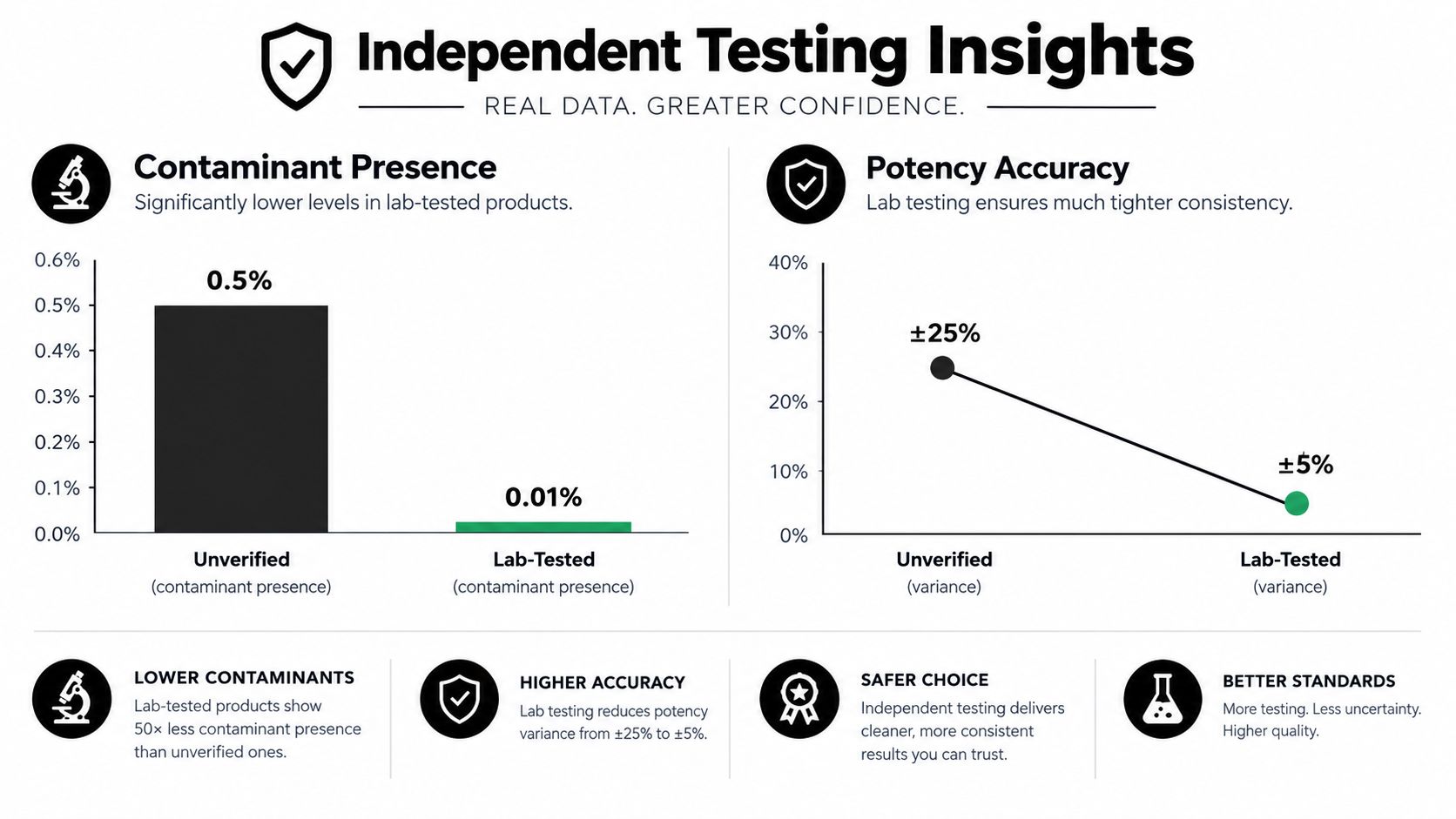
Independent analysis has exposed a sharp difference between what a wrapper suggests and what a finished bar or edible contains. In a 2025 JAMA Network Open analysis of 12 psilocybin-edible products sold in Portland, including one chocolate bar, none tested positive for psilocybin. Eight of the 12 products contained psychoactive constituents that weren't listed on the label, and three contained psilocin without psilocybin or its biosynthetic precursors. The authors treated that pattern as suggesting likely adulteration with synthetic psilocin rather than mushroom-derived material (JAMA Network Open analysis).
Why chocolate needs serious analytical work
Chocolate is a difficult matrix. Fat, cocoa compounds, flavorings, and other ingredients can interfere with detection or complicate preparation. The Portland analysis used dispersive solid-phase extraction along with GC-MS, UHPLC-high-resolution MS, and tandem MS across three platforms, a useful benchmark for buyers evaluating the seriousness of a testing program. A single informal screening result gives less confidence than a method designed to identify and confirm compounds in the finished food.
The practical question isn't just, “Was this product tested?” Ask what was tested, with which method, and against which lot. A report that only names a company, without a sample identifier or matching batch code, may not tell you anything about the bar in your cart.
Public-health events make the issue concrete
The CDC tracked a multistate outbreak linked to Diamond Shruumz products in 2024. By October 31, 2024, it reported 180 illnesses across 34 states, 73 hospitalizations, and 2 deaths. The agency also recorded 36 cases among people who reported eating a mushroom chocolate bar of an unspecified brand, showing why chocolate-bar claims deserve scrutiny beyond the familiar idea of a local smoke-shop product (CDC outbreak investigation).
The CDC warned consumers not to eat edible products claiming psychedelic effects because undisclosed ingredients may be linked to severe illness. That warning doesn't prove that every mushroom chocolate is contaminated. It does establish why undisclosed formulation is a material safety problem, not a minor labeling flaw.
A separate investigation had 33 mushroom-chocolate products from smoke shops in Los Angeles and San Diego tested by an independent laboratory. The report found that 40% contained no psilocybin, while 8 products contained 4-AcO-DMT, sometimes alongside psilocybin. It also noted that front-label claims about specific amounts of Psilocybe cubensis or fruiting bodies didn't reliably correlate with potency (independent testing report).
How to Verify Ingredient Quality and Label Accuracy Before You Buy
A trustworthy label lets you answer basic questions without guessing. Start by separating functional mushroom chocolate from a product marketed for psychedelic effects. Lion's mane extract, reishi, and chaga belong to a different category from a bar that implies altered perception. The wrapper should state which category it belongs to instead of using suggestive language while withholding the active ingredient.
Use the label as an evidence document
Check these details in order:
- Named ingredients: Look for specific mushroom species or named active compounds. “Proprietary blend” is a warning when the product promises a psychoactive experience but doesn't identify the substance responsible.
- Serving structure: A scored bar can help with portioning, but only if the label states the amount per square and the amount refers to a verified ingredient rather than the weight of a broad blend.
- Batch traceability: The lot number on the package should match the lot number on the laboratory report. A generic report dated long before the product was made isn't enough.
- Complete formulation: Review sweeteners, emulsifiers, flavorings, allergens, caffeine, cannabinoids, and other added compounds. “Natural” doesn't identify a substance or establish its safety.
- Clear manufacturer details: Look for a business name, contact method, manufacturing information, storage guidance, and a way to report a problem.
Some formulation sources illustrate how portioning can work in a conventional functional product. One example describes a 70% chocolate bar divided into scored pieces, with 500 mg of lion's mane fruiting-body extract in the bar (example of dose-per-piece labeling). That kind of label is useful because it identifies the mushroom form and connects the amount to the serving structure. It still isn't evidence that every bar using the same format has equivalent contents.
Ask the seller direct questions
Send a short message before ordering:
- What exact compounds or mushroom species are in this product?
- Is the laboratory report for the finished chocolate or only a raw ingredient?
- Does the report show the same lot number as the package?
- Which methods did the laboratory use?
- Does the report include identity, potency, and contaminant screening?
- Who should a customer contact if the package is damaged or the effects don't match the label?
The response matters. A seller who answers with a report and a specific explanation earns more trust than one who repeats marketing language. A seller who says the formula is secret, refuses to identify active ingredients, or sends an unrelated certificate has failed the basic verification test.
A product can be organic, vegan, or attractively packaged and still be chemically unidentified. Those claims describe ingredients or sourcing, not the presence and amount of the compound you expect.
Understanding Dosing, Potency, and Safe Starting Points
The most dangerous dosing mistake is treating the printed weight of a blend as though it were a measured amount of an active compound. A bar can contain a large total weight of chocolate, mushroom powder, or mixed ingredients while providing no reliable information about the substance responsible for its effects. If the report doesn't identify the active compound in the finished lot, a serving-size calculation becomes an estimate built on another estimate.
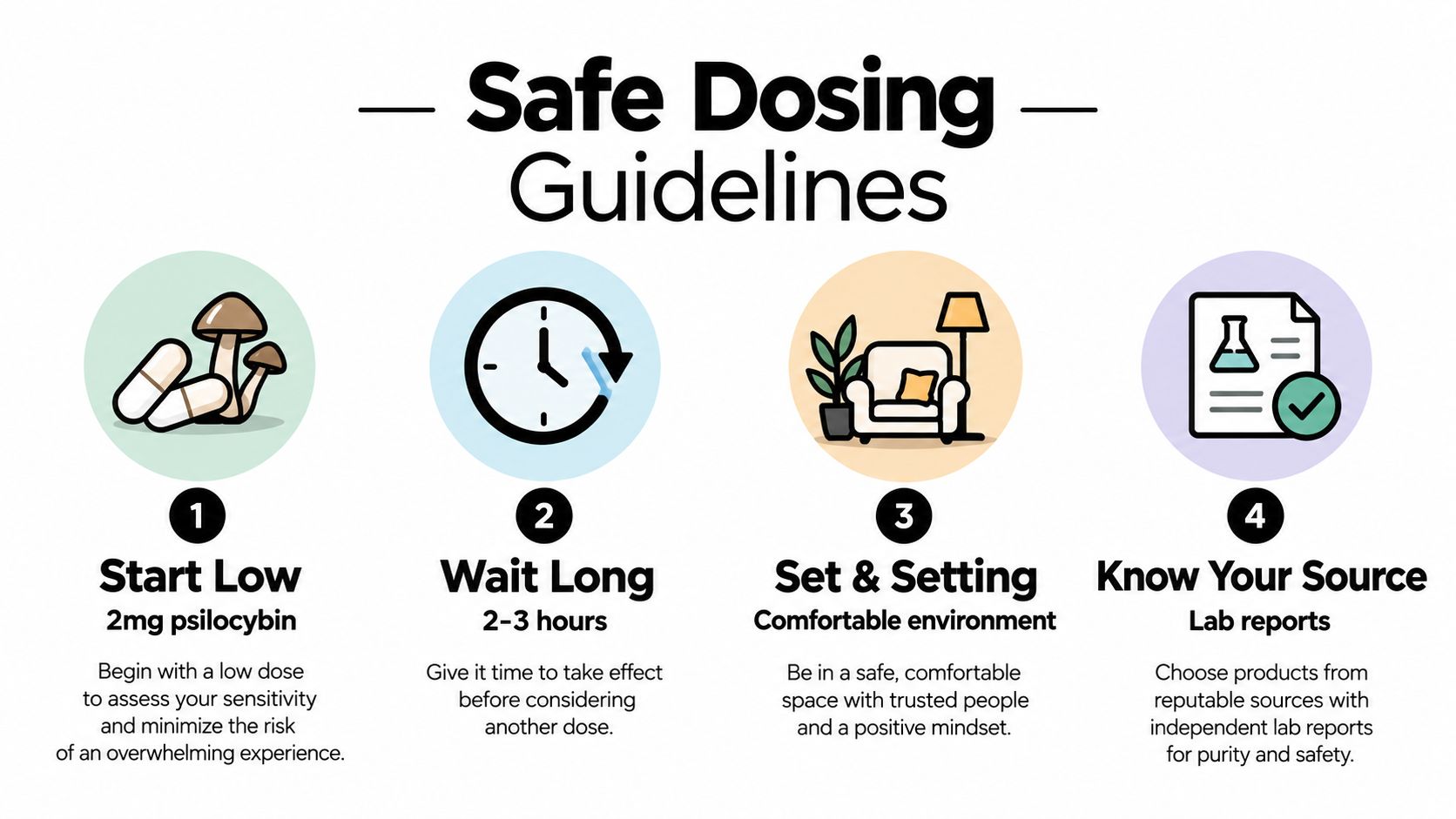
Portion size isn't potency
Scored squares are useful for controlling how much chocolate you eat. They don't prove that each square contains an even amount of active material. Mixing, settling, temperature, and manufacturing technique can affect distribution, particularly when a bar includes a small quantity of an active ingredient in a larger chocolate matrix.
Individual response also varies. Previous experience, food in the stomach, metabolism, current mood, medications, and the environment can all change how an edible feels. Body size alone doesn't provide a dependable dosing formula, and a prior experience with another brand doesn't validate the strength of a new bar.
A cautious approach has three parts:
- Choose verified identity first: Don't compensate for an unclear label by taking a smaller number of squares. Unknown content remains unknown at every portion.
- Use one measured portion: Don't stack servings because the first effects seem subtle. Edibles can develop gradually, and early impressions aren't a reliable potency test.
- Give the experience time: Wait for the product to develop before considering any additional amount. Avoid making decisions during the uncertain period when effects may still be building.
The supplied dosing visual uses a conservative starting framework, but its icons shouldn't be treated as a universal prescription. The important principle is start with the smallest clearly measured amount from a verified product, then wait in a controlled setting. If the label provides only a proprietary blend, there is no honest way to convert its total milligrams into a dependable active dose.
For readers who prefer a visual explanation of the pacing and source-checking process, this short video can sit alongside the written guidance:
Don't mix the experience with alcohol or other psychoactive substances. Keep the product away from children and pets, and don't drive, cycle in traffic, swim, climb, or handle machinery while affected. If someone develops severe confusion, chest pain, trouble breathing, a seizure, loses consciousness, or may have consumed an unknown substance, contact emergency services or poison control promptly.
Choosing a Reputable Seller and Shipping Option That Matches Your Needs
A good seller makes verification easy before checkout. A weak seller makes speed and discounts the center of the experience, then leaves you searching for ingredient details after the package arrives. Compare sellers on documentation, communication, packaging, and support, not just on delivery promises.

Match the shipping choice to the product
Fast shipping is useful for perishable chocolate, but speed doesn't repair a poor certificate of analysis. Standard tracked delivery may provide a better balance if it gives the seller time to package the product securely and gives you a tracking record. Untracked shipping costs less in some cases, but it leaves fewer options when a package is delayed or arrives damaged.
Look for packaging that protects the chocolate from heat and crushing. The seller should explain storage after delivery, especially if the bar contains ingredients sensitive to temperature or moisture. A discreet package can protect privacy, but discretion shouldn't mean the exterior lacks a sender identity or that the customer can't reach support.
A useful comparison looks like this:
| Priority | What to look for | Trade-off |
|---|---|---|
| Lowest cost | Basic shipping and fewer extras | Less delivery visibility or slower arrival |
| Speed | Express or expedited handling with tracking | Higher shipping cost, without any guarantee of better testing |
| Privacy | Plain outer packaging and restrained order details | You still need clear support and a usable return process |
| Accountability | Age verification, lot information, and responsive customer service | Checkout may take longer, but the seller is easier to evaluate |
Evaluate checkout and support
Age verification, a clear privacy policy, and secure payment handling are positive signs of an organized retailer. They don't prove product purity, so keep them separate from laboratory evidence. Customer service should answer ingredient and testing questions before purchase, not send an automated response that avoids the question.
Read the return and damage policy before paying. Chocolate exposed to heat may not be eligible for a simple return, and a seller should explain how it handles melted, broken, misdelivered, or incorrectly labeled items. The seller's discreet shipping information should describe packaging and delivery handling without using privacy as a reason to conceal product details.
The Magic Mushroom Delivery offers online access to raw mushrooms, infused chocolates, gummies, capsules, and mushroom coffee, with educational resources and discreet packaging. If you consider its products, apply the same standard used for every retailer: identify the ingredients, request the relevant batch documentation, and confirm that the product description matches what you receive.
Safe Use Recommendations for a Responsible Experience
A friend once opened a chocolate bar at a crowded gathering because the packaging made the product seem casual. The label gave broad serving suggestions but didn't identify the active ingredient. He took a piece, felt little at first, and started treating the delay as evidence that the bar was weak. The sensible decision would have been to stop and wait. The safer setting would also have been a familiar private room with one sober person available, not a noisy social space where leaving was difficult.
Set and setting aren't decoration. Choose a place where you can sit or lie down comfortably, lower the lights if that helps, and remove obligations for the rest of the experience. Put phones, keys, and anything you might use impulsively out of reach. A sober, trusted companion can provide calm reassurance and practical help if anxiety rises.
Prepare before opening the wrapper
Have water available, but don't force large amounts. Eat a normal meal if an empty stomach tends to make you uncomfortable, and avoid combining the product with alcohol, stimulants, or other substances. Keep the original packaging and any laboratory report nearby in case you need to tell a healthcare professional what was consumed.
Your mindset matters as much as your room. Don't use an unfamiliar product when you're already distressed, sleep-deprived, or trying to escape an urgent problem. Postpone the experience if you feel pressured to impress someone, redose quickly, or keep participating after you want to stop.
If anxiety appears, reduce stimulation and speak in short, reassuring sentences. Move to a quiet room, breathe slowly, sip water, and remind the person that the feeling can change. Don't restrain someone unless there is an immediate danger, and don't leave an impaired person alone near roads, balconies, water, fire, or other hazards.
The responsible move isn't proving that you can tolerate more. It's creating enough room to respond calmly when the product behaves differently from the label.
Seek urgent help for severe physical symptoms, loss of consciousness, seizures, dangerous agitation, suicidal thoughts, or suspected poisoning. Tell responders the product name, the amount consumed, the time taken, and whether anything else was used. The CDC's investigation of mushroom chocolate products demonstrates why unknown ingredients should be treated seriously rather than explained away as an unusually strong mushroom experience (CDC consumer and outbreak information).
Before you buy, save the product page, capture the lot-specific report, and check the label when the package arrives. If those details don't match, don't consume the bar. Visit The Magic Mushroom Delivery to review its chocolate and mushroom product categories, then contact the seller with your batch-testing and ingredient questions before placing an order.