

You've taken the mushrooms, settled into your room, and expected the familiar lift to arrive. Instead, your stomach tightens, saliva builds, and a wave of queasiness makes you wonder whether the entire experience is about to go sideways. That moment can feel alarming, but nausea is a documented acute effect of psilocybin, not automatically evidence of a bad batch or a psychological problem.
The most reliable way to reduce the risk is to manage the variables you can control: dose, food timing, stomach load, hydration, and sensory stimulation. No method guarantees a perfectly comfortable onset, but thoughtful preparation can make the early phase much easier to handle.
Understanding Why Psilocybin Causes Stomach Upset
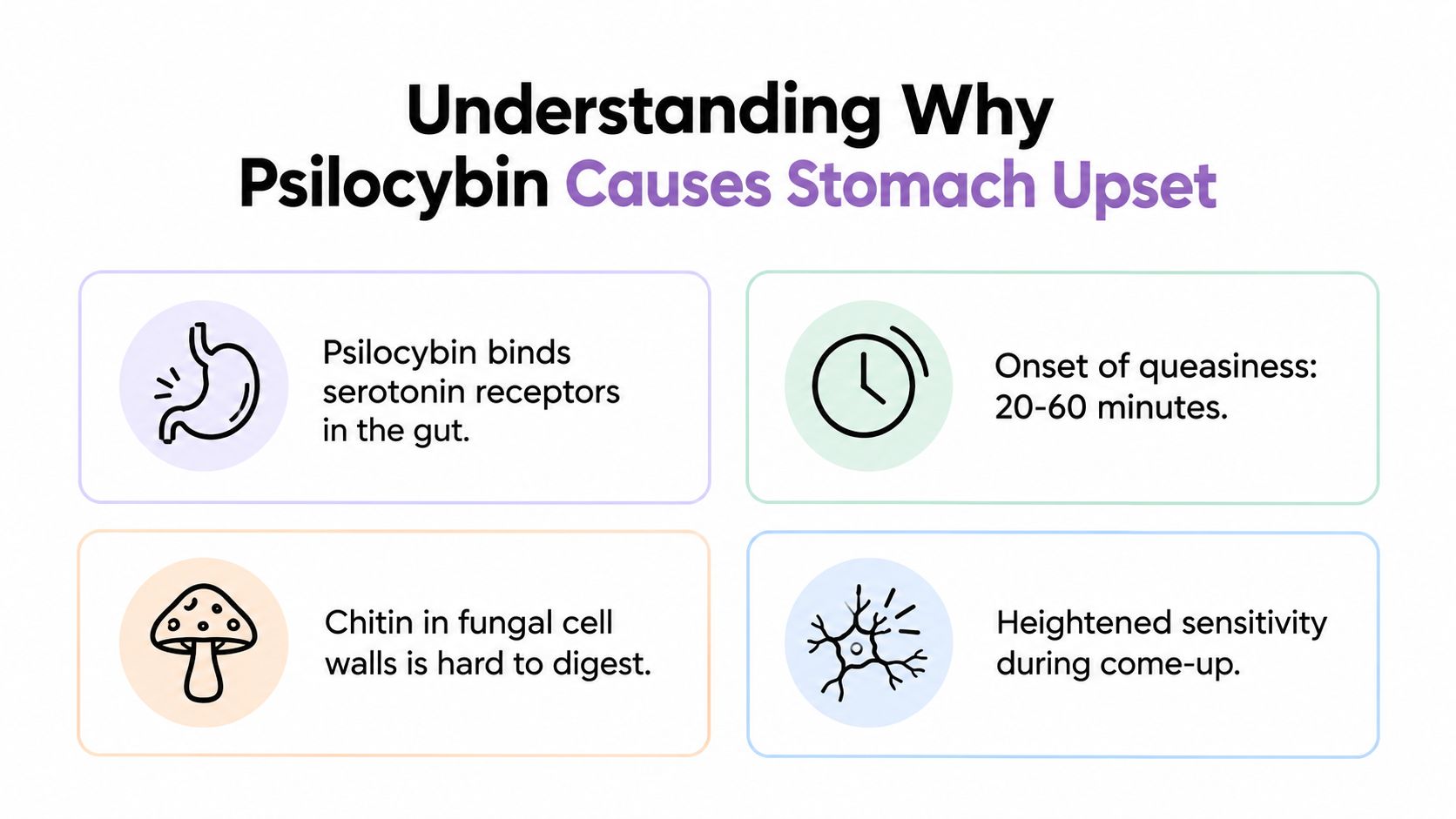
Psilocybin-related nausea is best understood as a combination of gut activity, digestion, and heightened bodily sensitivity. Psilocybin is converted in the body into psilocin, which affects serotonin signaling. Serotonin isn't limited to the brain. The digestive tract contains a large share of the body's serotonin activity, so changes in that signaling can coincide with queasiness, abdominal unease, or the urge to vomit.
Raw mushrooms add another possible source of discomfort. Their fungal structure contains chitin, a material that many people find difficult to digest. When the stomach is processing fibrous mushroom matter at the same time that the psychedelic effects are beginning, the physical sensations can feel more prominent than they would during an ordinary meal. Eating raw mushrooms can therefore create a different digestive experience from consuming a preparation that removes or softens much of the solid material. The practical differences are discussed in this guide to the side effects of eating raw mushrooms.
The come-up can also amplify normal sensations. A mild stomach contraction, warmth, change in breathing, or increase in salivation may receive intense attention once the effects begin. That attention can increase tension, and tension can make nausea feel stronger. This doesn't mean the nausea is imaginary. It means the gastrointestinal sensation and the nervous system can reinforce each other.
Dose is the clearest controllable factor
A 2024 meta-analysis of six randomized, double-blind clinical trials involving 528 participants found that nausea occurred significantly more often with psilocybin than with comparators. Across the included studies, nausea rates ranged from 4% to 48%. In one trial, nausea occurred in 22% of people receiving a high dose, compared with 7% at a moderate dose and 1% at a lower dose, showing a clear dose-response pattern. These findings are reported in the 2024 clinical meta-analysis of psilocybin adverse effects.
That pattern matters more than any single folk remedy. If a person is prone to nausea, taking less is generally a stronger and more evidence-supported adjustment than adding several ingredients to an otherwise excessive dose. Higher amounts can make the onset more physically demanding, while a lower amount may give the body more room to adapt.
Practical rule: Treat nausea as a dose and preparation signal first, not as a challenge to overpower.
Nausea also varies between people. An empty stomach, anxiety, heat, motion, strong smells, and the texture of raw mushrooms can all make the experience harder. Controlled research can't reproduce every variable of unsupervised use, so the safest interpretation is modest: dose reduction has the clearest clinical support, while the other strategies aim to remove additional sources of stomach stress.
Pre-Trip Preparation and Dietary Strategies
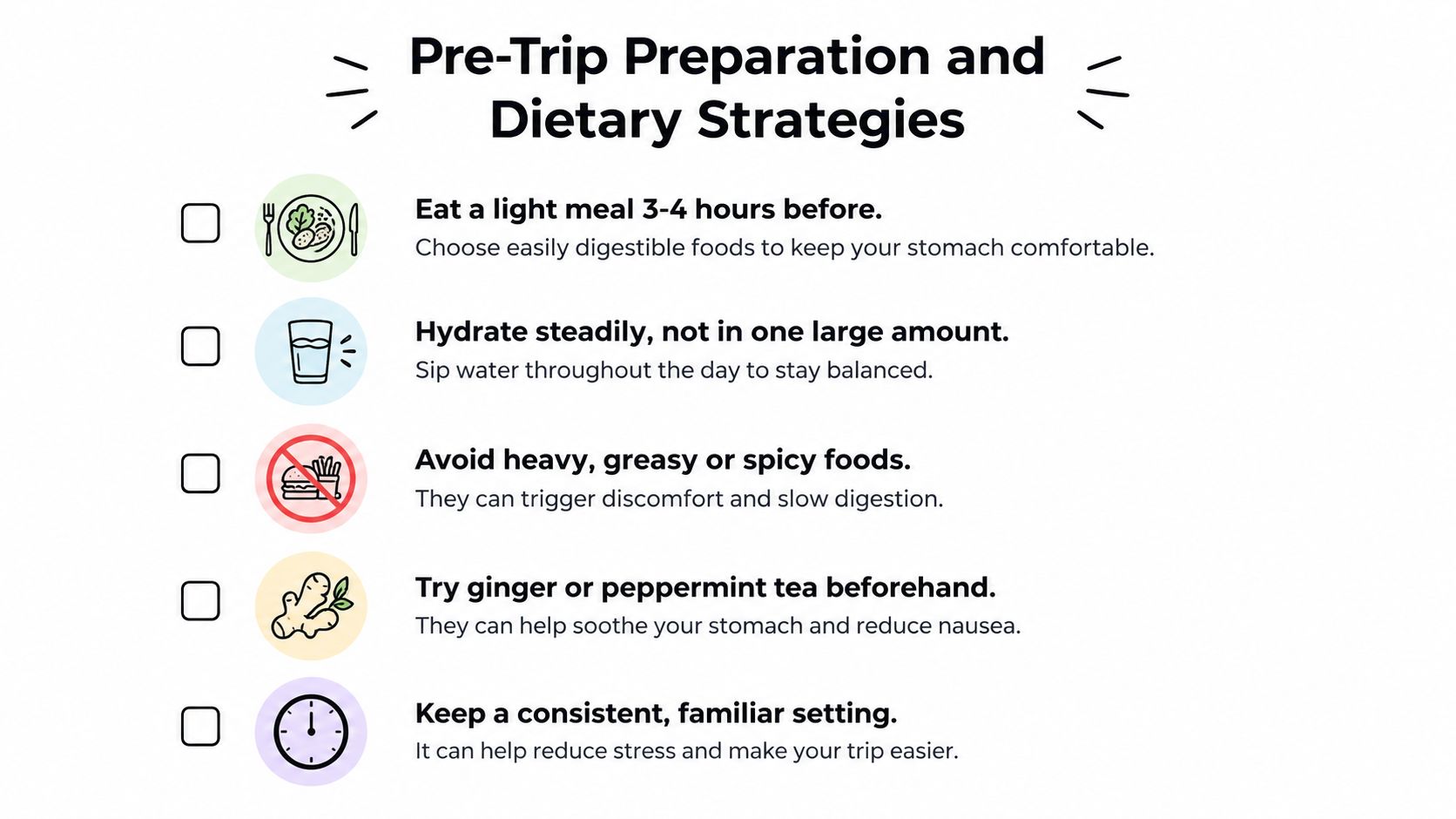
Strict fasting is often presented as the answer to nausea, but it can backfire for people whose stomachs react badly when empty. Clinical authors discussing psilocybin therapy specifically note that taking nutrition on the morning of dosing may reduce nausea associated with an empty stomach. The evidence doesn't establish one perfect meal size or universal schedule, so the useful approach is to choose a light, familiar meal rather than forcing a fast that leaves you shaky, hungry, or preoccupied with your stomach.
A heavy meal creates a different problem. Greasy, spicy, or very rich food can sit heavily and compete with the onset for your attention. The middle path is usually more comfortable: eat enough to avoid an empty, acidic-feeling stomach, but avoid turning the session into a digestion project.
Build a low-stress physical baseline
Use this preparation sequence:
Choose simple food. A small portion of a familiar, easily digested meal is more predictable than a large feast or complete fasting. If you already know that a particular food causes reflux, bloating, or discomfort, don't use it before dosing.
Drink steadily. Have water available and take normal sips rather than consuming a large amount at once. Overfilling the stomach can add sloshing, pressure, and discomfort, while failing to drink leaves you less prepared if sweating, vomiting, or dry mouth develops.
Skip alcohol and sedatives. Mixing substances makes it harder to interpret physical symptoms and can impair judgment when nausea begins. Clinical harm-reduction guidance recommends avoiding alcohol and other sedatives, especially when no trained staff are present.
Prepare the room before ingestion. Keep the space quiet, cool, and softly lit. Fresh air, comfortable clothing, an accessible bathroom, and a clear route to a safe place matter more once the effects have started.
Arrange sober support. A sober sitter can lower anxiety, reduce unnecessary movement, and notice when symptoms are becoming more serious. Their job isn't to control the experience. It's to provide calm reassurance and practical help.
Clinical guidance also emphasizes a supportive, low-stimulation setting when nausea appears. This clinical discussion of psilocybin dosing support supports food before dosing, water nearby, a quiet environment, and sober assistance as sensible harm-reduction measures.
Ginger tea or peppermint tea may feel soothing for some people, but don't treat them as a guaranteed antidote. Citrus preparations are popular because acidity may alter the mushroom material and can change the onset, yet citrus can aggravate reflux or a sensitive stomach. Test your tolerance to ingredients when sober, and don't pile several remedies together just because nausea is a possibility.
Choosing the Right Formulation and Dosing Method
The form you consume changes how much solid mushroom material reaches the stomach, how quickly the effects may develop, and how easy it is to measure the amount. Those variables have trade-offs. A faster onset may shorten the period of uncertainty, but it can also make the transition feel more abrupt. A preparation that reduces solid material may be gentler for digestion, but it doesn't remove the need for conservative dosing.
| Formulation | Digestion Speed | Stomach Load | Nausea Risk |
|---|---|---|---|
| Raw mushrooms | Slower and variable | Higher, because whole fungal material remains | More likely to feel heavy for sensitive stomachs |
| Mushroom tea | Often faster than whole mushrooms | Lower when solids are strained | May be more comfortable, though the active dose still matters |
| Acidic mushroom preparation | Often faster and more noticeable | Potentially lower if solids are removed | Can help some people, but acidity may irritate reflux-prone stomachs |
| Capsules | Depends on the capsule and contents | Moderate to high if powdered mushroom is retained | Convenient, but it still requires digestion of mushroom material |
| Infused chocolate | Depends on the product and meal context | Lower mushroom volume, but heavier food content | May suit some people, while chocolate can feel rich to others |
| Gummies | Usually low visible mushroom material | Lower solid mushroom load | Ingredients and dose consistency matter, so read the product information carefully |
Tea is often the most practical alternative for someone who dislikes chewing raw mushrooms. Steeping and straining can reduce the amount of fungal matter the stomach must process. It can also make the experience feel quicker, so start with a dose you already understand rather than assuming a tea preparation will feel identical to whole mushrooms.
Acidic methods, including the popular Lemon Tek mushroom preparation, may appeal to people who want a faster onset and less raw material. The trade-off is that an acidic drink isn't automatically gentle. If lemon, lime, or orange juice gives you heartburn, burning, or stomach pain when sober, it may make nausea worse rather than better.
Capsules, chocolates, and gummies can be easier to take than raw mushrooms, but “formulated” doesn't mean risk-free. Capsules may still contain powdered mushroom material, chocolate can feel rich, and gummies may contain sweeteners or other ingredients that don't agree with everyone. Choose the option with the clearest ingredient and dose information, and avoid taking extra because the onset feels slow.
Dose remains more important than the packaging
A controlled study comparing psilocybin doses found that nobody vomited after placebo or after 10 mg/70 kg or 20 mg/70 kg, while 2 of 20 participants, or 10%, vomited after 30 mg/70 kg. The dose-response finding is reported in this controlled study of psilocybin tolerability.
That result doesn't predict exactly what will happen to you, because mushroom potency and individual sensitivity vary. It does show why changing the formulation can't compensate for taking an unnecessarily high amount. For a sensitive stomach, the most sensible combination is a measured, conservative dose and a preparation that limits unnecessary solid material.
Managing Early Symptoms During the Experience
The first sign may be a hollow feeling under the ribs, followed by warmth, yawning, salivation, or a sudden need to lie down. The wrong response is to pace around, search for frightening explanations, or keep adding remedies. Sit or recline somewhere stable, loosen restrictive clothing, and reduce the sensory input around you.

Let the body settle before the mind escalates
Lower the lights, cool the room, and open a window if fresh air feels comfortable. Take small sips of water, but don't force a large drink. A sober sitter can say very little and still help by reminding you that the sensation is physical, temporary, and manageable.
Try breathing with a longer exhale than inhale. Keep your attention on the contact between your body and the chair or floor, then notice a few neutral details in the room. This isn't about suppressing the experience. It's about giving your nervous system fewer reasons to interpret a stomach sensation as danger.
If you feel the urge to vomit, move toward a bathroom or keep a container nearby without rushing. Kneeling or sitting on the floor can be safer than standing quickly. Avoid taking additional substances to counteract the nausea unless a medical professional has specifically advised you to do so. Self-medicating while altered can create new risks and can make it harder for a sitter or clinician to understand what happened.
The guide to stopping or calming a difficult trip can be useful to review before the experience, while you're sober and able to make a plan. During the session, simple actions usually work better than complicated instructions.
A calm soundtrack, a cool cloth on the forehead, and a quiet voice may help. Strong smells, crowded rooms, bright screens, and repeated discussion about whether something is wrong tend to keep attention locked onto the stomach. If vomiting passes and you can sip water, rest rather than trying to resume normal activity immediately.
A short visual breathing practice can help a sitter guide the room without excessive conversation:
Nausea doesn't automatically mean the experience is ruined. It becomes more concerning when the person can't recover, can't keep fluids down, develops severe pain, or shows signs of a broader medical problem.
Recognizing Red Flags and When to Seek Medical Help
Mild nausea, dizziness, headache, or a brief episode of vomiting can occur as short-term effects. Medical summaries describe these effects as generally mild in supervised settings, with adverse effects usually resolving within 24 to 48 hours. The Memorial Sloan Kettering overview of psilocybin provides this clinical context.
That doesn't mean every symptom should be dismissed as normal. A person using mushrooms outside clinical supervision needs a clear point at which comfort measures stop being appropriate. Persistent or severe vomiting, inability to keep even small sips of fluid down, markedly reduced urination, fainting, confusion, or worsening weakness should prompt medical help.
Severe abdominal pain deserves attention, especially if it doesn't resemble ordinary transient cramping or continues after the other effects have eased. Chest pain, trouble breathing, a seizure, collapse, or an inability to stay awake requires urgent emergency assistance. Don't leave an impaired person alone while waiting for help.
Psychological distress can become a safety issue
Anxiety is common during an uncomfortable onset, but extreme agitation, panic that doesn't respond to a calm environment, dangerous behavior, or persistent disorientation creates a different situation. The sober sitter should remove hazards, speak plainly, and contact emergency services when safety can't be maintained.
Don't give additional drugs, alcohol, or unprescribed medication to force the experience in a different direction. Tell medical professionals what was taken, how much was taken if known, when it was taken, and whether anything else was used. Accurate information helps clinicians choose appropriate care.
Escalation rule: If the person is deteriorating rather than gradually settling, stop trying to manage the session alone and seek professional help.
Final Takeaways for a Comfortable Journey
Learning how to avoid nausea on shrooms starts with accepting that the stomach may respond even when the setting is ideal. The practical goal isn't to guarantee zero sensation. It's to reduce unnecessary strain and respond early without adding panic.
Keep this day-of checklist simple:
- Choose a conservative dose. Clinical evidence links higher doses with more frequent nausea and vomiting, so dose management deserves priority over decorative remedies.
- Don't force a fast. A light, familiar meal can be a better baseline than an empty stomach, particularly if fasting makes you shaky or nauseated.
- Reduce solid mushroom load when appropriate. Tea or another clearly measured formulation may feel easier than chewing whole mushrooms, but faster onset and ingredient-specific stomach irritation remain possible trade-offs.
- Prepare the environment. A cool, quiet room, gentle lighting, accessible water, and a nearby bathroom reduce both physical and psychological strain.
- Use ginger or peppermint cautiously. They may feel soothing, but neither replaces careful dosing, and citrus can trouble people who are sensitive to acidity.
- Know the exit point. Persistent vomiting, dehydration, severe pain, collapse, or dangerous psychological distress calls for medical help rather than more self-experimentation.
The strongest approach combines physiology with restraint. Give your stomach less work, give your nervous system fewer surprises, and give yourself a sober person and a calm space in which to respond if nausea appears.
For adults researching measured mushroom options, The Magic Mushroom Delivery offers raw mushrooms, infused chocolates, gummies, capsules, and educational resources about effects and dosing considerations. Visit The Magic Mushroom Delivery to review the available formats and preparation guidance before deciding what fits your comfort and harm-reduction plan.