You've probably seen it happen. Someone describes a movie poster, a bedroom tapestry, a music video, or a strange dream sequence as “very Alice in Wonderland.” They usually don't mean Victorian children's literature. They mean warped scale, talking objects, impossible logic, a rabbit hole into a reality that feels playful and unsettling at the same time.
That's why Alice in Wonderland trippy has become such a durable phrase. It names a whole mood. You can use it for surreal art, psychedelic visuals, immersive theater, neon decor, stop-motion films, or even that feeling of losing the normal rules of time and proportion.
What makes this especially interesting is that the phrase joins together two different histories. One starts in the nineteenth century with literary nonsense. The other arrives much later, when popular culture began reading Wonderland through a psychedelic lens. Put those together, and you get one of the most recognizable surreal aesthetics in modern culture.
Why Is Alice in Wonderland So Trippy
You don't have to know the book well to recognize the feeling. Alice gets smaller, then larger. Animals talk like people. A grin floats without a cat. A tea party follows its own broken rules. Doors, bottles, cards, mushrooms, and mirrors stop behaving like ordinary objects and start acting like symbols.
That's the core of why people call it trippy. Wonderland keeps removing the stable reference points that help us feel oriented. Size changes. Language slips. Identity becomes uncertain. Time feels unreliable. The world stays vivid, but it no longer stays consistent.
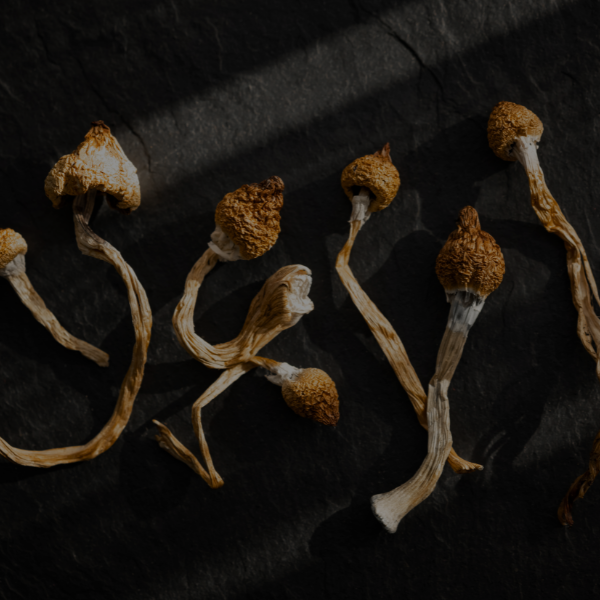
For many readers and viewers, that resemblance to altered perception is immediate. If you want a broader sense of why surreal experiences get described in those terms, this overview of what a mushroom trip can feel like helps explain the language people often borrow when they talk about distortion, intensity, and unusual thought patterns.
Wonderland feels “trippy” because it makes normal reality negotiable. Nothing fully breaks, but nothing stays fixed either.
A quick example makes this clearer. If a fantasy story gives you dragons, you still know the rules of that world. In Wonderland, the rules keep changing while you watch. Alice isn't just visiting a magical place. She's moving through a place where logic itself keeps shape-shifting.
That's why the story became shorthand for surreal experience. It captures confusion without losing charm. It offers nonsense, but carefully designed nonsense. And it gives that nonsense memorable images people keep recycling in art, music, fashion, and visual culture.
From Victorian Nonsense to Psychedelic Icon
Lewis Carroll's Alice's Adventures in Wonderland first appeared in 1865, has never been out of print, and one widely cited estimate says it has been translated into 176 languages. The original edition also featured 42 wood-engraved illustrations by John Tenniel, which helped define how later generations pictured Wonderland (publication history and Tenniel illustrations).

The original strangeness was already there
People often misunderstand this particular aspect. They assume the “trippy” label was built into the book from the start. It wasn't. Carroll wrote for Victorian readers, and the story belongs to the tradition of literary nonsense, not drug allegory.
That distinction matters. The original power of Alice comes from verbal play, paradox, reversals, and dream logic. The Caterpillar asks destabilizing questions. The Queen turns emotion into law. The tea party treats conversation like a machine that has come loose from its gears.
Tenniel's drawings reinforced that effect. They didn't just decorate the text. They gave form to its absurdity. A child falling into impossible space, creatures with human posture, and cards becoming authority figures all helped lock Wonderland into the visual imagination.
Why later generations read it differently
The psychedelic reading came much later. A major shift happened in the 1970s, when Alice became strongly associated with drug-culture imagery and psychedelic aesthetics rather than being understood mainly as Victorian nonsense (discussion of the later psychedelic association).
That later adoption makes sense for a simple reason. Wonderland already had the right ingredients. It was full of unstable scale, odd transformations, strange conversations, and a protagonist trying to make sense of a world that refused to stay orderly. Popular culture didn't have to invent those elements. It reinterpreted them.
This provides a valuable insight:
| Era | Main reading of Alice | What stands out |
|---|---|---|
| Victorian period | Nonsense literature | Wordplay, paradox, dream logic |
| Later psychedelic culture | Surreal perception symbol | Distortion, immersion, altered reality |
| Contemporary culture | Flexible visual shorthand | Rabbit holes, neon surrealism, identity play |
The real cultural fusion
The enduring “Alice in Wonderland trippy” idea comes from a fusion of both eras, not from either one alone.
- Carroll supplied the structure. He built a world where logic slips and identity stays unstable.
- Tenniel supplied memorable imagery. The visual language made Wonderland easy to quote and remix.
- Later culture supplied a new lens. The psychedelic era taught audiences to interpret those older images as signs of altered consciousness.
The book didn't start as a psychedelic text. Culture turned it into one by reusing its imagery in a new context.
That's why Wonderland still works today. It can be read as a classic children's story, a nonsense masterpiece, a surreal visual archive, or a psychedelic symbol. Few stories survive that many reinterpretations without losing their shape. Alice does because its core idea is flexible: reality can become strange without becoming meaningless.
Anatomy of the Wonderland Trippy Aesthetic
When people say something has an Alice in Wonderland trippy vibe, they're usually pointing to a cluster of recurring features rather than one single image. You can spot those features in illustration, film, stage design, posters, room decor, and digital art.

Distorted perception
Wonderland keeps changing the body's relationship to space. Alice grows too large for a room, shrinks too small for ordinary objects, and moves through environments that refuse stable proportion. That's one of the fastest ways the aesthetic creates disorientation.
In visual design, this often shows up as:
- Warped scale where doors, teacups, mushrooms, or furniture feel too large or too small
- Impossible perspective that makes a hallway, garden, or table feel dreamlike rather than architectural
- Mirror-like distortion that bends familiar objects just enough to make them uncanny
If you've ever looked at surreal art and thought the room itself seemed to wobble, that's the effect. For a related breakdown of how visual distortion gets described in psychedelic language, this guide to common mushroom visual effects gives useful vocabulary.
Dream logic
The second ingredient is not visual at all. It's structural. Scenes in Wonderland don't always develop by ordinary cause and effect. They jump, twist, contradict themselves, and still somehow feel connected.
Practical rule: If a scene feels internally vivid but externally unreasonable, you're probably in Wonderland territory.
That's why the Mad Tea Party matters so much to the aesthetic. It isn't just weird because the characters act oddly. It's weird because the social script itself has broken. Conversation no longer helps people understand each other. It becomes a loop.
Living objects and unstable identity
Another major feature is anthropomorphism, or the habit of giving life, personality, or agency to animals and objects. In Wonderland, cards become guards, animals hold conversations, and everyday things feel on the edge of sentience.
A technically grounded example appears in Jan Švankmajer's Alice, which uses mixed-media puppetry and stop-motion to animate ordinary objects, including a marionette Mad Hatter and soldiers made from playing cards. That material instability creates a dream-like state where identity, scale, and motion keep shifting (analysis of Švankmajer's techniques).
Color and sensory overload
Not every version of Wonderland uses the same palette, but the modern trippy adaptation often leans toward high contrast, saturated color, and visual excess. That doesn't mean any bright design is “Alice.” The color works because it supports instability.
A useful comparison:
| Element | Ordinary whimsical design | Wonderland trippy design |
|---|---|---|
| Color | Cheerful and coordinated | Intense, clashing, overstimulating |
| Space | Decorative fantasy | Bent, unstable, shifting |
| Characters | Cute or magical | Playful but slightly unsettling |
| Logic | Coherent fantasy rules | Unpredictable dream rules |
Symbolism that stays open
The last piece is symbolic looseness. Rabbit holes, keys, clocks, mirrors, mushrooms, masks, and checkerboard patterns all suggest transition, uncertainty, or altered perspective. They feel meaningful without pinning down one exact meaning.
That openness is why the style remains reusable. Artists can borrow the grin, the hat, the falling figure, or the keyhole shape and still make the work feel contemporary. The symbols travel well because they don't arrive with one fixed interpretation.
Wonderland's Influence on Modern Culture
The strange thing about Wonderland is that it never stays in the book. It leaks outward. You see it in album art, mural work, fashion shoots, immersive events, animation, and performance design. Even when an artist doesn't retell the plot, the visual language is instantly legible.

Why artists keep returning to it
Wonderland offers creators a ready-made toolbox. They can borrow rabbit holes for descent, tea parties for social absurdity, checkerboards for instability, or the Cheshire grin for disembodied presence. Those motifs are flexible enough to work in dark art, playful illustration, or psychedelic collage.
That's a big reason the aesthetic lasts. It doesn't depend on one medium. A painter can use it. A filmmaker can use it. A stage director can use it. A digital artist can remix it into a looping visual with neon mushrooms and floating typography, and audiences still recognize the reference.
From stage spectacle to marketing shorthand
Recent coverage of MOMIX's 2025 stage production shows the Alice theme being marketed with overtly hallucinogenic and surreal imagery, including repeated rabbit-hole motifs and a clear psychedelic framing. In that coverage, the Wonderland look functions as shorthand for an immersive, mind-bending experience rather than as a simple adaptation of the original story (review of MOMIX's 2025 production and its visual framing).
That's a useful clue about the present moment. “Alice in Wonderland trippy” now works like a cultural shortcut. Audiences don't need a full explanation. They already know the promise: visual transformation, strange scale, dreamlike movement, and a plunge into the surreal.
Video can show this transformation more vividly than description alone:
The aesthetic beyond nostalgia
People sometimes assume this is all nostalgia for a familiar childhood story. That's only part of it. The stronger reason is that Wonderland still gives modern culture a language for experiences that feel unstable, immersive, fragmented, or psychologically charged.
You can see that in several contemporary uses:
- Live performance: Choreography and costume design turn the rabbit hole into a full-body experience.
- Music visuals: Artists borrow the imagery to signal unreality, rebellion, or perceptual drift.
- Interior design and events: Party planners and decorators use the style for environments that feel theatrical and disorienting.
- Online art culture: Digital creators remix Cheshire grins, card soldiers, clocks, and oversized flora into surreal visual loops.
What persists is not one “correct” Alice. It's the reusable grammar of Wonderland. Once you learn that grammar, you start spotting it everywhere.
Bringing Wonderland Home With Trippy Decor and Art
A good Wonderland-inspired room feels like you walked into a familiar space where ordinary rules no longer quite apply. The floor pattern pulls your eye in one direction. A mirror bends the room back at you. One object looks slightly too large, and that small mismatch changes the mood of everything around it.

That effect matters more than character references. Lewis Carroll's Wonderland was always built on altered logic, shifting scale, and visual contradiction. The psychedelic versions that came later kept the same core idea and translated it into color, pattern, and sensory atmosphere. If you want the look at home, start with that shared foundation.
Build the room around distortion
Characters can appear later, if you want them. The stronger starting point is visual instability.
A room begins to feel Wonderland-like when it interrupts your sense of proportion or symmetry, much like the book interrupts ordinary cause and effect. A slightly warped mirror, a checkerboard rug, or a lamp that feels oversized for its corner can do more than a shelf full of themed figurines. These choices suggest that the room has its own logic.
A few elements work especially well:
- Distorted mirrors: Irregular frames or antique glass create mild visual uncertainty.
- Checkerboard accents: Rugs, trays, tiles, or wall art introduce tension and rhythm.
- Oversized forms: A giant flower print, mushroom-shaped stool, or exaggerated clock shifts the room's sense of scale.
One well-placed object is often enough.
Use color the way psychedelic art uses it
Victorian Wonderland illustrations often relied on line, contrast, and symbolic detail. Twentieth-century psychedelic interpretations pushed those ideas into saturated color and optical intensity. Your decor can follow the same evolution.
Start with a stable base so brighter elements have something to push against. Black, cream, dark green, faded red, or natural wood all work well. Then add two accent colors with clear contrast. Let one item carry the strongest visual charge, such as a tapestry, framed print, throw pillow cluster, or lighting feature.
The room needs tension, not noise. If every surface competes for attention, the result feels busy rather than surreal.
Choose art that suggests altered perception
The most effective Wonderland art usually does more than quote the story. It recreates the sensation of entering it.
Look for pieces with warped proportion, layered symbols, melting clocks, impossible florals, fragmented portraits, or tea-party imagery pushed into dream territory. Collage, mixed-media illustration, blacklight-reactive prints, and stop-motion-inspired visuals often fit better than polished character merchandise because they preserve some strangeness. That strangeness is the point.
Some adults also connect decor with a broader ritual atmosphere that includes music, lighting, journaling, or intentional preparation for an intense sensory experience. The Magic Mushroom Delivery is one example of a retailer in that space. If that context is part of what interests you, their guide on how to have a good mushroom trip explains how mindset and environment shape the overall experience.
Keep DIY projects small and precise
Wonderland decor works best through concentration. A single corner can carry the whole theme.
Try one of these focused setups:
- Create a framed cluster: Combine a rabbit-hole image, a distorted clock, and an abstract floral print.
- Assemble a tea-party vignette: Use mismatched cups, patterned fabric, and one strange centerpiece.
- Change the light: Projection lamps, colored bulbs, or blacklight-reactive details can shift the room quickly.
The best rooms do not copy every symbol from the story. They borrow Wonderland's deeper trick. They make ordinary space feel curious, unstable, and a little dreamlit.
Navigating Surreal States with Set and Setting
Whether you're watching a disorienting film, walking through immersive theater, meditating intensely, or spending time with intense visual art, your experience depends on more than the material in front of you. It also depends on set and setting.
“Set” means your internal condition. That includes mood, expectations, emotional state, and mental readiness. “Setting” means your environment. That includes light, sound, comfort, company, and how safe or pressured the space feels.
People often underestimate this. They think a surreal experience is created entirely by the artwork, event, or atmosphere. But two people can encounter the same material and have completely different reactions because they arrive with different levels of tension, curiosity, fatigue, or openness.
A simple framework helps:
- Check your set: Are you calm, rushed, anxious, curious, distracted?
- Check your setting: Is the room comfortable, overstimulating, noisy, welcoming?
- Check your social context: Are you with people who make the experience easier or harder?
If you want a general guide to preparing for a positive, grounded experience with intense perception shifts, this article on how to have a good mushroom trip outlines the same core principle in practical terms.
A surreal experience lands better when your mind isn't fighting the room around you.
That applies broadly. Wonderland works best when you can lean into uncertainty without feeling overwhelmed by it. A comfortable environment doesn't remove the strangeness. It gives the strangeness somewhere safe to unfold.
The Enduring Allure of a Trippy Tale
The lasting power of Alice in Wonderland trippy comes from a rare combination. Carroll created a world of nonsense precise enough to endure, and later culture supplied a psychedelic frame that made the imagery newly legible to modern audiences. Neither part alone explains the phenomenon. Together, they do.
That's why Wonderland keeps returning in new forms. It can become stop-motion unease, live-performance spectacle, neon poster art, surreal room decor, or visual shorthand for the collapse of normal logic. The rabbit hole still works because it names a universal feeling. Entering a space where the usual rules no longer hold.
The story also stays alive because it doesn't force one interpretation. It can be playful, eerie, literary, symbolic, childlike, complex, or psychologically strange. Few cultural icons can move across so many moods without becoming empty. Wonderland remains full because its central question still feels fresh: what happens when perception stops behaving the way you expect?
That's the core reason the aesthetic lasts. It doesn't just show weird things. It gives form to the experience of disorientation itself, then wraps that disorientation in wit, imagery, and wonder. People keep coming back because the tale still does what the best surreal art does. It makes reality feel unfamiliar, but not unreachable.
If you want to explore the culture around surreal perception further, The Magic Mushroom Delivery also publishes educational resources on visuals, mindset, and experience planning alongside its product catalog, which makes it a useful starting point for adults looking to learn more.