
You've probably seen the term blue caps shrooms in a product listing, a forum thread, or a conversation with a friend and thought, “Are those a strain, a species, or just a nickname?” That confusion is common. Mushroom names get tossed around loosely, and “blue caps” is one of those labels that sounds specific while covering several different possibilities.
That matters because mushrooms that get grouped under the same casual name can differ in appearance, habitat, and strength. If you're trying to make careful choices, vague language isn't helpful. You need to know what people usually mean, what visual signs are relevant, and where people often make unsafe assumptions.
The good news is that the term becomes much less mysterious once you strip away the slang. A lot of the uncertainty comes from one visible feature: the tendency of some psychoactive mushrooms to bruise blue after handling or damage. From there, the main work is learning which species people are talking about, how those species differ, and why appearance alone never tells the whole story.
Your Introduction to Blue Caps Shrooms
A typical situation goes like this. Someone asks for “blue caps,” and the reply assumes everyone already knows what that means. One person is thinking of wavy caps. Another is thinking of liberty caps. Someone else just means any mushroom that turns blue when bruised.
That's where people start mixing up a nickname with a real identification label. Blue caps shrooms isn't a precise scientific name. It's a casual term people use for mushrooms that often show blue or blue-green bruising, especially those associated with psilocybin and psilocin.
There's also a second layer of confusion. A mushroom can be called “blue” because of bruising, because of cap color, or because the person describing it isn't using formal mycology terms. If you're new to mushrooms, all three can sound like the same thing.
Simple starting point: Treat “blue caps” as a conversation starter, not a final identification.
A responsible approach starts with clarity. You want to separate nickname from species, species from potency, and potency from experience. Once you do that, the topic becomes much easier to understand.
People often come to this subject with two goals at once. They want a useful experience, and they want to avoid preventable mistakes. Both goals depend on the same habits: careful identification, conservative dosing, and realistic expectations about what visual traits can and can't tell you.
What Does 'Blue Caps' Actually Mean
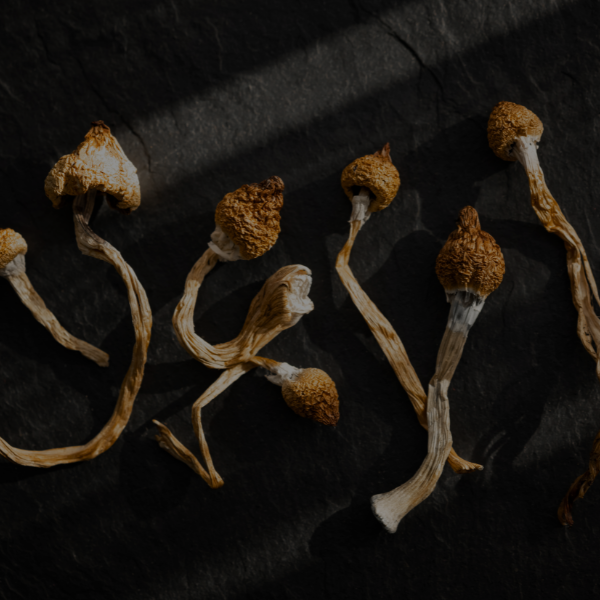
The term blue caps usually refers to mushrooms that bruise blue or blue-green when handled, cut, or dried. The color shift isn't just a cosmetic quirk. It happens because damaged mushroom tissue triggers oxidation of psilocin, the active dephosphorylated form of psilocybin, and the European Union Drugs Agency's hallucinogenic mushroom profile notes that this blue or green bruising reaction is common in Psilocybe species while also warning that wild mushrooms are difficult to identify morphologically.

Why the mushroom turns blue
A simple analogy helps. Cut an apple and leave it on the counter. The exposed flesh changes color because compounds react with oxygen. Blue bruising in psilocybin mushrooms is different chemistry, but the basic idea is similar: damage exposes compounds and the tissue changes color.
That's why bruising often shows up after picking, squeezing, or drying. It's a reaction to tissue disruption, not a built-in paint color.
Here's the key point people miss. Blueing is a clue, not a conclusion. It can support an identification, but it can't replace one.
Why the name causes confusion
“Blue caps” sounds like one thing, but it usually isn't. It's a catch-all label used for multiple mushrooms that may share bruising behavior without sharing the same look, habitat, or typical strength.
A few practical reminders help keep that straight:
- Common name only: “Blue caps” isn't a formal species name.
- Bruising is contextual: Handling, cutting, and drying can all intensify visible blueing.
- Different species fit the label: People may use the term for more than one psilocybin mushroom.
- Visual overlap happens: Mushrooms can share one trait while differing in others that matter more for identification.
A blue bruise tells you something happened to the tissue. It doesn't tell you everything you need to know about the mushroom.
That's why careful observers go beyond cap color. They look at habitat, cap shape, stem features, spore color, and growth pattern. The nickname is useful only if it leads you to ask better questions.
Identifying Common Blue Cap Species
A picker finds small mushrooms with some blue bruising and assumes the job is done. That is where mistakes start. The safer habit is to sort mushrooms by species-level clues, the way a birder checks beak shape, size, and habitat instead of relying on one patch of color.

Wavy caps and liberty caps
Two species are often swept into the “blue caps” label. Psilocybe cyanescens, commonly called wavy caps, and Psilocybe semilanceata, commonly called liberty caps, are both psilocybin mushrooms, but they do not look alike in the field and they do not usually grow in the same places.
Psilocybe cyanescens is known for a cap margin that becomes visibly wavy as it matures. The stem is usually pale, the cap is often caramel to chestnut when moist, and the mushroom is commonly associated with wood chips, mulch, and cultivated beds. Miraculix Lab's profile of Psilocybe cyanescens is useful here because it focuses on features people can check instead of relying on the nickname alone.
Psilocybe semilanceata has a different build. It is usually slimmer, with a more pointed or nipple-like cap, and it is more often associated with grassland settings, especially acidic pasture or meadow environments noted earlier in this article. If someone calls both species “blue caps,” the label hides differences that matter for identification.
A quick comparison
| Species | Common name | Standout trait | Typical habitat |
|---|---|---|---|
| Psilocybe cyanescens | Wavy cap | Wavy cap margin at maturity | Wood chips and mulched beds |
| Psilocybe semilanceata | Liberty cap | Slender shape with a pointed cap | Acidic grasslands |
Habitat acts like a filter. A mushroom growing from chipped wood pushes your identification in one direction. A mushroom growing in open grass pushes it in another.
That does not mean habitat identifies the mushroom by itself. It means habitat helps narrow the field before you look closer.
If you want a broader species map, this guide to types of Psilocybe mushrooms helps place these names in context.
What experienced identifiers check first
Beginners often lock onto cap color because it is easy to notice. Experienced identifiers slow down and build a profile from several traits at once.
A practical checklist includes:
- Cap shape: Mature P. cyanescens often develops a distinctly undulating edge.
- Growth surface: Wood chips, mulch, and woody debris suggest different possibilities than pasture grass.
- Stem and overall form: Liberty caps usually look slimmer and more delicate than wavy caps.
- Condition of the specimen: A crushed, dried, or waterlogged mushroom can hide the traits you need.
- Full cluster view: One mushroom can mislead. Several mushrooms from the same patch often show the pattern more clearly.
This is the part many quick guides skip. Identification works by stacking clues, not by finding one magic feature.
Before looking at more examples, this short visual overview can help anchor the differences in your mind.
Field rule: If you cannot confidently identify the species, label it unknown and leave it alone. That is a safety skill, not a failure.
Understanding Potency and Expected Effects
A person hears that a batch is "blue caps," assumes that tells them how strong it will be, and gets surprised by how different the experience feels from what they expected. That confusion happens because "blue caps" is a loose nickname, not a potency category.
Strength depends on the exact species, the specific batch, and how the mushrooms were grown, handled, and stored. Two mushrooms that both bruise blue can produce very different effects.
Potency depends on the species and the batch
Earlier sections explained why names like liberty caps and wavy caps should not be lumped together. Potency is one of the main reasons. Some blue-capped species are often described as relatively strong. Others land closer to the middle range. Even within one species, one flush can feel noticeably different from another.
That is why responsible use starts with a simple rule: treat every new batch as unknown until experience proves otherwise.

A practical way to frame this is to stop asking, "Are blue caps strong?" and ask, "Which species is this, and how cautious should I be with this batch?" If you want a clearer reference point, this overview of magic mushroom potency across species and batches helps show why broad labels can mislead.
What the effects can actually feel like
People often expect visuals first. In practice, the experience usually changes several layers of perception at once.
Common effects include:
- Sensory shifts: colors may look richer, surfaces may appear more patterned, and music may feel more absorbing
- Emotional amplification: curiosity, tenderness, anxiety, relief, or vulnerability can all feel stronger than usual
- Changes in thinking: thoughts may become more associative, symbolic, or inwardly focused
- Time distortion: minutes can feel stretched, compressed, or oddly hard to track
- Body effects: some people notice lightness, restlessness, nausea, yawning, or a heavy relaxed feeling
A lower-potency experience may feel reflective and manageable. A stronger one can make ordinary tasks hard to follow, including texting, making decisions, or holding a simple conversation. That is one reason dose estimates need humility.
Why the same dose can feel different
People sometimes assume the mushroom alone determines the trip. The mushroom matters, but it is only one part of the equation. Mindset, setting, recent food intake, sleep, emotional state, and personal sensitivity all shape the outcome.
A useful comparison is alcohol tolerance versus alcohol content. The drink matters, but so do the person and the context. Psilocybin works the same way, except the emotional setting often matters even more.
This is also where confusion about blue bruising causes problems. More visible blueing does not give you a reliable read on how intense the experience will be. Bruising can signal the presence of active compounds, but it cannot tell you dose strength with any precision.
Set expectations that leave room for uncertainty
The safest expectation is variability. Mushrooms are not a packaged product with identical effects every time. They are biological material, and biology varies.
A helpful mindset question is simple: what am I bringing into this experience right now?
That question matters because psilocybin can magnify what is already in the room, including your mood, your environment, and the people around you. Clear expectations do not remove uncertainty, but they reduce the kind of overconfidence that leads to poor decisions.
A Guide to Safe Dosing and Responsible Use
Safe use starts with one principle: start lower than your curiosity wants to. That advice becomes more important with blue caps shrooms because bruising intensity doesn't tell you how strong the mushroom is.
The verified data for this article notes that potency depends on species, substrate, and age, not just visible blueing, and that P. cyanescens can contain up to 1.68% psilocybin in the Beckley Retreats overview of wavy cap identification and potency. The same source also notes that blueing can increase after damage while active compounds degrade during poor storage. So the mushroom may look “bluer” without being more potent.
A practical dosing framework
Because the article brief requires a dried-mushroom guide, here is a conservative framework for adults who already know the species and want a cautious starting point. These are general educational ranges, not guarantees.
| Dose Level | Typical Amount (grams) | Expected Experience |
|---|---|---|
| Micro | 0.1 to 0.3 | Subtle mood or perception shifts, often below the level of a full psychedelic experience |
| Low | 0.5 to 1 | Noticeable changes in mood, sensory appreciation, and introspection |
| Medium | 1 to 2 | Clear psychedelic effects, stronger emotional and perceptual changes |
| High | 2 to 3+ | Intense experience with marked shifts in perception, thinking, and sense of time |
For a more detailed walkthrough, this psilocybin dosage guide can help you think in terms of caution, product form, and personal sensitivity.
How to make the first decision
If you're trying a new species or batch, don't choose your dose based on confidence alone. Use a decision process.
- Unknown batch means lower starting point. Even if you've used mushrooms before, a new batch can land differently.
- Empty schedule beats a busy day. You want space before, during, and after the experience.
- One variable at a time. Don't mix uncertain potency with an unfamiliar setting.
Set and setting still shape the outcome
Dose matters, but context often decides whether the experience feels workable. “Set” means your internal state. “Setting” means the environment and people around you.
A safer setup usually includes:
- A calm location: somewhere quiet, familiar, and easy to control
- A clear intention: curiosity is fine, but confusion and pressure aren't a great starting point
- A trusted sober person for stronger sessions: especially if you're inexperienced or exploring a higher dose
- Basic comfort items: water, a blanket, low-stimulation music, and a plan to avoid unnecessary interruptions
Don't chase a dramatic experience on the first try. Chase a manageable one.
That approach often gives people a better result anyway. You can always adjust upward another time. You can't undo taking too much.
Sourcing and Storing Your Mushrooms Correctly
A common mistake happens before any dose is measured. Someone buys "blue caps" based on the name alone, puts them in a drawer in a thin bag, and weeks later has no clear idea what species they have, how old the material is, or whether it was stored well enough to stay consistent.
Good sourcing reduces that uncertainty. Good storage keeps it from coming back.
What to look for in a seller
The term "blue caps" is loose, so the seller should be more specific than the label. A reliable listing helps you answer practical questions: What species is this supposed to be? What form is it in? Is it dried whole material, a capsule blend, or an infused edible? If those basics are blurry, everything that follows gets harder, including dose decisions.
Useful signs include:
- Clear product labeling: species name or a plain explanation of what is known and what is not
- Distinct format descriptions: whole mushrooms, capsules, chocolates, and gummies should not be lumped together
- Plain-language education: storage, onset, duration, and general safety information should be easy to find
- Visible support details: there should be a real way to ask questions before buying
- Straightforward shipping and handling information: you should know how the product is packaged and delivered
The Magic Mushroom Delivery is one example of a retailer that presents multiple mushroom formats with educational material and ordering details in one place. That kind of presentation does not prove quality by itself, but it shows the level of clarity you should expect.
One more point matters here. Avoid treating branding, strain-style names, or strong bruising color as proof of potency or identity. Clear information beats colorful marketing every time.
How to store them
Storage works like protecting dried herbs from heat and moisture, except that diligence is more essential because consistency matters for safety. If mushrooms pick up moisture, break down from warmth, or sit in light for long periods, you lose confidence in what you are taking.
Keep them dry, dark, and cool in an airtight container. A sealed glass jar with a food-safe desiccant pack is often a practical option if the material is fully dry to begin with.
A few habits make a real difference:
- Keep humidity out: avoid bathrooms, kitchens, and frequently opened plastic bags
- Reduce light exposure: store the container in a cupboard or drawer, not on display
- Open the container less often: repeated exposure to air and moisture can lower stability
- Label the contents: note the species or product type and the date you got it
- Watch for warning signs: softness, unusual odor, or visible moisture means the batch should not be trusted
Storage is not just about shelf life. It is about keeping your future decisions grounded in something stable. If you know what you bought and you know how it was stored, you have a much better chance of judging dose and effects with care.
Frequently Asked Questions About Blue Caps
Are blue caps shrooms one species
No. Blue caps shrooms is a casual label, not a formal species name. People often use it for mushrooms that bruise blue, especially psilocybin-containing ones, but the term can refer to different species.
Does a darker blue bruise mean a stronger mushroom
Not reliably. Bruising is a reaction to tissue damage, and visual intensity doesn't map neatly to potency. Treat blueing as an identification clue, not a strength meter.
What's the difference between wavy caps and liberty caps
The biggest practical difference is that they're different species with different growth habits and different typical potency profiles. Wavy caps are associated with wood chips and mulched beds, while liberty caps are associated with acidic grasslands.
What should a first-time user focus on most
Keep the process simple. Confirm the species as well as you can, start low, choose a calm environment, and avoid stacking uncertainty on uncertainty.
Is it better to choose by name or by format
Format matters for convenience, but species knowledge matters more for predicting intensity. A capsule, chocolate, or whole mushroom product still depends on what mushroom is being used and how clearly that's described.
What's the safest mindset to bring in
Curiosity is good. Pressure isn't. People do better when they're rested, unhurried, and open to a range of effects instead of trying to force a specific kind of trip.
If you want to keep learning while you shop, The Magic Mushroom Delivery combines product listings with educational guides on dosing, potency, and mushroom formats, which can help adults 21+ make more informed decisions before choosing a product.