
Have you ever wanted the roasty ritual and earthy comfort of mushroom coffee, but not the coffee part that can leave you wired, jittery, or staring at the ceiling later? That gap is exactly where mushroom coffee without coffee lives. It keeps the mushroom ingredient story, but the cup is built on caffeine-free bases instead of coffee beans, so the experience shifts from “morning buzz” to “calm, flavorful drink.”
That distinction matters more than most labels admit. A drink can be coffee-free without being caffeine-free, and a drink can be decaf while still carrying some caffeine from coffee itself. Once you separate those ideas, the category becomes much easier to understand, taste, and buy with confidence.
What Does Mushroom Coffee Without Coffee Mean
A reader usually meets this category after one simple thought, “I like the idea of mushroom coffee, I just don't want coffee.” That's a fair instinct. Some people want to keep the warm cup ritual, others want an evening drink that won't interfere with sleep, and many just want the earthy flavor without the sharp edge of brewed coffee.
Mushroom coffee without coffee is best understood as a mushroom beverage built on non-coffee bases such as chicory, cacao, roasted grains, dandelion, burdock, or date seed. It's not the same thing as a decaf coffee blend with mushrooms stirred in. The base changes the drink's personality before the mushrooms even enter the picture.
The simplest way to think about it
A coffee-based mushroom blend still begins with coffee, so the familiar stimulant effect comes from coffee itself. A coffee-free version removes that base and lets the mushroom extract, spices, and alternative roots or grains carry the drink. The result can feel closer to an herbal infusion, a cacao drink, or a roasted grain latte than a standard mug of coffee.
Practical rule: If the bag starts with coffee, it's not a coffee-free drink. If it starts with chicory, cacao, grains, or another non-coffee base, you're looking at a different category.
That difference matters for expectations. A coffee-free mushroom beverage can be warm, earthy, creamy, and satisfying, but it shouldn't be sold to yourself as “coffee without the coffee taste.” It's its own drink, and that's part of its appeal.
The rest of the journey is simple: learn the label language, compare it with decaf, figure out what it tastes like, and decide whether you want a morning cup, an evening cup, or just a calmer ritual.
Coffee-Free Versus Decaf and Caffeine-Free
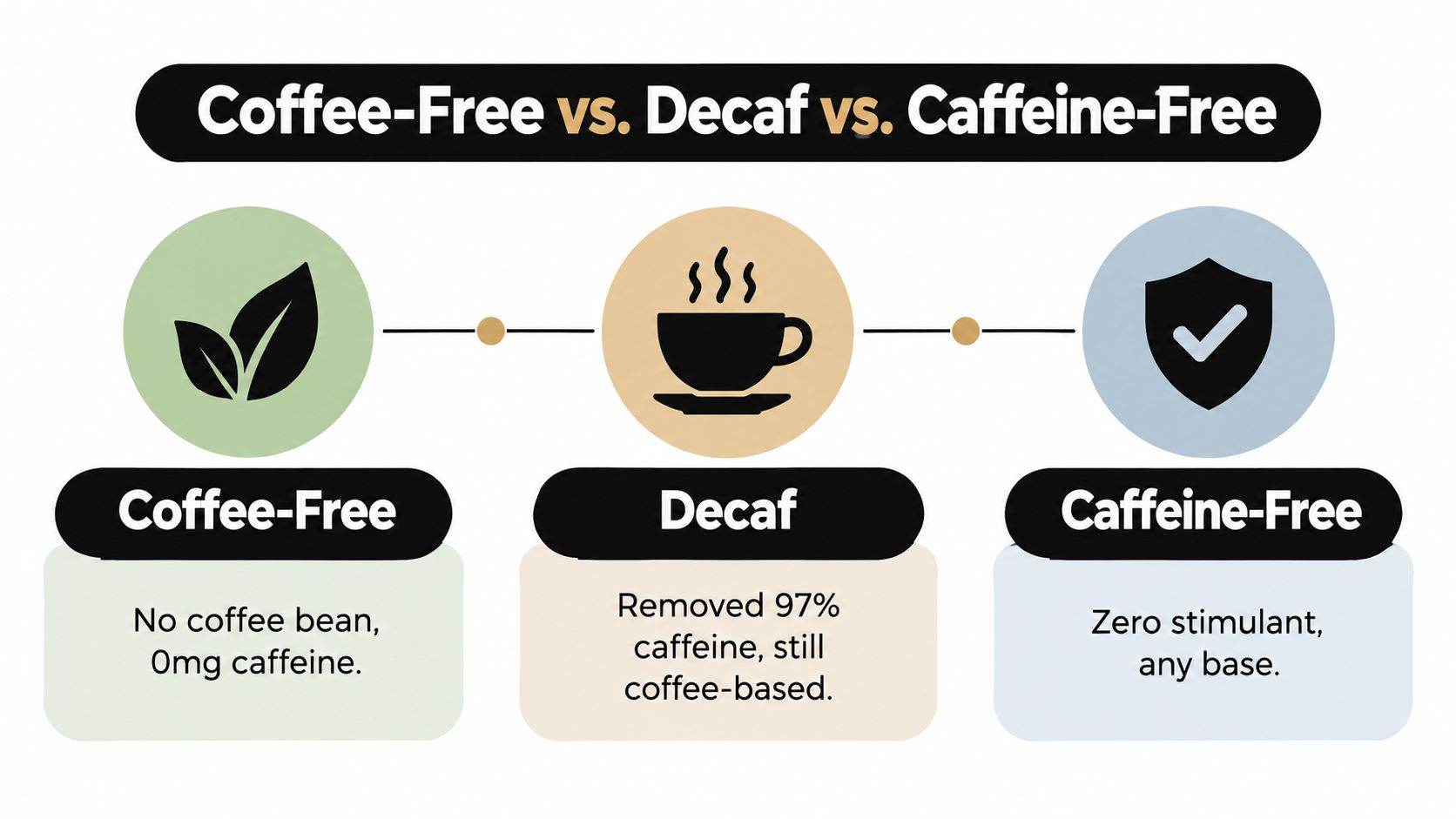
Are coffee-free, decaf, and caffeine-free interchangeable terms? No. Each describes a different part of the drink. Decaf changes the amount of caffeine in coffee, coffee-free changes the base, and caffeine-free describes the stimulant content.
Coffee-free, decaf, and zero caffeine
Decaf coffee remains coffee, even after much of its caffeine has been removed. FDA consumer guidance says decaffeinated coffee typically contains approximately 2–15 mg of caffeine per 8-fluid-ounce serving FDA caffeine guidance. That amount may suit someone reducing caffeine, but it does not meet a strict zero-caffeine goal.
A coffee-free mushroom drink starts with a different base, such as chicory, dandelion, burdock, roasted grains, date seed, cacao, or mushroom extracts. The absence of coffee does not automatically guarantee the absence of caffeine. Cacao, tea, matcha, guarana, and added botanical stimulants may introduce caffeine or a similar stimulating effect.
A useful comparison is a lamp. Decaf dims the original coffee lamp. Coffee-free replaces the lamp with another kind. Caffeine-free means the light is off, although the label still needs checking to confirm what is in the drink.
Read the label for the decision that matters
The label should make two points clear: whether coffee or coffee-derived ingredients are present, and whether caffeine or stimulating ingredients have been added. FDA guidance explains the role of the Supplement Facts panel and ingredients list for dietary supplements FDA supplement labeling guide. Use those details rather than relying on phrases such as “coffee alternative” or “calm energy.”
Bottom line: For a coffee-free, caffeine-free mushroom drink, look for no coffee-derived ingredients, no added caffeine, and no stimulant bases.
Three useful categories
| Option Type | Typical Caffeine | Common Bases | Best For |
|---|---|---|---|
| Coffee-free, caffeine-free | None expected from coffee ingredients | Chicory, dandelion, burdock, roasted grains, mushroom extracts | People avoiding stimulants |
| Coffee-free, caffeine-containing | Varies by added ingredient | Cacao, tea, matcha, guarana, botanical blends | Drinkers who want a lighter stimulant effect |
| Decaf mushroom coffee | Low but not zero | Decaffeinated coffee plus mushroom extracts | People who want coffee flavor with less caffeine |
These categories separate the base from the stimulant question. A drink can be free of coffee yet still contain caffeine, while decaf can offer familiar coffee flavor without delivering a completely caffeine-free cup.
Coffee-Free Mushroom Drinks Versus Regular Mushroom Coffee
Regular mushroom coffee usually begins with coffee plus mushroom extract. That means the most reliable stimulant in the cup is still coffee. A coffee-free version removes that base and asks the mushrooms, botanicals, and roasting notes to do the sensory work instead.
A market backdrop helps explain why this category keeps growing. The broader U.S. functional-mushroom market was estimated at $3.9043 billion in 2023 and projected to reach $8.5682 billion by 2030, with an estimated 12.1% CAGR from 2024 through 2030 Grand View Research. Those figures describe the wider functional-mushroom category, not coffee-free beverages alone, but they show that mushroom-based wellness products are no tiny corner of the market.
Side by side, the differences are practical
Regular mushroom coffee tends to taste more like coffee first, mushroom second. Coffee-free versions usually taste softer, earthier, or more cocoa-like, depending on the base. That changes when people drink it too, morning lift for coffee-based blends, calmer rituals or evening sipping for coffee-free ones.
The other difference is transparency. A coffee-free blend only makes sense if the label makes the species and base obvious. Without that, it's hard to know whether you're buying a zero-caffeine drink, a low-caffeine drink, or a cup that just sounds gentler than it is.
| Feature | Regular Mushroom Coffee | Coffee-Free Mushroom Drink |
|---|---|---|
| Main base | Coffee | Chicory, cacao, grains, or other non-coffee base |
| Caffeine | Present | Can be none, or present if tea, cacao, or stimulants are added |
| Flavor | Coffee-forward, often bitter | Earthier, softer, often more herbal or cacao-like |
| Best use | Morning ritual with stimulation | Calm ritual, caffeine avoidance, evening cup |
The best way to shop is to read the species name, extraction details, and serving amount, not just the front-of-pack claims. A bag that says “mushroom complex” tells you almost nothing about the actual cup.
What the Evidence Says About Benefits
The benefits question has three parts: how closely the drink replaces coffee's sensory ritual, whether it lowers caffeine intake, and what mushroom compounds remain in the finished beverage. Keeping those questions separate prevents a pleasant caffeine-free drink from being presented as a proven treatment.
A satisfying ritual is not clinical evidence
A coffee-free mushroom drink can replace part of the coffee habit. Warm liquid, layered flavor, and a familiar mug create comfort without coffee's sharper roast and bitterness. That practical benefit matters to anyone seeking a calmer cup or an evening alternative.
The evidence for direct mushroom effects is more limited. Extraction method, particle size, solvent, temperature, and time influence which compounds reach the cup. Beverage research describes hot-water extraction at about 90–95 °C for 2–4 hours for water-soluble polysaccharides ScienceDirect article on mushroom beverage extraction. That finding explains why two products containing the same species may not deliver the same formula.
For a closer look at how coffee-based functional blends position these ingredients, see this guide to functional mushroom coffee. Its category language can help you understand product positioning, but marketing claims still need to be checked against the label.
What should be on the label
A species name by itself gives too little information. A clearer package identifies the mushroom species, extraction ratio, extraction solvent, and beta-glucan amount per serving. “Mushroom blend” or “functional complex” does not show how much material is present or how it was prepared.
A systematic review of fungal beta-glucan trials used with cancer treatment found insufficient information to compare products by dosage, administration route, and timing, while assessing safety and possible immune effects systematic review. That does not make mushroom ingredients irrelevant. It means the finished beverage deserves scrutiny as a specific formula, rather than as a generic representative of its mushroom species.
Caffeine status also belongs in this check. A coffee-free drink may contain no caffeine, but added tea, cacao, or stimulants can change that. Decaf coffee is a separate category, and it can still contain 2–15 mg per serving, so “coffee-free” and “caffeine-free” should never be treated as synonyms.
Best expectation: choose a flavorful caffeine-free beverage with mushroom ingredients, not a proven treatment or a guaranteed replacement for coffee's alertness effect.
Before buying, look for named species, serving amount, and analytical standardization. Without them, the front label offers a story rather than a measurable formula.
How to Make Mushroom Drinks Without Coffee
What makes a good coffee-free mushroom drink? Start with a base that already tastes enjoyable, then add mushroom powder as a supporting note. Chicory supplies roasted depth, cacao adds richness, and warm milk rounds out earthy flavors. The result should feel like a complete drink, not coffee with an ingredient removed.
1. Morning chicory-and-mushroom mug
Use hot water or warm oat milk as the base. Add chicory powder, a mushroom extract powder, and a small pinch of cinnamon, then whisk until smooth. Chicory brings bitterness and body, while the mushroom powder fills the middle with a gentle earthy character.
Choose darker roasted chicory for a fuller, more coffee-like profile. For a softer cup, use more oat milk and less mushroom powder. Maple syrup or honey can smooth the edges without making the drink taste like dessert.
2. Evening cacao mushroom drink
Cacao gives the mug a bittersweet chocolate flavor, which can make mushroom notes feel more like woodland earth than ash or roast. Warm dairy or plant milk, whisk in cacao, add mushroom powder, and finish with vanilla.
This recipe works well as a comforting evening drink because its flavor is rich without relying on coffee. Add the ingredients gradually, especially if you are unfamiliar with the mushroom powder.
3. Fast instant mix for busy days
For the quickest option, place a measured mushroom powder mix in a mug and pour in hot liquid. Use water just off the boil, around 200°F, so the powder dissolves instead of clumping. Whisk thoroughly, or use a handheld frother. A fork works when that is all you have.
Once the powder is smooth, add milk to adjust the texture. Dairy makes the drink rounder and creamier, while oat or almond milk keeps it lighter. Taste before adding sweetener, since some powders already have a strong earthy finish.
Simple rule: start with a small amount, whisk well, taste before sweetening, and change one variable at a time.
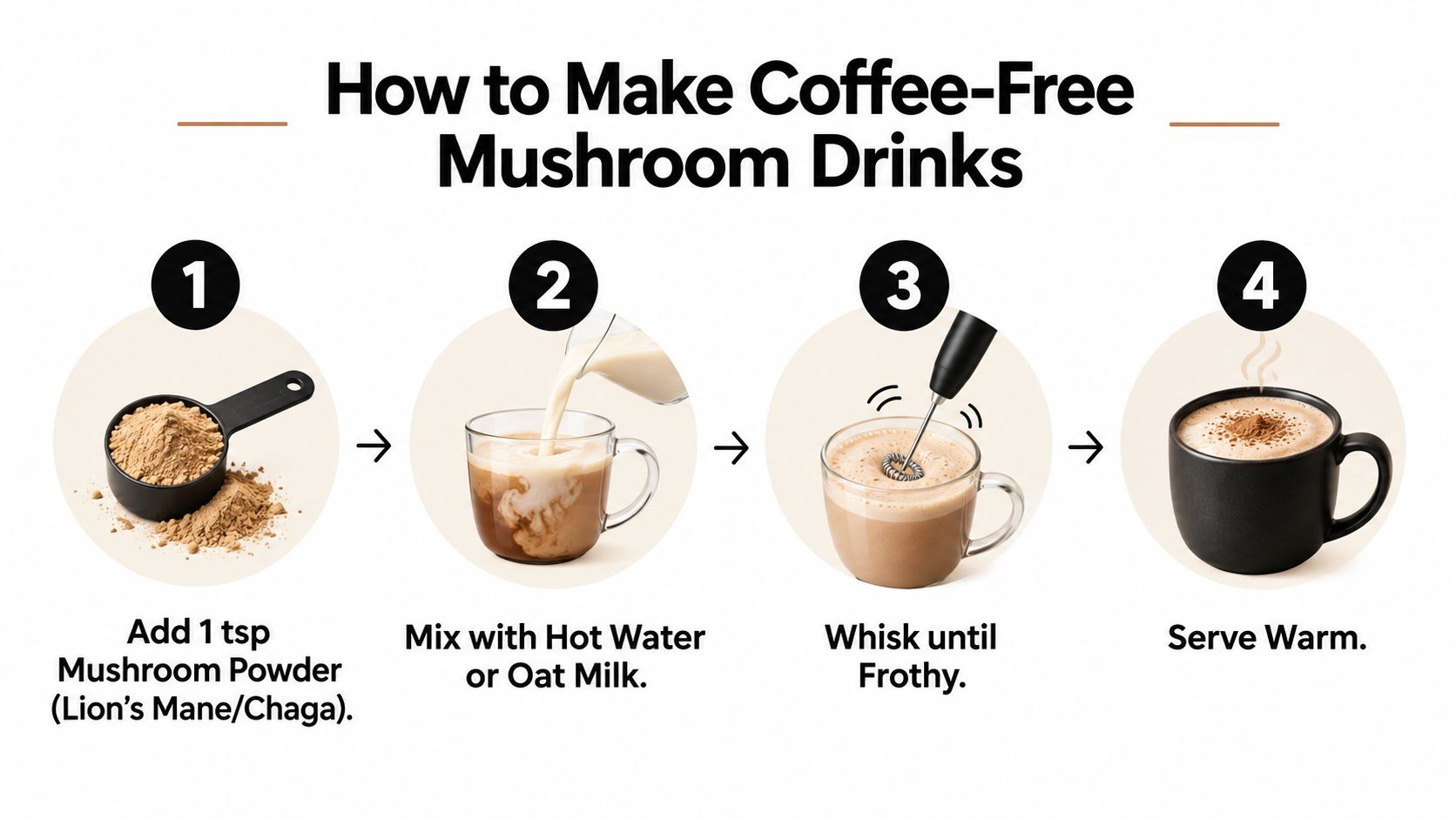
For a visual walkthrough, this guide to how to make mushroom coffee demonstrates how the base, liquid, and whisking affect the finished mug. The same sequence works for a coffee-free version.
A small initial dose and thorough frothing usually produce the smoothest first cup. Adjust the base only after you have tasted the mushroom mixture on its own.
Taste Profiles and Flavor Expectations
A coffee-free mushroom drink doesn't taste like a stunt version of coffee. It tastes closer to a roasted herbal drink with creamy edges, or sometimes a cocoa-forward latte with a woodland note underneath. That difference surprises people who expect a dead ringer for a café brew.
What each ingredient tends to bring
Lion's mane usually reads as mild and earthy rather than loud. Reishi can bring bitterness that lingers on the back of the tongue. Chicory feels roasted and slightly sweet, cacao brings a deeper cocoa edge, and a splash of vanilla or cinnamon can smooth the whole mug out.
The easiest tasting method is simple, aroma first, body second, bitterness third, finish last. A thin drink feels almost tea-like, while a fuller drink clings more like a latte. That framework helps you figure out whether the problem is the mushroom, the base, or just not enough milk.
Tasting note: if the first sip feels too earthy, don't assume the whole category is wrong for you. A little sweetener, a warmer milk, or a different base can shift the cup completely.
How to adjust the cup
A pinch of cinnamon softens harshness. Vanilla adds a bakery-like roundness. Honey, maple, or a chopped date brings sweetness without flattening the flavor. Frothed milk gives the drink the kind of body that makes the mushroom notes feel intentional instead of muddy.
Think of this more like herbal tea culture than espresso culture. You're not trying to copy a bean-based drink perfectly, you're building a new flavor habit that happens to sit in the same mug shape.
For a deeper look at flavor expectations, the mushroom coffee taste guide is useful as a companion read.
Who Should Choose Coffee-Free Mushroom Beverages
Could a warm mushroom drink suit your routine better than coffee? This category fits people who want the comfort of a morning or evening ritual without coffee-derived stimulation. If coffee disrupts sleep, increases anxiety, worsens palpitations, or just feels too sharp, a coffee-free option offers a gentler starting point. It also suits evening drinkers who want something cozy without adding caffeine to the day.
The category can appeal to people who dislike coffee's roasted flavor but remain interested in mushroom-based wellness products. Expectations still matter. A caffeine-free beverage can replace the ritual and flavor experience, while claims about specific mushroom effects require more careful evaluation.
What to check before buying
Use the earlier caffeine framework first. Confirm that “coffee-free” also means caffeine-free, then check the label for the mushroom identity and amount rather than relying on broad words such as “complex” or “blend.”
- Proprietary blends: Read these cautiously. They may list several ingredients without showing how much of each one the serving contains.
- Other stimulants: Look for tea, cacao, guarana, or added caffeine if you want a caffeine-free cup.
- Special situations: If you are pregnant, taking medication, or managing a medical condition, ask a clinician before trying a new functional beverage.
- Clear labeling: Choose products that make the ingredients and serving information easy to find. Vague front-label promises deserve extra scrutiny.
The Minnesota Department of Agriculture warns consumers that mushroom product labels may not always make ingredient amounts easy to verify, so the consumer safety guidance supports a careful approach. This matters especially for anyone who needs to avoid caffeine completely or wants to limit particular ingredients.
Good fit if: you want a warm ritual, a calmer cup, and a practical way to avoid coffee-derived caffeine.
Maybe not a fit if: you expect coffee-like stimulation or prefer products that require no label checking.
A careful buyer does not need to distrust every mushroom beverage. Checking the formula helps ensure that the drink in the mug matches the reason you chose it.
Bringing It All Together Over Your First Cup
The simplest way to think about mushroom coffee without coffee is this, it's a caffeine-free ritual drink first, and a functional-food question second. The three layers stay separate, sensory substitution, caffeine reduction, and compound-specific effects. If you keep those apart, the drink becomes much easier to evaluate.
Your first cup should be small, warm, and uncomplicated. Pick a base like chicory or cacao, check the label for species and serving amounts, and pay attention to taste before chasing claims. If the cup gives you comfort and fits your caffeine goals, it's doing its job.
A good label tells the truth. A good recipe makes the cup pleasant. A realistic expectation keeps both of those useful.
If you want carefully chosen mushroom products and a straightforward place to explore functional options, The Magic Mushroom Delivery offers a curated selection that fits this broader mushroom conversation. It's a practical next stop if you're comparing forms, ingredients, and product styles before buying your first cup.