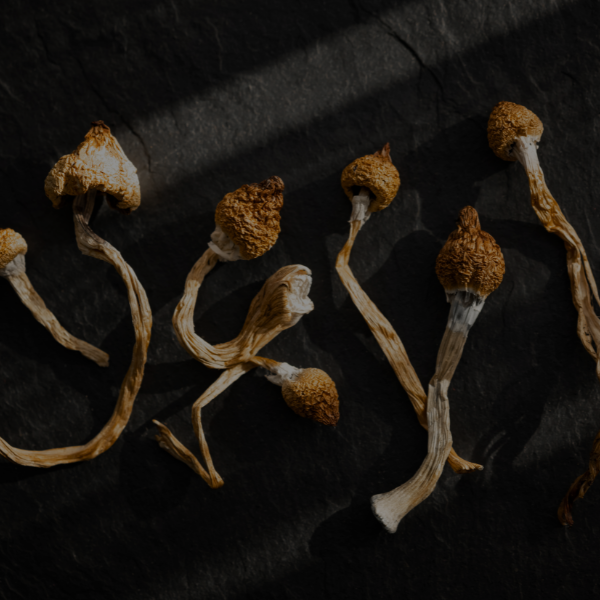

You're probably here because a mushroom product caught your eye and then the label raised more questions than it answered. One package says “fruiting body.” Another says “mycelium.” A coffee blend promises focus. A chocolate bar promises a very different kind of journey. Then you notice extract ratios, Latin species names, and ingredient lists that sound half botanical, half chemistry set.
That confusion makes sense. Mushrooms are sold as food, supplements, wellness tools, and experiential products, but what matters is the chemistry inside them. Those active compounds are called mycological natural products, and once you understand that idea, the shelf starts to make a lot more sense.
Why You Should Understand What's Inside Your Mushrooms
A shopper walks into a store looking for Lion's Mane coffee for workdays and notices gummies and chocolates on the next shelf. Everything says “mushroom,” but those products are not interchangeable. They can contain different species, different parts of the organism, different extraction methods, and very different active compounds.
That matters because mushrooms aren't magical in a vague sense. They're chemical libraries. A mushroom product works, or fails, because of the molecules present in it, the molecules missing from it, and whether the label tells the truth.

A crowded shelf and a bigger market
The shelves keep expanding because fungi have moved far beyond soup and stir fry. In 2023, the global mushroom market reached a valuation of $62 billion USD, with the food industry commanding 42% and the cosmetics industry 24%. The market is projected to reach $156.26 billion USD by 2033, according to global mushroom market data from Market.us.
That scale explains why consumers keep running into mushroom ingredients in places they didn't expect. Coffee. Capsules. Protein blends. Skin care. Chocolates. The commercial world has embraced fungi faster than evaluation capabilities have become widespread.
If you're still sorting out the practical side of wellness mushrooms, this guide to functional mushroom benefits is a useful companion to the chemistry discussion.
Practical rule: If two products both say “mushroom” but list different species, different extract types, or different active compounds, you should expect different effects.
Why chemistry beats marketing
A clean label doesn't automatically mean a meaningful product. “Natural,” “full spectrum,” and “10:1” can sound reassuring while telling you very little about what's biologically active.
Understanding mycological natural products helps you ask better questions:
- Which compound family matters here: Is this product built around polysaccharides, alkaloids, terpenes, or something else?
- Which fungal material was used: Fruiting body, mycelium, or a blend?
- How was it processed: Powdered whole material, hot-water extract, alcohol tincture, or a combined extraction?
- What outcome are you seeking: Daily wellness support, sensory effects, cognitive support, or a particular experiential profile?
Once you think that way, mushroom shopping stops being a leap of faith. It becomes label reading with a purpose.
Fungi The Ultimate Natural Chemists
If plants are quiet solar panels, fungi are underground laboratories. They build, transform, and release molecules with a level of chemical creativity that still surprises researchers.
That's the heart of mycological natural products. They are the compounds fungi make as they grow, defend themselves, communicate, and interact with their environment. Some are basic survival molecules. Others are more specialized, and those are often the ones people care about most.
Primary compounds and secondary compounds
A simple way to sort fungal chemistry is to separate it into two buckets.
Primary metabolites are the everyday machinery of life. Think of them as the fungus's rent money and groceries. They help the organism grow, reproduce, and keep its cells running.
Secondary metabolites are different. They're more like tools in a field kit. These compounds help fungi compete, protect territory, respond to microbes, and adapt to stress. Many of the compounds people associate with medicinal or psychoactive effects fall into this second category.
That distinction clears up a common misunderstanding. A product can contain mushroom material without containing much of the specific secondary chemistry a buyer is hoping for.
Why fungi make such unusual molecules
Fungi live in crowded neighborhoods. Soil, wood, leaf litter, tree roots, and decaying matter are busy ecosystems. A fungus can't run away from a competitor, so it solves problems chemically.
It may release compounds that deter bacteria. It may build molecules that influence insects or other organisms. It may produce antioxidants to protect itself from stress. Over time, evolution turns that chemical problem-solving into an enormous natural catalog.
One striking example is pharmaceutical relevance. Fungal natural products helped inspire drugs such as retapamulin, a semisynthetic antibacterial derived from pleuromutilins found in Clitopilus and Omphalina species, described in this review of fungal natural products and drug discovery. The same review notes that in 2008, 225 new drugs derived from natural products were developed, with approximately 38% functioning as anticancer agents and 18% as anti-infective drugs.
Fungi don't make compounds for us. They make them for survival. Human medicine benefits because those survival tools often interact with our biology in useful ways.
The overlooked half of the organism
Many consumers picture the mushroom cap and stop there. But the visible mushroom is only one stage of fungal life. The hidden mycelium is the sprawling network doing much of the ecological work.
That matters because the chemistry of the mycelium may differ from the chemistry of the fruiting body. Kew describes fungi as a hidden dimension of nature, and that phrase fits the consumer market too. Many products market “the mushroom” as if all fungal material were chemically identical. It isn't.
If you remember one idea from this section, make it this: a mushroom product is never just “mushroom.” It is a package of specific fungal chemistry produced by a specific organism, in a specific form, processed in a specific way.
Decoding the Main Classes of Fungal Compounds
Once you stop treating mushrooms as a single category, the next step is learning the major chemical families. You don't need a chemistry degree for this. You just need a mental map.
Think of these classes like genres in music. Rock, jazz, classical, and hip-hop can all be “music,” but they behave differently. Alkaloids, terpenes, polysaccharides, and phenolics are all fungal compounds, but they tend to play different biological roles.

A quick field guide
| Compound Class | Key Characteristic | Primary Role/Effect | Common Example |
|---|---|---|---|
| Alkaloids | Nitrogen-containing compounds | Often neuroactive or strongly bioactive | Psilocybin |
| Terpenes | Aromatic and structurally diverse compounds | Often tied to scent and defense chemistry | Terpenoids in Lion's Mane and other fungi |
| Polysaccharides | Complex carbohydrates | Often associated with immune modulation and formulation performance | Beta-glucans |
| Phenolics | Redox-active compounds | Often linked to antioxidant activity | Phenolic antioxidants in mushrooms |
For readers comparing psychoactive chemistry, this explainer on psilocin and psilocybin gives useful background on one important alkaloid family.
Alkaloids
Alkaloids are the class many people notice first because they often have direct effects on the nervous system. They contain nitrogen, and they tend to be potent even in relatively small amounts.
In fungi, the best-known examples are indole alkaloids such as psilocybin and related compounds. They're chemically interesting because small structural differences can shift how a compound behaves in the body.
For a consumer, the practical takeaway is simple. If a product is centered on alkaloids, the expected experience will differ sharply from a product centered on beta-glucans or antioxidant phenolics.
Terpenes and terpenoids
Terpenes are common across nature, and fungi make their own versions too. They often contribute to aroma, ecological signaling, and defense. In mushroom products, these compounds often show up in discussions of nuanced wellness effects rather than blunt, dramatic sensations.
Labels can be misleading. A product may mention a mushroom species famous for terpenoids, but if the extraction method doesn't pull those compounds effectively, the name alone doesn't guarantee much.
Polysaccharides
Polysaccharides, especially beta-glucans, are less flashy but critically important. These are long carbohydrate chains, and they're a major reason many functional mushrooms are valued in food and wellness contexts.
Their chemistry also matters beyond biology. According to research on mushroom polysaccharide functionality, mushroom-derived polysaccharides such as β-glucans can hold up to 10–15 g water/g and also bind oil, which helps create stable emulsions, foams, and gels in food and pharmaceutical systems. In plain language, they don't just act in the body. They also help determine how a product mixes, feels, and stays stable.
A powder that clumps, a tincture that separates, and a gummy that holds together all reflect chemistry, not just recipe design.
Phenolics
Phenolics are often introduced as antioxidants, and that's a fair starting point. These compounds help manage oxidative stress and can contribute to a mushroom's broader protective chemistry.
Consumers usually don't need to identify individual phenolics on a label. What matters is understanding that some fungal benefits come from networks of compounds working together, not from a single star ingredient.
Once you see these four classes as families rather than jargon, labels become easier to interpret. You're not memorizing chemistry trivia. You're learning what kind of compounds a product is likely built around.
Famous Fungal Compounds and Their Roles
Chemical classes become easier to remember when you attach them to familiar names. Some fungal compounds have become household words. Others work in the background, shaping how mushroom products feel, function, or support formulation.
Psilocybin and psilocin
Psilocybin is an indole alkaloid, and it belongs to a larger fungal family with impressive chemical diversity. Fungi are known to produce over 140 distinct natural products containing an indole heterocycle structure, including psilocybin and related compounds, according to research published in the Journal of Natural Products.
That matters because psilocybin isn't a one-off chemical accident. It sits inside a broader pattern of fungal innovation. Mushrooms repeatedly build complex, highly specific molecules that interact with animal nervous systems in unusual ways.
Another practical point often gets lost. Natural psilocybin exists within the broader mushroom matrix alongside other co-occurring compounds, and Rose Hill notes that this matrix may influence onset time and intensity differently from isolated synthetic forms. Consumers often describe this as the difference between hearing a solo instrument and hearing the full band.
Beta-glucans
Beta-glucans are the celebrities of the polysaccharide world. They don't produce a dramatic perceptual shift, but they're central to why many functional mushrooms show up in daily routines.
If psilocybin is the headline act in one corner of fungal chemistry, beta-glucans are the reliable character actors. They help explain why mushrooms are discussed in relation to immune modulation, texture, formulation, and daily wellness support.
Retapamulin and the drug discovery story
Fungal chemistry isn't only about supplements or experiential products. It has changed medicine. One strong example is retapamulin, a clinically used semisynthetic antibacterial derived from fungal pleuromutilins, as described earlier in the drug discovery review.
That story is worth remembering because it resets expectations. Mushrooms aren't just folk remedies dressed up in modern packaging. Fungi have already given science lead structures that became real therapeutic tools.
The compounds shoppers don't notice
Some of the most important mycological natural products never become front-label stars. They may contribute to antioxidant behavior, aroma, stability, or the broader feel of a whole-mushroom preparation.
That's one reason simplistic shopping habits can mislead you. People often search for a single molecule as if the rest of the mushroom were filler. In reality, many fungal products are more like ensembles.
- A capsule may emphasize a measured extract.
- A whole mushroom powder may preserve a broader matrix.
- A chocolate or gummy may include mushroom-derived chemistry, but the surrounding ingredients can shape delivery and user experience.
The better question isn't “What's the one active ingredient?” It's “Which compounds are present, and what role is each one likely playing?”
The Therapeutic Power of Mushroom Bioactives
When people talk about mushrooms for wellness, they often collapse very different effects into one vague promise. “Good for you” doesn't tell you whether a compound interacts more with immune signaling, oxidative stress, nervous system pathways, or product delivery systems.
A clearer view starts with biological roles.

Immune and biological response effects
Some mushroom compounds are valued because they appear to help modulate how the body responds rather than just forcing a single pathway up or down. That's why the phrase biological response modifier appears so often in mushroom research.
In clinical studies involving cancer patients, medicinal mushrooms such as Ganoderma lucidum and Grifola frondosa showed biological response modification effects, with cancer regression or significant improvement observed in 68.8% of breast cancer patients and 62.5% of lung cancer patients, according to this clinical review on medicinal mushrooms and cancer care.
Those figures don't mean every mushroom product should be treated like a medical therapy. They do show why fungal bioactives continue to attract serious scientific attention.
Mushrooms matter in research because their compounds don't fit neatly into one box. A single species can contain molecules relevant to immunity, oxidation, inflammation, and formulation chemistry at the same time.
A short visual overview helps if you want a broader wellness lens.
Oxidative stress and nervous system support
Other fungal compounds are discussed for their antioxidant or neuroprotective potential. That doesn't mean every mushroom is a cognition tool. It means fungal chemistry contains multiple pathways of interest, and different species lean in different directions.
This is one reason mushroom blends can be confusing. A package might combine species associated with immune support, stress response, and cognitive interest, but unless the label explains what was extracted and standardized, the promise stays fuzzy.
Why whole chemistry often matters
Consumers sometimes assume isolated compounds are always cleaner or better. Sometimes they're narrower. Whole-fungus preparations can include co-occurring compounds that influence how a product feels in practice.
That idea shows up strongly in experiential products, but it matters in wellness products too. Biology doesn't read labels by marketing category. The body responds to the chemistry present.
How Fungi Become Powders and Tinctures
A mushroom in the wild is not the same thing as a powder in a jar. Processing decides which compounds make it into the finished product and which stay behind.
That's why extraction deserves plain-language attention.
What extraction is doing
Think of extraction as selective brewing. Hot water pulls well on some compounds. Alcohol pulls better on others. A dual extract tries to capture a wider range.
- Hot water extraction often targets water-soluble compounds such as many polysaccharides.
- Alcohol extraction is often used for less water-friendly compounds, including some terpenoid-rich fractions.
- Whole powders may preserve broad material, but they don't automatically deliver the same accessibility as an extract.
For readers comparing formats, this overview of magic mushroom powder helps show why form changes use and dosing habits.
The extract ratio trap
One of the most misunderstood label terms is the extract ratio. A 10:1 ratio sounds like a potency score, but that's not what it guarantees.
According to this explanation of mushroom extract ratios, a 10:1 extraction ratio means ten kilograms of raw mushroom material were processed to yield one kilogram of final powdered extract, and that figure mainly reflects moisture loss. It does not guarantee a corresponding concentration of bioactive compounds such as beta-glucans.
That single fact saves consumers from a lot of expensive confusion.
Label check: An extract ratio tells you something about processing yield. It does not, by itself, tell you how much of the compound you care about is present.
What a better label looks like
A useful label gives you more than a dramatic ratio. It should help answer practical questions such as:
- Species identity: Which mushroom is in the product?
- Fungal part used: Fruiting body, mycelium, or both?
- Extraction method: Water, alcohol, or dual extraction?
- Active compounds listed: Beta-glucans, alkaloid content, or other relevant markers where appropriate
That kind of transparency won't make every choice easy, but it gives you something real to evaluate.
Navigating the Market Safely and Effectively
You are standing in a shop, looking at two mushroom gummies. Both promise clarity, calm, or a profound experience. One has a clean label, test results, and clear ingredient details. The other has bright branding and vague language. From the outside, they can look equally convincing.
That is the consumer problem in a nutshell. In the mushroom market, packaging often speaks louder than chemistry.

The danger consumers often miss
Some products sold as “magic mushroom” goods contain something very different from what buyers expect. A 2025 report summarizing Oregon State University findings described sampled retail products from smoke shops that contained no psilocybin and instead included undisclosed ingredients such as synthetic drugs, caffeine, or kava, as reported in coverage of the Oregon State University findings.
That matters for more than label accuracy. It changes the entire risk profile. If a product contains hidden stimulants, sedatives, or research chemicals, the user is no longer choosing a mushroom experience. The user is taking an unknown chemical mixture.
A good rule is simple. If the label leaves you guessing, the product should not get your money.
A practical buying checklist
Use the label the way a field mycologist uses a mushroom key. One feature alone is never enough. You identify the specimen by checking several traits together.
- Look for third-party testing: Independent lab results help confirm identity, purity, and the absence of unwanted contaminants.
- Read the full ingredient panel: Front-label promises are marketing. The ingredient list is where the product tells the truth, or avoids it.
- Check for named active compounds or extract details: “Proprietary blend” and “mushroom complex” are often too vague to evaluate.
- Pay attention to where the product is sold: Retail channels with poor documentation often give buyers very little to verify.
- Choose sellers that explain sourcing and form clearly: You should be able to tell what species is used, what part of the fungus is included, and how the product was prepared.
The Magic Mushroom Delivery is one example of a retailer that presents distinct product categories such as raw mushrooms, chocolates, gummies, capsules, and mushroom coffee alongside educational material. That does not remove the need for careful reading, but it shows the kind of product clarity consumers should expect.
Natural matrix versus isolated ingredients
It also helps to ask what kind of experience the product is built to deliver. Whole mushroom material contains many compounds together, much like an orchestra contains more than a single instrument. Isolated ingredients narrow that chemistry down to one or a few notes.
For wellness products, that difference can affect how broad or targeted the product feels. For psychedelic products, it can influence onset, intensity, and overall character. The point is not that one format is always better. The point is that form and chemistry shape the experience, so vague labels leave you without the information needed to choose wisely.
Good buying habits come down to patience and evidence. Slow down. Read closely. Ask what is in the product. If the answer stays fuzzy, keep looking.
If you want a retailer that combines product access with educational reading, The Magic Mushroom Delivery is one place to explore mushroom categories while comparing formats, ingredient transparency, and learning resources before you buy.