
When you hear the term ‘magic mushroom,’ it's easy to picture a single, specific fungus. But that's more of a nickname than a scientific label. The reality is far more fascinating—it’s an umbrella term for a massive kingdom of fungi, with hundreds of unique types of psychedelic mushrooms found all over the world.
Each one has its own personality, potency, and story.
Exploring the Vibrant World of Psychedelic Fungi
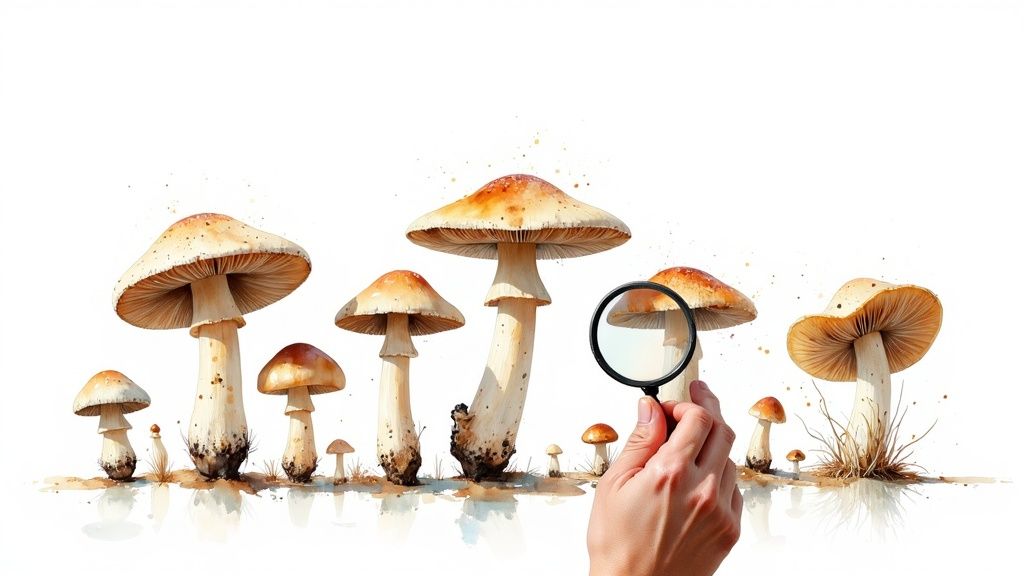
Think of psychedelic fungi less like a single species and more like a sprawling family tree full of distinct branches. Each major branch represents a different genus, like the famous Psilocybe or the powerful Panaeolus. On those branches, you'll find countless individual species. Getting a handle on this diversity is the first step to truly appreciating what makes each mushroom special.
This guide is your map to this incredible world. We’ll start with the basics, helping you tell the major mushroom families apart before we zoom in on the specific strains that have caught the eye of psychonauts and wellness seekers alike. The idea is to build your knowledge from the ground up, giving you a clear path from simple identification to a much deeper understanding.
Getting to Know the Mushroom Kingdom
The psychedelic properties that link these fungi come from a handful of naturally occurring compounds. While this shared chemistry unites them, they can look and act completely differently in terms of their appearance, where they grow, and how potent they are.
Before we dive deep, let's get a quick lay of the land. The table below gives you a snapshot of the main mushroom families we'll be covering in this guide.
Quick Guide to Major Psychedelic Mushroom Genera
| Genus Name | Common Name | Key Characteristic | Typical Potency Range |
|---|---|---|---|
| Psilocybe | Cubes, Gold Caps | Most famous and widespread; bruises blue | Moderate to High |
| Panaeolus | Copelandia, Pan | Often small, thin, and found on dung | High to Very High |
| Gymnopilus | Laughing Gym | Bright orange-to-rusty color; grows on wood | Low to Moderate |
| Pluteus | Shield Mushroom | Less common; often grows on decaying wood | Low to Moderate |
This variety is what fuels the explosive interest we're seeing today. In fact, the market for psychedelic mushrooms hit an estimated US$1.5 billion in 2024 and is on track to more than double, reaching a projected US$3.3 billion by 2031.
That’s a massive 10.3% compound annual growth rate, reflecting a huge shift in public and scientific interest across more than 300 known species. You can read more about the forestry and global change findings here.
Here’s a simple way to think about it: consider mushroom species and strains like you would apples. You have Granny Smith and Red Delicious—both are apples, but they have completely different flavors, textures, and looks. This guide will help you tell them apart.
Meet the Psilocybe Genus: The Most Famous Family
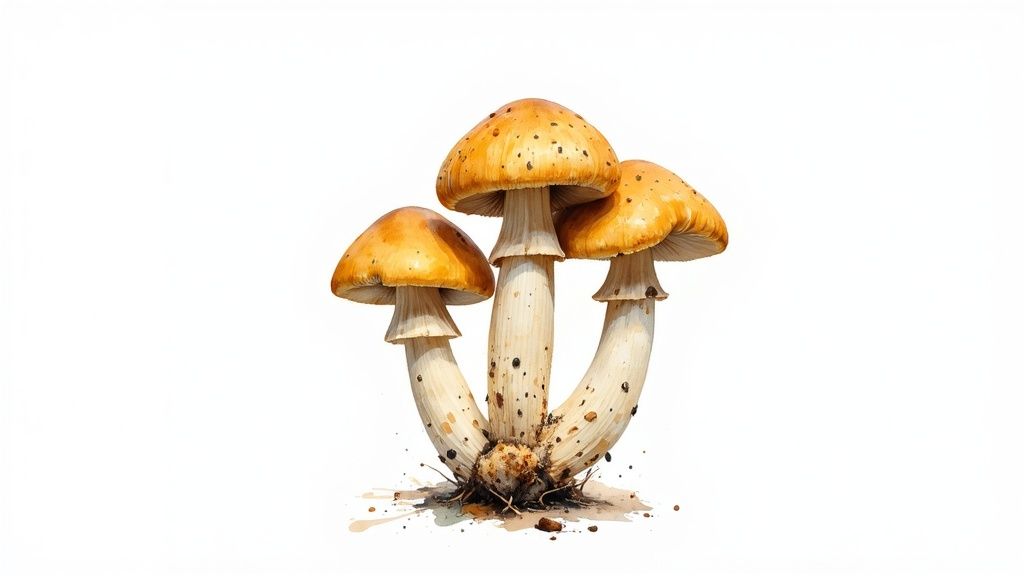
When people talk about magic mushrooms, chances are they’re picturing a member of the Psilocybe genus. This celebrated family is easily the most recognized and widespread group of psychedelic fungi on the planet. Think of it as the royal family of the fungal kingdom, holding a special status in both ancient history and modern culture.
This genus is incredibly diverse. With over 150 known species found in ecosystems all over the globe, Psilocybe is the cornerstone of hallucinogenic mycology. Despite this rich variety, we’ve only just scratched the surface; publicly available DNA sequences cover only about 40 species, which shows how much more there is to learn. You can dive deeper into the current taxonomic understanding of these fungi if you’re curious.
While the family is large, one species in particular has become the undisputed star of the show.
The Reigning Champion: Psilocybe cubensis
Within this vast genus, Psilocybe cubensis is hands-down the most widely cultivated and recognized species on Earth. Its popularity isn't an accident. This mushroom is famously resilient, relatively easy to grow, and has that classic golden-brown cap and sturdy stem that many people imagine when they think of "shrooms."
Its approachable nature has made it a favorite for both first-timers and seasoned psychonauts. Because it grows so well in controlled environments, cultivators have spent decades isolating and stabilizing unique genetic variations. This is where the world of psychedelic mushrooms gets even more interesting, as we move from the broad category of species to the more specific level of strains.
Think of it like this: Psilocybe cubensis is the "species," just like Canis lupus familiaris is the species for all dogs. But within that single species, you have countless "breeds" or, in this case, "strains"—like Golden Retrievers, Poodles, and Beagles. Each has a unique look and temperament, but they're all dogs at the end of the day.
This same principle applies perfectly to P. cubensis. The huge array of options available today are all members of this one species, but they showcase an incredible range of characteristics.
Understanding Strains: A World Within a Species
So, what exactly is a strain? A strain is simply a genetic variant within a species that has been isolated and grown for its specific traits. These traits can include:
- Appearance: Variations in cap shape, color, size, and even how thick the stem is are common.
- Growth Patterns: Some strains grow faster or produce bigger, more abundant harvests (flushes) than others.
- Reported Effects: Users often report subtle but distinct differences in the feel of the experience from one strain to the next.
This genetic diversity is why you'll see so many different names when you browse mushroom products. Names like Golden Teacher, B+, and Penis Envy all refer to specific strains of Psilocybe cubensis. They aren't different species; they are carefully developed "breeds" of the same core mushroom, each offering its own distinct profile.
The Most Common P. cubensis Strains
The variety can seem endless, but a few key strains have become household names thanks to their reliability and unique features. Getting to know them is the perfect entry point into appreciating the finer details of the Psilocybe cubensis world.
- Golden Teacher: Often recommended for newcomers, this strain is famous for delivering balanced, insightful, and often profound experiences.
- B+: A resilient and adaptable strain that's a huge favorite among cultivators for its robust and forgiving growth.
- Penis Envy: Known for its unique phallic appearance and highly potent effects, this legendary strain is typically preferred by more experienced users.
These are just a few examples of the rich diversity that exists within this one famous species. By understanding the difference between a genus, a species, and a strain, you unlock a much deeper appreciation for the world of psychedelic mushrooms. This foundational knowledge is the key to navigating your options and finding the variety that best aligns with your intentions and experience level.
A Closer Look at Popular Psilocybe Cubensis Strains
Think of Psilocybe cubensis as a single, versatile species—like a coffee bean. Just as beans from different regions have unique flavors and strengths, each mushroom strain has its own character, appearance, and potency.
These aren't just random names; they represent distinct genetic lines that cultivators have refined over years to emphasize specific traits. Let’s meet a few of the most well-known members of the P. cubensis family.
Golden Teacher: The Wise Guide
Golden Teacher is arguably one of the most famous and beloved strains out there, and for good reason. It's often recommended as the perfect starting point for newcomers, thanks to its reputation for providing a balanced, insightful, and gentle experience.
Many people report that Golden Teacher offers profound moments of clarity and learning, truly living up to its "teacher" name. Visually, it's a classic: a distinct golden-brown cap, often speckled with yellow, sitting atop a thick, pale stem. Its reliable growth and moderate potency have made it a cornerstone of the mushroom world.
Penis Envy: The Potent Powerhouse
No list of popular strains would be complete without Penis Envy. This legendary strain stands out for two main reasons: its unique, phallic appearance and its famously high potency. The mushroom features a thick, dense stem and a bulbous cap that often doesn't fully open.
Because of its significantly higher concentration of psilocybin, Penis Envy is almost always recommended for experienced users. The journey it offers is frequently described as more intense, visual, and transformative than most other cubensis varieties. Its unique genetics also make it a slower and more challenging mushroom to grow, which only adds to its mystique.
Key Takeaway: The difference between a strain like Golden Teacher and Penis Envy isn't just about strength. It’s also about the character of the experience—one is often seen as a gentle guide, while the other is a powerful force for deep exploration.
B+: The Resilient Survivor
If Golden Teacher is the wise guide and Penis Envy is the powerhouse, then B+ is the resilient survivor. This strain has earned a massive following among growers because it's remarkably adaptable and forgiving. It can thrive in a wider range of conditions than many other strains, making it a robust and reliable choice.
The effects of B+ are often described as warm, positive, and gentle, placing it somewhere in the middle of the potency spectrum. It’s another excellent option for beginners or anyone seeking a reliably cheerful and less overwhelming experience. Its large, beautiful caramel-colored caps also make it one of the more visually appealing mushrooms.
Albino A+: The Ghostly Beauty
Standing out with its striking looks, Albino A+ is a leucistic (low-pigmentation) variant that captivates with its ghostly white or pale cream-colored appearance. While not a true albino—it still produces dark purple spores—its ethereal look makes it a highly sought-after variety.
In terms of effects, Albino A+ is considered moderately potent. Users often report a balanced experience that sparks creativity and mental focus. It’s a great example of how simple genetic variations can lead to stunning visual differences within the same species.
Comparing Popular Psilocybe Cubensis Strains
To make it easier to see how these strains stack up against each other, we've put together a quick comparison table. This breakdown highlights their key traits, giving you a clear picture of what makes each one unique.
| Strain Name | Visual Characteristics | Reported Potency | Commonly Reported Effects |
|---|---|---|---|
| Golden Teacher | Classic golden-brown caps, often with yellow specks. | Moderate | Balanced, insightful, gentle, spiritual. Great for beginners. |
| Penis Envy | Thick, dense stem with a bulbous, underdeveloped cap. | Very High | Intense, visual, transformative, profound. For experienced users. |
| B+ | Large, beautiful caramel-colored caps. Very robust. | Moderate | Warm, positive, cheerful, gentle. Another good choice for beginners. |
| Albino A+ | Ghostly white or pale cream-colored caps and stems. | Moderate | Creative, mental focus, balanced. Visually striking. |
Each of these popular strains offers a unique window into the incredible diversity of a single mushroom species. To dig even deeper, you can explore this Psilocybe Cubensis strain guide and compare their characteristics in more detail.
Discovering Other Notable Mushroom Species
While Psilocybe cubensis gets most of the spotlight in the psychedelic fungi family, the world of magic mushrooms is far wider and more varied than just one species. When you start exploring other types, you find an incredible diversity of mushrooms with unique looks, different growing habits, and profoundly distinct experiences.
Think of it like this: if P. cubensis is the familiar, reliable golden retriever, then other species are the wilder, more potent cousins—the wolves and foxes of the fungal kingdom. They’re related, but each has its own untamed character. Broadening our view helps us appreciate the full spectrum these fungi have to offer.
Here’s a quick look at how some of the popular P. cubensis strains we’ve already covered fit together.
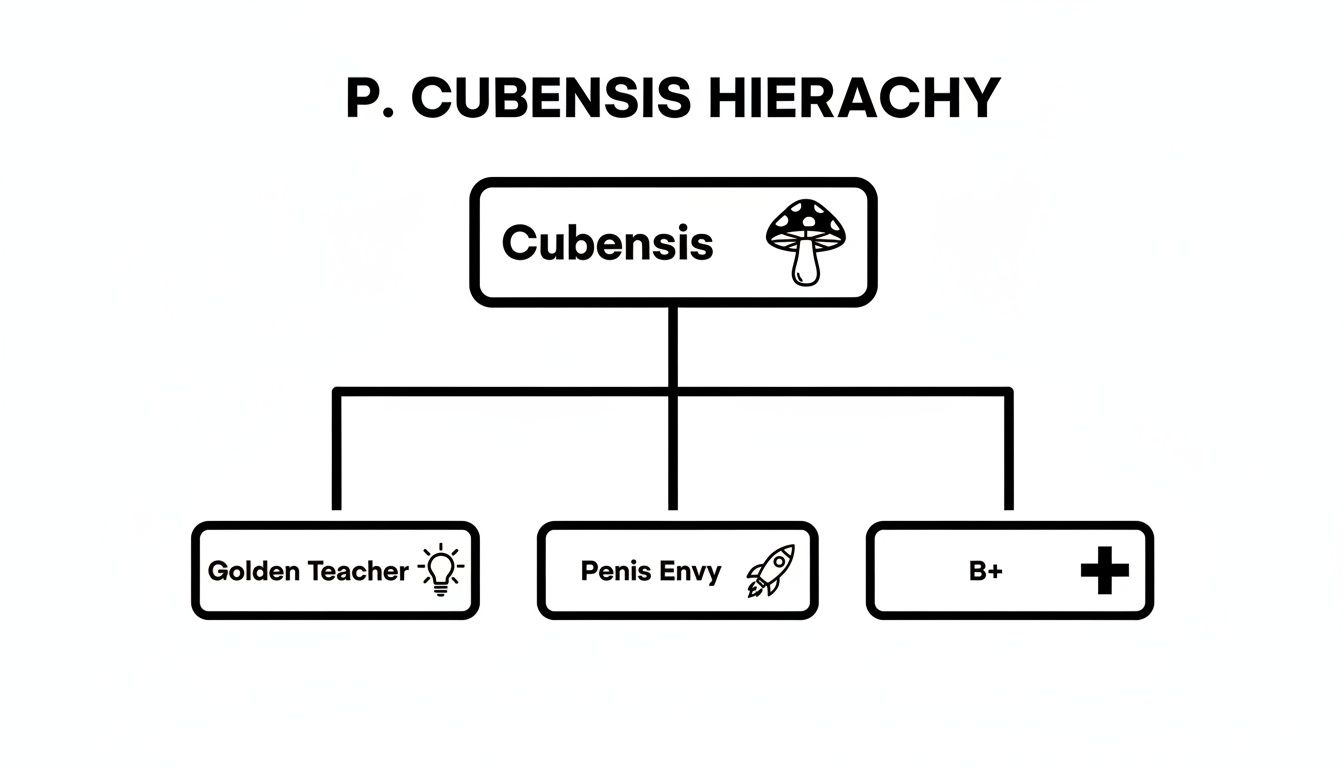
This just shows how much genetic variety exists within a single species. Now, let’s dive into some entirely different members of the family.
Panaeolus Cyanescens: The Potent Blue Meanies
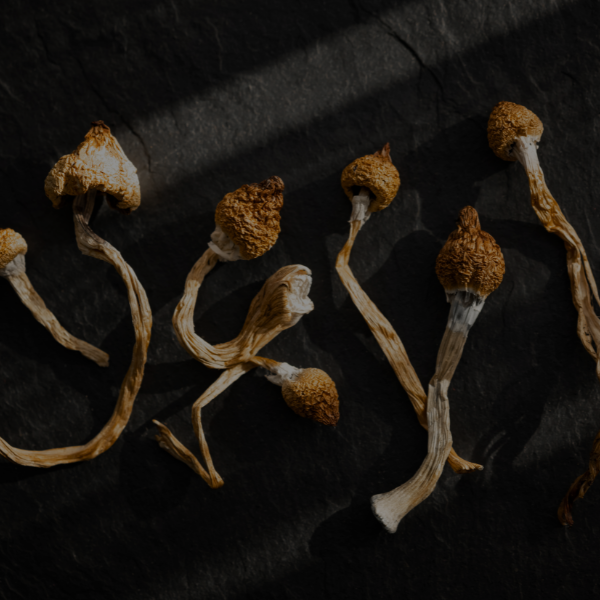
One of the most famous species outside the cubensis line is Panaeolus cyanescens, better known by its nickname, "Blue Meanies" or "Pans." These are small, slender mushrooms that don't look like much, but they are legendary for packing a serious punch. They usually have thin, pale stems and small caps that can be light tan or almost white.
What truly makes them stand out is their raw power. Panaeolus cyanescens can contain two to three times more psilocybin than your average P. cubensis strain. Because they are so much stronger, a much smaller dose is needed for a full experience, making them a go-to for experienced psychonauts looking for a more intense and immersive trip.
Psilocybe Semilanceata: The Iconic Liberty Caps
If you were to wander through the rolling hills and grassy fields of Europe and other parts of the world, you might just stumble upon Psilocybe semilanceata, or "Liberty Caps." These tiny mushrooms are one of the most widespread, naturally growing psychedelic species on the planet and have been used for centuries.
They have a very distinct look that makes them easy to identify:
- Conical Cap: A signature bell-shaped cap that never flattens out, giving it a pointed, witch's-hat appearance.
- Slender Stem: A long, thin, and often wavy stem that’s surprisingly tough.
- Small Stature: They are much smaller and more delicate than their cubensis relatives.
Don't let their small size fool you. Liberty Caps are quite potent, with a consistently high psilocybin concentration that delivers a powerful trip. Many people describe the experience as euphoric and highly visual, with a deep feeling of connection to nature.
Psilocybe Azurescens: The Wood-Loving Powerhouse
Found mostly along the coastal dunes and wood chip beds of the Pacific Northwest, Psilocybe azurescens holds the title as one of the most potent psilocybin mushrooms ever discovered. Nicknamed "Azzies" or "Flying Saucers," these fungi are true powerhouses, containing incredibly high levels of both psilocybin and psilocin.
Because of their extreme potency, Psilocybe azurescens are only recommended for the most experienced and cautious users. Their effects can be overwhelmingly intense, often launching people into profound visionary states and life-changing spiritual journeys.
They have broad, caramel-colored caps that flatten out with age and sturdy white stems that bruise a deep, dark blue at the slightest touch. These mushrooms thrive in colder, wetter climates and love decaying wood, making them a fascinating example of how different species adapt to their own unique environments. If you’re curious about other high-potency varieties, check out our guide to the most potent mushrooms out there.
Navigating Potency, Dosing, and Experience
Knowing your way around different types of psychedelic mushrooms is a great start, but it’s only half the story. To have a safe and meaningful journey, you need to understand potency, how to dose properly, and the other big factors that shape the entire experience. Potency is the engine, and learning how to handle it is a fundamental skill.
The magic in these mushrooms comes down to two key active compounds: psilocybin and its direct partner, psilocin. When you eat a mushroom, your body gets to work converting the psilocybin into psilocin. That psilocin is what interacts with your brain to kick off the classic psychedelic effects.
Think of psilocybin as the stored-up potential energy, and psilocin as the kinetic energy that brings the trip to life. Different species and strains pack different amounts of these compounds, which is why 1 gram of Panaeolus cyanescens can feel worlds apart from 1 gram of Psilocybe cubensis.
Factors Influencing Mushroom Potency
It's a common myth that a mushroom's strain is the only thing that determines its strength. While genetics are a huge piece of the puzzle, a few other things can seriously crank the potency up or down.
- Growing Conditions: The environment is key. The substrate (what the mushroom eats), temperature, and humidity all play a part in how much psilocybin it produces.
- Harvesting Time: Timing is everything. Shrooms are typically at their most potent right before the veil—the thin membrane under the cap—breaks. Harvest too early or too late, and you could end up with a weaker batch.
- Drying and Storage: Fresh mushrooms have psilocin, which breaks down pretty fast. To preserve the good stuff for the long haul, proper drying and airtight storage away from heat and light are absolutely essential.
Because of these variables, potency can swing quite a bit, even within the same strain. This is exactly why it’s always a good idea to start with a lower dose whenever you’re trying a new batch.
A Guide to Dosage Levels
Finding the right dose is deeply personal. It depends on your body weight, your tolerance, and what you’re hoping to get out of the experience. Still, some general guidelines can help you find a solid starting point. All doses are measured in grams of dried mushrooms.
Important Note: The 'heroic dose' is a serious undertaking meant only for highly experienced individuals. It is not a place to start and requires a ton of preparation and a deep understanding of psychedelic states.
Here’s how the common dosage tiers break down:
- Microdose (0.1g – 0.3g): This is a sub-perceptual dose, so you're not supposed to feel any classic psychedelic effects. People often report subtle improvements in creativity, mood, and focus.
- Low Dose (0.5g – 1.5g): Sometimes called a "museum dose," this amount can bring on mild euphoria, brighter senses, and a gentle shift in how you see the world, without being overwhelming.
- Moderate Dose (1.5g – 3.0g): This is the sweet spot for a full psychedelic experience. Expect visual patterns, deep self-reflection, and noticeable shifts in your thoughts and emotions.
- High Dose (3.0g – 5.0g+): Reserved for seasoned explorers, this dose can lead to intense, mystical experiences, ego dissolution, and profound visionary states.
If you want a more detailed timeline of what to expect at each stage, check out our guide on the different levels of a mushroom high.
The Importance of Set and Setting
Finally, you can't talk about dosing without talking about set and setting. This concept is just as crucial as the dose itself in determining what kind of experience you'll have.
- Set (Your Mindset): This is all about your internal world—your thoughts, your mood, and your intentions for the journey. A calm, open, and positive mindset can lay the groundwork for a beautiful trip.
- Setting (Your Environment): This is your physical space. A safe, comfortable, and familiar place where you won’t be interrupted is perfect, especially for those moderate to high doses.
Your set and setting are the container for your entire experience. A strong dose in a chaotic environment is a recipe for a bad time. But a moderate dose in a peaceful setting with a trusted friend can be a healing and unforgettable event. Always put these two elements first.
How to Choose the Right Mushroom Product for You
Knowing the different types of psychedelic mushrooms is one thing, but figuring out how you want to actually take them is a whole different part of the journey. The form you choose—from raw fungus to carefully crafted edibles—shapes everything from the taste and convenience to how precise your dose will be.
There's no single "best" way to do it. The right choice is simply the one that fits your comfort level, your goals, and what you want to get out of the experience.
Raw Dried Mushrooms
This is the classic, old-school way. Consuming raw, dried mushrooms is the most direct and unfiltered route to a psilocybin experience. For many purists, this is the only way to go because it’s a direct connection to the fungus, with nothing added or taken away.
But let's be real—the taste isn't for everyone. That distinct, earthy (and sometimes bitter) flavor can be a bit much. Dosing can also be a little tricky, since potency can vary from one mushroom to the next, even if they're from the same batch.
Why Choose Raw? It’s perfect for anyone who wants the most authentic, no-frills experience and doesn’t mind the natural taste. This is the method that's been trusted for generations.
Edibles: Chocolates and Gummies
If the thought of chewing on a dried mushroom makes you cringe, edibles like infused chocolates and gummies are your best friend. They completely mask that earthy flavor, turning your dose into a genuinely pleasant treat.
The biggest win for edibles? They come in pre-measured doses. This takes all the guesswork out of the equation, giving you a consistent and reliable amount of psilocybin in every single piece. It's a game-changer for consistency.
- Chocolates: The rich, deep flavor of chocolate is a perfect partner for psilocybin. It's a familiar and comforting way to begin your journey.
- Gummies: Often fruity and easy to chew, gummies are super manageable. Their simple serving sizes make dosing a breeze.
Capsules for Precision and Convenience
For the ultimate in discretion, convenience, and pinpoint accuracy, capsules are the way to go. Each one contains a perfectly measured dose of ground mushroom powder, so you can forget about scales and guesswork.
This precision makes capsules the ideal choice for anyone exploring microdosing, where consistency is absolutely crucial for tracking those subtle, day-to-day effects.
They’re tasteless, odorless, and incredibly straightforward. Capsules offer a simple, no-fuss way to integrate psilocybin into a wellness routine without any of the sensory baggage of eating raw mushrooms.
Your Top Questions About Mushroom Types
To wrap up our journey, let's tackle some of the most common questions that pop up. Think of this as a quick-reference guide to clear up any lingering confusion and give you some straightforward, practical answers.
What Is the Main Difference Between a Mushroom Species and a Strain?
Think of it like this: a species, such as Psilocybe cubensis, is a distinct biological category, like canines. A strain, like Golden Teacher, is a specific genetic variant within that species—much like a Golden Retriever or a Poodle.
Golden Retrievers and Poodles are both the same species (Canis lupus familiaris), but they have completely different looks and personalities. It's the same with mushroom strains; they can vary in appearance, potency, and how they grow, but they all trace back to the same parent species.
Are More Potent Mushrooms Always Better?
Not at all. The "best" mushroom is all about your experience level and what you're hoping to achieve. For newcomers, highly potent varieties can feel overwhelming, and many seasoned explorers prefer strains with moderate potency for a more manageable and balanced experience.
The goal should always be finding what’s right for your comfort level, not just chasing the highest potency. A thoughtful, intentional approach almost always leads to a more positive journey.
How Long Do the Effects of Psychedelic Mushrooms Last?
The timeline can shift a bit depending on the dose, the mushroom type, and your personal metabolism. But generally, the experience follows a pretty predictable arc:
- Onset: You'll usually start feeling the first effects within 30 to 60 minutes.
- Peak: The experience will build and reach its most intense point around the 2 to 3-hour mark.
- Total Duration: The whole journey typically lasts for about 4 to 6 hours.
It's also common for people to feel a pleasant "afterglow"—a sense of well-being and clarity that can hang around into the next day.
Do All Psychedelic Mushrooms Look Alike?
Nope, there's an incredible amount of visual diversity out there. Psilocybe cubensis strains usually have that classic look with stout stems and golden-brown caps. On the other hand, Panaolus cyanescens are much thinner and paler.
Meanwhile, Psilocybe semilanceata (better known as Liberty Caps) are tiny and have a very distinct pointy cap. Appearance is actually one of the main ways different types of psychedelic mushrooms are identified.
Ready to explore a curated selection of high-quality mushroom products? The Magic Mushroom Delivery offers everything from classic dried mushrooms to precisely dosed edibles and capsules, all delivered discreetly to your door. Visit our shop at https://themagicmushroomdelivery.com to find the perfect product for your journey.