
When you hear someone talk about finding a “real mushrooms brand,” they’re not just looking for a company name. They’re on a quest for something genuine—a product that promises quality, potency, and honesty. It’s about cutting through the noise to find supplements that actually work, without all the useless fillers and marketing fluff.
What Makes a Mushroom Brand "Real"?
The term ‘real mushrooms brand’ has become a kind of code in the community for a gold standard in a super crowded market. It’s less about a single company and more about a set of principles that separates the truly powerful stuff from the pretenders. At its heart, this whole movement is a response to a huge problem in the industry: products packed with grain instead of actual mushrooms.
Think of it like this: you can buy 100% real orange juice, or you can buy an orange-flavored "drink." One is pure, packed with nutrients, and straight from the fruit. The other is mostly sugar, water, and artificial powders. A genuine mushroom brand is committed to only using the mushroom fruiting body—that's the part you actually see growing above the ground, and it’s where all the beneficial compounds like beta-glucans are concentrated.
The Hidden Problem of Starch and Fillers
So why is this even an issue? Many companies cut corners and save money by using mycelium (the mushroom's root system) grown on a grain base like rice or oats. They grind this entire mixture up—roots, grain, and all—and call it a mushroom powder. The result is a product that's mostly starchy grain filler, not potent mushroom.
This is the key difference that pushed some brands to focus on authenticity. Take the company named Real Mushrooms, for instance. It was founded back in 2015 by the mushroom pioneer Jeff Chilton and his son, Skye. They built it on over 40 years of Jeff’s expertise from his other venture, Nammex, which has been a top supplier of organic mushroom extracts since 1989. Their whole mission was to fix a massive flaw in the market. At the time, some studies showed that the vast majority of functional mushroom products sold in North America were just this myceliated grain, with tons of starch and very little of the actual mushroom magic. You can dive deeper into their story and the industry background on ZoomInfo.
A true "real mushrooms brand" is built on a simple, non-negotiable promise: delivering pure, potent mushroom extracts without the starchy fillers. This commitment to quality ensures you get the active compounds you're paying for.
Ultimately, when you're searching for a real mushrooms brand, you're looking for proof. You want to find brands that are totally transparent about:
- Using 100% mushroom fruiting bodies.
- Showing you third-party lab tests to prove their stuff is pure and potent.
- Clearly stating the beta-glucan content (that’s the good stuff).
- Having low to no starch content (the filler).
This guide is here to teach you how to spot these markers of quality. We'll empower you to see past the sneaky marketing and choose products that will genuinely support your wellness journey.
The Fruiting Body and Mycelium Quality Test
Before you can really know what makes a mushroom product worth your money, you need a quick lesson in mushroom anatomy. It’s pretty simple, actually. The most critical factor for quality boils down to the difference between two parts: the fruiting body and the mycelium.
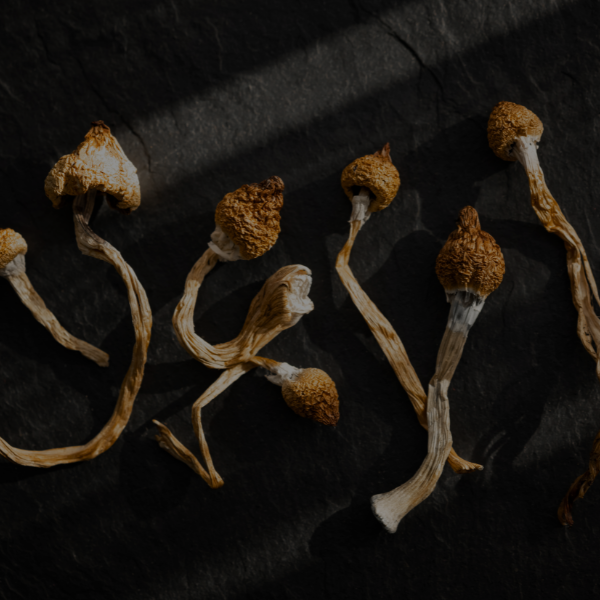
A great way to think about this is to picture an apple tree. The fruiting body is the part everyone recognizes—the classic mushroom cap and stem. This is the apple itself, the part of the organism where all the most valuable nutrients and active compounds are concentrated.
On the other hand, the mycelium is the vast, root-like network that grows underground or through whatever the mushroom is feeding on. It’s like the tree's root system. While it's essential for the mushroom's survival, it’s not the part you want in your supplement.
Why Mycelium on Grain Is a Red Flag
Many companies cut corners and save a ton of money by using what’s known as mycelium on grain (MOG). They grow the mycelial "roots" on big blocks of sterilized grain, like rice or oats. When it's harvest time, they don't bother separating the mycelium from the grain it was grown on. The whole block—mycelium, grain, and all—gets ground up into a fine powder.
What you end up with is a product that's mostly just starchy grain filler, not actual mushroom. The active compounds you're looking for, like the beta-glucans that boost your immune system or the nootropics that sharpen your mind, get severely watered down. It’s the equivalent of grinding up the apple tree’s roots, dirt and all, and calling it "apple powder." You get almost none of the good stuff.
A potent, high-quality mushroom supplement is always made from 100% fruiting bodies. This guarantees you’re getting a high concentration of beneficial compounds, not a bottle full of starchy filler.
This diagram really hits home on what a genuine mushroom brand should be all about: a foundation of honesty, quality, and proven potency.

As you can see, it all comes back to a promise: delivering real quality, ensuring the product actually works, and being completely honest with the people who use it.
To help you see the difference clearly, here’s a quick breakdown of fruiting bodies versus MOG.
Fruiting Body vs. Mycelium on Grain (MOG) at a Glance
| Attribute | Fruiting Body | Mycelium on Grain (MOG) |
|---|---|---|
| Source | The actual mushroom (cap and stem). | The root-like network grown on grain. |
| Active Compounds | High concentration of beta-glucans and other key compounds. | Very low concentration; diluted by grain filler. |
| Starch Content | Very low, naturally. | Extremely high due to the ground-up grain. |
| Effectiveness | Potent and effective for desired benefits. | Mostly ineffective; primarily filler. |
| Cost | More expensive to produce, but worth it. | Cheap to produce, resulting in a low-quality product. |
This table makes it obvious why a product made from 100% fruiting bodies is the only way to go if you want real results.
The Problem with Fillers
That high starch content in MOG products isn't just a waste of your money—it can be downright deceptive. Some lab tests can’t even tell the difference between the beneficial beta-glucans from mushrooms and other glucans found in the grain filler. This can lead to lab reports with inflated numbers, making a useless product look potent.
If you want to see what poor quality looks like up close, our guide on mycelium contamination pictures and other red flags is a real eye-opener.
Now you have the fundamental knowledge to see past all the marketing hype. When you’re trying to find a real mushrooms brand, the first question you should always ask is: "Is this made from the fruiting body or from mycelium on grain?" The answer to that one question separates the products that work from the ones that are basically worthless.
How to Verify a Brand's Legitimacy

So, you now know the crucial difference between real fruiting bodies and the cheap filler that is mycelium on grain. That’s the first step. Now it’s time to put on your inspector hat and start vetting brands like a pro.
Here's the good news: any truly real mushrooms brand isn't going to make you dig for information. They’ll be proud to show you what they’re made of.
Your most powerful tool for this is the Certificate of Analysis (CofA). Think of it as a report card for the mushroom product, issued by an independent, third-party lab that tests for both power and purity. If a company makes it hard to find their CofAs, that’s not just a red flag—it’s a parade of them.
Decoding the Certificate of Analysis
When you get a CofA, don’t just glance at it and look for a checkmark. You’re on a mission, hunting for specific numbers that prove the product is both effective and safe.
Here's your cheat sheet for every CofA you review:
- High Beta-Glucan Content: This is your money number. Beta-glucans are the main active compounds that give medicinal mushrooms their magic. Look for a high percentage, often above 25%, which is a solid sign of a potent, fruiting-body product.
- Low Starch Content: This number is the snitch that exposes fillers. A low starch number, ideally under 5%, tells you the product isn't puffed up with myceliated grain or other useless junk.
- Heavy Metals Analysis: Mushrooms are like sponges; they absorb things from their environment. This test is non-negotiable. The report needs to show that lead, arsenic, cadmium, and mercury levels are safely below the legal limits.
- Pesticide and Microbe Screening: This is your final check for cleanliness. It confirms the product is free from nasty agricultural chemicals, mold, and bacteria.
A brand that’s on the level won’t just have these reports—they’ll flaunt them. Transparency isn't just a trendy word; it’s the ultimate proof that a company believes in its product and has nothing to hide.
Other Essential Trust Signals
Beyond the lab report, there are other clues you can look for to confirm you've found a good one. A quality brand shows its cards in everything it does, from growing to packaging to how they talk about their products.
One of the best signs is getting a thumbs-up from independent testers. For instance, the company Real Mushrooms has snagged the 'Best Mushroom Supplement Company' award from ConsumerLab for four years straight, with their latest win in 2026. This is a huge deal because ConsumerLab buys products off the shelf and tests them rigorously, checking beta-glucan content and screening for contaminants. In an industry where tests show only about 25% of mushroom products live up to their labels, this kind of consistent, third-party proof sets the gold standard for a real mushrooms brand. You can read more about their approach on the Real Mushrooms blog.
Finally, check the label for how they get the good stuff out. The beneficial compounds in mushrooms are trapped inside tough cell walls made of chitin, which our bodies can't break down. A proper extraction is vital. Seeing terms like “hot water extraction” or “dual extraction” is a fantastic sign that the brand knows its science and is making a product you can actually absorb and use.
Red Flags to Avoid When Buying Mushrooms

Jumping into the mushroom market can feel like walking through a minefield of sneaky marketing tricks. Some brands are masters at making a weak product sound incredible, but once you know what to look for, you can spot their games from a mile away. Think of this section as your personal buyer’s defense guide, arming you with the red flags you need to watch for.
The single biggest red flag is any mention of mycelial biomass. This term is a classic marketing spin for a product that's mostly just grain filler. As we covered, it means the company grew the mushroom’s root system (the mycelium) on a grain substrate like rice or oats and then ground the whole thing up. What you get is a powder heavy on starch and disappointingly light on the active compounds you're actually paying for.
Misleading Marketing Terms
Beyond mycelial biomass, a few other buzzwords are used to dress up low-quality products. Be skeptical of any brand that leans heavily on these terms, as they often mask what’s really inside the bottle.
- "Full-Spectrum": This sounds impressive and comprehensive, right? In reality, it often just means the product contains the mycelium, the grain it was grown on, and maybe a few tiny, immature mushrooms. It’s a clever way to justify selling you cheap filler.
- "Fermented": Some companies will claim that fermenting their myceliated grain makes the nutrients more bioavailable. While fermentation can be beneficial, it doesn't magically turn a starchy grain filler into a potent mushroom extract. The real problem—a lack of active compounds—is still there.
Another major warning sign is a total lack of transparency. If a company doesn’t make its lab reports easy to find, you should be immediately suspicious. A truly real mushrooms brand will be proud to show you its Certificate of Analysis, which proves the product is both potent and pure.
Vague sourcing details are another giant red flag. If a brand can't or won't tell you where its mushrooms are grown and how they are processed, it's likely because they are cutting corners on quality control.
Unproven Claims and Hidden Details
Finally, be wary of any brand making wild, exaggerated claims without any science to back them up. If a product promises to cure everything under the sun but offers no proof, it’s running on pure hype, not facts. A trustworthy brand will be realistic and honest about what its products can do, supporting its claims with actual research and clear lab data.
Keep an eye out for these common warning signs:
- No mention of beta-glucan content on the label or website.
- Labels that don't clearly state "100% fruiting bodies."
- Pricing that seems too good to be true—because it probably is, signaling cheap, filler-heavy ingredients.
By learning to spot these red flags, you can confidently avoid the duds and put your money toward a genuine real mushrooms brand that actually delivers the results you’re looking for.
Dosing and Safety for Potent Products
Finding a high-quality, legitimate mushroom product is a fantastic first step, but the real magic happens when you know how to use it. Proper dosing is what turns a potent product into a positive experience, whether you're looking for daily wellness support or a much deeper, more profound journey.
When it comes to functional mushrooms like Lion's Mane or Reishi, potency means a little can go a long way. Because a real mushrooms brand is packed with 100% fruiting body extracts, the good stuff is highly concentrated. You won't need to be scooping out massive spoonfuls to feel the effects.
Functional Mushroom Dosage
For most daily wellness goals, starting with the typical dosage range is a smart move. Just remember, this can shift depending on the mushroom itself and how concentrated the extract is.
- Lion's Mane: This is the go-to for cognitive support. A common daily dose usually falls between 1-3 grams of a quality extract.
- Reishi: Known for its calming vibes and immune support, doses are often in that same 1-3 grams per day sweet spot.
The industry is always pushing to improve quality and help everyone understand dosing. In a major move announced on January 20, 2026, Real Mushrooms acquired Mushroom Science, bringing two powerhouses committed to purity together. This came as the U.S. functional mushroom market exploded by 28% in 2025, thanks to a huge surge in wellness interest. The goal of the acquisition is to boost product quality even further and amplify education on effective dosing—especially since trials show that 70% of users report cognitive benefits from Lion's Mane right in that 1-3 gram daily range. You can learn more about the industry-shaping acquisition on Nutraceutical Business Review.
Psilocybin and the Golden Rule
When we're talking about psilocybin products, the golden rule is simple and absolutely non-negotiable: start low and go slow. This is especially true if you’re trying a product for the first time or even just sampling a new brand. Potency can vary a ton between different strains and product types, like chocolates versus raw dried mushrooms.
Understanding the exact potency of a product is the key to a predictable and positive experience. A brand that provides clear, per-serving dosage information empowers you to make safe, informed choices for your wellness.
A responsible trip involves more than just the dose, though. Your mindset ("set") and physical environment ("setting") play a massive role in shaping your entire experience. A calm, comfortable space and a positive, prepared state of mind are just as crucial as the product itself. For a more detailed breakdown, you might be interested in The Magic Mushroom Delivery's comprehensive psilocybin dosage guide.
Finding Verified Mushroom Products You Can Trust
You’ve made it through the wild world of mushroom supplements. From figuring out the difference between fruiting bodies and mycelium to learning how to spot sketchy marketing, you’re no longer just guessing. Now you’re equipped to find a genuine real mushrooms brand.
It really all comes down to a few key things. Real quality is always backed up by transparent, third-party lab reports, a solid commitment to using 100% mushroom fruiting bodies, and marketing that actually teaches you something instead of just hyping things up. These aren't just random suggestions; they’re the exact standards we use at The Magic Mushroom Delivery. We put every single product through the wringer to make sure it meets these high bars, so you don’t have to.
Your Path to Confident Choices
Putting this knowledge to work is how you go from hoping a product is good to knowing it is. When you buy from a source that actually cares about quality control and educating its customers, you’re getting more than just a good product. You’re also getting the confidence that comes with making a smart choice.
This dedication to checking our facts means every purchase is exactly what it claims to be—pure and potent. Once you know these key signs of quality, you can navigate the market like a pro and find products that will actually help you on your wellness journey. If you want to check out a selection of products we've already vetted, our guide on where to buy psilocybin mushrooms is a great place to start.
Finding a true 'real mushrooms brand' is all about partnering with people who care about quality and transparency as much as you do. It’s about building that trust with products that are proven to work.
At the end of the day, your search for the best mushroom products ends where your confidence begins—with clear standards, honest information, and a source you can trust to put you first.
Your Top Questions, Answered
Venturing into the world of mushroom supplements can feel like exploring a new frontier. It’s natural to have questions. We’ve gathered some of the most common ones here to help you navigate your journey with confidence.
Is "Real Mushrooms" the Only Good Brand Out There?
While the brand Real Mushrooms is a gold standard in the functional mushroom space, when people talk about a “real mushrooms brand,” they're usually describing a philosophy, not just one company. It's about a commitment to quality.
Think of it as a seal of approval for brands that do things the right way. The key is knowing what to look for, so you can spot a top-tier brand no matter the name on the label.
You're looking for brands that:
- Use 100% mushroom fruiting bodies—no mycelium on grain filler.
- Offer complete transparency with third-party lab tests (also called Certificates of Analysis).
- Clearly state the active compounds, like beta-glucans, and have low starch content, proving their potency.
Tons of fantastic brands meet these criteria. Learning to spot them is the real power move.
How Can I Tell if a Psilocybin Edible Is High Quality?
The same principles of quality and transparency apply just as much to psilocybin edibles. A high-quality edible isn't just about the trip; it's about the trust you can place in the product.
Look for brands that are open about what’s inside. They should clearly state the mushroom strain and the exact dosage in every single serving.
Products made with pure mushroom extracts often deliver a cleaner, more consistent experience compared to those that just use ground-up, raw mushrooms. The best brands are proud of their process and prioritize accurate dosing, giving you a reliable and predictable journey every time.
Why Is Mycelium on Grain So Common if It's No Good?
Honestly? It all comes down to money. Growing mycelium on a substrate like rice or oats is way faster and cheaper than cultivating and harvesting a whole mushroom fruiting body. This lets companies pump out products at a lower cost.
The catch is that this shortcut comes directly at your expense. The final product ends up being mostly starchy filler from the grain, with very few of the beneficial compounds you’re actually paying for. This is exactly why checking lab reports for low starch is a non-negotiable step in verifying you're getting the real deal.
What Is Hot Water Extraction and Why Does It Matter?
Think of a mushroom as a locked treasure chest. The cell walls are made of a tough material called chitin, which our bodies can't break down. Hot water extraction is the key that unlocks that chest.
This process breaks down the chitin, making all the good stuff inside—like beta-glucans—bioavailable. That just means your body can actually absorb and use them.
Without a proper extraction, you could have the best mushroom in the world, but you wouldn't get any of its benefits. When a real mushrooms brand talks about its extraction method, it’s a huge sign they're serious about making a product that actually works.
At The Magic Mushroom Delivery, we take the guesswork out of your search. We’ve already done the homework, vetting every single product to ensure it meets our strict standards for purity, potency, and transparency.
You can shop with total peace of mind, knowing you’re getting the best. Explore our curated collection and experience the difference at https://themagicmushroomdelivery.com.