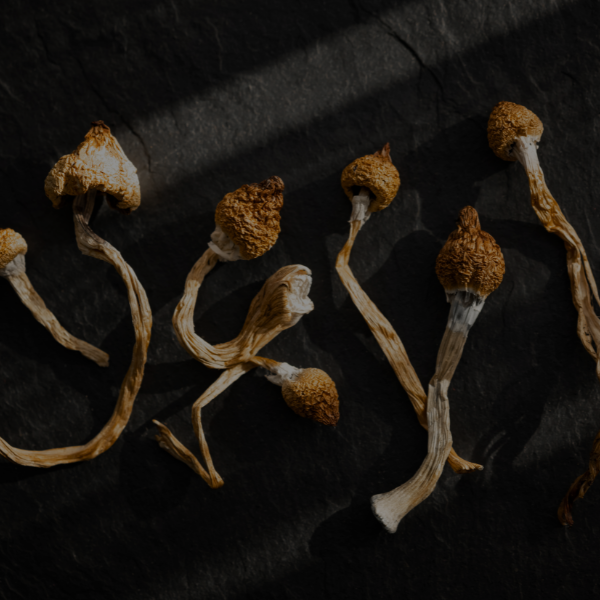

The first step to spotting a problem in your grow is knowing what a healthy one looks like, and the best way to learn is by studying clear mycelium contamination pictures. Healthy mycelium has a very distinct look—it's almost always a vibrant, stringy white. Contaminants, on the other hand, show up as unwelcome splotches of fuzzy, discolored green, blue, or black.
Healthy Mycelium vs Contamination A Visual Comparison
Before you can go on high alert for intruders in your mushroom project, you need to get intimately familiar with your friend—healthy mycelium. Picture your substrate as a pristine garden bed. Healthy mycelium is the thriving root system, pushing out with bright white, rope-like strands called rhizomorphs. It looks powerful, organized, and smells beautifully earthy, like a deep forest after a fresh rain.
Contamination, however, is the sneaky weed that muscles in and tries to ruin your entire crop. These invaders look completely out of place. They often pop up as patches of strange color—greens, blues, grays, or blacks—and can have a slimy, powdery, or fuzzy texture that’s a dead giveaway against the clean, defined growth of your mycelium. Learning to tell friend from foe at a glance is the single most critical skill in any cultivator's toolkit.
The core idea is simple: healthy mycelium is uniform and vibrant, while contamination introduces chaos in the form of weird colors, textures, and sometimes, foul odors. Trust your gut—if something looks wrong, it probably is.
To help you get a quick read on your project, here's a side-by-side comparison. Use this table to quickly check if what you're seeing is a good sign or a warning bell.
Quick Identification Guide: Healthy Mycelium vs Contamination
| Characteristic | Healthy Mycelium (The Goal) | Potential Contamination (The Problem) |
|---|---|---|
| Color | Bright, brilliant white. Sometimes slightly off-white. | Green, blue, black, gray, yellow, pink, or orange patches. |
| Texture | Stringy, rope-like (rhizomorphic), or fluffy (tomentose). | Powdery, slimy, cobweb-like, sugary, or gelatinous. |
| Smell | Fresh, earthy, like mushrooms or a damp forest. | Sour, sweet, rotten, musty, or chemical-like. |
| Growth Pattern | Spreads outward from inoculation points in a uniform, organized way. | Appears as isolated spots, often growing rapidly and chaotically. |
Think of this table as your field guide. The more you observe your grows, the more instinctual this identification process will become, allowing you to spot trouble from a mile away.
Establishing Your Visual Baseline
Developing a sharp eye for these differences is a skill you build through pure observation. When you're just starting, it’s incredibly easy to second-guess everything you see. Is that dense patch just healthy, fluffy mycelium, or is it the beginning of a dreaded mold outbreak? You'll want to get comfortable with the signs of healthy growth first. If you're interested in building that foundation, you can start by learning about what mushroom spawn is and how it’s supposed to develop.
Here are the key visual cues to lock in:
- Color: Healthy mycelium is almost always a brilliant white. Any hint of green, black, yellow, pink, or even a dull, lifeless gray is an immediate red flag that needs your attention.
- Texture: Look for strong, web-like networks or thick, ropey growth. Contaminants just don't look the same—they’re often powdery, slimy, or have a weak, cottony appearance that lacks the defined structure of a mycelial network.
- Growth Speed: Healthy mycelium colonizes its territory at a steady, predictable rate. A mold that seems to appear out of nowhere and doubles in size overnight is a classic, undeniable sign of contamination.
A Rogues' Gallery of Common Contaminants
Welcome to the 'Most Wanted' list for every mushroom cultivator. Think of this section as your personal field guide to identifying the enemies that can sneak into your project. Getting good at spotting trouble early gives you a massive advantage in protecting your grow.
Each contaminant has its own signature—a unique color, texture, and growth speed. Learning to recognize these traits is the first and most important step to making a quick, accurate diagnosis. Let's get to know the usual suspects you're most likely to run into.
Trichoderma: The Green Monster
Often called the "Green Monster," Trichoderma is easily one of the most common and aggressive invaders. It’s tricky because it starts as a bright, dense patch of white mycelium, looking almost identical to your mushroom culture. This camouflage makes it tough to spot right away.
But it won’t stay hidden for long. Within a day or two, it shows its true colors, turning a deep forest green as it starts producing spores. The moment you see that green, it means trillions of spores have already been released, putting any other projects nearby at serious risk. It often gives off a coconut-like or musty smell and spreads so fast it can devour an entire substrate in just a few days.
Penicillium: The Blue-Green Mold
While people often mix it up with Trichoderma, Penicillium looks and acts differently. You might recognize the name—some of its relatives are used to make antibiotics and blue cheese. In our world, however, it's a definite party-crasher.
Penicillium usually shows up as dusty, blue-green circles. Unlike Trichoderma's all-out assault, Penicillium's growth is often more contained, appearing as distinct spots on your substrate. Its texture is powdery, almost like the mold you’d find on old bread or a forgotten orange.
This concept map breaks down the visual difference between a healthy, thriving mycelial network and one that's been compromised by contamination.

The key takeaway is simple: healthy mycelium is a vibrant, uniform white. Contamination introduces strange colors and textures, disrupting the network and signaling that something has gone wrong.
Cobweb Mold: The Wispy Invader
Cobweb Mold (Dactylium) is another common guest, infamous for its lightning-fast growth. It looks exactly like its name suggests: a delicate, wispy, grayish-white mold that looks like a thin layer of cobwebs stretched over the substrate or even your mushroom pins. It's an easy mistake for beginners to confuse it with fluffy mycelium.
The dead giveaway is speed. Cobweb Mold can explode overnight, covering an entire tray in less than 24 hours. Healthy mycelial growth is always much slower and more structured. A great trick for identifying it is to gently spray it with a hydrogen peroxide solution—Cobweb Mold will instantly dissolve and melt away, confirming its identity.
Aspergillus: The Colorful Danger
Aspergillus is a whole family of molds that can appear in various colors, but black and yellow are the main troublemakers for cultivators. Aspergillus niger, or black mold, looks like someone sprinkled black pepper over your substrate.
The yellow version, Aspergillus flavus, has a similar powdery look and can be quite toxic, as it produces potent mycotoxins. Both types are often a sign that your grains weren't sterilized properly. To get a better handle on how these invaders take hold, check out our guide on the best magic mushroom substrates and how to prepare them correctly.
Bacterial Blotch: The Slimy Menace
Unlike the fuzzy molds we've covered, bacterial contamination usually looks wet and slimy. Bacterial blotch, which is caused by Pseudomonas species, appears as slimy, yellowish, or brown patches across your substrate. This one often comes with a foul, rotting smell.
This type of contamination is a red flag for too much moisture and not enough fresh air. You'll know it by its slimy feel and unmistakable odor—a clear signal that your grow environment needs immediate attention. Learning to spot these contaminants by sight and smell is a fundamental skill that will help you keep your cultivation space healthy and productive.
Building a Fortress Against Contamination
So you've seen the rogue's gallery of what can go wrong. After scrolling through enough gut-wrenching mycelium contamination pictures, the next logical question is: "How do I stop this from happening to me?" This is where we shift from defense to offense. Think of your grow as a fortress, and I'm going to show you how to build impenetrable walls.
In the world of mushroom cultivation, the old saying "an ounce of prevention is worth a pound of cure" couldn't be more true. A single, invisible mold spore can hijack your project and lay waste to weeks of hard work. It's a real blow to your time, money, and morale. Getting proactive about cleanliness is the single biggest factor in boosting your success rate.
The Three Main Entry Points for Contaminants
Contamination doesn't just magically appear. It's an intruder, and it almost always gets in through one of three main gateways. If you can lock these down, you're 99% of the way to a clean and healthy grow.
Airborne Spores: The very air we breathe is a soup of microscopic competitors. Mold spores and bacteria are everywhere, just floating around, waiting for a perfect home like your nutrient-rich substrate to land on.
Improperly Prepared Materials: Your grain or substrate has to be perfectly sterilized or pasteurized. If that process is rushed or incomplete, a few tough contaminant spores will survive. They’ll have a massive head start on your mycelium and will win the race every time.
Unsterile Tools and Handling: Your hands, your syringes, every single tool that touches your project is a potential Trojan horse. Without a meticulous cleaning routine, you can personally deliver contaminants right to your mycelium's front door.
The golden rule of cultivation is simple: assume everything is contaminated until you have personally sterilized it. Adopting this mindset is the absolute foundation of a solid sterile technique.
By building a strong defense against these three pathways, you're essentially creating a secure cleanroom where your mycelium can thrive without having to fight for its life.
Mastering Your Sterile Technique
Sterile technique isn't just one action; it's a disciplined workflow. It's a whole set of practices designed to create what cultivators call a "cone of sterility" around your workspace, protecting your project from that invisible world of contaminants.
A Still Air Box (SAB) is your best friend here. It’s a dead-simple tool—just a clear tote with armholes—but it's incredibly effective at shielding your work from all those airborne spores. Working inside an SAB is probably the most significant and affordable upgrade you can make to your process.
Here’s a basic checklist to get your fortress built:
- Work in a Still Air Box (SAB): Seriously, do all your sensitive work like inoculations and grain transfers inside an SAB. It minimizes your exposure to airborne threats dramatically.
- Alcohol Is Your Best Friend: Keep a spray bottle of 70% isopropyl alcohol handy and use it on everything. I mean everything—your gloved hands, tools, grain bags, and the entire inside of your SAB.
- Proper Sterilization: No shortcuts here. Make sure your grain and substrate are pressure-cooked at 15 PSI for the full recommended time. This is what wipes out any hidden competitors.
- Minimize Air Movement: An hour before you start, turn off all fans and air conditioners. Close the doors and windows. You want to give all the dust and spores in the air a chance to settle.
- Practice Good Hygiene: It might seem obvious, but wear clean clothes, tie back your hair, and always wear gloves that you've drenched in alcohol.
When you make these steps a non-negotiable habit, you turn your workspace into a secure zone. For those ready to go even deeper, our complete guide on growing mushrooms at home really breaks down how to set up for success from day one. Turn these practices into muscle memory, and you’ll build a fortress that contamination can't breach.
How Contamination Becomes a Catastrophe
After scrolling through all those grim mycelium contamination pictures, it's pretty obvious that sterile technique is a big deal. But to really get it, we need to look past our own tubs and grain jars for a minute. The stakes can be much, much higher than a single lost project. Sometimes, a tiny slip-up spirals into a genuine catastrophe.
This isn't just about getting a good harvest. It’s about a fundamental respect for the process, a commitment to safety that applies whether you're a hobbyist in your closet or a professional in a million-dollar lab.
A Powerful Case Study
Back in 2012, a public health crisis erupted that serves as a bone-chilling reminder of just how devastating fungal contamination can be. This incident is a masterclass in why sterile practices are non-negotiable.
The 2012 fungal meningitis outbreak was traced back to the New England Compounding Center (NECC), starting with tainted steroid injections. Due to shockingly poor sterile procedures, a fungus called Exserohilum rostratum began growing inside vials of medicine. This hidden growth turned deadly when injected into patients, leading to 753 confirmed infections across 20 states and 64 deaths. You can read more about the microbial failures that led to this tragedy to understand the full scope of the event.
This outbreak wasn't triggered by some exotic super-fungus. It was a failure of the most basic sterile protocols—the same exact principles that keep your monotub safe. The consequences were just amplified on a terrifying scale.
Why This Matters to You
So, what does a disaster in a compounding pharmacy have to do with your home grow? Everything. The fungi that caused this tragedy aren't so different from the molds we battle in our own projects. Both of them thrive the second we let our guard down.
Your sterile technique is your first, last, and only line of defense. The NECC case is hard proof that even a microscopic breach in what should be a clean space can have consequences you can't undo.
- A Single Spore Is All It Takes: That disaster started with invisible spores finding their way into a supposedly sterile environment. Sound familiar? It's the exact same way a grain bag gets contaminated.
- Contamination Is an Exponential Threat: Once it was inside, the fungus grew silently and exponentially, turning a helpful medicine into a poison. This is a perfect parallel to how a spot of Trichoderma can swallow an entire substrate in a matter of days.
- Sterility Is a Non-Negotiable Habit: The incident wasn't a freak accident. It was the result of cutting corners and repeated failures in sterile procedure. For us growers, it drives home the point that every single step—wiping down your workspace, sterilizing your tools, using a still air box—is part of a critical system.
This real-world example elevates sterile technique from a simple "best practice" to an essential discipline. It's not just about winning a race against green mold; it's about respecting the incredible power of the microscopic world you've chosen to work with.
The Hidden Scale of Fungal Contamination
Ever feel like you’re fighting an invisible, uphill battle against contamination? It might be comforting to know you're not alone. This isn't just a challenge for home growers staring at their own mycelium contamination pictures; it's a massive, multi-billion dollar problem for global industries.
Even with multi-million dollar cleanrooms and extreme sterilization protocols, the pros are constantly fighting off the exact same microscopic invaders you find in your grain jars. Common culprits like Aspergillus and Penicillium aren’t just a nuisance for hobbyists—they’re a primary threat for manufacturers in the most strictly regulated fields on the planet.

Just how big is this problem? Fungal contamination was the trigger for a jaw-dropping 40% of all 1,712 U.S. FDA drug recalls between 2012 and 2023. That makes it a top microbial menace in pharmaceutical manufacturing, drawing a straight line to the frustrations we all face in our own cultivation projects. You can discover more about these microbial identification findings and see the full scope of the issue for yourself.
From Pro Labs to Home Grows
The methods professionals use to hunt down these threats have become incredibly sophisticated. They rely on advanced lab equipment to pinpoint the exact species of a contaminant, a critical step for ensuring public safety and preventing catastrophic recalls.
This broader industrial context highlights a critical point: if these molds can breach state-of-the-art facilities, they can certainly breach your home setup. This underscores why mastering sterile technique isn't just a suggestion—it’s the most important factor for success.
But here’s the empowering part. The very same discipline and sharp eye for detail that prevent billion-dollar recalls are what will protect your personal grows.
Every step you take to keep your environment clean—from using a still air box to properly sterilizing your substrate—directly stacks the odds in your favor for a healthy, successful harvest. It just goes to show that a serious commitment to sterility is the great equalizer in the world of fungi, no matter the scale you're working on.
Safely Handling and Disposing of Contamination
It’s a gut-wrenching moment for any grower: spotting that tell-tale patch of green, black, or grey mold. Your first instinct might be to crack open the jar for a closer look, but you have to fight that urge.
Opening a contaminated container inside your home is one of the biggest mistakes a cultivator can make. It can unleash a massive cloud of spores, contaminating your grow space, your home, and your lungs.

This isn’t just about protecting future projects—it’s about your health. Some of these molds, like certain strains of Aspergillus, can be genuinely harmful if inhaled, particularly for anyone with respiratory sensitivities. Seeing these invaders in mycelium contamination pictures is one thing; breathing them in is another matter entirely.
The cardinal rule is simple and non-negotiable: Never open a contaminated container indoors. Always take it outside for inspection and disposal to prevent widespread spore dispersal.
The Myth of Saving a Contaminated Project
We’ve all been there. You see a small spot of mold and think, "Maybe I can just scoop it out and save the rest." It seems logical, a way to salvage weeks of work, but it’s a gamble that almost never pays off.
What you see on the surface is just the tip of the iceberg. That visible mold is the "fruiting body" of the fungus, but its invisible root system has likely already threaded its way through your entire substrate.
Trying to perform "surgery" on a contaminated cake or bag just agitates the mold and sends its spores flying everywhere, practically guaranteeing cross-contamination. Experienced growers know when to cut their losses. The most important long-term strategy is to protect the cleanliness of your environment and start fresh.
Follow this simple, professional protocol for safe disposal:
- Do Not Open: First and foremost, keep the bag or jar completely sealed.
- Take It Outside: Carefully carry the sealed container outside, well away from your grow area or any open windows.
- Dispose Securely: Place the entire container into an outdoor trash can. Don't even think about reusing the jar or dumping the substrate in your garden.
- Clean Up: Go back and thoroughly clean the area where the contaminated project was sitting.
This no-nonsense approach is the best way to protect yourself and ensure your future grows have a clean slate to thrive.
Frequently Asked Questions About Mycelium Contamination
Every grower, from the first-timer to the seasoned veteran, runs into questions when something looks a little off in their tubs. Here are some of the most common questions we get, with straightforward answers to help you tell the good from the bad and keep your projects on track.
What Is the Difference Between Mycelium Bruising and Contamination
This is easily the most common point of confusion, and it can cause a lot of unnecessary panic. The key difference is simple: bruising is a reaction, while contamination is an invasion.
Bruising is just what happens when healthy mycelium gets a bit stressed, maybe from handling, misting too directly, or even harvesting. It shows up as a distinct blue color, but it does not spread or get bigger over time. Think of it like a bruise on an apple.
Contamination, on the other hand, is a living, growing organism trying to steal your substrate. Molds like the dreaded Trichoderma will appear as patches of green, gray, or even black, and they will actively grow and take over your tub.
The Q-Tip Test: This is the go-to method for telling them apart. Gently rub the discolored spot with a clean cotton swab. If any color comes off onto the swab, you're almost certainly looking at mold. If the Q-tip comes away clean, it's just harmless bruising.
Can I Eat Mushrooms From a Contaminated Substrate
We get this question a lot, and the answer is a hard no. It is strongly advised not to eat any mushrooms that have grown in a tub with visible contamination.
While the mushrooms themselves might look perfectly fine, the contaminant (like a mold) can be producing nasty mycotoxins that are completely invisible. These toxins aren't destroyed by drying or cooking and can pose serious health risks.
It's heartbreaking, we know, but the only safe and responsible move is to toss the entire project, including any fruits that grew from it. It's just not worth the risk.
What Is the White Fuzz on My Mushroom Stems
Seeing fluffy white growth at the base of your mushroom stems? Don't panic! This is rarely contamination. What you're seeing is often called "fuzzy feet," and it's actually just aerial mycelium.
This is your mycelium's way of telling you it needs more oxygen. It's reaching up into the air, searching for more fresh air.
It’s a super easy fix. All you need to do is increase the fresh air exchange (FAE) for your fruiting chamber. Once you dial in the airflow, you'll see those fuzzy feet shrink or disappear entirely.
Ready to start your next project with confidence? At The Magic Mushroom Delivery, we provide premium products and educational resources to support your cultivation success from day one. Explore our curated selection today at https://themagicmushroomdelivery.com.