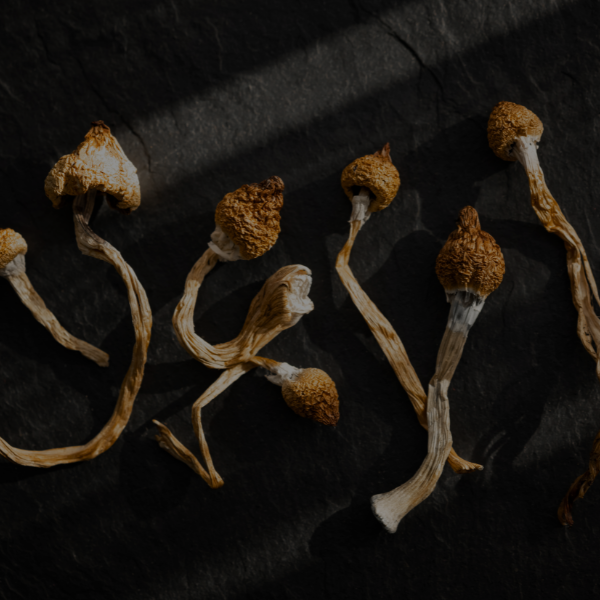
We are often taught to sort life into neat categories. Plants stay rooted, animals move around, and mushrooms sit somewhere in the background like odd little umbrellas after rain. That tidy picture breaks down fast once you spend real time with fungi.
Mushrooms don’t behave as commonly expected. They appear suddenly, feed in unfamiliar ways, build hidden networks underground, and produce spores that seem built for punishment. So when people say mushrooms are aliens, they’re usually pointing at a real feeling first. Fungi can seem less like ordinary organisms and more like visitors operating by a different rulebook.
That’s why the question matters. Not because a mushroom is a tiny spaceship, but because the idea opens a deeper conversation about evolution, resilience, consciousness, and how humans relate to life forms that feel profoundly non-human.
An Introduction to a Cosmic Question
Have you ever seen a mushroom push up through asphalt, bloom overnight on a fallen log, or appear in perfect rings across a field and thought, “What exactly is this thing?” That reaction is more common than people admit. Fungi don’t fit ordinary mental boxes well, and that gap in understanding is where cosmic theories tend to grow.
The phrase mushrooms are aliens survives because it speaks to something real. Fungi feel ancient, strange, and somehow ahead of us. Their visible fruiting bodies are only a brief appearance above ground. Most of the organism remains hidden in mycelial networks, digesting, connecting, and transforming matter out of sight. For many people, that alone gives mushrooms an otherworldly quality.
Then the thought experiment gets more interesting. Some writers and speakers have asked whether mushrooms are merely unusual Earth life, or whether their most unusual traits make them candidates for a much bigger story. Could spores travel through space? Could fungal life have roots deeper than one planet? Could encounters with mushrooms change human consciousness in ways that feel less like intoxication and more like contact with an ancient intelligence?
Those questions sit at the intersection of biology, philosophy, and lived experience. They also explain why this idea keeps resurfacing among wellness seekers, psychonauts, and curious readers who aren’t satisfied with simple labels.
Some ideas matter not because they’re easy to prove, but because they help us notice what we’ve been overlooking.
Seen that way, the alien mushroom hypothesis becomes more than a claim. It becomes a lens. It asks us to look at fungi with more respect, more patience, and more curiosity than we usually give them.
Defining the Alien Mushroom Hypothesis
When people hear the phrase mushrooms are aliens, they often picture science fiction. That’s not really the core idea. The hypothesis isn’t about fungi piloting craft or hiding messages in crop circles. It’s about origin.

What people usually mean by alien
In this context, alien means not necessarily native to Earth. The broader framework behind that idea is panspermia, the hypothesis that life, or the raw material for life, can move through space between worlds. A simple way to picture it is to think of seeds riding wind, except the “wind” is cosmic movement and the “seeds” are microbes or spores.
That shift matters. It turns the question from “Are mushrooms weird?” into “Are mushrooms weird in a way that suggests they could survive a journey far beyond Earth?”
For many readers, that’s also where the idea begins to overlap with spiritual language. Mushrooms can feel like a bridge to states of mind that seem larger than ordinary consciousness. If you’ve explored discussions of sacred plant use and altered states through resources on what entheogens are, you’ve already seen how people use mythic language to describe experiences that feel deeply real.
Why fungi became the stars of the theory
Plenty of organisms are hardy. Fungi stand out because they combine resilience with mystery. They reproduce through spores, stay dormant for long periods, and often seem to emerge from nowhere. Their visible bodies are temporary, but the organism itself can persist subtly and patiently.
Supporters of the alien mushroom idea tend to focus on three features:
- Their travel-ready form: Spores are small, durable, and built to endure conditions that would destroy softer life.
- Their hidden architecture: Mycelium spreads in ways that remind many people of biological circuitry or natural intelligence.
- Their psychological impact: Certain mushrooms don’t just affect the body. They alter perception, selfhood, and meaning.
A thought experiment, not a commandment
You don’t have to believe mushrooms came from space to get value from the idea. The hypothesis works as a tool for thinking. It helps people stop treating fungi as botanical background scenery and start seeing them as one of the most unusual forms of life we know.
That’s part of the appeal. The theory doesn’t shrink mushrooms into a curiosity. It enlarges them into a cosmic possibility.
The Scientific Case for an Otherworldly Origin
What would an Earth organism need if it really had a cosmic backstory? It would need a way to travel, a way to endure, and a timeline old enough to make the question feel more than poetic. Fungi do not prove that story. They do make it interesting in a way that few other organisms do.

Spores built for extremes
The first reason people reach for space language is simple. Fungal spores are survival specialists.
Research tied to orbital exposure and other extreme-condition studies has shown that some spores can tolerate combinations of vacuum, radiation, deep cold, and long dormancy that would destroy far more delicate life forms. That does not turn fungi into visitors from another world. It does show why spores fit the logic of panspermia better than soft, metabolically busy cells.
A seed is a useful comparison, but spores are even more stripped down and travel-ready. They are tiny, protective, and built to wait. For wellness seekers and psychonauts, that detail matters beyond the sci-fi appeal. The same organism that can persist through harsh conditions is also one that often enters human life through patience, timing, and environment. Mushrooms appear suddenly, yet the true story began long before the fruiting body showed up.
A good thought-experiment question: If life were going to survive a brutal journey, what form would give it the best chance?
Ancient enough to invite big questions
Age is the second piece of the puzzle. Fungi are not newcomers in Earth’s story. As the fossil literature summarized in a Nature review on the early evolution of fungi makes clear, their lineage reaches deep into the history of life, and early fungal forms were present long before the modern forests commonly associated with mushrooms.
That ancient presence does not point to outer space by itself. It does something subtler. It changes the scale of the conversation. Once you realize fungi belong to one of the oldest and most persistent branches of complex life, the “alien” label starts to function less like a claim and more like a way of describing how unfamiliar their story really is.
Here is the practical translation. Organisms that have endured for immense spans of time usually carry useful lessons in adaptation. Fungi have had a very long time to solve problems involving survival, exchange, decomposition, and symbiosis. That helps explain why they keep showing up in modern conversations about immunity, ecology, and altered states of consciousness.
Neither plant nor animal, and that matters
A lot of fungal strangeness comes from category error. People often group mushrooms with plants because they grow from the ground, but fungi follow a different operating system. They do not photosynthesize. They digest externally, releasing enzymes into their surroundings and absorbing nutrients from the material around them. Their main body is often a hidden mycelial network, while the mushroom is only the temporary reproductive structure.
That hidden-visible split is part of what makes fungi feel so uncanny. The mushroom you notice is more like an event than a complete organism.
For people interested in psychedelic experience, this distinction matters because it keeps the conversation grounded. Mushrooms are not magical because they violate biology. They are fascinating because their biology already stretches ordinary intuition. If you want to connect that biology to subjective experience, this overview of psilocybin effects on the brain helps bridge the gap between fungal chemistry and human perception.
Wonder with guardrails
The strongest scientific version of the alien mushroom idea works best as a disciplined thought experiment. Spores can be astonishingly durable. Fungi are ancient. Their life cycle and body plan are unusual. Those facts make the hypothesis memorable.
They do not settle it.
That is the useful part. Treating mushrooms as “alien” can sharpen your attention without asking you to suspend judgment. It encourages a habit that serves both science and inner exploration well. Stay open to surprise, but keep your feet on the ground.
From Ancient Apes to Internet Memes
The modern version of the alien mushroom idea owes a lot to one person: Terence McKenna. He didn’t just say fungi were strange. He gave people a narrative large enough to hold biology, consciousness, evolution, and cosmic mystery all at once.

McKenna’s leap from panspermia to consciousness
As described in this account of mushrooms, apes, and aliens, McKenna popularized the idea that psilocybin mushrooms may have originated extraterrestrially and played a catalytic role in human evolution. He pointed to psilocybin’s unusual structure as a possible “biochemical fingerprint” of alien origin and argued that spores, protected by an electron-dense casing that acts as a radiation shield, could survive galactic transit.
That’s a big jump, and it’s why his ideas still divide readers. But McKenna’s influence came from more than factual claims. He knew how to frame mushrooms as participants in a drama about consciousness itself. In his telling, fungi weren’t passive organisms. They were ancient agents pressing human beings toward language, symbolism, and expanded awareness.
The associated “Stoned Ape” theory gave that story a vivid ancestral setting. Early hominins encounter mushrooms, perception changes, and cognition begins to shift. Whether someone treats that as speculative philosophy or literal possibility, it’s easy to see why the idea stuck.
Why the story spread so well online
Internet culture loves concepts that are both serious and shareable. “Mushrooms are aliens” works because it compresses a giant stack of ideas into a short phrase. It’s half joke, half worldview.
That combination helped the theory migrate from lectures and niche books into forums, clips, memes, and long late-night threads. Online, people don’t always pass around the full argument. They pass around the emotional center of it. Mushrooms feel ancient. Mushrooms feel intelligent. Mushrooms feel not entirely from here.
For readers who want to hear more of the wider cultural conversation, this collection of documentaries about magic mushrooms is a useful companion.
A lot of the meme power comes from contrast. Put a mushroom next to a human brain, a galaxy, or an ape, and the image tells a story before anyone reads a word.
Here’s a good example of how that conversation now circulates in media form:
From fringe idea to shared cultural shorthand
What changed over time wasn’t just exposure. It was tone. McKenna often spoke in sweeping, philosophical language. Internet culture translated that into shorthand people could remix. A lecture became a clip. A clip became a meme. A meme became a doorway into deeper reading for some people and a punchline for others.
That doesn’t mean the idea lost all value. Sometimes memes function like modern folklore. They simplify a strange truth into a portable form. In this case, the truth underneath the joke is that fungi really do challenge ordinary assumptions about life.
The meme survives because the organism earns it.
That’s why the phrase keeps resurfacing. Even stripped of its full philosophical baggage, it still captures something people sense immediately when they encounter mushrooms with fresh eyes.
What This Means for Modern Consciousness Explorers
For people drawn to altered states, the alien mushroom idea can do something practical. It changes posture. Instead of approaching mushrooms like a product to overpower the mind, people often approach them with more humility when they think of them as an ancient non-human intelligence.
That shift may sound poetic, but it has real effects on mindset. Expectation shapes experience. If someone enters a journey with the attitude that they’re meeting something old, strange, and deserving of respect, they usually listen differently. They rush less. They interpret difficult moments less as failure and more as contact with unfamiliar terrain.

Ego-dissolution through an alien lens
One reason this framing resonates is that it lines up with a common experience reported during psilocybin sessions. According to this discussion of McKenna’s ideas and user experience, fMRI scans show psilocybin causes desynchronization in the brain’s default mode network, which correlates with subjective reports of “oneness.” The same source notes clinical trials in which 20 to 30 mg doses led to significant depression remission for 67% of participants.
Those details matter because they give the conversation two layers at once. There is the poetic layer, where a person feels they’ve stepped outside the ordinary self and into contact with something vast. Then there is the measurable layer, where changes in network activity correspond with the felt loosening of ego boundaries.
For many psychonauts, the alien hypothesis becomes a useful metaphor for that exact state. The experience can feel less like dreaming and more like entering a perspective that isn’t centered on the usual human story.
A better frame for preparation
This perspective can also improve preparation because it encourages care instead of bravado.
Consider the difference:
- Consumer mindset: “How strong is this? How far can I push it?”
- Relational mindset: “What kind of state am I entering, and how do I prepare for it well?”
That second mindset usually leads to better choices around intention, setting, pacing, and integration. It doesn’t guarantee an easy experience. It does make a meaningful experience more likely.
Respect is often the most practical preparation tool.
Why wonder helps people integrate experience
After a powerful session, many people struggle with language. They know something important happened, but they can’t fit it neatly into ordinary speech. The alien mushroom lens gives them a symbolic container. It says, in effect, “Of course this feels hard to describe. You encountered a mode of being that didn’t feel fully human.”
That can be grounding. Not because it proves an extraterrestrial origin, but because it validates the strangeness without flattening it. People don’t always need a reductive explanation right away. Sometimes they need a framework spacious enough to hold awe.
A simple table shows how the frame changes interpretation:
| If you view mushrooms as… | You may interpret the experience as… |
|---|---|
| A chemical event only | Temporary perceptual disruption |
| A therapeutic tool | Structured emotional or cognitive work |
| An ancient non-human intelligence | A dialogue with something larger than the ordinary self |
None of those frames is automatically correct for every person. But the third one often invites patience, reverence, and deeper reflection. For modern consciousness explorers, that’s not a small benefit. It can shape the entire arc of the experience, from preparation to meaning-making afterward.
Conclusion A Universe of Possibility
Whether mushrooms came from deep space or evolved entirely on Earth, they still deserve the adjective that started this whole conversation. They are alien in the everyday sense of the word. They’re unfamiliar, elusive, and astonishingly unlike commonly understood life forms.
That’s why the idea endures. The science gives it traction through spore resilience and ancient lineage. Culture gives it imagery through McKenna’s storytelling and the internet’s talent for turning mystery into shorthand. Personal experience gives it emotional force through states of awe, oneness, and ego-dissolution that feel bigger than ordinary language can hold.
Taken together, those layers make the phrase mushrooms are aliens more than a claim to debate. It becomes a useful way to think. It invites people to treat fungi not as background biology, but as a kingdom of life that can still surprise us at the deepest level.
And maybe that’s the core value of the theory. It keeps wonder alive. It reminds us that the world is not fully explained just because we can name its parts.
If one of the oldest and strangest life forms on Earth can still make us ask cosmic questions, what else are we overlooking when we assume we already know what life is?
If you’re ready to explore mushrooms with a mix of curiosity, care, and reliable education, The Magic Mushroom Delivery offers a wide selection of mushroom products along with guides that help adults make more informed choices.