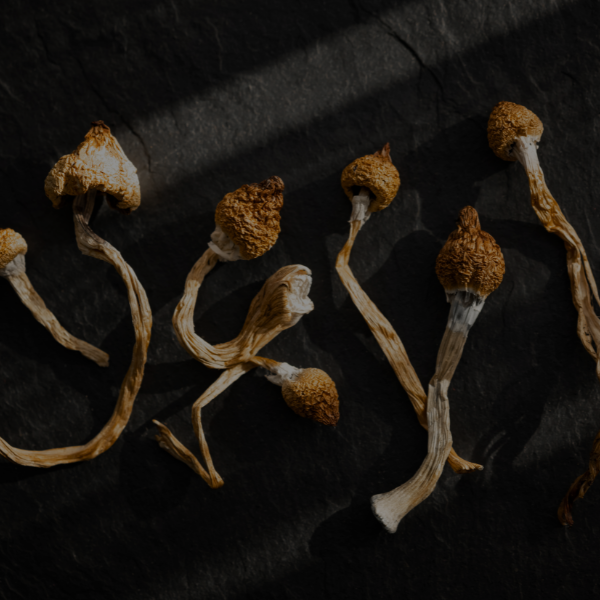

Microdosing is all about taking a tiny, almost unnoticeable amount of functional mushrooms to support your wellness goals. The whole point is that the dose is so small it doesn't create any kind of overwhelming sensory trip. Instead, the idea is to subtly enhance your daily life.
What Is Microdosing Mushrooms
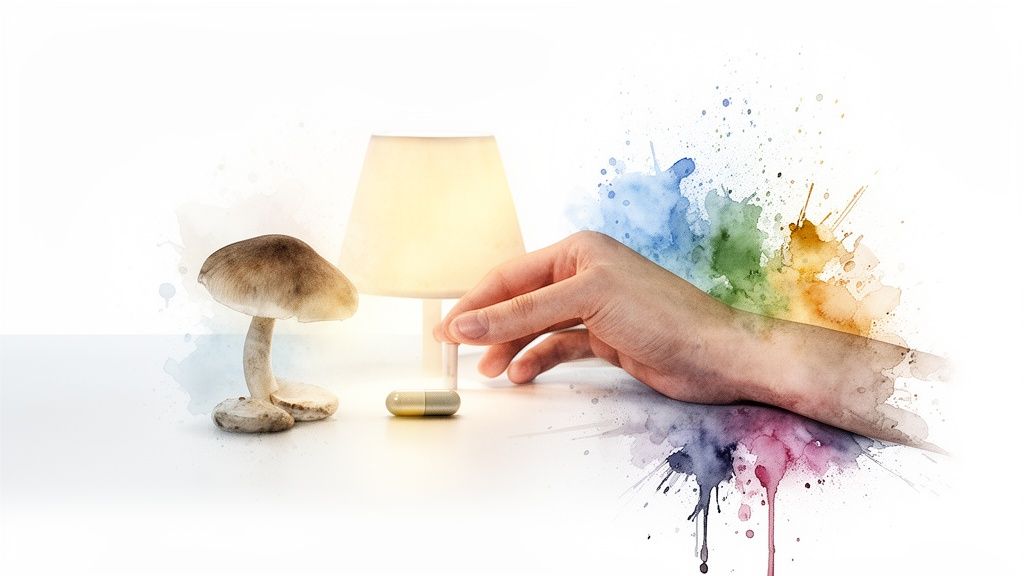
Think of microdosing like adjusting the dimmer on a light. You aren't blasting the room with a bright, intense beam. You’re just making a small tweak to improve the mood, clarity, and overall vibe of your space.
This modern approach to wellness works on the exact same principle. The goal isn't a massive shift in how you see the world, but a gentle lift to your day-to-day baseline. It’s all about finding that “sweet spot” where you feel more present, focused, and emotionally steady without feeling impaired in any way.
A Tool for Everyday Enhancement
For a lot of people, microdosing is simply a way to fine-tune their daily routine. They weave it into their lives for all sorts of reasons, whether they’re looking for a slight creative edge or just a greater sense of well-being. It’s no surprise the practice has caught on with professionals, artists, and wellness enthusiasts.
The core idea is simple: take a dose small enough to go about your normal day, but significant enough to potentially influence your cognitive and emotional state positively.
This is completely different from a full-dose, or "macrodose," experience. A larger dose might be about deep exploration or life-changing insights, but microdosing is about integration and function. It’s designed to work quietly in the background of your life.
Reported Benefits and Motivations
The reasons people get curious about microdosing are pretty diverse, but they usually circle back to a few common wellness goals. A 2019 study that looked at reports from 278 microdosers found that 26.6% of them pointed to improved mood as the main benefit. Another 14.8% were focused on better concentration and getting more done. These numbers really show why people are turning to it to handle daily stress or just sharpen their focus. You can discover more insights about these user-reported benefits in the full study.
Some of the most common reasons people start include:
- Improved Focus: To sharpen concentration for work, studying, or creative projects.
- Enhanced Creativity: Helping to bust through mental blocks and look at problems in a new light.
- Emotional Balance: Promoting a more stable and positive mood throughout the day.
- Increased Presence: Fostering a stronger connection to the here and now.
Ultimately, microdosing mushrooms is a personal journey. It’s about mindfully adding a tool that might just help you feel more aligned, productive, and engaged with the world, one subtle step at a time.
The Potential Benefits for Your Mind and Mood

The curiosity around microdosing mushrooms usually boils down to one simple question: why do people do it? While everyone’s reasons are personal, the stories often share a common thread of subtle but meaningful shifts in their mental and emotional worlds. These aren't seismic, overnight transformations but gentle upgrades that compound over time.
Think of it like fine-tuning an old radio. You’re not trying to find a new station, just dialing it in to get rid of the static so the signal comes through clearer. For a busy parent, that might mean a greater sense of calm amidst the chaos. For a creative professional, it could be the spark that breaks through a frustrating mental block. The idea isn't to escape your reality but to elevate your baseline within it.
Boosting Creativity and Mental Flow
One of the most talked-about benefits is a definite kick in creative thinking. So many people describe a newfound ability to connect dots they didn't see before, tackle problems from a fresh perspective, and finally push past stubborn creative hurdles. It’s less about pulling genius ideas out of thin air and more about unlocking the mental flexibility you already have.
This often leads to what athletes and artists call a "flow state." That's the zone where you're so completely absorbed in what you're doing that time just melts away. For anyone whose work relies on deep concentration—coders, writers, designers, you name it—finding that state more easily can be a game-changer.
On top of that, many report feeling a renewed sense of curiosity and an openness to new things, which can turn even the most routine parts of life into opportunities for discovery.
Microdosing seems to soften those rigid, well-worn paths in our thinking that can kill innovation. It encourages a slight shift in perspective, making way for more fluid, spontaneous thoughts that are incredibly valuable for problem-solving.
Sharpening Focus and Productivity
Beyond the creative buzz, another key perk people report is a noticeable improvement in focus and mental clarity. It’s that feeling of being able to stay on task more easily, tune out the constant stream of distractions, and hold your concentration for longer stretches. Naturally, this can lead directly to getting more done and feeling a greater sense of accomplishment at the end of the day.
Imagine sweeping away all the mental clutter that builds up. Some users feel that microdosing helps them organize their thoughts more efficiently, leading to sharper decisions and a more deliberate approach to their work.
This isn’t the jarring, buzzy energy you get from a triple-shot espresso. It's more of a smooth, sustainable sharpening of the mind. That’s what makes it an appealing tool for students, professionals, and anyone looking to optimize their daily performance without the jitters and eventual crash that come with stimulants.
Enhancing Emotional Well-Being
Perhaps the most compelling reason people explore microdosing is its potential to improve mood and find a better emotional balance. When you dig into the mental health conversation, the anecdotal and early scientific results are definitely promising. Users frequently report a general lift in their spirits, a dialing-down of anxious thoughts, and a stronger ability to bounce back from daily stressors.
One large observational study found that people who microdosed reported significant drops in their levels of anxiety, depression, and stress. Another trial was even more striking, showing an incredible 83% response rate for depression in the high-dose group, compared to just 14% in the low-dose group. You can learn more about these encouraging findings on emotional health through the research.
This improved emotional regulation can also help you feel more connected to yourself and the people around you. By quieting some of that noisy internal chatter, it can create space for more meaningful interactions and a deeper appreciation for the present moment. If you're curious about the science behind how this works, take a look at our guide on the psilocybin effects on the brain.
Finding Your Ideal Dosing Schedule
Stepping into the world of microdosing is a uniquely personal journey. There’s no magic formula or a single “right way” to do it. Think of it less like following a rigid prescription and more like learning a new dance with your own body and mind. The whole point is to find a rhythm that clicks with your lifestyle, helps you move toward your wellness goals, and just plain feels right. Getting there takes a bit of patience, a lot of self-awareness, and the willingness to tweak things as you go.
The golden rule? Start low and go slow. A common rookie mistake is thinking more is better, but with microdosing, the opposite is almost always true. You’re aiming for a sub-perceptual dose, which means you shouldn't feel any obvious psychedelic effects. Instead, you're looking for those quiet, positive shifts in mood, focus, or creativity that build up over time. Keeping a simple journal can be a game-changer here, helping you connect the dots and see what schedule really works for you.
Exploring Common Microdosing Protocols
While your perfect schedule will be your own discovery, a few well-trodden paths can give you a great place to start. These established protocols are all designed to sidestep building a tolerance, which keeps the practice effective in the long run. They strategically build in "off days" which do two things: they let your system reset, and they give you a chance to notice the lasting benefits on the days you don't dose.
Two of the biggest names in the game are the Fadiman Protocol and the Stamets Stack. Each has a slightly different philosophy and structure, making them better suited for different goals.
The Fadiman Protocol
Developed by the legendary Dr. James Fadiman, this is probably the most famous microdosing schedule out there. It’s loved for being simple, balanced, and an incredibly gentle entry point for beginners.
The structure couldn't be easier:
- Day 1 (Dose Day): Take your microdose, usually in the morning.
- Day 2 (Transition Day): No dose. Pay attention to any lingering effects or afterglow.
- Day 3 (Normal Day): No dose. This is your baseline to see how you feel normally.
- Repeat: You follow this three-day cycle for a few weeks (usually 4 to 8), and then take a longer break of a week or two to completely reset.
This classic "one day on, two days off" cycle is brilliant for preventing tolerance and making it really clear how the microdose days differ from your normal state.
The Stamets Stack
This protocol comes from the mind of world-renowned mycologist Paul Stamets. It takes a different angle by combining psilocybin with a couple of other natural supplements to create a powerful synergy, specifically aimed at boosting brain health and cognitive function.
The Stamets Stack usually includes a combination of:
- Psilocybin Mushroom: The core ingredient for the microdosing effect.
- Lion's Mane Mushroom: A functional mushroom celebrated for its potential to support nerve growth factor (NGF).
- Niacin (Vitamin B3): Included with the idea that it helps carry the other compounds throughout your system.
The schedule itself is more frequent, often calling for four or five days on in a row, followed by two or three days off. This is the go-to protocol for people specifically looking to sharpen their focus, improve memory, and support long-term neurological health. If you're looking for more guidance on where to start with your actual dose amount, our comprehensive psilocybin dosage guide is an excellent resource.
The most important principle is self-awareness. A dosing schedule is just a framework; your personal experience is the true guide. Pay attention to how you feel, both on dosing days and off days, and don't hesitate to adjust your routine.
So, which path might be the right one to start with? Here’s a quick breakdown to help you compare the two main approaches.
Common Microdosing Mushroom Schedules
| Protocol | Dosing Schedule | Core Concept |
|---|---|---|
| The Fadiman Protocol | 1 day on, 2 days off | A simple, balanced routine for general well-being, creativity, and mood support. Great for beginners. |
| The Stamets Stack | 4-5 days on, 2-3 days off | A focused approach for cognitive enhancement, neurogenesis, and brain health using a synergistic "stack." |
At the end of the day, choosing a schedule for micro dosing mushrooms is all about mindful experimentation. Start with a plan, listen to your body, and let your personal journey unfold at its own pace.
How to Navigate Potential Side Effects
While most people have positive things to say about microdosing, any complete, honest guide has to take a calm look at the potential for side effects. This isn't about causing alarm—it’s about giving you the knowledge to navigate your experience responsibly.
Knowing what you might encounter helps you stay prepared and make smart adjustments. Most reported side effects are pretty mild and often just a sign that your dose is a little too high for your unique body chemistry.
Think of it like having one too many cups of coffee. You might feel a bit jittery or overly sensitive, which is your body’s clear signal to dial things back. The whole point is to find that sub-perceptual sweet spot where the experience is smooth and supportive, not distracting.
Common Concerns and How to Address Them
If you happen to run into any unwanted effects, they’re typically easy to manage. The most common ones are usually temporary and tend to fade as your body adjusts or as you fine-tune your dosage. The most important skill you can develop on this journey is simply listening to your body.
Here are a few mild effects people sometimes report:
- Mild Fatigue: Now and then, you might feel a bit tired or drained, especially toward the end of a dose day. This could be a sign to adjust your timing, like taking your microdose a bit earlier.
- Heightened Sensitivity: You might find yourself more emotionally or sensorily sensitive than usual. This is often a clear cue that your dose is a tad too high and needs a small reduction.
- Minor GI Discomfort: Some people report a bit of stomach upset. This can often be managed by taking your microdose with a small amount of food or switching to a different product, like capsules instead of raw mushrooms.
The Role of Expectation and Mindset
Interestingly, your own expectations can play a huge part in what you experience while microdosing. Some scientific studies have actually found it tricky to separate the genuine effects of the substance from the placebo effect, simply because participants' beliefs are so powerful.
One double-blind, placebo-controlled trial from 2022 highlighted this perfectly, noting that participants guessed correctly when they received the real substance 75% of the time. While this proves that expectations are strong, the research still points toward real, objective effects. On the flip side, user reports sometimes mention risks like insomnia when microdosing isn't done properly. For a deeper look, you can explore more modern psychedelic research on this topic.
Your mindset and environment—often called "set and setting"—are incredibly influential. When you approach your practice with a calm, positive, and intentional mindset, you're already steering your experience in the right direction from the get-go.
To help you picture what a wellness-focused microdosing schedule might look like, this decision tree outlines the two most common protocols: the Fadiman and Stamets methods.
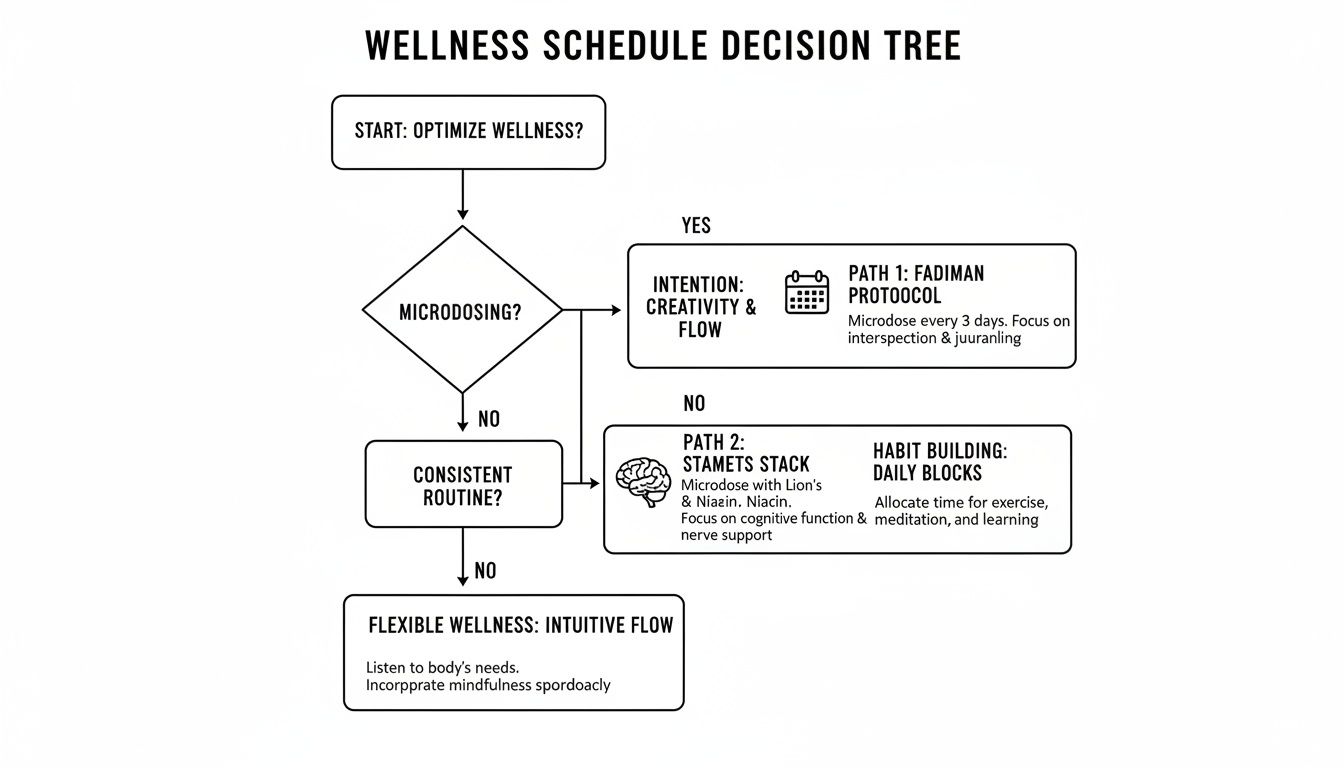
This visual guide shows that your choice of schedule often comes down to your personal wellness goals, whether you’re aiming for general balance or more targeted cognitive support.
Practical Tips for a Positive Journey
Ultimately, ensuring you have a positive experience is all about mindful and responsible use. If you ever start to feel uncomfortable, the solution is usually simple.
- Adjust Your Dose: This is the number-one fix. If you notice any unwanted effects, just reduce your next dose significantly.
- Check Your Timing: Try experimenting with taking your microdose at different times. Morning is usually best to avoid any impact on your sleep.
- Stay Hydrated and Nourished: A healthy body supports a healthy mind. Make sure you’re drinking enough water and eating well, especially on your dose days.
- Take Breaks: Always follow a protocol that includes "off" days. It’s also wise to take longer integration breaks every few weeks to keep your experience effective and fresh.
How to Choose the Right Product for You
Once you've mapped out a potential schedule, the next step is finding a product that actually fits into your life. The world of microdosing mushrooms has blossomed far beyond raw fungi, and today’s market is full of convenient, effective, and even enjoyable options. What you choose will ultimately boil down to your personal preferences, your daily routine, and what you hope to achieve.
Think of it like picking your morning caffeine fix. Some people savor the ritual of brewing a fresh pot of coffee. Others need the grab-and-go speed of an energy drink or an espresso pod. They all deliver caffeine, but the experience, taste, and other ingredients are worlds apart. It's the same idea here.
The best product is simply the one you'll actually use consistently—the one that slips into your routine so naturally you barely have to think about it.
Comparing Popular Product Formats
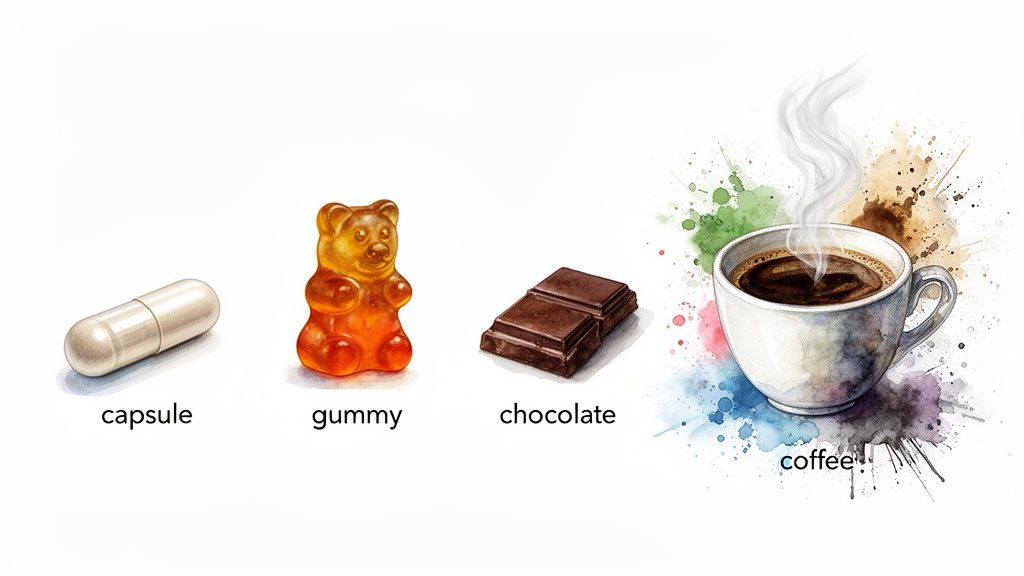
The market offers a few distinct ways to microdose, each with its own vibe and advantages. From hyper-precise capsules to tasty edibles, there’s something for pretty much everyone. Getting to know the pros and cons is the first step to making a choice you feel good about.
Here’s a quick rundown of the most common options you'll come across:
- Capsules: These are easily the most popular choice, and for good reason. They offer unbeatable precision and consistency, taking all the guesswork out of dosing. Capsules are also discreet and tasteless, making them a breeze to add to your daily supplement lineup.
- Gummies and Chocolates: If you're not a fan of the earthy taste of mushrooms, edibles are a fantastic alternative. They completely mask the flavor, turning your daily dose into a little treat. Just be sure to double-check the dosage per piece to stay in that sweet, sub-perceptual spot.
- Mushroom-Infused Coffee or Tea: This is perfect for anyone looking to weave their microdose into an existing morning habit. It blends the subtle lift from the mushrooms with the familiar comfort of a warm drink, making for a smooth start to any day.
Each format offers a totally different experience. Capsules are all about function and accuracy, while edibles and beverages make the process a more sensory, enjoyable moment.
The key is to select a product that you can use consistently and confidently. If a product is difficult or unpleasant for you to take, you're far less likely to stick with your routine and see the subtle, long-term shifts you're looking for.
How to Read Labels and Identify Quality
No matter which format you lean toward, knowing how to spot a quality product is non-negotiable. A clear, transparent label is your best friend here. It's how a company communicates exactly what’s inside, so learning to decode it is a crucial skill for any conscious consumer.
When you're looking at a product, keep an eye out for these tell-tale signs of quality:
- Clear Dosage Information: The label must state exactly how many milligrams of active ingredient are in each serving (e.g., per capsule, gummy, or chocolate square). Anything vague is a definite red flag.
- Ingredient List: Good companies are proud of their ingredients. Look for organic, real-food components and be wary of products loaded with artificial fillers, flavors, or preservatives you can't pronounce.
- Third-Party Lab Testing: The most reputable brands send their products to independent labs to verify their potency and purity. Look for a mention of lab testing or even a QR code on the package—it's a strong sign of a trustworthy company.
Making a smart choice is about more than just picking your favorite flavor; it’s about making sure the product aligns with your health and wellness goals. Taking a minute to understand what's inside helps build a foundation of trust and safety for your entire microdosing journey. If you want to dive deeper into different consumption methods, our guide on the best way to take mushrooms covers even more ground.
Your Microdosing Questions, Answered
As you start exploring the world of microdosing mushrooms, it's totally normal to have questions pop up. We get it. This final section is all about giving you clear, straightforward answers to the most common queries we hear. Our goal is to make sure you feel confident and informed as you consider this path.
Think of this as the last piece of the puzzle. We’ll cover the practical stuff that might still be on your mind, from what to expect when you first start to how you’ll know if it’s a good fit. Let's tie it all together so you can move forward with clarity.
How Long Does It Take to Feel the Effects of a Microdose?
This is probably the number one question people ask, and the truth is, it’s a little different for everyone. Since a microdose is sub-perceptual by design, you shouldn’t be looking for an immediate, obvious shift. The whole point is for the effects to be subtle—a gentle hum in the background of your day.
Most people don't "feel" a microdose kick in like a cup of coffee. Instead, you might look back at the end of the day and realize you were a little more focused, felt more patient with your kids, or found creative solutions to problems more easily. While these subtle benefits might start to emerge within 30 to 90 minutes, the real magic happens over weeks of following a consistent protocol.
Can I Microdose Mushrooms Every Day?
Daily microdosing is a definite no-go. The main reason comes down to one word: tolerance. Just like with coffee or other substances, your body gets used to it, and over time, it just stops working as well. To keep that from happening, nearly all established protocols—like the ones developed by Fadiman or Stamets—build in "off days" for a reason.
These rest days are super important. They do a few key things:
- Prevent Tolerance: Giving your system a break lets it reset, so the practice stays effective.
- Promote Integration: Off days are your chance to see how the benefits carry over. Are you still feeling more focused and calm on your days off? That's the goal.
- Boost Self-Awareness: Taking breaks gives you a baseline, making it easier to notice the subtle shifts you experience on the days you do dose.
Sticking to a schedule with breaks is the key to making this a sustainable and genuinely beneficial practice.
What Is the Best Time of Day to Take a Microdose?
For the vast majority of people, morning is prime time. Taking your microdose early in the day lets the subtle effects support you when you're most active and productive. It just makes sense, whether you’re hoping for better focus at work or aiming to be more present with your family in the evening.
If you take a dose too late in the afternoon or at night, some people find it can mess with their sleep. The easiest way to avoid that is to make it part of your morning ritual. Have it with your breakfast, your coffee, or your morning tea to set a clear intention for the day and keep your sleep cycle happy.
How Do I Know if My Dose Is Too High?
Finding your personal "sweet spot" is all about mindful observation. If you take a bit too much, you'll start noticing effects that are no longer subtle or "sub-perceptual." It’s just your body’s way of saying, "Hey, let's dial it back a notch."
Here are a few signs that your dose might be a little too strong:
- Feeling drowsy, yawning a lot, or feeling unexpectedly tired.
- A spike in anxiety or feeling emotionally sensitive.
- Slight visual changes, like colors seeming a bit brighter.
- Feeling more distracted instead of more focused.
If you notice any of these, don't sweat it. It's a super common part of the process. It just means you should take a little less next time. Think of it as calibration—you're just learning what works for your unique system.
Can Microdosing Interfere With My Medications?
This is a critically important question, and it's one that needs a personalized answer from a professional. The compounds in functional mushrooms can potentially interact with certain medications, especially anything that affects your serotonin system, like antidepressants (SSRIs). These interactions can be complex and aren't fully understood, so safety has to be your number one priority.
It is absolutely essential to consult with a qualified healthcare professional before you begin microdosing, especially if you are taking any prescription medications or have a pre-existing health condition. Your doctor can provide guidance based on your specific health profile and help you make a safe, informed decision.
How Do I Know if Microdosing Is Right for Me?
Figuring out if microdosing mushrooms is a good fit for your wellness goals is a personal journey. It’s not a magic pill or a quick fix, but rather a tool that can support gradual, positive changes in your life. It might be right for you if you're looking for a natural way to gently enhance your day-to-day experience.
Ask yourself if your intentions line up with what microdosing can offer.
- Are you looking to sharpen your focus and finally tackle that big project?
- Do you want to unlock a more creative, free-flowing mindset?
- Are you hoping to find a bit more emotional balance and calm?
- Do you just want to feel more present and connected in your daily life?
Ultimately, the best way to know is to approach it with an open, curious mind. Keep a journal, pay close attention to how you feel over time, and be honest with yourself. This mindful approach is what makes the journey truly yours.
Ready to explore high-quality, reliable mushroom products for your wellness journey? At The Magic Mushroom Delivery, we offer a curated selection of capsules, edibles, and more, all crafted with organic ingredients and backed by our commitment to quality. Find the perfect fit for your lifestyle and have it delivered discreetly to your door.
Start your journey with us today at The Magic Mushroom Delivery.