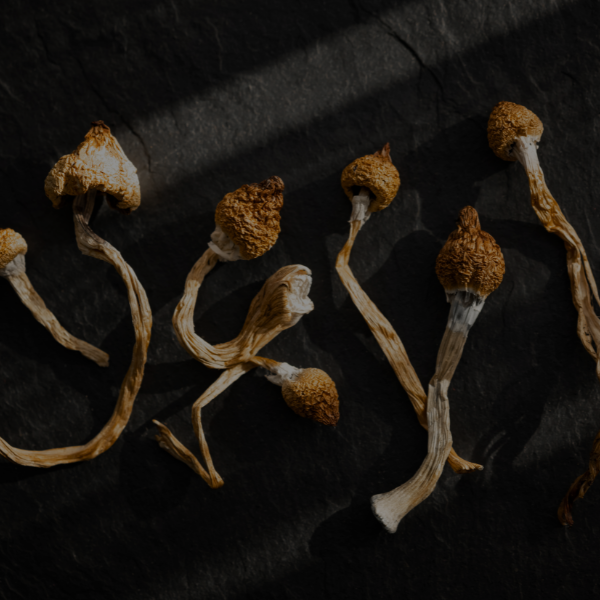


Mushroom effects typically begin within 20–40 minutes, peak around 60–90 minutes, and last for about 4–6 hours. This window can widen because food, formulation, digestion, and individual body chemistry all influence how quickly the active compound reaches the brain.
You may be reading this while watching the clock, sitting somewhere comfortable, and wondering whether the mushrooms are working at all. At the 30-minute mark, a lack of strong visuals doesn't necessarily mean the dose failed. Early changes can be quiet, and the intensity may still be building.
That delayed onset creates the most common timing mistake: taking more before the first dose has fully developed. Understanding why the clock varies helps you wait with less anxiety, recognize a normal progression, and make calmer choices.
What the Typical Mushroom Timeline Actually Looks Like
At 30 minutes, a first-time user may still be sitting on the couch, watching the clock and wondering whether anything is happening. Early signs can be quiet: softened edges, a lighter mood, altered body awareness, or a faint internal hum. Full visuals are not required for the experience to have started.
Clinical and review literature places usual oral onset at 20–40 minutes, with peak subjective intensity around 60–90 minutes and a total experience of roughly 4–6 hours. Psilocin, the active compound formed from psilocybin, has been reported in plasma within 20–40 minutes, reaching peak plasma concentrations around 80–105 minutes (clinical review literature on psilocybin timing).

Four useful points on the clock
Ingestion to early onset: While the body processes the mushroom material, small changes may appear in mood, senses, or physical awareness. This early stage can be easy to overlook.
Building phase: As effects become clearer, music may hold more attention, visual details may seem richer, and ordinary thoughts may form unusual associations.
Peak period: The strongest effects commonly arrive around 60–90 minutes. A slower digestive process or delayed product can shift that point later, and intensity may rise in steps rather than along a smooth curve.
Descent and return: After the peak, the main effects gradually taper. Returning toward baseline commonly takes another 1–2 hours, while tiredness, reflection, or a lingering mood lift may continue into the next day.
These time points describe averages, not a personal schedule. Human timing data includes onset anywhere from 5 to 90 minutes, while the typical oral window remains about 20–40 minutes and total duration about 4–6 hours. A delayed start is therefore a reason to wait and observe, not an automatic sign that the dose failed. Taking more before the first dose develops can make the eventual experience stronger than intended.
For a broader look at how the experience changes from onset through return, read this guide to the stages of being high.
Why Mushrooms Take Time Before You Feel Anything
The delay makes more sense when you follow the compound's route through the body. Think of oral mushrooms as a package that must be processed at several stops before reaching its destination.
Psilocybin is converted into psilocin, the compound responsible for most of the psychoactive experience. Digestion begins breaking down the mushroom material, the body carries the resulting compounds through the gut and bloodstream, and psilocin then reaches the brain, where it interacts with serotonin receptors. That sequence takes time, unlike a substance delivered directly into the bloodstream.
The biological delivery route
A simple version of the journey looks like this:
- Ingestion: The mushroom material enters the stomach and intestines.
- Conversion: The body changes psilocybin into psilocin through metabolic processes.
- Absorption: The active compound moves through the digestive system and into circulation.
- Brain access: Psilocin crosses into the brain and begins producing subjective effects.

Chewing thoroughly can help break down the mushroom's chitin-rich cell structure earlier in the process, but it won't remove the need for digestion, absorption, conversion, and brain access. An empty stomach generally processes oral material faster than a full stomach, while a person's individual metabolic activity can add another layer of difference.
The practical explanation: Oral mushrooms don't act instantly because the body has to prepare the active compound before the brain can respond to it.
Non-oral administration shows why the usual delay comes largely from the digestive route. A review discussing intravenous psilocybin describes immediate onset, a sustained peak after about 4 minutes, and resolution within 45–60 minutes, while oral use commonly produces noticeable effects later (review of psilocin pharmacokinetics). For ordinary edible products, the multi-step route is the reason onset is measured in tens of minutes rather than seconds.
The Key Factors That Shift Your Onset and Duration
The same dose can follow different clocks. A person may feel the first changes early, while another waits beyond the usual window. Dose size, food, metabolism, tolerance, and potency overlap, so a 20–90 minute onset window can still be normal.
Dose size changes intensity more reliably than speed. Taking more does not guarantee earlier effects. A larger amount may create a stronger experience and a longer or more demanding peak. If onset is delayed, that same amount can become risky because the effects may arrive with greater force than expected.
Food can move the clock too. A full stomach, especially after a heavy or fatty meal, may slow gastric emptying and absorption. The quiet period can then resemble a failed dose, even while the material is still being processed.
Metabolism adds another layer. Individual processing rates can bring the first noticeable changes earlier or later than expected. Waiting beyond the 40-minute mark does not prove that the mushrooms are weak, and it should not automatically lead to a second dose. Treat delayed onset like a traffic jam, not an empty road.
Five factors at a glance
| Factor | Effect on Onset | Effect on Duration |
|---|---|---|
| Dose size | Does not necessarily speed onset | A larger amount may extend the peak and overall experience |
| Stomach contents | Food can delay absorption and soften early changes | A delayed rise can make the experience feel longer |
| Metabolism | Faster or slower processing can move onset earlier or later | Individual chemistry can alter how long effects feel noticeable |
| Tolerance | Recent use can blunt perceived onset and intensity | Reduced intensity may encourage unsafe redosing |
| Species or potency | Stronger material can make the first shift feel more pronounced | Greater potency can change perceived intensity and duration |
Tolerance needs separate attention. Using mushrooms again too soon can noticeably dull the experience, which may tempt someone to take more. That response mistakes reduced sensitivity for delayed absorption and makes the session harder to judge.
Species and potency create further uncertainty. Psilocybe cubensis is often treated as a baseline reference, while Penis Envy and similar varieties can be noticeably stronger per gram. Two people can take what appears to be the same amount of mushroom material and experience different intensity, timing, and duration because the active content can vary. The safest reading of a delayed onset is patience, not an immediate increase.
How Different Product Forms Change the Clock
The delivery vehicle can change the early part of the experience. Whole dried mushrooms must be chewed and digested, while powders, liquids, capsules, chocolates, gummies, and coffee products introduce different materials that affect breakdown and absorption.
The most useful comparison isn't just “fast” versus “slow.” Ask how much waiting you can comfortably manage, whether you can identify the product's contents, and whether you're prepared for the peak to arrive later than expected.
Timing by product form
| Product Form | Typical Onset | Peak Effects | Total Duration |
|---|---|---|---|
| Dried mushrooms | 20–40 minutes | 60–90 minutes | 4–6 hours |
| Mushroom tea | 10–20 minutes | Earlier than whole mushrooms may peak | About 4–6 hours |
| Powdered capsules | 30–45 minutes | Around the broader oral peak window | About 4–6 hours |
| Gummies | 20–45 minutes | Around the broader oral peak window | About 4–6 hours |
| Chocolates | 20–45 minutes | Around the broader oral peak window | About 4–6 hours |
| Mushroom coffee | Variable and harder to read | Variable | Variable |
The baseline oral timing for dried mushrooms, including the 20–40 minute onset, 60–90 minute peak, and 4–6 hour duration, is consistent with clinical reviews of oral psilocybin (review of psilocybin time course). Product-specific timing can be less predictable because the digestive matrix and the surrounding food or drink affect gastric emptying (overview of psilocybin product onset).
Mushroom tea may feel faster because the liquid format reduces some of the physical breakdown required by whole mushrooms. Capsules add a shell-dissolution step, while gummies and chocolates contain a digestive matrix that can delay the release of their contents. Chocolate's fat content may also affect how the body handles the product.
Mushroom coffee adds another complication. The warm liquid may change how quickly the stomach handles the drink, while caffeine can make early sensations such as alertness, stimulation, or body energy harder to interpret. If you're comparing preparation methods, read the information on lemon tek mushrooms carefully and don't assume a faster-feeling format is easier to manage.
The Redosing Trap and How to Read Delayed Onset
At 30 minutes, someone may feel almost nothing, assume the dose failed, and take more. The first dose may still be developing, so the added amount can arrive before the effects of the original dose have fully appeared.
Oral onset has a wide documented range, from 5 to 90 minutes, with a common window around 20–40 minutes. Food, capsules, and slower digestion can push the experience toward the later end of that range. A quiet first half-hour does not reliably show how strong the eventual effects will be.
Why early redosing feels unpredictable
Digestion and absorption happen in stages. While a person watches for obvious sensations, the material may still be moving through the stomach and intestines. Once enough active compound reaches the brain, the experience can become noticeably stronger over a relatively short period. Taking a second dose during that quiet interval may turn a manageable plan into a more intense session than intended.
Safer timing rule: Treat the first two hours as an observation window. Do not decide that a dose failed while the original dose may still be developing, and do not double a dose during one session.
The concern involves setting as well as intensity. Someone who expects no effects may become frightened when a delayed peak appears, especially after changing locations, going out, driving, or using other substances. Delayed onset can make an ordinary plan suddenly unsafe.
A weak or inactive product, tolerance, food-related delay, or unexpected contents could explain little or no effect. At the 30-minute mark, those possibilities look similar. Waiting separates the next decision from the anxiety of watching the clock and gives the first dose time to show what it is doing.
The safest response to delayed onset is to keep the environment unchanged and avoid adding more because the beginning feels quiet.

Practical Tips for First-Timers Waiting It Out
Waiting feels longer when you're monitoring every sensation. A simple plan reduces the urge to improvise.
Start with the conditions around the dose:
- Eat lightly: Have a light meal 2–3 hours beforehand, and avoid a heavy or fatty meal that may slow stomach emptying.
- Choose a calm setting: Remove commitments, travel plans, loud interruptions, and time pressure.
- Prepare comfort items: Keep water, soft lighting, familiar music, and a comfortable place to sit nearby.
- Tell a sober friend: A trusted sober sitter can provide reassurance if the experience becomes stronger than expected.
- Record the time: Write down when you took the product so you don't rely on memory as effects begin.
The purpose isn't to force a particular onset. It's to make the waiting period easier to interpret. If the first effects haven't appeared after 30 or 45 minutes, that still doesn't prove the dose failed. Food and formulation can move the experience toward the later part of the documented range.

If effects feel delayed past 90 minutes, stay in the same calm environment and continue observing rather than reacting with a second dose. If the experience suddenly feels overwhelming, sit or lie down, breathe slowly, reduce sensory stimulation, and remind yourself that the peak is temporary. A detailed trip preparation checklist can help you organize those choices before the waiting begins.
Matching Product Form to Your Experience Level
Choosing a product form is partly a decision about how much uncertainty you can comfortably handle. Whole dried mushrooms may offer the broadest variability because digestion, potency, chewing, and stomach contents all influence the clock. A prepared liquid can feel more accessible to someone who wants an earlier onset, but a faster rise can also leave less time to adjust emotionally.
For a first experience, a slower, clearly labeled product may be easier to monitor than an unfamiliar high-potency mushroom. People with more experience may value capsules or gummies for consistent handling, while seasoned users may choose dried mushrooms because they understand that the onset window can move substantially.
Product form by experience level
| Product Form | Experience Level | Typical Onset | Best For |
|---|---|---|---|
| Mushroom tea | Beginner with support | 10–20 minutes | People who prefer a liquid format and a clearer early rise |
| Balanced chocolate | Beginner to intermediate | 20–45 minutes | A measured format with a familiar food matrix |
| Capsules | Intermediate | 30–45 minutes | People who prioritize a contained, repeatable format |
| Gummies | Intermediate | 20–45 minutes | Users who want a prepared edible format |
| Dried mushrooms | Experienced | 20–40 minutes, with wider variability possible | People comfortable monitoring digestion and potency differences |
| Mushroom coffee | Intermediate to experienced | Variable | Users who already understand how caffeine affects their reading of body sensations |
These categories aren't guarantees. The same product can act differently depending on whether you've eaten, how potent the material is, and whether tolerance is present. Matching form to experience is about controlling the clock, not chasing intensity.
A curated retailer can make the comparison easier when product descriptions identify the format and set realistic onset expectations. The Magic Mushroom Delivery offers raw mushrooms, infused chocolates, gummies, capsules, and mushroom coffee, giving shoppers a way to compare delivery methods before choosing. Visit The Magic Mushroom Delivery to review the available formats and select the one that fits your preparation plan, waiting window, and experience level.