


Coming down from shrooms is all about a gentle, intentional shift—both in your head and in your surroundings. The most powerful moves you can make are often the simplest: change your setting, focus on your senses, and hold onto a grounding object. These aren't complicated tricks; they're simple, immediate actions that can bring back a sense of calm and control when you need it most.
Immediate Steps for a Gentler Landing

When an experience ramps up and becomes too much, wanting to come down is completely natural. The trick isn't to fight the feeling—that can make things worse. Instead, you want to gently guide yourself toward a more comfortable headspace. A few small, immediate actions can make a world of difference in taking the edge off and navigating the rest of the journey with more ease.
Those first few moments of feeling overwhelmed are critical. Instead of letting your mind spiral, you can interrupt the pattern by making a few simple, deliberate changes. Think of these actions as anchors, pulling your awareness back to the present moment and away from any internal storm.
It also helps to remember the timeline. The comedown, or post-peak phase, usually unfolds over 2-6 hours as the main effects fade. You might feel a mix of deep thoughts and leftover energy for up to 12 hours total. For a deeper dive, you can learn more about the psilocybin experience timeline from this detailed research.
When things get too intense, you need actionable steps you can take right away. This table breaks down the quickest and most effective things you can do to find your footing again.
Quick Actions for a Softer Landing
| Action | Why It Helps | Practical Example |
|---|---|---|
| Change Your Environment | Interrupts sensory overload and breaks negative thought loops. A new space offers a "reset" for your brain. | If the living room feels chaotic, move to a quiet bedroom or step outside into a calm backyard for fresh air. |
| Shift Your Sensory Input | Reduces the amount of information your brain is trying to process, which calms the nervous system. | Switch off the complex electronic music and put on some gentle ambient sounds or nature recordings. Dim the bright overhead lights. |
| Use a Grounding Object | Anchors your awareness in the physical world through the sense of touch, pulling you out of your head. | Hold a smooth, cool stone, wrap yourself in a soft blanket, or squeeze a stress ball. Focus on its texture and weight. |
These aren't just suggestions; they are proven, go-to techniques used by experienced psychonauts to navigate challenging moments. They work because they are simple, direct, and rooted in the mind-body connection.
Change Your Environment
One of the most powerful things you can do is simply change where you are. If you're in a room with bright lights, loud music, or a lot of chatter, your senses can get overloaded, which just turns up the volume on your anxiety.
Move to a space that feels calmer and safer. This doesn't have to be a major trek. It could be as easy as walking into another room, stepping out onto a quiet balcony, or even just moving from the couch to a cozy chair in the corner. The goal is to find a low-stimulus spot where you can breathe and reset.
Shift Your Sensory Input
Once you're in a new space, take stock of what you're hearing, seeing, and feeling. Your sensory input is directly wired to your emotional state.
- Adjust the Music: If the music is too intense or complex, switch it out for something ambient, instrumental, or calming. Nature sounds like rain or ocean waves can be incredibly soothing. And remember, silence is always an option if any sound feels like too much.
- Dim the Lights: Harsh, bright lighting can feel jarring and overwhelming. Kill the overhead lights and switch on a soft lamp. Natural light from a window can also be really comforting, connecting you to the outside world in a gentle way.
These small tweaks reduce the amount of information your brain has to juggle, giving you the mental space to relax and find your center again.
Key Takeaway: Your environment isn't just a passive backdrop; it's an active participant in your experience. By intentionally curating your surroundings for calm, you are actively helping yourself have a smoother, more manageable comedown.
Use a Simple Grounding Object
Holding onto a physical object can be a powerful anchor to reality. When your mind is racing a million miles a minute, the simple sensation of touch can bring you right back into your body and the present moment.
Pick an object with a noticeable texture, temperature, or weight. It doesn't need to be anything special or sentimental.
- A smooth, cool stone from the garden.
- A soft, fuzzy blanket.
- A stress ball you can squeeze.
- A piece of wood with an interesting grain.
Focus all your attention on that object. Notice its weight in your hand, its texture against your skin, its temperature. This simple act is a form of mindfulness, pulling your focus away from overwhelming thoughts and grounding you firmly in the here and now.
Creating a Safe and Supportive Space

Your environment isn't just a backdrop; it's an active participant in your psilocybin experience. Especially during the comedown, when you're feeling more open and introspective, your surroundings can either crank up the anxiety or offer a soft, comforting cushion to land on.
This is where the classic wisdom of "set and setting" comes into play. It’s a cornerstone of any responsible journey. "Set" is your mindset, but "setting"—your physical and social space—is what we're focused on here. Intentionally crafting a space that feels secure and peaceful is one of the most powerful things you can do for a gentle return.
Curate Your Sensory Experience
Think of your five senses as dials you can adjust. To ease the comedown, you want to turn most of them down to a gentle, predictable hum. This simple act reduces the amount of information your brain is trying to process, freeing up energy and encouraging a deep sense of calm.
- Lighting: Harsh overhead lights are the enemy. Swap them for softer, warmer sources like a single lamp, candlelight (used safely!), or even a string of fairy lights to make a room feel cozy instead of clinical.
- Sound: Music with complex lyrics or a fast tempo can feel like a mental assault. Instead, try ambient soundscapes, instrumental tracks, nature sounds, or even just pure, beautiful silence. The goal is to choose audio that doesn't demand your focus.
- Scent: Familiar, gentle scents can be incredibly grounding. A lavender or chamomile essential oil diffuser can work wonders. Just be sure to avoid anything too strong or artificial, as your sense of smell might be extra sensitive.
These tweaks are all about building a low-stimulus cocoon where you feel safe enough to relax and let the experience wind down on its own terms.
The best environments are predictable and require zero effort to navigate. When you simplify your sensory world, you give your mind the quiet space it needs to process everything without any added stress.
The Power of Comforting Objects
Beyond light and sound, having tangible objects to ground you can be a game-changer. These items offer a real connection to the present moment and a source of simple, physical comfort when your inner world feels anything but simple.
Think of it as building your own personal "comfort nest." Surround yourself with things that feel good to the touch and bring a sense of security.
- Soft Blankets: A heavy or weighted blanket can be especially calming. The gentle pressure it provides can work wonders on a frayed nervous system.
- Comfortable Clothing: Ditch anything tight or restrictive. Change into loose, soft clothes made from natural fibers like cotton or bamboo.
- Pillows: Pile them up. Having plenty of pillows lets you easily adjust your position until you find the most relaxing way to sit or lie down.
These are your physical anchors—reassuring, constant presences that help you feel safe and held as you navigate the final leg of your journey. Many of these elements are also fundamental to setting yourself up for success from the very beginning, a topic we cover in our guide on how to have a good mushroom trip.
The Role of a Supportive Friend
If you're lucky enough to have a trusted friend or "trip sitter" with you, their presence can be the most valuable part of your safe space. During the comedown, however, their role shifts to one of gentle, non-intrusive support. Their job isn’t to dissect the experience with you—it’s simply to hold space and be a reassuring presence.
A great sitter knows that less is more. They are a calm, grounding force in the room, ready to help but otherwise staying quiet.
If you’re the one supporting a friend, a few simple phrases can offer immense comfort without being disruptive:
- "You are safe."
- "This feeling won't last forever."
- "I'm right here with you."
- "Just focus on your breath. You're doing great."
Resist the urge to ask big questions like, "What are you seeing?" or "What does that mean?" Instead, offer simple, practical help, like fetching a glass of water or changing the music. Your quiet confidence can create a powerful sense of security, making it much easier for them to relax and come down gently.
Mind and Body Grounding Techniques

When your thoughts start spiraling, the quickest way back to solid ground is through your own body. Grounding techniques are simple, powerful exercises that pull you out of the internal chaos and anchor you firmly in the present moment.
Think of these methods not as fighting the experience, but as reconnecting with the here and now. By shifting your awareness to your breath, your senses, or even some gentle movement, you can effectively dial down the intensity and calm your nervous system.
Master Your Breath to Calm Your Mind
Your breath is the most immediate tool you have. When you’re anxious, your breathing naturally becomes shallow and fast, telling your body to stay on high alert. Intentionally slowing it down sends the opposite signal: you're safe, and you can relax.
One of the most effective methods out there is box breathing. It’s used by everyone from Navy SEALs to yoga practitioners because its simplicity is its strength. The predictable rhythm gives your racing mind something solid to latch onto.
Here’s the breakdown:
- Inhale Slowly: Breathe in through your nose for a count of four. Really feel the air fill your lungs.
- Hold: Gently hold that breath for another count of four.
- Exhale Slowly: Breathe out completely through your mouth for a count of four.
- Hold Again: Hold your breath with your lungs empty for a final count of four.
Just repeat this cycle for a few minutes. The structure interrupts anxious thought loops and helps regulate your heart rate, bringing an almost immediate sense of calm and control.
The physical act of controlled breathing activates the parasympathetic nervous system—your body’s natural "rest and digest" mode. This is a direct counter to the "fight or flight" response, making it one of the fastest ways to come down from shrooms when you feel overwhelmed.
Engage Your Senses to Stay Present
When your mind feels disconnected, engaging your five senses is a powerful way to pull your awareness back into your physical body. The idea is to focus your attention on concrete, external things, which leaves less mental space for anxious thoughts to run wild.
The key is to pick a single sense and explore it with gentle curiosity. Don't just notice something; really experience it.
- Touch: Run cool water over your hands and just focus on the temperature. Grab an ice cube and feel its sharp coldness. Wrap yourself in a soft blanket and pay attention to its texture.
- Taste: Bite into a piece of fruit, like a juicy orange or a crisp apple. Focus only on the burst of flavor and the texture as you chew. A warm sip of herbal tea can work wonders, too.
- Smell: Inhale a familiar, comforting scent. This could be lavender oil on your wrist, the smell of a freshly peeled orange, or a favorite candle.
- Sight: Pick one object in the room and study it. Notice its color, shape, and tiny imperfections. Try to avoid looking at complex patterns or screens that might be overstimulating.
- Sound: Tune into the ambient sounds around you—the hum of the fridge, rain outside, or a calming instrumental track. Focus on just one sound at a time.
Practicing this actually builds a skill called cognitive reappraisal, which is just a fancy way of saying you get better at reframing challenging thoughts. In fact, research shows that after a psilocybin experience, people's ability to use these skills often gets better, along with a drop in anxiety. A 2023 study highlighted some of the lasting positive mental effects observed in psilocybin users.
Release Tension with Gentle Movement
Sometimes that feeling of being overwhelmed is literally held in your body as physical tension. Gentle, mindful movement can be a fantastic way to release that pent-up energy and feel more in control. This isn’t a workout; it’s about simple, slow stretches that reconnect mind and body.
Try a few of these simple movements:
- Neck Rolls: Slowly and gently tilt your head from side to side, then roll it in a slow circle.
- Shoulder Shrugs: Inhale as you lift your shoulders to your ears, then exhale and let them drop completely.
- Cat-Cow Stretch: If you're on the floor, get on your hands and knees. Inhale as you drop your belly and look up, then exhale as you round your spine like an angry cat.
- Child’s Pose: A classic for a reason. Kneel on the floor, sit back on your heels, and fold forward, resting your forehead on the ground.
These movements do more than just stretch your muscles. They encourage you to breathe deeply and bring your focus inward in a controlled, calming way, helping you feel less "stuck in your head" and more present in your body.
Tending to Your Body After the Trip
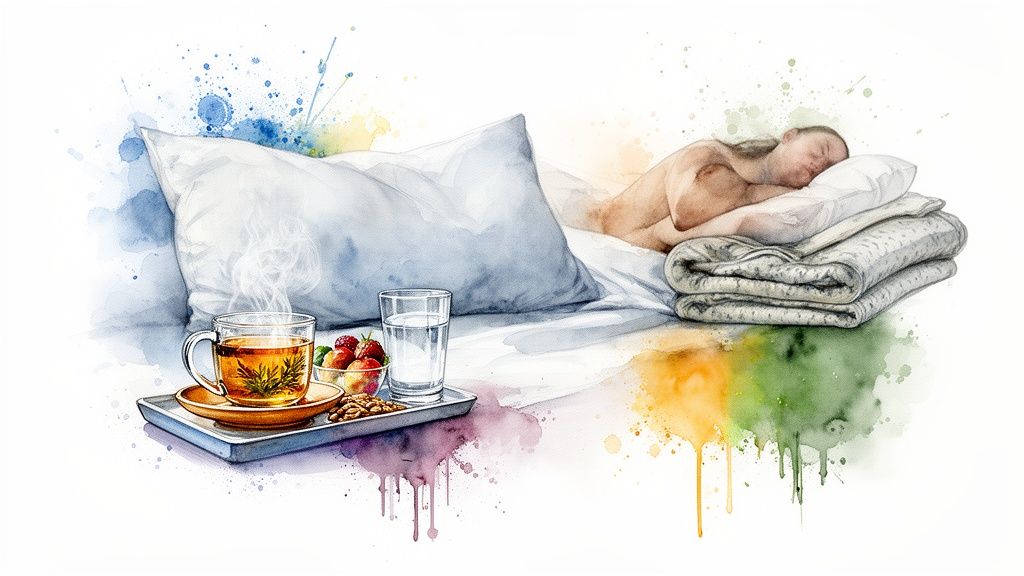
Once you've navigated the deep currents of your inner world, it’s time to support your body on a physical level. This is a crucial step in coming down from shrooms gently. A psychedelic experience can be mentally and emotionally demanding, and your body often feels the toll, too.
This final phase is all about gentle, compassionate care. Think of it as giving your body the basic, comforting resources it needs to recharge and find its footing after an extraordinary journey. Simple acts of nourishment and rest aren't just afterthoughts; they're essential to recovery and integration.
Ground Yourself with Hydration
One of the simplest yet most effective ways to feel more grounded is to hydrate. Sipping on water or a warm, caffeine-free herbal tea can feel incredibly centering. The physical act itself—holding a warm mug, feeling the liquid—is a sensory experience that pulls you back into your body.
Dehydration can easily creep in and contribute to feelings of anxiety or physical discomfort during the comedown. Replenishing fluids helps your system regulate itself and can soothe common post-trip symptoms like headaches or fatigue.
Comforting Sips
- Warm Herbal Tea: Chamomile, ginger, or peppermint are all excellent choices. They are naturally calming and can help settle an uneasy stomach.
- Water with a Twist: Adding a slice of lemon or a few pieces of cucumber can make water much more appealing. The fresh, subtle taste is refreshing without being overwhelming.
- Coconut Water: This is a fantastic option for replenishing electrolytes, especially if you’ve been sweating or simply forgot to drink fluids during your experience.
The goal here is to sip slowly and mindfully. Don't force yourself to chug a huge glass of water all at once. The gentle ritual of sipping is just as important as the hydration itself, giving you a steady, calming rhythm to focus on.
Light, Comforting Fuel
Your appetite might be pretty minimal during the comedown, and that's perfectly normal. The idea isn't to sit down for a huge meal but to offer your body some light, easily digestible fuel. Heavy, greasy, or complex foods can feel overwhelming to both your senses and your digestive system right now.
Instead, reach for simple, natural foods that provide gentle nourishment. Think of comforting snacks that are easy to prepare.
- Fresh Fruit: A handful of berries, a sliced apple, or a juicy orange can be incredibly refreshing. The natural sugars give you a gentle energy boost, and the cool, crisp texture is very grounding.
- Nuts and Seeds: A small handful of almonds or walnuts offers protein and healthy fats, which can help stabilize your energy levels without feeling heavy.
- Simple Broth or Soup: A warm, savory broth might be the ultimate comfort food in this state. It’s hydrating, easy on the stomach, and deeply soothing.
Choosing the right foods helps your body transition smoothly back to its baseline. It’s a simple act of self-care that honors the energy you've just expended.
Winding Down for Restful Sleep
Sleep is your body's ultimate recovery tool. But let's be real, trying to force it after a profound experience can be tricky. You might still feel a buzz of residual energy or have thoughts gently swirling in your mind. The key is to create a peaceful transition toward rest rather than expecting to just switch off.
Start by creating a calm, pre-sleep environment. Dim the lights an hour or so before you plan to sleep, put on some soft ambient music, and definitely avoid screens. This sends a clear signal to your brain that it's time to wind down.
If your mind is still active, try a simple, non-stimulating activity. Listening to a guided meditation for sleep or doing some very gentle stretches can work wonders. The goal is to invite sleep, not demand it. Be patient with yourself; even just resting quietly in a dark, comfortable room is restorative.
Integrating Your Experience the Next Day
The journey doesn't just end when the visuals fade. What happens the next day is just as important. This unique, often gentle period is known as the "afterglow," and it acts as a bridge between the profound inner world you just visited and your return to everyday life. Learning how to come down from shrooms gracefully means embracing this time for quiet reflection and self-care.
This isn't about sitting down to dissect every single detail or trying to force some grand conclusion out of the experience. It's more about gently holding onto the feelings, ideas, and new perspectives that came up, letting them settle in naturally. Approaching this day with intention can make all the difference in carrying those meaningful insights forward.
Honoring the Afterglow Period
The day after a trip can leave you feeling uniquely open and sensitive. Colors might pop a little more, your emotions could feel closer to the surface, and your thoughts may flow more freely. This is a completely normal—and valuable—part of the process. It's a quiet window for contemplation before the noise of your regular routine rushes back in.
To really make the most of it, treat the day with a bit of reverence. If you can, clear your schedule of demanding tasks, stressful meetings, or chaotic social plans. Your mind and body have been through a significant event, and giving them the space to rest is a simple way to respect the experience.
A Gentle Approach: Think of the next day not as a jarring return to reality, but as a soft landing zone. The goal is to create a calm, low-pressure environment where you can process your thoughts and feelings at your own pace, without any judgment.
Capturing Insights Without Pressure
During this reflective state, you might feel an urge to capture some of the thoughts or feelings from your journey. The key is to do this in a way that feels creative and fluid, not like a homework assignment. Trying to logically list every "lesson learned" can create unnecessary pressure and make the insights feel rigid or forced.
Instead, lean into more expressive, right-brained activities that let ideas flow without constraint. This approach helps you capture the essence of the experience, not just a literal play-by-play.
Creative Integration Methods:
- Journaling: Forget about grammar or perfect sentences. Try stream-of-consciousness writing, just jotting down any words, phrases, or images that bubble up. You could even write a letter to your future self.
- Drawing or Painting: You don't have to be an artist. Use colors, shapes, and textures to express the feelings or visuals from your journey. It's all about the process, not the final product.
- Creating a Playlist: Music and emotion are deeply intertwined. Put together a playlist of songs that resonate with the feelings of your journey or the afterglow itself.
These activities act as gentle anchors, helping you revisit and understand your journey in a new light. If you're curious about the huge range of feelings people report, reading about other magic mushroom experiences can offer some valuable context and a sense of shared community.
Practicing Self-Compassion and Patience
This might be the most crucial part of next-day integration: be kind to yourself. You might feel tired, emotionally raw, or just a bit… different. All of that is perfectly okay. Fight the temptation to immediately slap a label on the experience, like "good" or "bad."
Self-compassion means accepting wherever you've landed. It’s about giving yourself the same grace you'd offer a close friend who has just been through something profound.
Simple Acts of Self-Kindness:
- Plan a Light Schedule: Keep your to-do list as short as possible. Focus on simple, restorative activities that make you feel good.
- Avoid Stressful Situations: Steer clear of difficult conversations, crowded places, or intense news and media. Your emotional skin might be a little thinner today.
- Nourish Your Body: Eat a healthy, comforting meal. Take a warm bath. Go for a gentle walk in nature if you can.
This day of integration is the final, essential step in the process of coming down from shrooms. It’s not just an endpoint but a beginning—an opportunity to thoughtfully weave the threads of your inner journey into the fabric of your life. By handling it with care, you honor the entire experience.
Common Questions About the Comedown Phase
As the intensity of a psilocybin journey starts to fade, it's natural to have a few questions. This final stage, where the psychedelic effects soften and you begin to float back to your baseline, is a really important part of the whole experience. Having some clear, straightforward answers on hand can help you relax into the process, turning any last-minute jitters into quiet confidence.
Here, we'll tackle some of the most common things people wonder about when coming down from shrooms. Think of it as a friendly guide for your gentle return, packed with practical reassurance for a smooth landing.
How Long Does the Comedown Last?
This is easily the number one question we get, and the truth is, it varies for everyone. Generally, you can expect the main psychedelic effects of shrooms to start tapering off 3 to 6 hours after you've taken them. The actual comedown, that slow and steady return to reality, usually unfolds over the following 2 to 6 hours.
But the experience doesn't just flick off like a light switch. You'll likely feel a subtle "afterglow" or a sense of deep thoughtfulness that can linger for the rest of the day, and sometimes even into the next. This isn't an intense part of the trip; it's more of a gentle, reflective period. For a deeper dive into the whole timeline, our guide on how long shrooms last breaks it all down.
Can I Make the Comedown Happen Faster?
While you can't really force your body to metabolize psilocybin any quicker, you can absolutely make the process feel smoother and more comfortable. In my experience, trying to "speed it up" just creates resistance and anxiety, which ironically can make everything feel longer and more difficult. The best strategy isn't to rush it, but to support it.
Instead of fighting the current, go back to those grounding techniques we talked about:
- Shift your environment. Move to a quieter, more relaxing space with low stimulation.
- Engage your senses. Find a comforting taste, smell, or texture to focus on. A soft blanket is a game-changer.
- Focus on your breath. A simple box breathing exercise can work wonders.
These actions won't abruptly end the experience, but they do a fantastic job of dialing down any anxiety, helping you relax and let the comedown unfold at its own natural pace.
The most effective way to manage the comedown is to surrender to its pace. Support your body and mind with gentle care, and you’ll find the return journey is far more peaceful than if you try to fight it.
Is It Normal to Feel Sad or Anxious?
Yes, it is completely normal and very common to feel a whole spectrum of emotions during the comedown. As your brain chemistry shifts back to its usual rhythm, you might experience waves of different feelings—from profound joy and gratitude to moments of sadness, anxiety, or just feeling extra sensitive.
Think of it as a kind of emotional recalibration. You've just gone through a deeply introspective and powerful experience, so it's only natural for that to stir things up. These feelings are almost always temporary. The best thing you can do is acknowledge them without judgment, show yourself some compassion, and remember that they will pass. If things feel particularly intense, having a chat with a trusted, sober friend can be incredibly grounding.
What if I Can't Sleep Afterwards?
Don't worry, this is another really common one, especially if your journey took place later in the day. Your mind might still be gently buzzing with new thoughts and residual energy. The worst thing you can do is stress about it—trying to force yourself to sleep is a surefire recipe for frustration.
Instead, just aim for rest. Create a peaceful, screen-free environment with dim lighting and maybe some soft, ambient music. Lie down, get comfortable, and focus on your breath. Even if you don't actually fall asleep for a while, just allowing your body to rest in a calm setting is incredibly restorative. A warm cup of chamomile tea can also be a nice signal to your body that it's time to wind down. Be patient with yourself; sleep will come when your body is ready.
At The Magic Mushroom Delivery, we believe that a well-informed journey is a safer and more meaningful one. From our carefully curated mushroom products to our educational resources, we're here to support you every step of the way. Explore our selection of organic gummies, chocolates, and more at https://themagicmushroomdelivery.com.