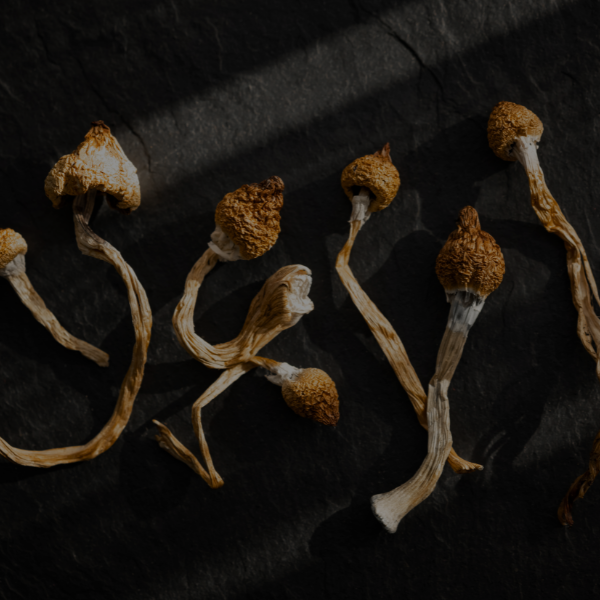

The real difference between dried and fresh mushrooms boils down to one simple thing: dried mushrooms pack way more punch for their weight and can be stored for months, even years. Fresh mushrooms are less concentrated and you’ve got to use them within a few days.
Your choice really hinges on what you’re after. Do you want the convenience and reliable dosing that comes with dried shrooms? Or are you looking for the unique experience that only fresh ones can offer? This guide will walk you through all the key differences to help you decide what’s right for you.
Unpacking the Core Differences
When you're choosing between dried and fresh, you're not just picking a preference—you're choosing two very different states of the same mushroom, each with its own set of rules. The drying process does a lot more than just suck out the water. It fundamentally changes the mushroom's properties, from potency and flavor to how you store and use it.
Getting a handle on these distinctions is the first step to getting the experience you want, whether that’s for microdosing, a deep therapeutic journey, or just exploring new flavors.
The big driver behind all these changes is water. Fresh mushrooms are about 90% water, which seriously dilutes the active compounds. Drying removes all that H2O, concentrating everything else. That's exactly why a small piece of dried mushroom can hit much harder than the same amount, weight-wise, of a fresh one.
Key Factors at a Glance
To lay it out clearly, let's look at the most important traits side-by-side:
- Potency by Weight: Dried mushrooms are incredibly concentrated. This makes them much easier to dose accurately, which is crucial if you're aiming for consistent, predictable effects.
- Shelf Life and Stability: Without moisture, dried mushrooms are naturally resistant to mold and bacteria. This gives them an impressive shelf life, often lasting a year or more if you store them right. Fresh mushrooms, on the other hand, are on a ticking clock and need to be used fast.
- Ease of Use: For most people, dried mushrooms are just more convenient. They're a breeze to store, carry around, and prepare in different ways—think teas, capsules, or edibles—without the pressure of spoilage.
The most important thing to remember is that drying is nature's way of concentrating everything. Think of it like the difference between a grape and a raisin. One is mild and full of water, while the other is dense, potent, and made to last.
This quick overview sets the stage for a deeper look. To make it even easier, here's a simple table that sums up the main distinctions.
Quick Comparison Dried vs Fresh Mushrooms
Here's a straightforward breakdown of what sets dried and fresh mushrooms apart, covering the essentials like potency, storage, and common uses.
| Attribute | Dried Mushrooms | Fresh Mushrooms |
|---|---|---|
| Potency | Highly concentrated; potent in small amounts | Less potent by weight due to high water content |
| Shelf Life | 12+ months when stored properly | 3-7 days in the refrigerator |
| Dosing | Easier to measure accurately for consistent results | Challenging to dose precisely due to variable water weight |
| Convenience | Excellent for long-term storage and planned use | Requires immediate use; less practical for stocking |
This table gives you a solid starting point. Now, let's dive into what these differences actually mean for your experience.
Comparing Potency and Dosing
When you’re weighing the choice between dried and fresh mushrooms, the single biggest difference comes down to potency. Getting this right is the key to having a predictable, intentional experience, because the concentration of the active compounds skyrockets once a mushroom is dried.
Think about it this way: fresh mushrooms are mostly water—about 90%, in fact. All that water dilutes the good stuff, meaning you have to eat a lot more by weight to get the desired effect. The drying process removes all that water, leaving you with a much lighter, more concentrated final product.
The 10-to-1 Conversion Rule
The go-to rule of thumb for figuring out doses is a simple 10:1 ratio. This just means that 10 grams of fresh mushrooms pack roughly the same punch as 1 gram of dried ones. Drying essentially concentrates the experience by a factor of ten, at least when you're looking at the scale.
This simple principle is the foundation of accurate dosing. While fresh mushrooms have their own unique vibe, their changing water content makes it incredibly difficult to dose consistently. You could have two fresh mushrooms that look the same size but hold different amounts of water, leading to wildly different outcomes. Dried mushrooms, on the other hand, give you a stable, measurable, and reliable starting point for your journey.
Key Takeaway: The potency difference is all about water removal. Imagine taking 10 pounds of fresh mushrooms and removing 9 pounds of water. You're left with 1 pound of highly concentrated material.
For a quick visual breakdown, the chart below lays out the key advantages of each form, zeroing in on potency, shelf life, and overall ease of use.
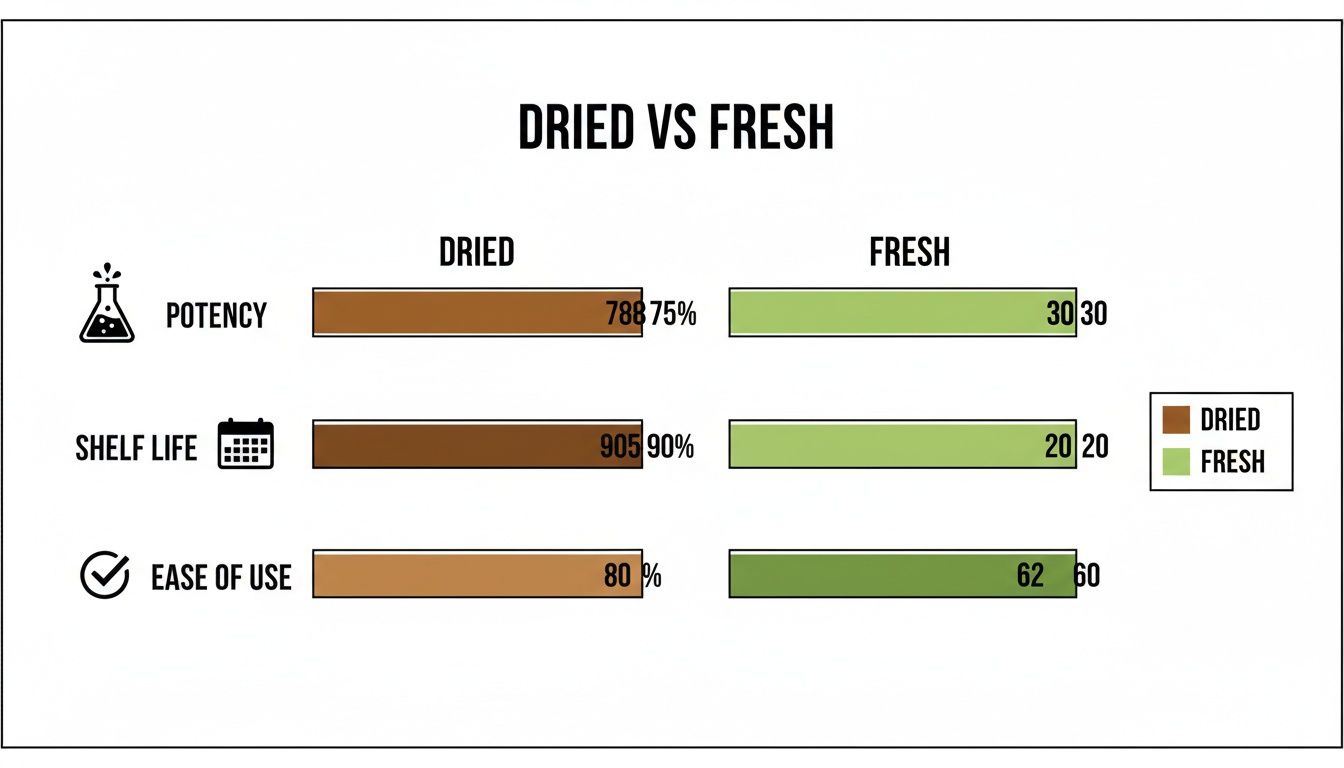
As you can see, while both have their place, dried mushrooms really shine in the areas that matter most for planned, consistent journeys.
Practical Dosing Examples
Let's put this conversion knowledge to work in the real world. Measuring your dose is way easier with dried products because their weight doesn't fluctuate. We always recommend using a digital scale to make sure you get exactly the dose you're aiming for.
Here’s how that 10:1 ratio plays out in common scenarios:
- Microdose: A typical dried microdose is 0.1–0.3 grams. The fresh equivalent? 1–3 grams. Trying to weigh out a single gram of fresh mushrooms with any real accuracy can be a pain.
- Low Dose: For a gentle, introductory experience, a common dose is 1 gram dried. To get there with freshies, you'd need to eat 10 grams.
- Moderate Dose: A standard trip often starts around 2.5 grams dried. The fresh version would be a hefty 25 grams.
- High Dose: For a deep, introspective journey, you might take 5 grams of dried mushrooms. That would mean choking down a massive 50-gram serving of fresh mushrooms.
It's pretty clear that the amount of fresh mushrooms you'd need to eat quickly becomes impractical, especially for bigger doses. This is another major reason why dried mushrooms are the go-to for most people—they’re just a more manageable and palatable option.
Why Starting Low Is Always the Best Practice
No matter if you go with dried or fresh, the golden rule is always to start low and go slow. Your personal sensitivity, your metabolism, and even the specific mushroom strain all play a part in how your experience unfolds. Potency can vary from batch to batch, and even between individual mushrooms in the same flush.
If you're new to this, starting with a dose that feels a little lower than you think you need is the smartest move you can make. It lets you safely get a feel for how you'll react. You can always take more next time, but you can never take less once they're down the hatch. This cautious approach sets you up for a positive and comfortable introduction. Remember, things like storage and age can also impact your stash over time. To get the full picture, check out our guide on whether shrooms lose potency. This knowledge will help you make the best decisions for both your safety and your experience.
Flavor, Texture, and Culinary Uses
When you're weighing dried mushrooms vs. fresh, you're looking at more than just potency and how long they'll last. The real personality of each form comes out in the sensory experience—the flavor, the smell, the texture. Your choice here will define not just your trip, but how you get there.
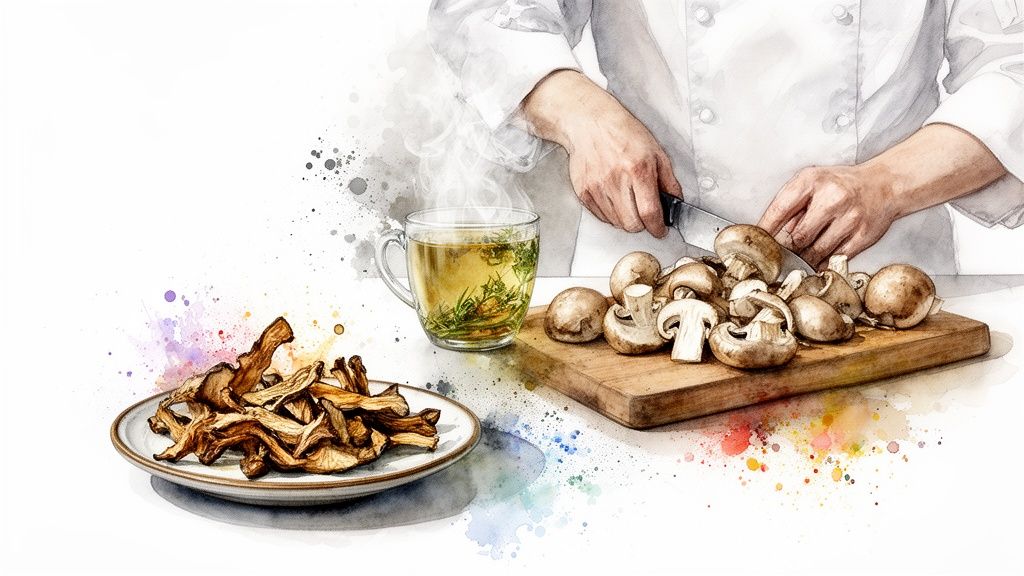
Drying fundamentally changes a mushroom. Fresh mushrooms are subtle, with an earthy flavor and a soft, almost spongy feel from all their water. The drying process pulls that water out, concentrating all the natural compounds that give mushrooms their taste and smell. The result is a much richer, more intense product.
The Flavor and Texture Showdown
That transformation during drying is what gives dried mushrooms a serious edge in the kitchen. When they lose 80-90% of their water, their umami compounds (like glutamates) get concentrated—sometimes by as much as ten times. This creates a deep, savory flavor profile and a meaty, chewy texture once you rehydrate them. It's a world away from the sponginess of fresh mushrooms.
This is exactly why so many chefs reach for dried varieties to add incredible depth to things like soups, sauces, and risottos.
Let’s break down their sensory profiles:
Fresh Mushrooms
- Flavor: Mild and delicate. They have a subtle, earthy taste that plays well with other ingredients without stealing the show.
- Texture: Soft, spongy, and sometimes a little juicy. Perfect for dishes where you want a tender bite, like a quick sauté or a fresh salad.
- Aroma: Faint and fresh, like damp forest soil.
Dried Mushrooms
- Flavor: Deep, concentrated, and intensely savory. That umami punch is robust and stands up to strong flavors.
- Texture: Chewy and satisfyingly meaty after rehydration. This texture makes them a fantastic addition to hearty stews and rich sauces.
- Aroma: Pungent, rich, and nutty. The smell alone tells you you’re in for a powerful flavor experience.
Popular Preparation Methods
Whether you go with dried or fresh will steer your preparation methods. Dried mushrooms are incredibly versatile, perfect for methods that extract their concentrated goodness, while fresh mushrooms are often best enjoyed with minimal fuss.
Brewing Tea with Dried Mushrooms
Making tea is easily one of the most popular ways to enjoy dried mushrooms. It's a method known for being gentle on the stomach and allowing for a quicker onset.
- Grind: First, grind your dried mushrooms into a coarse powder. A coffee grinder works perfectly for this and creates more surface area for a better infusion.
- Steep: Put the powder into a mug or teapot and add hot (but not boiling) water. Let it steep for about 10–15 minutes.
- Flavor (Optional): This is a great time to add a little something extra. Ginger, a spoonful of honey, or a squeeze of lemon can really improve the taste and may even help with digestion.
- Strain and Serve: Pour the liquid through a fine-mesh sieve or some cheesecloth to get rid of the mushroom solids.
Many people find that mushroom tea helps sidestep the nausea that can sometimes come with eating them whole. The hot water helps break down chitin, a tough compound in the mushroom's cell walls that can be hard for our stomachs to handle.
Cooking with Fresh Mushrooms
If you've got your hands on fresh mushrooms, cooking them into a dish is a simple and effective approach. Their delicate texture shines in straightforward recipes.
- Sautéing: A classic for a reason. Lightly sauté sliced fresh mushrooms with a bit of garlic and your favorite herbs. You can serve them on toast or as a side to a main course.
- Adding to Dishes: Chop them up and throw them into pasta sauces, omelets, or on top of a pizza. Just be sure to cook them thoroughly to make them easier to digest.
One important thing to remember is that heat can impact potency. It’s a good idea to add the mushrooms toward the end of the cooking process to keep their exposure to high temperatures to a minimum.
For more creative ideas on how to prepare your mushrooms, check out some of our favorite psilocybin mushroom recipes. Whether you choose the concentrated power of dried mushrooms or the subtle nature of fresh ones, knowing their unique culinary personalities is the key to a great experience.
Mastering Storage for Long-Term Viability
Proper storage is the secret to getting the most out of your mushrooms, plain and simple. While both fresh and dried forms offer their own unique experiences, their shelf lives are worlds apart. How you store them is a massive factor in the whole dried-versus-fresh debate, directly impacting their potency, flavor, and how long they'll last you.
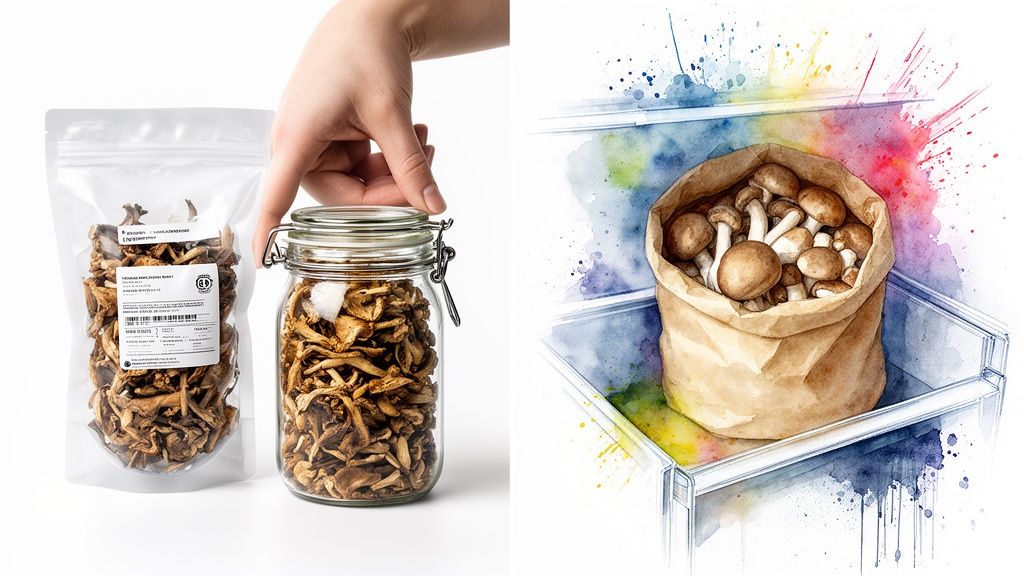
When it comes to long-term viability, dried mushrooms are the undisputed champion. The dehydration process removes virtually all moisture, creating an environment where mold and bacteria just can't get a foothold. This gives them an impressive shelf life that fresh mushrooms simply can't compete with.
Best Practices for Storing Dried Mushrooms
To really stretch the life of your dried mushrooms, your main goal is to protect them from their four biggest enemies: light, heat, moisture, and oxygen. An airtight container isn't just a suggestion—it's essential for keeping out humidity and preserving the mushroom’s delicate compounds.
Here’s how to create the perfect storage setup for your dried supply:
- Keep It Cool: Find a cool spot like a pantry or a cupboard, well away from heat sources like your stove or direct sunlight.
- Keep It Dark: Light, especially UV light, will degrade the active compounds over time. A dark cabinet or an opaque container works best.
- Keep It Sealed: Use glass jars with tight lids or, even better, vacuum-sealed bags. This minimizes oxygen exposure, which leads to oxidation.
When you store them right, dried mushrooms can easily hold their quality for over a year. This stability makes them incredibly convenient and a smart buy, letting you stock up without worrying about anything going to waste. If you're interested in doing it yourself, our guide on dehydrating magic mushrooms walks you through the entire process.
The Challenges of Storing Fresh Mushrooms
On the other end of the spectrum, fresh mushrooms are incredibly perishable and need your attention right away. Their high water content makes them a prime target for spoilage, giving you a very short window to use them.
Fresh mushrooms, despite their market dominance, suffer from a short shelf life, needing refrigeration and spoiling in 3-7 days, while dried can store for 1-2 years. For enthusiasts and first-timers, dried mushrooms maintain their active compounds longer; studies indicate minimal loss over 12 months versus the rapid degradation seen in fresh mushrooms within weeks. You can explore more data on the durability of dried mushrooms.
If you need to get a few extra days out of your fresh mushrooms, put them in a paper bag in the main part of your fridge. A paper bag lets them breathe, unlike a plastic one which traps moisture and will turn them slimy in no time.
A Quick Storage Comparison
The difference in shelf life is one of the most practical things to consider when you're choosing between the two. Let's lay it out clearly.
| Storage Factor | Dried Mushrooms | Fresh Mushrooms |
|---|---|---|
| Optimal Location | Cool, dark pantry or cupboard | Refrigerator (not the crisper) |
| Ideal Container | Airtight glass jar or vacuum bag | Breathable paper bag |
| Typical Shelf Life | 12+ months | 3-7 days |
| Primary Risk | Moisture, oxygen, light | Spoilage, mold, sliminess |
Ultimately, dried mushrooms have the clear advantage in convenience and economics. Their impressive shelf life means less waste and ensures you always have a consistent, reliable supply ready for whenever you need it.
How to Choose the Right Mushroom for Your Goals
So, how do you make the final call between dried and fresh mushrooms? It really just comes down to what you’re trying to achieve. Each form brings something different to the table, suiting intentions that range from a subtle daily boost to a profound, soul-searching journey.
Matching your choice to your desired outcome is the secret to a predictable, effective, and all-around better experience. Think about what matters most for your situation: pinpoint precision, long-term stability, grab-and-go convenience, or a one-of-a-kind culinary event. Your answer will point you straight to the right option.
For Consistent Microdosing
When you’re microdosing, precision is everything. The whole point is to get a sub-perceptual effect that sharpens your focus, sparks creativity, or lifts your mood without getting in the way of your day. That requires an exact, repeatable dose every single time, and this is where dried mushrooms are the undisputed champion.
Dried mushrooms offer rock-solid stability and can be ground into a fine powder with ease. This makes it simple to create perfectly measured microdoses, which you can then pack into capsules for the ultimate convenience and discretion. Trying to pull this off with fresh mushrooms is a recipe for frustration due to their wild swings in water weight and the fact they spoil so quickly.
For Therapeutic or Ceremonial Use
For those deeper, more intentional journeys—whether for therapy or ceremony—you need reliability above all else. A high-dose experience demands predictable potency so you can navigate the space with confidence and a sense of safety. Once again, the dried mushroom is the superior choice.
Using dried mushrooms gives you a consistent baseline to calculate your dose, taking all the guesswork out of the equation. Their concentrated form also means you’re eating far less mushroom matter, which is often much easier on the stomach and makes for a more comfortable journey. It’s no surprise that most experienced guides and facilitators work exclusively with dried products for this very reason.
By selecting the appropriate form, you are not just choosing a product; you are setting the stage for your entire experience. Matching the mushroom's characteristics to your goals—precision for microdosing or reliability for deep work—is the first and most important step.
For Unique Culinary and Wellness Experiences
While dried mushrooms clearly win on practicality, fresh mushrooms hold a special place for those curious about their culinary side. If you happen to have a great source and plan on using them right away, fresh mushrooms can offer a truly distinct experience.
Their flavor is milder and the texture is softer, making them an interesting ingredient in certain dishes. This route is less about nailing a specific dose and more about exploring the mushroom in its natural form. It's a kind of culinary-wellness hybrid, perfect for a special occasion if you're ready to embrace the variability and short shelf life.
Ultimately, the debate over dried vs. fresh mushrooms is settled by looking at your intentions. For almost every wellness application that demands consistency, reliability, and precision, dried mushrooms are the clear winner. They put you in control of your experience, from the tiniest microdose to the most profound journey, letting you focus on your goals with total peace of mind.
Common Questions Answered
When you're deciding between fresh and dried mushrooms, a few practical questions always seem to pop up. Let's tackle the most common ones to clear things up and help you choose with confidence.
How Should I Rehydrate Dried Mushrooms?
It's simple. Just soak your dried mushrooms in warm—not boiling—water for about 20 to 30 minutes. You’ll see them plump up and get pliable again, which is your cue that they're ready for tea or edibles.
Pro Tip: Don’t toss that soaking water! It’s packed with valuable compounds and has a deep, earthy flavor. You can drink it as part of your dose or even use it as a fantastic base for broths and sauces.
We recommend skipping the boiling water. Intense heat can risk degrading some of the delicate active compounds you’re after.
Is There a Difference in Digestion?
Yes, and for many people, it's a big one. Fresh mushrooms have a lot of chitin in their cell walls, a tough, fibrous material that our stomachs can struggle to break down. This can sometimes lead to an upset stomach or discomfort.
The drying process starts breaking down these tough cell walls. Better yet, the common ways we prepare dried mushrooms—like grinding them into a powder or brewing a tea—make the active compounds far easier for your body to absorb. The result is often a much smoother digestive experience compared to munching on fresh mushrooms whole.
Does Grinding Dried Mushrooms Affect Potency?
Grinding mushrooms into a fine powder massively increases their surface area. This is fantastic for making teas and capsules, but it also exposes more of the mushroom to oxygen and light, which can speed up potency loss if you're not careful.
The key is proper storage. If you grind them and immediately put the powder into an airtight, light-proof container in a cool, dark spot, you'll preserve its quality just fine.
Grinding has some real advantages:
- Precision Dosing: It’s the only way to go for creating perfectly consistent microdosing capsules.
- Quicker Onset: That increased surface area means faster infusion into teas or edibles, which can lead to a quicker come-up.
However, if you're planning on storing your mushrooms for several months or longer, keeping them whole is the best way to maintain maximum potency over time.
Are Fresh Mushrooms More Natural or Authentic?
This is a great question, and the answer really depends on what "authentic" means to you. Fresh mushrooms are certainly in their rawest, most natural state, but that doesn't automatically make for a better or more genuine experience.
Authenticity is personal. If your goal is a predictable, controlled therapeutic journey, the reliability and consistency of a precisely weighed dose of dried mushrooms is your best bet. If you're looking for a more rustic, back-to-nature vibe, the novelty of consuming a fresh mushroom might feel more connective.
Ultimately, one isn't more "real" than the other. They are just different forms of the same tool, each suited for different intentions and purposes.
Ready to experience the convenience and reliability of premium dried mushrooms? At The Magic Mushroom Delivery, we offer a curated selection of high-quality products to support your wellness goals. Explore our shop and enjoy fast, discreet shipping right to your door.