
Finding the best functional mushroom supplements isn't about chasing one magic brand. It's about matching the right mushroom, with proven quality, to what you want to achieve for your own wellness.
Whether you're looking for a sharper mind, a stronger immune system, or just a better night's sleep, this guide will help you cut through the marketing noise and find a clear path forward.
Why Functional Mushrooms Are Your New Wellness Ally

If you've dipped your toes into the natural wellness world lately, you've probably seen functional mushrooms popping up everywhere—from morning coffees and daily capsules to even skincare products. This isn't just some fleeting trend. These powerful fungi are a rediscovery of ancient wisdom, and they're finally getting the modern attention they deserve for their potential health benefits.
But what exactly are they? Unlike the button mushrooms you toss in a salad, functional mushrooms are packed with unique bioactive compounds. These compounds can help your body adapt to stress, support a huge range of bodily functions, and gently guide you back to a state of balance. Think of them less like a sledgehammer and more like a skilled mechanic for your well-being.
A Rediscovery of Ancient Wisdom
For thousands of years, cultures across the globe have turned to mushrooms like Reishi and Cordyceps for their supportive properties. Now, a renewed and massive interest in natural health solutions has brought them roaring back into the spotlight. This surge is more than just good stories; it represents a huge shift in how we think about the ingredients we put in our bodies.
The global functional mushroom market tells the same story. Valued at roughly USD 31.09 billion, the market is expected to almost double to USD 62.18 billion by 2032. This incredible growth isn't just a number—it highlights a collective desire for natural, plant-based ways to feel better. You can learn more about these market trends on Fortune Business Insights.
The key to unlocking their potential is consistency. Functional mushrooms work with your body’s systems over time, gently coaxing them toward a state of healthy balance rather than providing an overnight fix.
This guide is here to empower you as you navigate this exciting new world. We'll break down how to spot potent, effective products and sidestep the common pitfalls, making sure you can confidently choose the best supplements to genuinely support your health journey.
Meet the Key Players in Functional Mushrooms
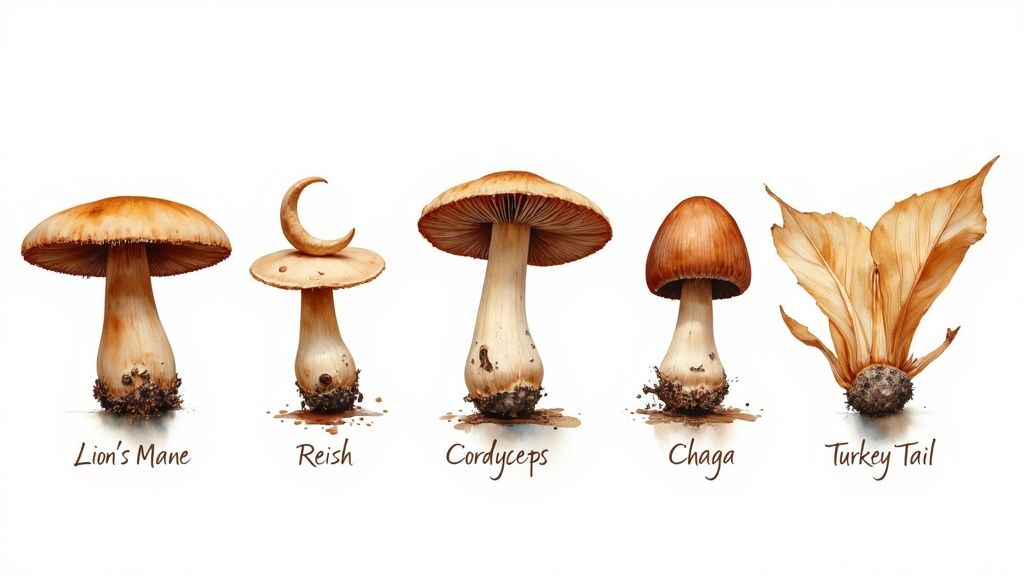
Jumping into the world of functional mushrooms can feel a little overwhelming at first, almost like you're learning a new language. But it doesn't have to be.
The easiest way to get started is to think of the most popular mushrooms as a team of specialists, each with a unique talent. Once you know who does what, you can find the best functional mushroom supplements to match what you’re looking for.
Instead of just running down a list of dry facts, let's properly introduce the all-stars of the fungal kingdom. Getting to know their individual strengths is the first step in building a routine that actually works for you.
Lion’s Mane: The Brain Booster
If you’re wrestling with brain fog or just want a sharper mental edge, Lion's Mane (Hericium erinaceus) should be on your radar. Instantly recognizable by its shaggy, icicle-like appearance, this mushroom is famous for its nootropic benefits—a fancy way of saying it supports brain health.
Lion's Mane is thought to work by supporting the production of Nerve Growth Factor (NGF), a vital protein for the health and survival of our brain cells. This has made it a favorite among students, professionals, and anyone looking to boost their focus, memory, and overall mental clarity. Think of it as a personal trainer for your brain, helping it stay sharp and resilient.
Lion’s Mane is often used to fight off mental fatigue and keep concentration levels high, but without the jittery side effects of caffeine. It’s all about building cognitive endurance over time.
Reishi: The Zen Master
Often called the "mushroom of immortality" in traditional Eastern medicine, Reishi (Ganoderma lucidum) is the ultimate calming force. If stress and sleepless nights are your main battles, Reishi is the specialist to call. It's an adaptogen, which means it helps your body adapt to and handle stress more effectively.
Its most important compounds, called triterpenes, are known to soothe the nervous system and can help lower cortisol—the body's main stress hormone. This promotes a natural sense of calm and relaxation, making it a perfect addition to an evening routine to wind down for a deep, restorative sleep. It’s like a meditation session in a capsule.
Cordyceps: The Energy Coach
For anyone looking for a natural lift in energy and physical performance, Cordyceps (Cordyceps militaris) is the undisputed champion. This unique fungus has a long history of use by athletes and high-performers to boost stamina and push back against fatigue.
Cordyceps helps the body improve how it uses oxygen and supports the production of ATP, which is the basic energy currency for all our cells. This translates to more efficient energy, whether you're hitting the gym, going for a long run, or just trying to power through a demanding afternoon. It delivers a clean, sustained energy lift without the dreaded crash.
- Who it's for: Athletes, active individuals, and anyone with a physically demanding lifestyle.
- Key benefit: Supports endurance, stamina, and respiratory health.
- Best time to take: As part of a pre-workout routine or first thing in the morning for all-day vitality.
Turkey Tail: The Immune Guardian
Turkey Tail (Trametes versicolor) is one of the most heavily researched functional mushrooms, celebrated for its incredible immune-supporting properties. Named for its colorful, fan-like shape that looks just like a turkey's tail, this mushroom is loaded with powerful compounds.
It contains two unique polysaccharides—polysaccharide-K (PSK) and polysaccharide-peptide (PSP)—that help modulate the immune system. Turkey Tail also works as a prebiotic, feeding the good bacteria in your gut, which we now know is a cornerstone of a robust immune response. It's your immune system's frontline defender.
Chaga: The Antioxidant Powerhouse
Found growing on birch trees in frigid climates, Chaga (Inonotus obliquus) looks less like a mushroom and more like a chunk of burnt charcoal. But don't let its rugged exterior fool you—inside lies a treasure trove of antioxidants.
Chaga has one of the highest antioxidant scores of any natural food on the planet, helping your body fight oxidative stress and cellular damage from free radicals. This makes it a powerful ally for promoting overall cellular health and aging gracefully. You can think of it as your body's internal rust-proofing, protecting you from the wear and tear of daily life.
To make it even easier to choose, here's a quick rundown of these fantastic fungi and what they're best known for.
Quick Guide to Popular Functional Mushrooms
| Mushroom | Nickname | Primary Use Case | Best For |
|---|---|---|---|
| Lion's Mane | The Brain Booster | Cognitive Health | Focus, memory, and mental clarity |
| Reishi | The Zen Master | Stress & Sleep | Relaxation and unwinding |
| Cordyceps | The Energy Coach | Energy & Stamina | Physical performance and vitality |
| Turkey Tail | The Immune Guardian | Immune Support | Daily immune defense and gut health |
| Chaga | The Antioxidant Powerhouse | Cellular Health | Fighting oxidative stress & aging |
By getting familiar with these key players, you can go from being a curious newcomer to an informed buyer, ready to pick the right mushroom to support your wellness journey.
How to Read a Mushroom Supplement Label Like a Pro
Walking into the supplement aisle can feel like you’re trying to crack a code. So many brands, so many bold claims. How do you possibly tell the good stuff from the clever marketing?
The secret is on the back of the bottle. Learning to read the label is where the real story of a supplement's quality and potency is told. Once you know what to look for, you’ll go from a confused buyer to an informed pro, able to pick out the best functional mushroom supplements that actually work. Let’s decode it together.
Fruiting Body vs. Mycelium
First things first, and this one is a deal-breaker: you need to know the difference between the fruiting body and the mycelium. Think of a mushroom like an apple tree. The fruiting body is the apple—the part you actually want to eat. The mycelium is the root system underground.
Fruiting Body: This is the classic mushroom that pops up from the ground, with the cap and stem. It's where the mushroom concentrates all its most powerful compounds, like beta-glucans and triterpenes. Any high-quality supplement worth your money will be made from 100% fruiting bodies.
Mycelium: This is the vast network of fungal threads that grows underground or, in a lab, on a block of grain. While it’s essential for the mushroom’s life cycle, products made from it are often packed with starchy fillers from the grain it was grown on, seriously diluting the final product.
Bottom line: always look for supplements that scream "100% fruiting bodies" on the label. If it just says "mushroom" or is vague about the source, you can bet it’s mostly cheap, less potent mycelium and grain.
Dual Extraction: The Gold Standard
Okay, so you've found a product made from the fruiting body. The next question is, how did they get the good stuff out? The most effective and thorough method is called dual extraction, which is a two-step process using both hot water and alcohol.
Why two steps? Because different active compounds in mushrooms dissolve in different liquids. It’s like trying to wash a greasy pan with just cold water—it won’t work.
- Hot Water Extraction: This first pass is absolutely essential for pulling out the water-soluble compounds, most importantly the powerhouse beta-glucans.
- Alcohol Extraction: This second step is needed to get the compounds that water can’t touch, like triterpenes, which are especially prized in mushrooms like Reishi.
If a supplement only uses one method, you're missing out on a huge chunk of the mushroom’s benefits. A dual-extracted product guarantees you’re getting the complete profile of what the mushroom can do, making it infinitely more effective.
When you see "dual extract" on a label, it’s a massive green flag. It tells you the company didn't cut corners and is serious about creating a potent, full-spectrum product. For anyone who actually wants to feel a difference, this is non-negotiable.
Beta-Glucans: The True Marker of Potency
So how can you actually measure the strength of a mushroom supplement? Forget the total milligram count of the mushroom powder. The most reliable indicator of potency is the beta-glucan percentage.
Beta-glucans are a type of complex polysaccharide that science has shown to be incredible for supporting the immune system and overall wellness.
A quality brand will be proud to tell you exactly how much of this active ingredient you're getting. They'll standardize their extract and guarantee a specific amount, like ">25% Beta-Glucans." If a brand doesn’t list this number, it’s a major red flag that the product is likely weak, untested, or full of fillers.
The demand for these supplements is exploding. The dietary supplements category alone recently accounted for about 38.21% of the global functional mushroom market, showing just how many people are looking for these benefits in easy-to-take forms. You can discover more about the functional mushroom market trends to see how fast this space is growing. By learning to spot these key metrics, you can make sure the product you choose can actually back up its promises.
Choosing the Right Format for Your Lifestyle
Knowing what makes a high-quality mushroom supplement is a huge step, but the final piece of the puzzle is finding a format you’ll actually use consistently. The most potent, well-made product in the world won’t do you any good if it’s a pain to fit into your daily rhythm. The best functional mushroom supplements are always the ones that blend seamlessly into your life.
So, let's break down the most popular ways to take them. Each one has its own vibe and strengths, and matching them to your personal habits is the real key to building a wellness routine that sticks.
Capsules: The No-Fuss, Precise Option
For anyone with a busy, on-the-go schedule, capsules are usually the winner. They offer a simple, pre-measured dose every single time, taking all the guesswork out of the equation.
There’s no mixing, no measuring, and definitely no mushroom taste—just a quick and easy way to get your daily dose in. If you’re already taking other vitamins or supplements, adding a mushroom capsule to your lineup is about as simple as it gets. This makes them perfect for travel or for anyone who just wants speed and convenience, period.
Powders: The Versatile and Cost-Effective Choice
If you enjoy a more hands-on approach to your wellness routine, powders offer incredible versatility. You can easily stir them into your morning coffee, blend them into a post-workout smoothie, or even mix them into soups and broths.
This flexibility lets you integrate your supplements directly into your existing meals and drinks, making them a natural part of your day. Powders are also often more cost-effective per serving than other formats, which is a big plus if you plan on using them long-term. Even with all the innovation in the functional mushroom space, powders and capsules continue to be what most people reach for. The global market, valued at around USD 22.01 billion, is projected to grow significantly by 2029, with a compound annual growth rate of 10.6%. You can read the full market analysis from Grand View Research to see just how popular they are.
Tinctures: The Fast-Absorbing Powerhouse
Tinctures, which are super-concentrated liquid extracts, are another excellent option, especially if you want fast absorption. By placing a few drops under your tongue (this is called sublingual administration), the active compounds can enter your bloodstream more directly, bypassing the digestive system for a quicker effect.
They are highly concentrated, so a little really does go a long way. Tinctures are also easy to add to water, tea, or any other beverage if you prefer not to take them straight. Their small, portable bottles make them great for keeping in a bag or at your desk for a midday boost.
This infographic breaks down the journey from raw mushroom to active compound, showing what quality really looks like.
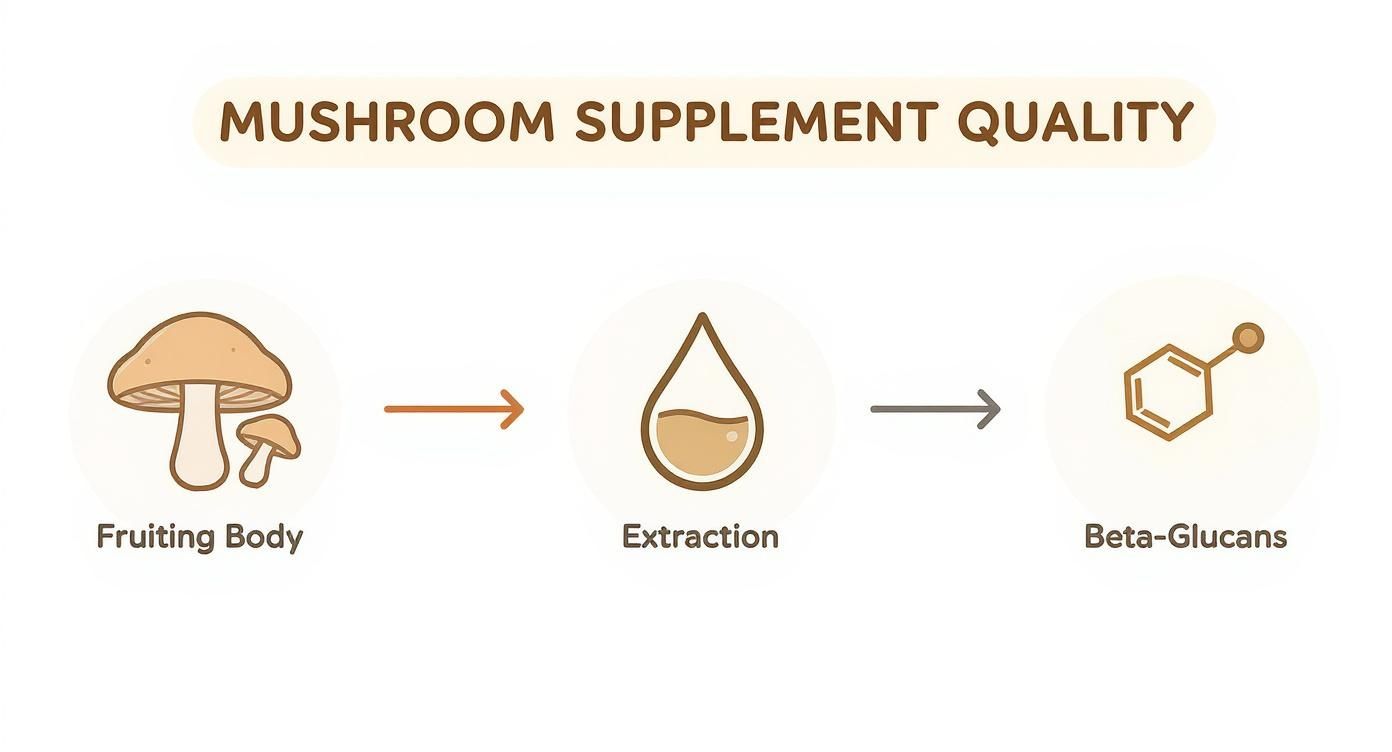
It shows how starting with the actual mushroom (the fruiting body) and using the right extraction methods is what gives you a high concentration of those beneficial beta-glucans.
Gummies and Infused Foods: The Enjoyable Experience
Lately, the market has blown up with more enjoyable and accessible formats like gummies and infused coffees or chocolates. These options turn taking your supplements from a chore into a treat.
For many people, the earthy taste or texture of powders and tinctures can be a deal-breaker. Gummies provide a flavorful, pre-dosed alternative that feels more like a daily snack than a supplement.
These fun formats are a game-changer for anyone who dislikes swallowing pills or just wants to make their wellness routine more enjoyable. If you’re looking for a gentle way to manage daily stress, you might be interested in our guide on mushroom gummies for anxiety, which dives deeper into this format. At the end of the day, if you find a delivery method you genuinely look forward to, you’re far more likely to stick with it long enough to feel the benefits.
Spotting the Non-Negotiable Signs of Quality
You’ve learned to decode a label and picked a format that fits your life. Great. Now comes the most important part: developing your quality-check radar before you pull out your wallet. This is where you learn to spot the simple but powerful signals that separate a genuinely effective supplement from something useless or, even worse, unsafe.
Think of this as your practical buyer's guide. These checks are your best defense, protecting your health and your money from sketchy products and making sure you only invest in the best functional mushroom supplements out there.
Third-Party Testing: Your Ultimate Safeguard
If you only remember one thing, make it this. Third-party lab testing is when a company sends its products to an independent, unbiased laboratory for a full workup. This isn’t a nice-to-have; it’s a non-negotiable sign of a brand you can actually trust.
So, what exactly are these labs looking for?
- Purity: They’re hunting for contaminants you absolutely do not want in your body. We’re talking heavy metals like lead and mercury, pesticides, and nasty microbes. Mushrooms are like little sponges—they’ll soak up any toxins in their growing environment.
- Potency: The lab also verifies that the product actually has the active compounds it promises on the label. This is how you know the beta-glucan percentage is real and that you’re getting a supplement that can do its job.
Any brand worth its salt will be proud of these results and make them easy to find. Look for a Certificate of Analysis (CoA) for each batch, usually posted right on their website.
Here’s the bottom line: if a brand hides its lab results, you should hide your wallet. In the supplement world, transparency is everything.
The Power of USDA Organic Certification
Another major green flag to look for is the USDA Organic seal. This little logo is way more than just a buzzword; it’s a rock-solid guarantee that the mushrooms were grown and processed under strict federal guidelines.
To earn that seal, the entire process has to be free of synthetic pesticides, fertilizers, or other shady substances. This is a huge deal for mushrooms, given their sponge-like ability to absorb whatever is in their soil or substrate. Going organic minimizes your exposure to harmful chemicals, ensuring a cleaner, more natural product. When you're looking for the best, these are the standards that matter. You can see why this is so important by learning about our commitment to quality and safety standards.
What to Watch Out For: The Big Red Flags
Just as important as knowing what to look for is knowing what to run from. A few common red flags can immediately tell you to put a product back on the shelf.
- Vague or Missing Information: If a label doesn’t specify “fruiting body,” list the beta-glucan content, or mention the extraction method, it's a huge sign the company is cutting corners. What are they hiding?
- Proprietary Blends: Be extremely wary of "proprietary mushroom blends" that don’t disclose how much of each mushroom is in the mix. This tactic is often used to hide the fact that the formula is 95% cheap filler with only a sprinkle of the good stuff.
- Suspiciously Low Prices: Everyone loves a bargain, but an insanely cheap price is usually a warning. High-quality sourcing, proper dual extraction, and third-party testing all cost money. A rock-bottom price almost always means the product is packed with fillers like grain or mycelium.
With this checklist in hand, you can walk into the market with confidence. You’ll know exactly how to choose a safe, potent, and effective supplement that will actually help you reach your wellness goals.
Using Functional Mushrooms Safely and Effectively
To truly unlock the power of the best functional mushroom supplements, you have to use them correctly and responsibly. While these fungi are generally seen as safe, a mindful approach is what separates a good experience from a great one, ensuring you get the benefits you're after while keeping your well-being front and center.
The golden rule here is simple: start low and go slow. It doesn’t matter what the product label suggests. Your body is unique. Give it a few days on a smaller amount to see how you feel, then you can gradually work your way up to the recommended serving size.
General Dosage Guidelines
While the right dose always depends on the specific product's potency and format, here are some common starting points for the big players. Just remember, these are guardrails, not gospel—always default to the instructions on your product's label.
- Lion's Mane: For that cognitive boost, daily doses often fall between 500 mg and 3,000 mg of a quality extract.
- Reishi: If you're looking for relaxation and sleep support, a typical range is 1,000 mg to 2,000 mg, which most people take in the evening.
- Cordyceps: To get that energy and stamina support, many find their sweet spot between 1,000 mg and 3,000 mg per day, usually taken in the morning or before a workout.
- Turkey Tail: For supporting your immune system and gut health, doses are often in the 1,000 mg to 3,000 mg range daily.
Knowing the best way to take any supplement is key. If you're curious about different methods, you can get some great ideas from our guide on the best way to consume magic mushrooms, as many of the principles apply here, too.
Always listen to your body. Consistency is way more important than taking huge doses. Functional mushrooms do their best work subtly over time, as their benefits build with regular use. They're not meant to give you an instant, dramatic effect.
Prioritizing Your Safety
Before you even think about adding a new supplement to your routine, have a conversation with your doctor. Seriously. This isn’t just a friendly suggestion; it’s a non-negotiable step for responsible wellness.
Your doctor can help you see the full picture of how a new supplement might fit in with your unique health profile. This is especially critical if you:
- Are pregnant or nursing.
- Have a pre-existing medical condition, like an autoimmune disorder or a bleeding disorder.
- Are currently taking any prescription medications.
For instance, some mushrooms can have mild blood-thinning properties, which might not mix well with anticoagulant medications. Others can influence the immune system, potentially interfering with immunosuppressant drugs. A quick chat with your healthcare provider can sidestep these potential issues and give you the confidence to move forward on your wellness journey.
Got Questions About Functional Mushrooms? We've Got Answers.
As you start dipping your toes into the world of functional fungi, you're bound to have a few questions. That's totally normal. Getting some straight answers can make all the difference, helping you feel confident as you figure out what's right for you. Let's tackle some of the most common things people wonder about when they first get started.
How Long Does It Take to Feel Anything?
This is probably the number one question we get, and the honest answer is: it really depends. The timeline for noticing benefits is different for everyone. It comes down to which mushroom you’re taking, your own unique body chemistry, and what you’re hoping to achieve.
Some effects show up pretty fast. If you're taking Cordyceps for energy, for instance, you might feel a lift within a few hours, especially if you take it before a workout. On the flip side, the benefits from mushrooms like Lion's Mane for brain health or Turkey Tail for immune support are more of a slow burn. They build up in your system over time.
For these long-haul benefits, consistency is everything. Most people tell us they really start to notice a consistent difference after taking their supplement every single day for at least two to three weeks.
Can I Mix and Match Different Mushroom Supplements?
Yes, absolutely! In fact, combining or "stacking" different mushrooms is a really popular way to hit multiple wellness goals at once. Think of it like building a custom toolkit for your body—many mushrooms have effects that complement each other perfectly.
A classic stack is taking Cordyceps in the morning to get you going and Reishi in the evening to help you wind down for a good night's sleep. It's a great way to get balanced support from sunup to sundown.
- Morning Stack: Try Lion’s Mane with Cordyceps to sharpen your mind and boost physical energy.
- Immune Stack: Combine Turkey Tail and Chaga for a double dose of immune and antioxidant support.
Our one piece of advice? Start with one new mushroom at a time. It's the best way to see how your body feels with it before you start mixing and matching.
Are There Any Side Effects I Should Know About?
For the vast majority of people, functional mushrooms are incredibly safe and well-tolerated. But just like with any new food or supplement, a small number of people might experience a little digestive upset, like bloating or a sensitive stomach, when they first start. This is usually just your body getting used to something new and typically fades quickly.
To play it safe, always start with a smaller dose than what the package recommends and slowly work your way up. And this is important: if you have any health conditions or are on medication, it's always a smart move to chat with your doctor before adding anything new to your routine.
What's the Difference Between a Powder and an Extract?
This is a huge one, and it’s key to finding a supplement that actually works. A simple mushroom powder is literally just the dried mushroom ground up. While it’s not bad, it isn't very potent. The good stuff is locked inside tough cell walls made of something called chitin, which our bodies can't break down very well.
An extract, however, is a whole different ballgame. It's a concentrated liquid or powder made by using hot water and sometimes alcohol to pull out all the valuable compounds like beta-glucans and triterpenes. This process breaks down the chitin and makes those active ingredients way more available for your body to absorb and use. Simply put, an extract gives you a much more powerful and effective dose.
Ready to see what high-quality functional mushrooms can do for you? Here at The Magic Mushroom Delivery, we've hand-picked a selection of premium, third-party tested supplements to support you on your wellness journey. Find your perfect match today.