
Your shoulders are tight. Your tabs are multiplying. You're answering messages while half-thinking about sleep, money, work, family, and the weird sense that your body never fully powers down anymore. A lot of people looking into mushrooms for stress relief aren't chasing a miracle. They want something that makes stress feel more manageable without adding more noise.
Mushrooms come up in that search for good reason. But the category gets muddled fast. Some mushrooms are used like daily wellness tools that support steadier energy, calmer mood, and better adaptation over time. Others work very differently and are discussed for deep shifts in perspective, emotion, and mental patterns.
That distinction matters more than most guides admit. Usually, the question isn't whether mushrooms can help with stress. It's which kind matches the kind of stress you're dealing with.
Navigating Modern Stress with Natural Allies
A common scenario looks like this. Someone wakes up already tired, moves through the day in reaction mode, and hits evening with a buzzing mind that still won't let go. Another person may function well on paper but feels emotionally brittle, scattered, or flat. Both are stressed, but not in quite the same way.
Some stress is chronic and physiological. It shows up as tension, poor sleep, irritability, and that “always on” feeling. Some stress is more psychological and pattern-based. It shows up as looping thoughts, dread, emotional stuckness, or a mind that keeps revisiting the same worries.

Mushrooms enter this conversation from both directions. On the food side, common culinary mushrooms are linked with better mental health patterns. An analysis of health data from over 24,000 U.S. adults showed that individuals who consumed mushrooms had significantly lower odds of depression, with researchers suggesting that nutrients like potassium and antioxidants in common mushrooms may contribute to this protective effect against anxiety and depression, according to Penn State's report on mushroom consumption and depression risk.
That doesn't mean every mushroom does the same thing, or that eating mushrooms and taking mushroom supplements are interchangeable. It means the broader category is worth taking seriously.
Why people get confused
Those searching online run into a pile of mixed claims:
- Functional mushrooms such as Reishi and Lion's Mane
- Culinary mushrooms you cook with
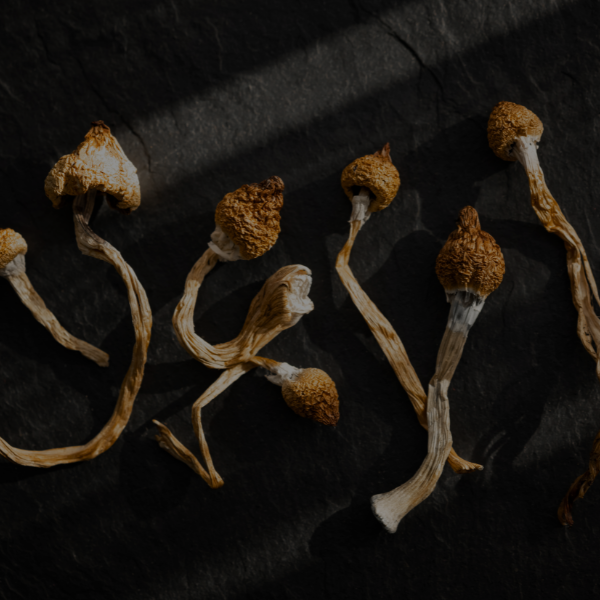
- Psilocybin mushrooms used for very different experiences
Those aren't the same tool.
The most useful way to think about mushrooms for stress relief is simple. Some help you build resilience gradually. Others may help you see your stress from a completely different angle.
Once you separate those paths, the topic gets much easier. You stop asking, “Do mushrooms work?” and start asking, “Am I trying to calm a system that's overworked, or loosen a mind that feels stuck?”
Two Paths to Relief Functional vs Psilocybin Mushrooms
Most online guides blur these categories together. That's where readers get lost. Functional mushrooms and psilocybin mushrooms can both appear in conversations about stress, but they serve different jobs.

A good analogy is this. Functional mushrooms are like a steady training routine. You don't feel everything at once, but over time your baseline becomes stronger. Psilocybin is closer to a deep mental reset. It isn't about daily background support. It's about a more concentrated shift in how the mind is processing emotion, memory, and meaning.
The basic difference
A source discussing this confusion notes that most online content conflates functional adaptogens like Reishi with psilocybin, even though the former is framed around long-term physiological resilience through HPA axis modulation, while the latter is framed around episodic psychological reframing by interrupting negative thought cycles, as described in this overview of adaptogenic mushrooms and psilocybin distinctions.
The HPA axis sounds technical, but the idea is simple. It's part of your body's stress command system. Think of it as your internal alarm network. Functional mushrooms are often discussed as tools that help that alarm system stop overreacting.
Psilocybin is discussed differently. Instead of trying to lower the volume of the body's stress alarm over weeks, it may temporarily loosen rigid thinking patterns. That can create space for a person to relate to stress differently.
Functional vs. Psilocybin Mushrooms at a Glance
| Attribute | Functional Mushrooms (e.g., Reishi, Lion's Mane) | Psilocybin Mushrooms (‘Magic Mushrooms') |
|---|---|---|
| Primary use | Daily support for stress adaptation and resilience | Intentional experiences aimed at perspective shifts |
| Main timeline | Gradual and cumulative | Acute and experience-based |
| Typical goal | Support mood, focus, sleep, and steadier stress response | Disrupt rumination and open new psychological perspectives |
| Experience | Non-psychoactive | Psychoactive |
| Best fit | Ongoing life stress, depleted routines, nervous-system overload | Feeling mentally stuck, emotionally looped, or trapped in repeating thought patterns |
| Relationship to routine | Often integrated into daily wellness habits | Usually approached less frequently and with more preparation |
A quick way to choose
If your stress feels like constant background pressure, functional mushrooms usually make more sense as the first lens.
If your stress feels tied to rumination, emotional knots, or a need for deep reframing, psilocybin fits a different conversation.
Simple rule: Functional mushrooms help many people work with the body's stress response over time. Psilocybin is discussed more often as a tool for changing the mind's relationship to stress.
Harnessing Functional Mushrooms for Daily Resilience
Functional mushrooms make the most sense when stress feels woven into your routine. You're not looking for a dramatic event. You're looking for steadier days, calmer evenings, and a nervous system that doesn't feel pinned open all the time.

What “adaptogenic” really means
When people call Reishi or Lion's Mane adaptogenic, they're usually pointing to one idea: these mushrooms are used to help the body handle stress more smoothly. A practical way to picture this is a thermostat. If stress keeps pushing your internal temperature too high, adaptogenic support aims to help the system regulate instead of staying overheated.
That's why consistency matters so much. Functional mushrooms are less like a painkiller and more like a routine that gradually changes your baseline.
Common formats include:
- Capsules for convenience when you want the same habit every day
- Powders stirred into coffee, smoothies, or tea
- Mushroom coffee blends for people replacing part of a caffeine-heavy ritual
- Tinctures for those who prefer liquid extracts
If you want a product-focused overview, this functional mushroom benefits guide lays out common categories and use cases.
Reishi for calming the system
Reishi is often the first name people hear in this category because its reputation leans calming rather than energizing. It's frequently discussed by people who feel “tired but wired,” especially when stress and sleep are tangled together.
A human study gives that reputation some grounding. A fungal extract of Ganoderma lucidum (Reishi mushroom) given to patients undergoing chemotherapy led to a clear reduction in emotional instability and a marked improvement in mood, including reduced anxiety and depression, while significantly increasing their sense of well-being, according to this PMC article on Ganoderma lucidum and quality-of-life outcomes.
That doesn't mean Reishi is a fast sedative. It's better understood as a mushroom people use when they want their stress response to feel less jagged over time.
Lion's Mane for stress with mental fog
Some stress doesn't just feel heavy. It feels mentally messy. You can't focus, your working memory slips, and simple tasks take more effort than they should.
That's where people often look at Lion's Mane. It gets discussed less for “knocking stress down” and more for helping the brain stay clearer under stress. In plain language, many people use it when stress makes them feel mentally dull, distractible, or disconnected from their normal sharpness.
Here's a short visual explainer before we get practical with routine-building.
How to use functional mushrooms well
People usually get the weakest results from functional mushrooms when they treat them like one-off fixes. A better pattern looks like this:
- Match the mushroom to the stress pattern. Reishi often fits a keyed-up, restless style of stress. Lion's Mane often fits stress mixed with brain fog and cognitive drag.
- Pair it with an existing habit. Add powder to morning coffee or take capsules with breakfast, so you don't rely on motivation.
- Give it time. Functional mushrooms are generally approached as gradual support, not instant transformation.
- Watch your own response. Better sleep, steadier mood, fewer stress spikes, and clearer focus are the kinds of changes people tend to look for qualitatively.
Exploring Psilocybin for Psychological Breakthroughs
Psilocybin belongs in a different lane. It isn't mainly discussed as a daily buffer against life's background wear and tear. It's discussed as a tool that may help interrupt the mental patterns that keep stress glued in place.
That matters because some forms of stress aren't just about being overloaded. They're about being stuck in the same inner loop. The event may be over, but the mind keeps replaying it. The pressure may be manageable, but your interpretation of it keeps spiraling.
How psilocybin may change the stress experience
One useful concept here is neuroplasticity. In simple terms, neuroplasticity is the brain's ability to rewire and update itself. If your mind has been taking the same path through worry, fear, or self-criticism again and again, neuroplasticity is the brain's capacity to build a different route.
Think of a snowy field. Repeated thoughts carve the same tracks. Over time, those tracks become the default. Psilocybin is often discussed as something that can soften those grooves long enough for a person to walk a new direction.
A clinical study in adults with major depression found that a single dose of psilocybin-assisted psychotherapy led to rapid and significant improvements in stress, anxiety, and tension within 8 days, with effects linked to neuroplastic changes that counter stress-related damage and help restore neuronal connectivity, as described in this Scientific Reports study on psilocybin-assisted psychotherapy.
Why this feels different from daily support
Functional mushrooms are often chosen to support the body under pressure. Psilocybin is often discussed in terms of meaning, perception, and emotional processing.
That's why people describe the two paths so differently.
- Functional use tends to sound like “I feel more balanced.”
- Psilocybin discussion tends to sound like “I saw the pattern I was stuck in.”
Neither one replaces the other. They answer different needs.
Some people don't need more coping. They need a genuine shift in perspective. That's where psilocybin enters the stress conversation.
Brain flexibility and rumination
Stress gets harder to live with when the mind turns repetitive. Rumination can make small problems feel total. It can also keep old pain emotionally active.
Psilocybin is often discussed as loosening that rigid internal narration. If you want a plain-language look at those mechanisms, including how perception and brain networks may change, this guide to psilocybin effects on the brain offers a useful starting point.
That doesn't mean every experience is automatically healing or easy. It means the tool is aimed at psychological reframing, not just symptom management. For the right person and the right context, that can be the difference between enduring stress and rethinking it.
A Practical Guide to Dosing and Responsible Use
A useful rule helps clear up a lot of confusion. Functional mushrooms are usually used like a daily support habit. Psilocybin is approached more like a deliberate psychological event. Stress relief can mean two very different jobs, so the dosing mindset should match the tool.

Functional mushrooms work like routines
Reishi, Lion's Mane, and similar options usually make the most sense in a steady rhythm. The goal is often to support the body's stress response over time, the way a good sleep routine or regular walks support you through repetition rather than through one dramatic moment.
A practical way to start looks like this:
- Choose one main goal. Better sleep support, steadier focus, calmer evenings, or less overstimulated energy.
- Pick a format you will use. Capsules fit people who want consistency. Powders fit people who already have a morning coffee, tea, or smoothie habit.
- Change one variable at a time. That makes it easier to notice what is helping and what is not.
- Watch for pattern shifts. People often notice a steadier baseline, such as fewer rough afternoons or a smoother wind-down at night.
This category rewards patience. Functional mushrooms are often closer to tending a garden than flipping a switch.
Psilocybin needs clearer intention
Psilocybin is usually discussed in two broad dose ranges. One is microdosing, where the aim is subtle support that stays in the background of daily life. The other is a full experience, where the aim is deeper reflection, emotional processing, or a meaningful shift in perspective.
That difference matters because dose changes the kind of stress support someone is seeking. A microdose is generally part of an ongoing experiment in mood, focus, or mental flexibility. A larger experience calls for time, preparation, and a safe setting because it can bring up strong emotions and insights.
If you want a plain-language overview of ranges, terms, and common starting frameworks, this psilocybin dosage guide for beginners and experienced users lays them out clearly.
A simple question can help here: are you looking for gentle background support, or are you setting aside space to examine the story underneath the stress?
The stacking question
People often ask whether functional mushrooms and psilocybin can be combined. This practice is commonly called stacking.
The short answer is that research-based guidance is still limited. A Healthline review of adaptogenic mushrooms notes a gap in clear evidence on combining functional mushrooms with psilocybin, while also pointing out that interest in the practice is growing.
So caution should lead the decision.
Some practical guardrails can reduce avoidable mistakes:
- Start with one category first. Learn how your body and mind respond before adding another variable.
- Treat combinations as less predictable. Two well-known products can still create a murkier experience when used together.
- Keep a simple log. Write down what you took, how much, when you took it, and how you felt later.
- Check with a healthcare professional if you take medications or have ongoing conditions. That matters even more if stress overlaps with anxiety, depression, sleep problems, or other treatment.
Responsible use basics
A few rules apply whether someone is building daily resilience with functional mushrooms or considering psilocybin for deeper psychological work:
- Know what you are taking. Clear labeling, identified species, and straightforward ingredient information matter.
- Choose sources that explain the product well. Mushroom products can differ a lot in form, strength, and intended use.
- Keep the larger stress picture in view. Sleep, therapy, movement, relationships, boundaries, and workload still shape the outcome.
- Match the tool to the kind of stress you have. Functional mushrooms are generally the better fit for ongoing physical wear and tear. Psilocybin belongs in a more careful conversation about perspective, emotional patterns, and reframing.
That last point is the anchor for responsible use. If your stress looks like a constantly overworked alarm system, daily support may be the better lane. If your stress feels tied to rumination, old narratives, or a rigid mental loop, a very different kind of preparation is needed.
Choosing Your Path and Preparing for the Journey
By this point, the decision usually gets clearer. If your stress feels like accumulated wear and tear, functional mushrooms are the more natural fit. If your stress feels bound up with thought loops, emotional rigidity, or a need for perspective change, psilocybin belongs in the conversation.
A simple self-check
Ask yourself which description sounds closer:
- “I'm overloaded all the time.” You may be looking for gradual support, better regulation, and a calmer baseline.
- “I can't stop thinking in the same painful way.” You may be looking for reframing, insight, and mental flexibility.
That one distinction helps cut through most of the confusion around mushrooms for stress relief.
Preparation matters
For functional mushrooms, preparation means choosing a product you can use consistently. The best plan is usually the boring one you'll stick with. A capsule by the coffee maker. A powder next to the kettle. A routine that survives busy days.
For psilocybin, preparation is more psychological. People often use the phrase set and setting for a reason. “Set” means your mindset, expectations, and emotional state. “Setting” means the environment, the people around you, and whether the experience supports safety and reflection rather than chaos.
Go in with a clear reason, a calm environment, and enough space afterward to reflect. Stress relief isn't only about the experience itself. It's also about what you do with what you learn from it.
Quality is part of safety
Good sourcing matters because mushroom products vary a lot in clarity, format, and intended use. Look for companies that clearly separate functional products from psilocybin products, explain what each category is for, and provide educational material instead of vague promises.
That's the bigger takeaway. The right mushroom isn't the one with the loudest claim. It's the one that matches your actual stress pattern, your level of experience, and the kind of support you're really seeking.
If you're comparing options for mushrooms for stress relief, The Magic Mushroom Delivery is one place to explore both functional mushroom products and psilocybin-focused education in one catalog, with product categories that clearly separate daily wellness support from more intentional psychedelic use for adults 21+.