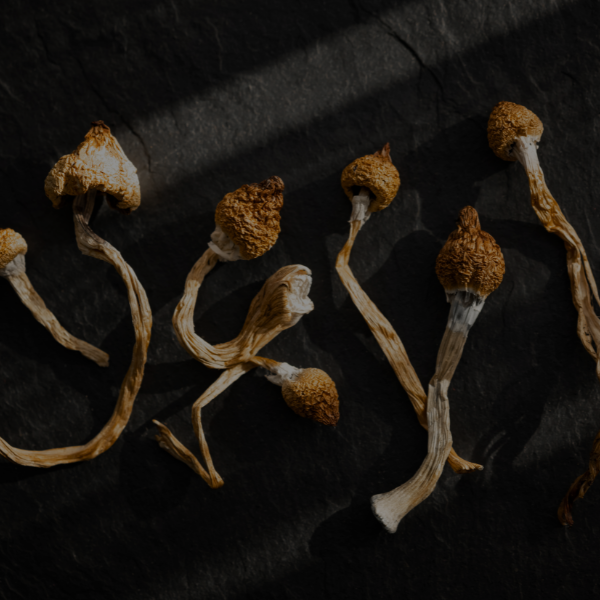

You’ve probably seen them in a jar, a pouch, or a photo online and had the same first question many people ask: why are they dried?
That question matters more than it seems. With psilocybe cubensis dried, the form changes the practical experience. It affects how easy they are to store, how steadily they hold potency, how people measure them, and how predictable they feel from one use to the next.
For someone new, the dried look can be confusing. They don’t resemble the soft, fresh mushrooms you’d recognize from a grocery store. They’re lighter, more fragile, and often blue-bruised or wrinkled. None of that tells you everything you need to know. What matters is understanding why dried mushrooms became the standard format in the first place.
Your Introduction to Dried Psilocybe Cubensis
A lot of first-time questions are practical ones. How strong are they? How long do they keep? Why do experienced users talk about grams only in the dried form? Why does everyone seem to prefer dried mushrooms over fresh ones?
Those are good questions because dried mushrooms are not just fresh mushrooms with less water. Drying changes how they handle, how they store, and how consistently people can work with them. That’s why dried material is so common in education, personal use, and preparation methods like tea or capsules.
What helps most is to think of dried mushrooms as the reference version. They’re easier to weigh accurately, easier to keep in stable condition, and easier to compare across batches than fresh mushrooms. For cautious users, that matters. Predictability is one of the biggest parts of safety.
Practical rule: Treat dried mushrooms like a concentrated, shelf-stable form. Respect starts with measuring carefully, storing them properly, and not assuming every mushroom is equally potent.
A respectful experience usually begins long before anyone consumes anything. It starts with learning what dried mushrooms are, why they’re used, and how to handle them without guesswork.
Why Dried Psilocybe Cubensis is the Standard
Fresh mushrooms are mostly water. Research cited in this article notes that fresh mushrooms contain approximately 90% water, while dried mushrooms retain only about 5% to 10% moisture and maintain psilocybin content more effectively when stored well, with the lowest decay seen in dried biomass stored in the dark according to this comparison of truffle and mushroom dosing and storage.
That one fact explains a lot.
A simple analogy helps. Fresh herbs are bulky, soft, and short-lived. Dried herbs are lighter, easier to store, and easier to portion. The same broad logic applies here. When mushrooms are dried, the water is removed, the material becomes more shelf-stable, and measuring by weight becomes more useful.

Fresh versus dried in real life
Fresh mushrooms are delicate. They bruise easily, spoil quickly, and change more from day to day. That makes them harder to handle if your goal is consistency.
Dried mushrooms are different. They’re lighter, less perishable, and easier to keep in a stable state when stored properly. If you want to weigh out a careful amount, dried material gives you a much more practical starting point.
A side-by-side view makes the difference clearer:
| Form | What it’s like | Main challenge | Why people choose or avoid it |
|---|---|---|---|
| Fresh | Soft, water-heavy, perishable | Spoilage and short storage window | More fragile and harder to keep consistent |
| Dried | Crisp, lightweight, shelf-stable | Needs careful storage after drying | Easier to measure, store, and use over time |
Why stability matters so much
Potency isn’t just about how strong a mushroom is at harvest. It’s also about how well that potency survives the days, weeks, or months afterward. Drying helps because it reduces the moisture that makes mushrooms more vulnerable to spoilage and chemical change.
This is why people often treat dried mushrooms as the standard format for education and dosing discussions. They’re not “better” in every possible sense. They’re more manageable. For anyone trying to approach mushrooms carefully, manageable is valuable.
If you want a broader side-by-side comparison of handling and format, this guide on dried vs fresh mushrooms is a useful companion.
Dried mushrooms became the standard because they make the experience easier to measure, easier to preserve, and easier to approach with intention.
Another point that confuses readers is appearance. A dried mushroom may look smaller or less impressive than a fresh one, but the missing bulk is mostly water. That’s why visual size is a poor guide. Weight and storage condition matter much more than looks.
Decoding Potency and Dosing Your Experience
Potency is where many people get overconfident. They assume one mushroom equals another, one strain equals another, or one batch will feel like the last. That’s not how psilocybe cubensis dried works.
Verified data shows that dried Psilocybe cubensis contains psilocybin concentrations ranging from approximately 0.5% to 1.5% by dry weight, with individual fruiting bodies often around 15 mg (±5 mg) per gram of dried material, while some measured strains have exceeded 19 mg/g according to the Psilocybe cubensis reference. The same source notes that a 3.5-gram dose may contain approximately 35 to 52.5 mg of psilocybin.
That range is the whole story. Mushrooms vary.
Why one batch can feel different from another
Several things affect how strong dried mushrooms feel:
- Genetics matter: Some strains are generally described as gentler, while others are often treated as stronger.
- Growing conditions matter: Environment can influence alkaloid expression.
- Individual mushrooms vary: Even mushrooms from the same harvest can differ.
- Flushes can vary: Potency doesn’t always line up neatly from one harvest cycle to the next.
So the safest mindset is simple. Start lower than your confidence level suggests.
A practical dosing table
Because potency varies, any dosing guide should be treated as a cautious framework, not a promise. The table below is qualitative on purpose. It gives a practical way to think, not a guarantee of effects.
| Dose Level | Dried Weight (grams) | Commonly Reported Effects |
|---|---|---|
| Microdose | Low sub-perceptual amount | Subtle shift or no obvious psychedelic effect; people often choose this when they want precision and minimal disruption |
| Threshold | Light amount | Early body sensations, mild mood shift, light visual changes for some people |
| Standard | Moderate amount | Clear psychedelic effects, stronger sensory changes, emotional movement, inward focus |
| Heroic | High amount | Very intense, immersive experience with a major loss of ordinary control and predictability |
That table avoids fake precision because false confidence is risky. Two people can take the same dried weight and still have very different experiences based on potency, body sensitivity, mindset, and setting.
How to approach your first measured dose
For beginners, a cautious process works better than a bold one:
- Use a scale. Eyeballing dried mushrooms is unreliable because shape and density vary.
- Start with one intentional amount. Don’t nibble and keep adding because you’re impatient.
- Wait before deciding it “isn’t working.” Impulsive redosing is a common mistake.
- Write down the batch and amount. Personal notes are often more useful than memory.
Low and learn beats high and hope.
If you want a broader framework for choosing a starting point, this psilocybin dosage guide can help you compare intentions and dose styles.
A note on strain names
Readers often ask about names like Golden Teacher or Penis Envy. Strain names can point to general expectations, but they shouldn’t replace caution. The verified data allows one broad takeaway: some strains, including Golden Teacher, are often found in lower concentration ranges, while Penis Envy phenotypes may show substantially higher alkaloid levels in some cases, as noted in the earlier potency source.
That doesn’t mean every sample will follow the stereotype. It means names can be clues, not guarantees.
The practical lesson is simple. Don’t dose based on reputation alone. Dose based on uncertainty.
Preserving Potency The Art of Storing Dried Mushrooms
Once mushrooms are dried, storage becomes the next make-or-break factor. Potency loss usually doesn’t happen because someone did one dramatic thing wrong. It happens because heat, light, air, and moisture keep working on the material little by little.
Research used for this article states that temperatures exceeding 95°F (35°C) during drying cause significant degradation of psilocybin and psilocin, and that after drying, mushrooms should be stored in air-tight containers in cool, dark environments because UV exposure and oxidation reduce active compounds, as described in this guide to drying mushrooms and preserving potency.

The four enemies of dried mushrooms
Think of stored mushrooms like coffee beans or spices. Their quality holds up best when you protect them from the basics.
- Air: Oxygen contributes to breakdown over time.
- Light: UV exposure can reduce potency.
- Heat: Warm storage speeds up unwanted change.
- Moisture: Dampness invites mold and further degradation.
A simple storage routine that works
Many individuals don’t need a complicated setup. They need consistency.
- Use glass, not a loose bag: A sealed glass jar protects better than a thin plastic bag that lets in air and humidity.
- Add a desiccant pack: This helps control stray moisture inside the container.
- Choose a dark spot: A drawer, closet, or cabinet works better than a sunny shelf.
- Avoid heat sources: Don’t store near stoves, radiators, or inside a hot car.
Store dried mushrooms the way you’d store something fragile, dry, and light-sensitive. Because that’s exactly what they are.
If you want a more detailed checklist, this guide on the best way to store shrooms walks through common storage mistakes and better options.
What people often get wrong
The biggest error is assuming “dry enough” is good enough. If mushrooms still feel bendy instead of dry and crisp, they’re harder to preserve. Another mistake is opening the container repeatedly in bright, humid places like kitchens or bathrooms.
A final mistake is using appearance alone as the test for quality. Dried mushrooms can still look acceptable while slowly losing reliability. Good storage isn’t glamorous, but it protects the part people care about: consistency.
A Practical Guide to Consumption Methods
A dried mushroom can be eaten four different ways and still be the same mushroom. What changes is the delivery method. That affects taste, comfort, how easy it is to measure a portion, and how repeatable the experience feels from one session to the next.
For many people, that practical side matters as much as the material itself. A method that is easy to weigh, prepare, and tolerate is usually easier to use carefully.

Eating them directly
Eating dried mushrooms as they are is the simplest option. You weigh the material, chew it, and swallow.
The main advantage is clarity. There is very little preparation, so there are fewer chances to mismeasure or lose track of what you took. The drawbacks are familiar. The taste can be strong, the texture can be unpleasant, and some people find the fibrous material harder on the stomach.
This method often suits people who want the shortest path from scale to session.
Tea and why grinding helps
Tea is popular for practical reasons, not just preference. Grinding dried mushrooms into a finer powder helps hot water reach more of the material. Researchers discussing extraction and processing of dried P. cubensis noted that finer, homogenized material can improve tryptamine extraction compared with larger pieces in this open-access paper on extraction and processing of dried P. cubensis.
The simplest analogy is kitchen prep. Ground coffee brews differently from whole beans because more surface area touches the water. Mushroom tea works in a similar way.
A basic approach is straightforward. Grind the dried material, add hot water, let it steep, then strain or drink the mixture depending on preference. Many users prefer tea because it is easier to consume than chewing dry pieces, and some find it gentler on digestion.
Lemon tek and acidic preparation
Lemon tek is still dried mushroom preparation. It is not a separate substance. Ground mushrooms are soaked in lemon juice for a short period and then consumed.
People are often curious about it because the format feels more approachable than chewing dried pieces. The acidic liquid starts softening and breaking down the material before ingestion, which may change how the experience feels for some individuals. That is why caution still matters. A different preparation method can change the pace and character of the onset, even when the amount is the same.
Here’s a short visual explainer:
Capsules and measured portions
Capsules appeal to people who care about consistency. Once dried mushrooms are ground into a more uniform powder, the material can be divided into portions with less guesswork than breaking off random stems and caps.
That matters because dried mushrooms are easier to store and weigh, but they are also easier to use carefully when the form is standardized. Capsules remove the taste, simplify small measured portions, and make the process feel more controlled. A grinder reserved for dry herbs or mushrooms is often used to create a finer powder before filling capsules.
Powder works like flour in baking. If one bowl has clumps and another is evenly mixed, the even mixture is easier to portion with confidence.
Mixing with chocolate or food
Mixing mushroom powder into chocolate or food can make the flavor easier to handle. For someone who struggles with the earthy taste, that can remove a major barrier.
The tradeoff is precision. If the powder is not mixed thoroughly, one piece may contain more than another. That makes careful preparation important. For beginners especially, simpler methods often make it easier to learn how their body responds without adding extra variables.
A practical way to compare the options is this:
- Direct eating is simple and low-prep.
- Tea can be easier to drink and may improve extraction from the material.
- Capsules help with taste avoidance and measured portions.
- Edibles improve flavor but require careful mixing for consistency.
The best method is usually the one that helps a person measure clearly, prepare calmly, and avoid unnecessary surprises.
Mindful Journeys The Importance of Set and Setting
Two people can take the same amount from the same batch and have very different experiences. Often the difference isn’t just chemistry. It’s context.
Set means your mindset. That includes your mood, expectations, emotional state, and intention. Setting means your environment. That includes the room, the people around you, the sounds, the schedule, and whether you feel safe.
Why mindset changes the feel of the experience
If someone goes in restless, overwhelmed, or secretly trying to outrun a difficult feeling, the experience can become harder to manage. Mushrooms tend to amplify what’s already there. That doesn’t mean a difficult moment is a failure. It means preparation matters.
A calmer approach helps. Eat lightly if that suits you, clear your calendar, silence distractions, and ask yourself a basic question: why am I doing this today?
A respectful session starts before ingestion. It starts with honesty about your mental state.
Why the room matters
Setting sounds simple until it goes wrong. A noisy apartment, surprise visitors, urgent texts, harsh lighting, or tense company can push a person into unnecessary stress.
A better setting is usually quiet, familiar, and easy to control. Soft lighting, water nearby, comfortable clothes, and a trusted person available if needed can make a major difference.
Some people prefer solitude. Others feel safer with a sober, calm sitter nearby. Neither is automatically correct. The useful question is which setup reduces pressure and increases trust.
A short checklist before any journey
- Check your mood: If you’re emotionally frayed, postponing may be the wisest choice.
- Prepare the room: Comfort reduces avoidable friction.
- Choose company carefully: Trusted people help. Unpredictable people don’t.
- Set an intention: Keep it simple. Curiosity, reflection, rest, or creative openness are enough.
- Let go of performance: You don’t need to have a “big” experience for it to be worthwhile.
The strongest harm-reduction habit isn’t bravado. It’s preparation.
Your Path Forward and Final Considerations
The practical reason psilocybe cubensis dried became the standard is straightforward. Drying makes mushrooms easier to preserve, easier to measure, and easier to use in repeatable ways. That supports the things cautious users care about most: stability, consistency, and respect for dose.
The big takeaways are simple. Don’t assume potency is uniform. Measure instead of guessing. Store dried mushrooms in a cool, dark, airtight environment. Choose a consumption method that fits your goals and your stomach. Pay close attention to set and setting because mindset and environment shape the experience as much as technique does.
It also makes sense to learn the current policies, rules, and personal-use guidelines that apply where you live. Regulations can differ by location, and doing your own due diligence is part of responsible decision-making.
A careful approach usually leads to a better one. Less guesswork, more intention.
If you're looking for a practical place to keep learning or to browse mushroom formats for adults 21+, The Magic Mushroom Delivery offers educational resources along with dried mushrooms, capsules, chocolates, gummies, and other mushroom products.