
You’re probably here because you opened a menu, saw magic mushrooms right next to magic truffles, and paused.
That hesitation makes sense. Mushrooms are familiar. Truffles sound exotic, maybe gentler, maybe stronger, maybe just marketing. If you’re a first-timer, you want clarity before you choose. If you’ve used mushrooms before, you may be wondering whether truffles offer a more manageable, more discreet, or more consistent option for your routine.
The confusion usually starts with one simple question: are these different, or are they basically the same thing with different names?
The honest answer is that they are closely related, but the practical differences still matter. They differ in form, water content, storage needs, dosing style, and often in how people approach them. Those tangible details shape the experience long before you ever feel the first effects.
Your Guide to Magic Truffles and Mushrooms
You open a product menu, see truffles and mushrooms side by side, and the practical questions show up fast. Which one stores better in a US home. Which one is easier to portion without guesswork. Which one makes more sense if you want something compact, predictable, and simple to handle.
Those are the questions that matter.
For a customer comparing options at The Magic Mushroom Delivery, the decision usually has less to do with folklore and more to do with real use. What arrives at your door. Whether it needs the fridge. How long it stays usable. Whether the dose is easy to repeat next time. If you are still learning the basics of species and product formats, this guide to different types of psilocybe mushrooms helps add context.

A simple way to frame it is this. Truffles often behave more like a fresh food item. Dried mushrooms behave more like a pantry item. They can come from the same broader fungal world, but for the customer, the day-to-day difference is often about handling and consistency rather than identity alone.
| Feature | Magic Truffles | Magic Mushrooms |
|---|---|---|
| What they are | Sclerotia, a dense underground fungal structure | Fruiting body of the fungus |
| Typical form sold | Often fresh | Often dried |
| Water content when fresh | Lower than fresh mushrooms, as noted in Alchimia’s truffle and mushroom comparison | Higher than fresh truffles, according to the same source |
| Storage style | Fresh format usually benefits from refrigeration and quicker use | Dried form is generally easier to store for longer |
| Onset window | Often a bit slower for some users, based on Inward Bound’s dosing comparison | Often a bit faster for some users, according to the same source |
| Best fit for many users | People who prefer fresh products and more gradual portioning by package | People who want compact dosing and longer shelf stability in dried form |
One caution helps clear up a common misunderstanding. A heavier fresh product is not automatically stronger. Water weight can make two products look very different on a scale, even if the active compounds are closer than the raw grams suggest. That is one reason new users can get confused when comparing fresh truffles to dried mushrooms.
The better choice usually depends on your routine. If you want something easy to tuck away, revisit later, and measure in small dried amounts, mushrooms often fit better. If you prefer a fresh format sold in pre-portioned packs and plan to use it soon after delivery, truffles can feel more straightforward.
If you’re choosing between magic truffles vs mushrooms, the better option usually comes down to your goal, your comfort with dosing, and how you plan to store them.
Understanding the Fungi Family Tree
A lot of first-time buyers in the U.S. run into the same problem. They see mushrooms in one product photo, truffles in another, and assume they are two completely different substances with completely different effects. The biology is simpler than that.
Magic truffles and magic mushrooms come from the same broad fungal line. The difference is the part of the organism you are buying. The mushroom is the fruiting body that grows above the substrate. The truffle, more precisely called a sclerotium, forms underground as a dense survival structure. Same organism category. Different structure. Different practical behavior once it reaches your shelf, scale, or fridge.
A simple comparison helps here. The mushroom is the reproductive growth you recognize right away. The truffle is the compact reserve the fungus develops below the surface. That distinction matters less for philosophical debates about what is “real” and more for day-to-day questions such as how the product looks, how it stores, and why equal-looking portions may not perform the same by weight.

What a mushroom is
A mushroom is the visible fruiting body of the fungus. It grows above the substrate and produces spores.
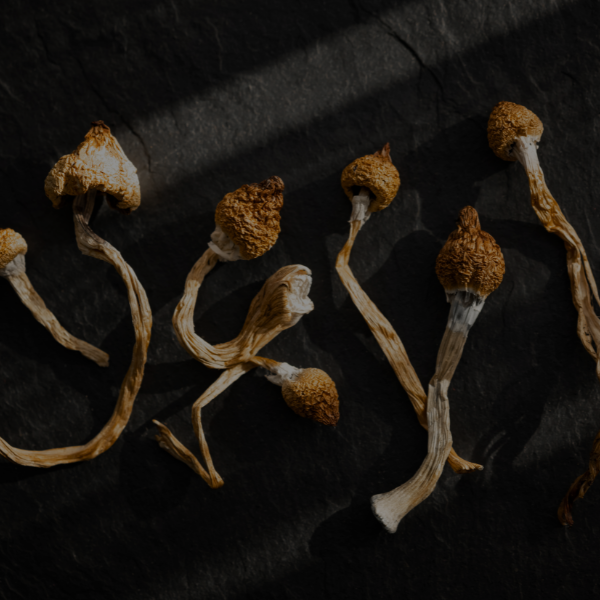
For many U.S. customers, “shrooms” usually means dried fruiting bodies, not fresh ones. That single detail clears up a lot of confusion. Drying changes weight, shelf life, and dosing feel. A dried mushroom product is usually lighter, more compact, and easier to portion carefully over time. If you want a clearer sense of how different species and formats fit together, this guide to types of Psilocybe is a useful reference.
What a truffle is
A magic truffle is a sclerotium. It develops underground and looks more like a small irregular nugget than a cap-and-stem mushroom.
That appearance often throws people off. New buyers sometimes assume truffles must be processed, synthetic, or somehow less natural because they do not look like the classic mushroom shape. In reality, they are a different fungal structure. Dense texture adds to the confusion because truffles can look small and sturdy while still containing a meaningful amount of active material.
Appearance is a poor guide for judging strength. With psilocybin products, form and water content can distort what your eyes expect.
Why truffles became their own category
“Magic truffles” became a retail category because sellers started naming and packaging sclerotia separately from mushrooms. That commercial split made the two products feel farther apart than they are biologically.
For a U.S. reader, the bigger takeaway is practical. Product labels can make truffles sound like a separate class, but they are better understood as an alternate format from the same fungal family. That helps you compare them more realistically. You are not choosing between natural and unnatural. You are choosing between different structures with different handling traits.
Why water content causes so much confusion
A fresh truffle and a dried mushroom can create one of the most misleading side-by-side comparisons in this category.
Fresh products carry much more water, and that water adds weight without adding proportional psychoactive content. Truffles are often sold fresh, while mushrooms are often sold dried. So the scale can suggest one story while the actual use experience suggests another. This is one reason cautious customers get mixed up when they try to compare raw grams across product types.
The practical lesson is straightforward. Weight only makes sense when you know the form. Fresh-to-fresh and dried-to-dried comparisons are far more useful than comparing a fresh truffle pack to a jar of dried mushrooms.
The simplest way to keep it straight
If you want a clean mental model, use this one:
- Mushrooms are the above-ground fruiting bodies.
- Truffles are underground sclerotia from the fungal organism.
- Form changes how weight behaves.
- Buying choices usually come down to storage style, shelf stability, and how consistently you want to portion doses.
That last point matters for real-world use. A customer deciding what fits their routine usually needs less taxonomy and more clarity about what will be easier to store, measure, and use responsibly.
A Side-by-Side Analysis of Potency and Experience
You order one product and receive a compact jar of dried mushrooms. You order the other and get a larger fresh portion of truffles. On the table, the truffles can look like the heavier, bigger option. In actual use, that visual comparison can send you in the wrong direction.
That confusion usually starts with dosing language. A gram of dried mushrooms and a gram of fresh truffles are not interchangeable units. For a U.S. buyer trying to choose what fits their routine, the more useful question is not “Which one is stronger?” It is “Which format gives me more predictable portioning for the way I plan to store and use it?”

What’s inside each one
Both truffles and mushrooms are associated with psilocybin-based effects, but they do not always present the same balance of active compounds in the same form. That helps explain why two products from the same fungal family can feel different to portion, different to time, and sometimes different in how steadily the experience comes on.
A helpful way to frame it is this: psilocybin is part of the starting material, and psilocin is more directly tied to what your body uses during the experience. If you want a plain-English refresher, this guide to psilocybin and psilocin differences gives useful background.
Potency depends on the format you are holding
Dried mushrooms usually provide more potency per gram than truffles. That is the comparison many people consider important, because dried mushroom products are often easier to weigh into small, repeatable portions.
Fresh truffles create a different kind of comparison. Because they are commonly sold with more moisture still present, the serving size often looks much larger. That does not automatically mean a stronger session. It means the product is being measured in a form that carries more weight and bulk.
This is a lot like comparing espresso beans to brewed coffee by the ounce. The cup can be larger, but that does not make it the better measure of strength.
Why dosing consistency feels different in real life
For many U.S. customers, dosing consistency is where the choice becomes practical.
Dried mushrooms are often easier to break into measured gram amounts with a scale. That makes them a familiar fit for people who want to start low, keep notes, and repeat roughly the same portion another time. Truffles can still be portioned carefully, but the fresh format can make the process feel less exact if the pieces vary in size or if the package is meant to be used within a shorter window.
That does not make truffles a bad option. It makes them a different style of product. Some people prefer that style because the larger fresh portion encourages a slower, more intentional approach instead of treating the experience like a quick calculation.
Typical dose framing
Dose language also differs between the two categories, which is one reason new buyers get mixed up.
Mushrooms are commonly discussed in small dried gram amounts. Truffles are often discussed in larger fresh gram portions. The numbers look far apart, but they are not speaking the same measurement language. As noted earlier, fresh-versus-dried comparisons can distort expectations fast.
Practical rule: Before you judge any dose, confirm whether the product is fresh or dried. That one detail changes how the number should be read.
Here’s the clearest side-by-side view for shopping and planning:
| Comparison point | Truffles | Mushrooms |
|---|---|---|
| Common sales format | Fresh portions are common | Dried portions are common |
| Potency by gram | Often less concentrated per gram in the form people usually buy | Often more concentrated per gram in dried form |
| Portioning style | Larger-looking servings, sometimes less intuitive for beginners | Smaller servings, often easier to weigh precisely |
| Onset tendency | Can feel more gradual for some users | Can feel quicker for some users |
| Best fit for | Buyers comfortable with fresh-product dosing and shorter-term use | Buyers who want easier measuring and repeatable portions |
A short visual explainer can help if you learn better by watching than reading.
How the experience can feel different
Experience reports deserve careful framing because mindset, setting, recent meals, sleep, and individual sensitivity all matter. Two people can take similar amounts of related products and describe the session very differently.
Even so, there are some practical tendencies shoppers ask about all the time. Mushrooms are often described as feeling more direct because the dried format makes dosing compact and straightforward. Truffles are often described as feeling more gradual to approach, partly because the serving format can encourage slower pacing and more deliberate use.
Those are patterns, not promises.
Some users say mushrooms feel more concentrated and easier to “read” from a dosing standpoint. Others like truffles because the larger fresh serving feels less abrupt psychologically, especially if they are cautious and want a gentler ramp into the experience.
The clearest takeaway
The useful comparison is not weak versus strong. The useful comparison is compact dried dosing versus larger fresh dosing, and how each format affects consistency, onset expectations, and the way a product fits into everyday handling.
For a customer deciding what to buy from a U.S. delivery service, that is usually a fork in the road. If you want tighter portion control and easier repeatability, mushrooms often make more sense. If you prefer a fresh format and do not mind working with larger portions, truffles may feel more approachable.
Sourcing Storage and Handling Differences
A common U.S. buying scenario is simple. Your package arrives on a warm afternoon, you are still at work, and you cannot open it for a few hours. In that moment, the difference between fresh truffles and dried mushrooms stops being abstract and becomes practical.

For many customers, this is a key dividing line. Mushrooms in dried form are usually easier to store, easier to portion over time, and easier to keep stable after delivery. Fresh truffles can still be a good fit, but they ask more from you right away.
Why shelf life feels so different
The format matters as much as the fungi.
Fresh truffles naturally carry much more moisture than dried mushrooms, which is why they usually need refrigeration and a shorter use window. By contrast, dried mushrooms have already had most of that moisture removed, so they are generally more stable in storage and less sensitive to day-to-day handling.
That difference affects real life in obvious ways. A dried product usually gives you more margin for error. A fresh product usually rewards planning.
What matters after delivery
Fresh truffles work more like refrigerated specialty produce. Dried mushrooms work more like a carefully stored herb. Neither one should be treated casually, but one clearly asks for faster attention.
If you receive fresh truffles, open the package promptly, confirm the product looks and smells normal, and get it into cold storage without delay. If you receive dried mushrooms, you still want to store them correctly, but a brief delay is usually less disruptive because the product is already in a lower-moisture state.
Customers who are curious about how truffle products are produced and packaged can get more background from this guide to a truffle grow kit.
Best handling habits for each format
For fresh truffles, focus on keeping conditions steady.
- Refrigerate soon after arrival: Cool storage helps preserve freshness.
- Avoid repeated warming and cooling: Temperature swings can shorten the useful life of a fresh product.
- Limit unnecessary opening: Every extra exposure adds warmth, air, and handling.
- Pause if anything seems off: Unusual odor, texture, or appearance is a reason not to proceed.
For dried mushrooms, the goal is protection from moisture, heat, and light.
- Store in an airtight container: This helps keep ambient moisture out.
- Keep them in a cool, dark place: Light and heat can gradually reduce quality.
- Handle only what you need: Less repeated exposure is better for the remaining product.
- Use a dry environment: Kitchens and bathrooms are often poor storage spots because humidity can fluctuate.
Why shipping and dosing consistency can point in different directions
This is one of the most useful distinctions for a U.S. customer ordering for home delivery.
Dried mushrooms are usually easier to ship because the product is lighter, less perishable, and less dependent on immediate refrigeration. They also tend to be easier to portion with consistency because the material is compact and the storage conditions are simpler to maintain over time. If you plan to use a scale, set aside repeatable amounts, and return to the product over days or weeks, dried mushrooms often fit that routine better.
Fresh truffles can appeal to people who prefer that format, but they usually make more sense when your plan is clear. You are available to receive the order, you have refrigerator space ready, and you expect to use the product on a shorter timeline.
The practical questions that usually settle the decision
A good comparison here is not “Which one sounds more interesting?” It is “Which one fits my actual setup?”
Ask yourself:
- Will I use this soon, or do I want to store it for a while?
- Can I receive and refrigerate a fresh product quickly?
- Do I want a format that is easier to keep stable between uses?
- Will I be measuring portions carefully over time?
Those questions usually lead to a better choice than chasing broad claims about one product being better than the other. For many U.S. buyers, storage, shelf life, and day-to-day handling are the details that matter most.
Choosing Your Journey for Different User Goals
There isn’t one correct winner in the magic truffles vs mushrooms comparison. There’s only a better fit for the kind of experience you want and the kind of user you are right now.
Some people buy for exploration. Some want a more measured relationship with the product. Some mainly care about convenience and consistency. Those priorities point toward different choices.
For the cautious first-timer
If you’re new, your biggest need usually isn’t maximum intensity. It’s predictability.
That often makes truffles appealing. The larger fresh serving style can encourage slower, more mindful portioning. Many first-timers also find truffles less intimidating visually. A cap-and-stem mushroom can carry a lot of cultural baggage. Truffles tend to feel more neutral and less dramatic.
That said, don’t confuse “less intimidating” with “weak.” A fresh truffle product still deserves respect, patience, and a low-and-slow mindset.
A first-timer usually does best by prioritizing:
- Clear labeling: Know whether you’re dealing with fresh truffles or dried mushrooms.
- Simple setting: Quiet environment, open schedule, no pressure.
- One product only: Don’t compare products on the same day.
- Patience: Especially important if onset is gradual.
For the person focused on microdosing consistency
Truffles can be attractive for microdosing because they’re often described as having a more even psilocybin distribution throughout their structure in the verified data. That’s a practical advantage when someone wants more consistent small portions rather than chasing a large recreational effect.
If your goal is subtle, repeatable use, consistency matters more than dramatic potency. Some users find truffles easier to think about in routine terms because the product format feels less like a “big event” and more like something you can portion carefully.
Mushrooms can also be used this way, especially when ground and blended for uniformity, but truffles often come up in microdosing conversations for exactly that consistency reason.
If your main goal is steadiness, the best product isn’t always the most potent one. It’s the one you can portion with the least guesswork.
For the experienced user who wants efficiency
Experienced users often lean toward mushrooms for one reason: compact strength.
Dried mushrooms usually require less physical material for a meaningful experience. That makes them simpler to store, simpler to weigh, and easier to consume without dealing with a larger fresh portion. If you already understand your response well and want a format that feels straightforward, mushrooms often fit that preference.
This doesn’t automatically mean they create a “better” experience. It means they often create a more compact one.
For the buyer who values easy storage
This is one of the clearest decision points.
If you want something you can keep with less maintenance, dried mushrooms usually make more sense. Fresh truffles demand a bit more commitment after arrival. Some people are happy to give them that attention. Others know they want a product that’s more forgiving.
That’s a practical preference, not a philosophical one.
For the person who feels anxious about intensity
People who are cautious about intensity often ask which option is gentler. The safer answer is that your dose, format, and mindset matter more than the label “truffle” or “mushroom.”
Still, many anxious users prefer truffles because the product presentation feels more approachable and the onset can be a little less abrupt. That can reduce the urge to brace against the experience. A smoother start often leads to a smoother mindset.
A simple decision guide
If you want a fast way to narrow it down, use this:
| Your priority | Often the better fit |
|---|---|
| Easier long-term storage | Mushrooms |
| Fresh product format | Truffles |
| Compact dosing | Mushrooms |
| Measured microdosing style | Truffles |
| Lower intimidation factor for some newcomers | Truffles |
| Familiarity and broad user recognition | Mushrooms |
The choice most people actually make
Individuals don’t choose based on abstract theory. They choose based on what feels manageable.
A careful newcomer may pick truffles because they seem easier to approach. A busy buyer may choose mushrooms because storage is simpler. An experienced user may stick with mushrooms because the dried format is efficient. A microdoser may prefer truffles because consistency matters more than impact per gram.
The best choice is the one you can understand, store correctly, and use responsibly.
Frequently Asked Questions About Truffles and Mushrooms
Is one safer than the other
In practical terms, the bigger safety factor is usually how you dose, where you are, and whether you know what product form you’re using. Truffles and mushrooms are closely related fungal products, so neither should be treated casually. Start conservatively, avoid impulsive redosing, and don’t use either one in a stressful or unpredictable environment.
Can you mix magic mushrooms and truffles
It’s generally wiser not to mix them, especially if you’re trying to understand your own response. Combining products makes it harder to judge onset, potency, and how much you’ve taken. If you’re learning what works for you, one product at a time is the cleaner approach.
Why do truffles sometimes taste sour or earthy
That’s usually about the product’s natural character and fresh format. Truffles often have a denser, earthier taste and texture than dried mushrooms. Because they’re commonly sold fresh, the flavor can come across as more tangy, nutty, or sour to some people.
Which is easier for beginners to dose
Beginners often find mushrooms easier to measure in a compact dried form, but some find truffles easier to approach psychologically because the experience can feel more gradual. “Easier” depends on whether your challenge is measurement or nerves.
Do truffles last as long in storage as mushrooms
Fresh truffles usually need more careful handling and a shorter timeline. Dried mushrooms are generally the easier product for long-term storage. If shelf stability matters a lot to you, that difference can decide the purchase before potency does.
Are the effects basically the same
They overlap a lot, but people still notice differences in onset, serving size, and overall feel. The broad family resemblance is real. So are the practical differences.
What’s the best option if I want consistency
For many people, truffles are appealing for consistency in small portions, while mushrooms are appealing for consistency in dried, compact storage. Pick the type of consistency you care about most.
If you want carefully selected products, discreet shipping, and a place to keep learning before you order, The Magic Mushroom Delivery offers a practical starting point for adults 21+ who want both access and education in one place.