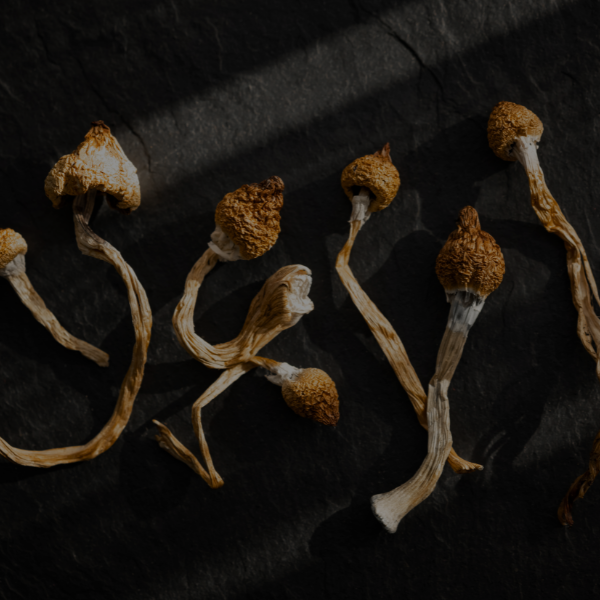

When you're trying to decide between dried and fresh mushrooms, the most important question is: what’s your goal? The real difference boils down to this: dried mushrooms are all about concentrated potency, long-term stability, and precise dosing. This makes them the go-to for microdosing or simply stocking up. On the other hand, fresh mushrooms offer a unique, natural experience but come with a very short shelf life and unpredictable potency.
Understanding the Core Differences
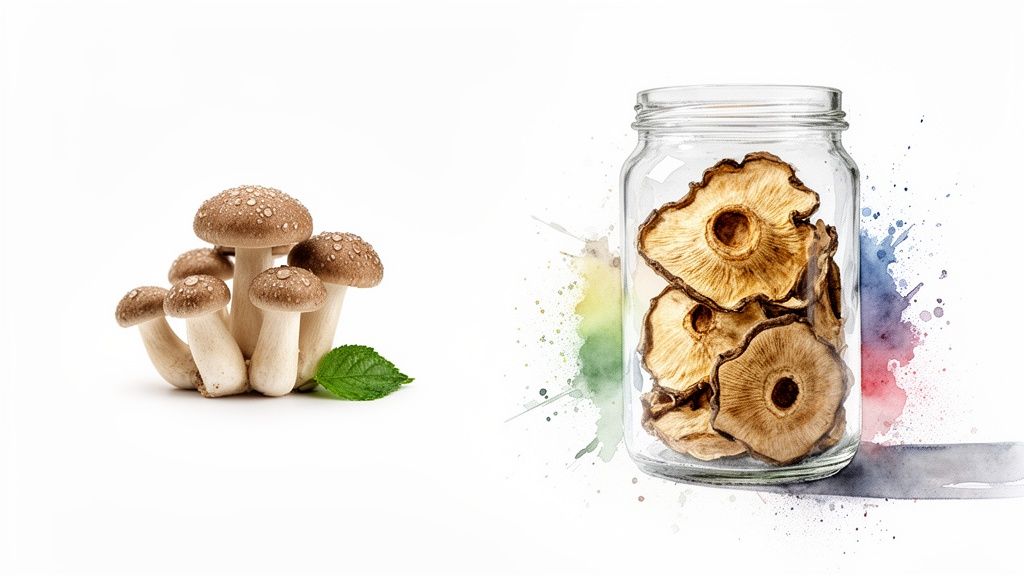
Let's be clear: this isn't about which one is "better." It's about which one is right for you, right now. The best choice really depends on what you plan to do, how you'll store them, and the kind of experience you're after.
Fresh mushrooms, straight from the earth, give you an experience that some people describe as cleaner or more natural. But their high water content makes them incredibly perishable and a real headache for accurate dosing.
Drying, however, changes the game completely. The process strips out about 90% of a mushroom's water weight, which massively concentrates its active compounds. This is why dried mushrooms have become the standard for anyone seeking a reliable, repeatable experience—especially for therapeutic sessions or a structured microdosing routine.
Dried vs Fresh Mushrooms At a Glance
The global market for dried mushrooms is exploding, with projections showing it could hit $8.6 billion by 2031. This massive growth is all about convenience. They have an incredible shelf life—often a year or more without any need for a fridge. Plus, the drying process deepens their flavor, giving them a much more intense taste. If you're curious, you can find more insights on the growing dried mushroom market and its trends.
This table gives you a quick snapshot of the key trade-offs.
| Attribute | Fresh Mushrooms | Dried Mushrooms |
|---|---|---|
| Potency | Inconsistent and less concentrated by weight. | Concentrated, predictable, and consistent. |
| Shelf Life | Extremely short—think 5-10 days, tops, in the fridge. | Very long, lasting up to a year or more if stored properly. |
| Dosing | Very difficult to measure accurately due to water weight. | Simple, precise, and totally reliable for consistent effects. |
| Storage | Needs refrigeration, ideally in a paper bag to breathe. | Just an airtight container in a cool, dark place. |
| Best For | Immediate use and for those seeking a unique, natural journey. | Microdosing, long-term storage, and predictable experiences. |
Once you get a feel for these fundamental differences, you can easily pick the form that lines up perfectly with your wellness goals.
Understanding Potency and Dosing Conversions
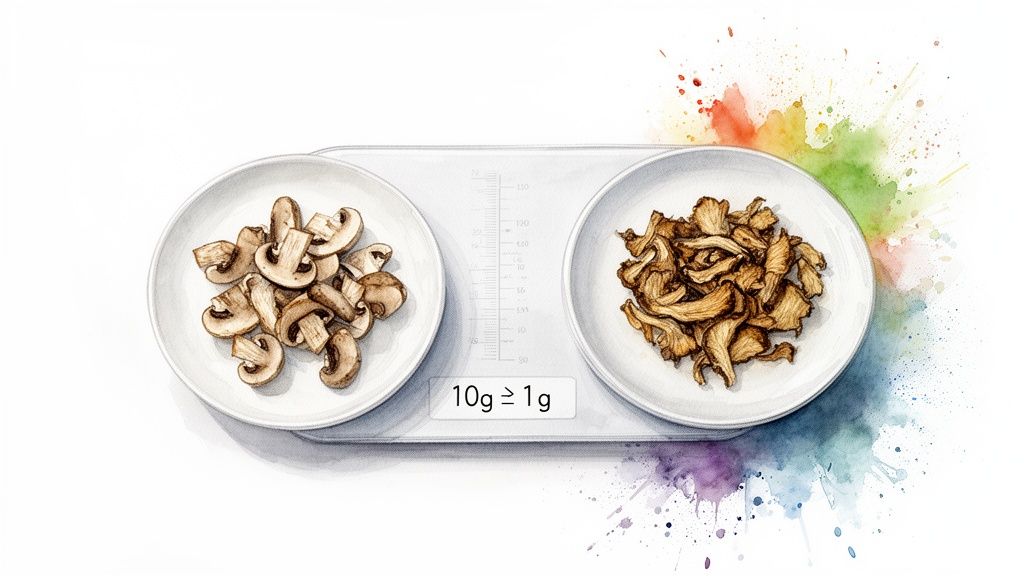
When we talk about dried versus fresh mushrooms, the single most important thing to get your head around is the massive difference in potency by weight. It’s not that one is inherently “stronger”—it’s all about concentration. And that entire difference comes down to one simple thing: water.
Freshly picked mushrooms are made up of about 90% water. All that H₂O dilutes the active compounds, which makes trying to dose them accurately a real headache. The drying process strips all that water away, leaving behind a much lighter product where the good stuff is highly concentrated.
This brings us to the golden rule of mushroom conversion: the 10-to-1 ratio.
The 10:1 Weight Conversion Rule Explained
The 10:1 ratio is the standard everyone goes by for figuring out doses between fresh and dried mushrooms. What it means is that 10 grams of fresh mushrooms have roughly the same amount of active compounds as 1 gram of dried mushrooms.
Think of it this way: if you have 100 grams of fresh mushrooms and you dry them out completely, you’ll end up with about 10 grams of material. The active ingredients didn't go anywhere; they're just packed into a much smaller, lighter package now.
This is exactly why dried mushrooms are the go-to for reliable dosing. It takes all the guesswork out of the equation. You get a consistent, repeatable experience every single time because you're not trying to account for fluctuating water weight.
Nailing this conversion is crucial for safety and for getting the experience you're after. A small miscalculation with fresh mushrooms could send you on a much wilder ride than you planned for. The predictability of dried mushrooms, on the other hand, gives you peace of mind. For anyone just starting, our psilocybin dosage guide is a great resource for understanding different dose levels.
Why Dried Mushrooms Are Better for Dosing Accuracy
While the 10:1 ratio is a solid rule of thumb, the truth about fresh mushrooms is a bit messy. The exact water content can shift based on growing conditions, the humidity in the air, or even just how long ago they were harvested. This variability makes consistent dosing with fresh shrooms practically impossible.
Here's why dried mushrooms win out for accurate dosing every time:
- Consistency: Every gram from a batch of properly dried mushrooms holds a predictable amount of active compounds. This is non-negotiable for therapeutic use and especially for microdosing.
- Precision: It's simple to weigh dried mushrooms with a digital scale down to a fraction of a gram. Measuring a 0.1 gram microdose is easy with dried material, but totally impractical when you’re just cutting a chunk off a fresh mushroom.
- Stability: The active compounds in fresh mushrooms start breaking down almost immediately after being picked. A fresh mushroom can lose potency day by day, adding another layer of uncertainty. Properly dried mushrooms, however, lock that potency in.
Just think about someone who's microdosing to improve their focus or mood. Their whole regimen depends on taking a precise, sub-perceptual dose consistently for weeks or months.
Example Scenario: A Microdoser's Choice
Imagine someone wants to take a 100mg (0.1g) microdose.
- With Dried Mushrooms: They can easily grind the material and weigh out exactly 0.1g on a precise scale. The dose they take today will be identical to the one they take tomorrow.
- With Fresh Mushrooms: They’d have to measure out around 1g of a fresh mushroom. But that piece could be 88% water one day and 92% the next. This means their actual dose of active compounds is always changing, which completely defeats the purpose of a stable microdosing routine.
Potency Stability Over Time
Another major point in the dried vs. fresh debate is how well they hold onto their potency. Fresh mushrooms are on a ticking clock. The second they're picked, enzymes start breaking down the active compounds. Oxygen, light, and heat just speed up the process. Within a week, a fresh mushroom can lose a big chunk of its initial power.
Drying puts a stop to all that. By removing the water, you create a stable environment where the active ingredients are preserved. When you store them correctly—in an airtight container away from light and heat—dried mushrooms can keep their potency for many months, sometimes even for years. This long-term stability makes them a far more practical and reliable choice for anyone not planning to use them right away.
Comparing the User Experience and Effects
Beyond the hard math of potency and dosing, the real choice between dried vs fresh mushrooms often boils down to the journey itself. Many psychonauts report that each form feels distinct, from how quickly the effects kick in to the overall vibe of the experience. Understanding these nuances is key to picking the right form for the outcome you’re after.
A lot of the anecdotal chatter suggests that fresh mushrooms bring on a faster, and sometimes more intense, initial come-up. The going theory is that the active compounds are more bioavailable in their natural, watery state. This means your body might absorb them more easily, leading to a quicker launch that some describe as more immediate and vibrant.
Dried mushrooms, on the other hand, are usually linked with a more predictable and steady ascent. The experience tends to build slowly, giving you plenty of time to get your bearings as your perception starts to shift. For many, especially newcomers, this measured pace makes dried mushrooms feel more reliable and easier to navigate.
Onset Time and Intensity: A Side-by-Side Look
The difference in onset isn't just about speed; it shapes the whole first act of your experience. A rapid come-up can feel thrilling and electric for some, but others might find it a bit jarring. A slower onset offers a gentler runway, which can be a more comfortable way to take off.
- Fresh Mushrooms: Users often report feeling the first whispers of effects within 20-40 minutes. The peak can also feel like it arrives sooner, creating a more compressed and potent initial phase.
- Dried Mushrooms: The onset here typically stretches from 30-60 minutes, with a more drawn-out and gentle build-up. This gives you a smoother, less abrupt entry into the experience.
The core difference really comes down to predictability. Fresh mushrooms can feel like you're navigating a more spontaneous, wild river. Dried mushrooms are more like a well-charted map, which many find reassuring.
This is a pretty important distinction when you're planning your set and setting. The faster onset of fresh mushrooms means you need to be ready and in your chosen space almost immediately. The gradual nature of dried mushrooms gives you a bit more breathing room as things start to unfold.
The Character of the Journey: Body Load and Sensation
Another major point of discussion in the dried vs fresh debate is the "body load"—the physical sensations you feel during the trip. This can be anything from a light, energetic hum to a heavier, more grounding feeling.
Many people describe the experience from fresh mushrooms as feeling "cleaner" or "lighter" on the body. This might be because you’re consuming the compounds in their natural matrix, which could lead to smoother digestion and less physical heaviness for some. The journey is sometimes characterized as more fluid or ethereal.
Dried mushrooms, conversely, are often said to produce a more "grounded" or "deeply introspective" journey. The physical sensations can feel more pronounced, which some users actually prefer because it enhances their connection to their body and surroundings. This groundedness can be perfect for deep, meditative work.
While fresh mushrooms are king in the culinary world, their use for psychedelic journeys is limited by simple logistics. They only last for 5-10 days, and their potency can drop by 10-20% every day after being picked, making consistency a huge challenge. To get a better sense of the market, you can learn more about mushroom market trends. This reality makes dried mushrooms the far more practical and reliable option for anyone looking for predictable and repeatable effects over time.
Practical Guidance for Preparation and Consumption
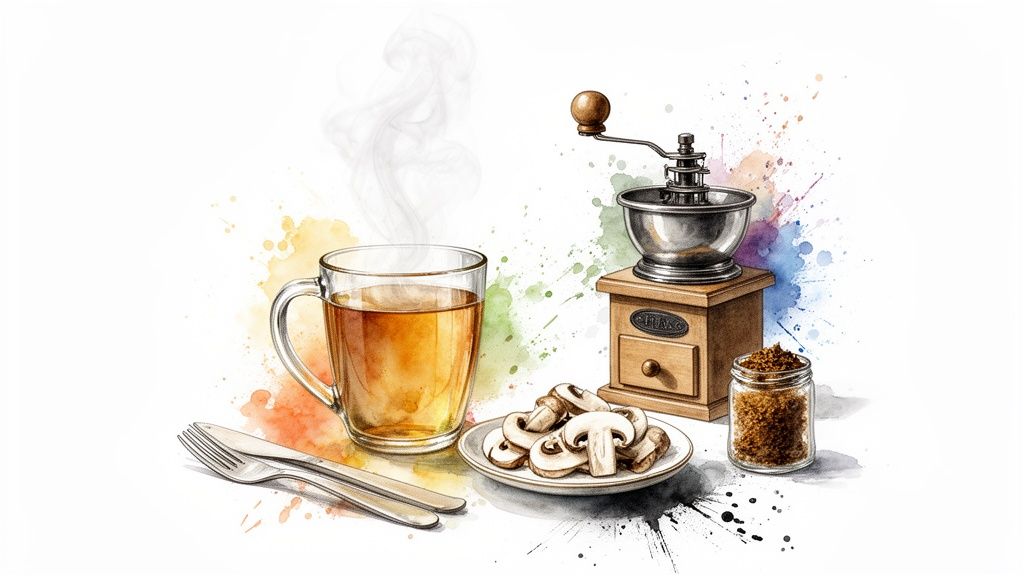
How you get your mushrooms ready can completely shape the experience. It influences everything—taste, texture, and even how your body absorbs the active compounds. When you're looking at dried vs. fresh mushrooms, the prep methods are totally different, and each one brings its own benefits and drawbacks to the table. Knowing the score helps you pick the right approach for the outcome you want.
Fresh mushrooms, being full of water and quite delicate, are best when you keep things simple. The goal is to stick to direct consumption methods that don’t mess with their natural state. Their earthy taste is also a bit milder than their dried cousins, which is a big plus for anyone who finds the flavor of dried shrooms a bit much.
Dried mushrooms, on the other hand, are way more flexible. Since they have almost no moisture, they’re perfect for grinding into a fine powder. This opens up a ton of options, from making precise microdosing capsules to getting creative with culinary concoctions.
Preparing Fresh Mushrooms for Consumption
When you’re working with fresh mushrooms, simplicity is your best friend. You want to make them easy to eat while respecting their natural form. Getting too fancy is just not necessary and can add a bunch of variables you don't need.
Two easy and popular methods really stand out:
- Direct Consumption: The most straightforward way is to just eat them raw. You can have them on their own or toss them in a light salad. It’s quick and requires zero gear, but that strong, earthy flavor and rubbery texture can be a deal-breaker for some people.
- Simple Tea: Gently simmering chopped fresh mushrooms in hot water will give you a basic tea. This can make them easier to get down and might help with nausea, since the hot water starts breaking down the tough chitin in the mushroom cell walls.
The Versatility of Dried Mushrooms
Dried mushrooms are the go-to for a whole range of prep techniques, mostly because they're stable and the active compounds are concentrated. The fact that you can grind them into a consistent powder makes dosing incredibly accurate and allows for much more creative consumption methods. A basic coffee grinder is all you need—it’ll turn those brittle pieces into a fine, workable powder in just a few seconds.
Some of the most popular ways to use dried mushrooms include:
- Classic Mushroom Tea: This is a classic method for a reason. It’s easy on the stomach and you can easily add things like honey, ginger, or lemon to make it taste better.
- Capsules: If you want to skip the taste entirely, grinding dried mushrooms and packing the powder into gelatin capsules is the perfect move. This is pretty much the standard for microdosing because it offers unmatched precision and convenience.
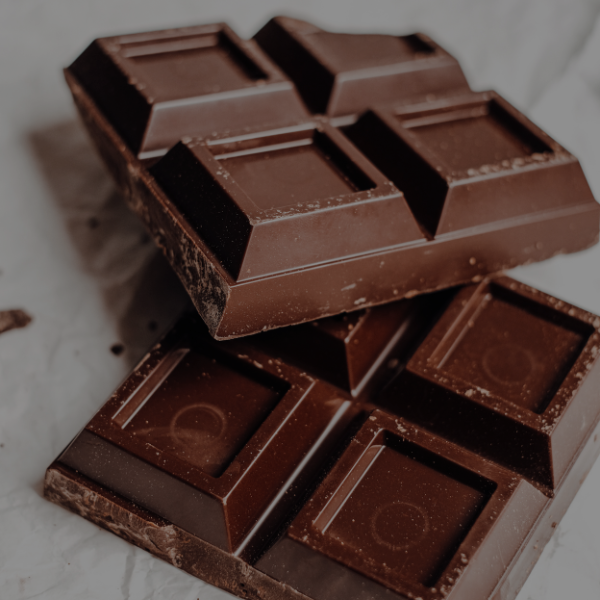
- Culinary Infusions: The powder can be mixed right into foods like chocolate or honey. This not only covers up the flavor but also makes for a much more pleasant and discreet way to consume them.
Key Insight: Being able to grind dried mushrooms into a powder is a total game-changer. It takes you beyond just chewing them up and opens the door to precise, tasty, and creative methods that just aren't an option with fresh, water-logged mushrooms.
How to Make a Basic Mushroom Tea
Making a mushroom tea is a fantastic way to consume either fresh or dried mushrooms. It can help ease digestion and tone down that earthy flavor. The process itself is really simple and easy to customize. For a deeper dive, check out our full guide on how to prepare magic mushrooms.
Here’s a simple, solid recipe to get you started:
- Prepare the Mushrooms: If you're using dried mushrooms, just break them into smaller pieces or give them a quick pulse in a coffee grinder for a coarse powder. If you’re using fresh, chop them up finely.
- Heat the Water: Get some water to a simmer in a small pot. This is critical: do not let it come to a rolling boil. Super high temperatures can start to degrade the active compounds.
- Steep the Mushrooms: Once the water is simmering, turn the heat down to low and add your mushroom pieces or powder. Let them steep for 10-15 minutes, giving it a stir every so often.
- Strain and Flavor: Pour the tea through a fine-mesh strainer or some cheesecloth to get the solid bits out. Now’s your chance to add a teaspoon of honey, a slice of fresh ginger, or a squeeze of lemon to liven up the taste.
- Serve and Enjoy: Sip the tea slowly over about 15-20 minutes. This allows for a gentle, comfortable onset.
This simple tea recipe really shows the main difference in handling dried vs. fresh mushrooms. While you can use both, the consistency and convenience of powdered, dried mushrooms usually make for a smoother, more reliable process.
Mastering Storage for Long-Term Potency
How you store your mushrooms is just as important as how you prepare them—it directly dictates their potency, safety, and how long they'll last. When it comes to storage, the battle between dried vs. fresh mushrooms isn't even a fair fight. One needs immediate attention and has a painfully short lifespan, while the other offers incredible stability with just a little bit of care.
Proper storage isn't just about stopping them from going bad; it's about protecting the active compounds that make the experience what it is. You're fighting a war on three fronts: oxygen, light, and heat. Each one of these will relentlessly degrade the delicate compounds inside, slowly draining your mushrooms of their magic over time.
The Short Lifespan of Fresh Mushrooms
Fresh mushrooms are incredibly delicate and spoil fast. Best case scenario, you've only got about 5 to 10 days before they're unusable, even with perfect storage. Their high water content is a magnet for mold, slime, and decay. Storing them right is really just a short-term game of buying a little more time.
The best method is deceptively simple: put them in a paper bag and pop them in the main part of your fridge. Whatever you do, don't use the crisper drawer. The paper bag lets them breathe and stops moisture from building up, which is what turns them slimy. Avoid plastic bags like the plague—they trap moisture and will turn your mushrooms into a soggy, useless mess in no time.
Even if you do everything right, you need to keep a close watch on them. Look for these clear signs they've gone bad:
- Slimy Texture: The moment you feel a slick film on the surface, they're on their way out.
- Dark Spots: Any major darkening or deep bruising is a sign of decay setting in.
- Off Smell: If they smell sour or just plain foul, it's time to toss them. They're no longer safe.
Long-Term Preservation for Dried Mushrooms
This is where dried mushrooms really pull ahead. When you remove all the water, you're left with a stable product that can hold onto its potency for a year or even longer if you store it correctly. The entire game is about creating an environment that shuts out those three enemies we talked about.
To pull this off, your storage setup needs to be:
- Airtight: Oxygen is a huge factor in potency loss. Get yourself some Mason jars with solid lids, vacuum-sealed bags, or other purpose-built airtight containers.
- Dark: Light, especially sunlight, is notorious for breaking down the good stuff. Store your container somewhere dark and cool, like a pantry, closet, or a deep cabinet.
- Cool: Heat just speeds up the degradation process. Keep them far away from stoves, ovens, or sunny windowsills.
A classic mistake is thinking any old sealed container will work. For long-term storage, a truly airtight seal is non-negotiable. Even a tiny bit of air getting in and out will slowly degrade your mushrooms over the months. If you're serious about maximum longevity, vacuum sealing is the gold standard.
For a deeper dive into the best storage methods, check out our complete guide on the best way to store shrooms to keep them potent.
The Role of Desiccant Packets
Moisture is the absolute arch-nemesis of dried mushrooms. Even a little bit of humidity seeping in can bring mold to the party and kickstart the degradation process all over again. This is why desiccant packets—those little silica gel packs you find in new shoes or beef jerky—are your secret weapon.
When you seal your dried mushrooms in their airtight home, just toss in a food-grade desiccant packet. It will quietly absorb any leftover moisture in the container, making sure your mushrooms stay perfectly cracker-dry and potent. It's a tiny, cheap step that acts as a powerful insurance policy, protecting your investment for the long haul.
Making the Right Choice for Your Needs
So, dried or fresh? The honest answer is that it really comes down to what you’re trying to achieve. There's no single "best" option here; the right mushroom for you depends entirely on the kind of experience you're after. By looking at a few common situations, you can get a much clearer idea of which form will be the perfect fit.
This simple decision tree is a great starting point for mushroom care, helping you figure out whether you need a short-term or long-term storage solution.
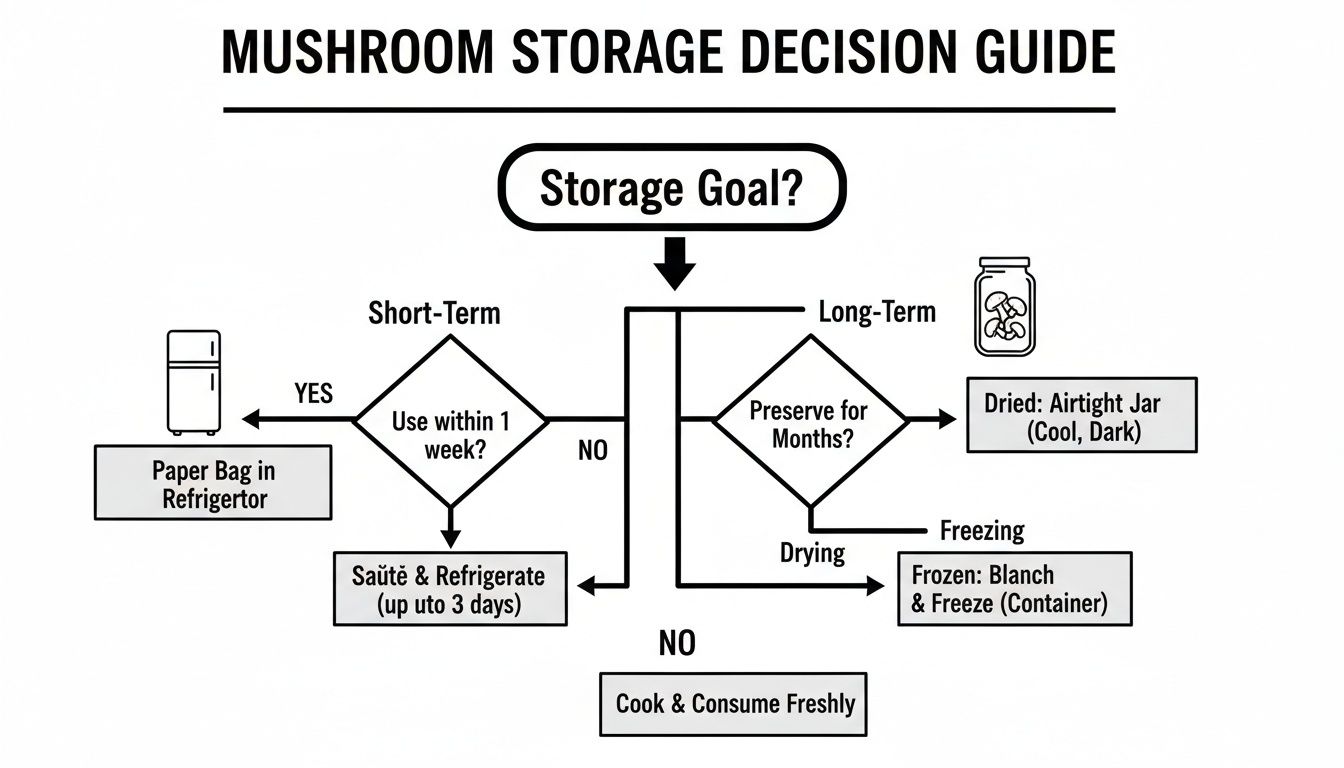
As the flowchart shows, it all boils down to your timeline. Fresh mushrooms are for right now, while dried ones are your ticket to long-term preservation.
Who Should Choose Which?
To make this even easier, let's break it down by a few user profiles. The context of why you're using them is the most important piece of the puzzle in the dried vs. fresh debate.
- First-Time Users: Go with dried mushrooms. It's a no-brainer. Their stability and predictable potency take all the guesswork out of the equation, which is exactly what you want your first time. This consistency lets you control your dose accurately and feel much more secure about the outcome.
- Experienced Psychonauts: If you've been around the block and are looking to explore new dimensions of the experience, trying fresh mushrooms can be a really worthwhile adventure. Some people swear by a "cleaner" or more vibrant journey. It's less predictable, for sure, but that unique character is something many seasoned users actively seek out.
- Dedicated Microdosers: For anyone microdosing, dried mushrooms are non-negotiable. The entire practice is built on precision and consistency—taking a tiny, sub-perceptual dose on a strict schedule. You can only achieve that by grinding dried material into a powder, weighing it precisely, and often putting it into capsules for easy use.
A Quick Decision Guide
Still on the fence? This table cuts straight to the chase, helping you match your goal with the right mushroom type.
Decision Guide: Dried vs. Fresh Mushrooms
| If Your Goal Is… | The Best Choice Is… | Why It's Recommended |
|---|---|---|
| A controlled, predictable first experience | Dried | Potency is stable and dosing is incredibly accurate, removing unwanted surprises. |
| Long-term storage and accessibility | Dried | They last for months or even years, making them perfect for planned use. |
| A consistent microdosing routine | Dried | Essential for the precise, repeatable measurements that microdosing requires. |
| Exploring a unique, potent journey | Fresh | Offers a distinct, vibrant experience that some seasoned users prefer. |
| Immediate consumption after harvesting | Fresh | Ideal when you have the opportunity to use them right away, with no need for storage. |
This makes it pretty clear: unless you have immediate access and an appetite for a more spontaneous journey, dried mushrooms offer the most practical path.
The Final Verdict
When you weigh all the factors, a clear winner emerges for most people. For the vast majority of users, dried mushrooms deliver superior practicality, consistency, and reliability. Their incredible shelf life, simple storage, and dosing accuracy make them the most sensible choice for planned sessions, microdosing, and general accessibility.
While dried mushrooms are the practical champion, don't write off fresh ones completely. They offer a unique, if fleeting, opportunity—a distinct experience worth exploring for the curious and experienced user who finds themselves in the right place at the right time.
Ultimately, the choice is yours to make. Think of dried mushrooms as a reliable map for your journey and fresh mushrooms as a more spontaneous, off-the-beaten-path adventure. Understanding these key differences will help you make a smart decision that supports your goals.
Got Questions? We've Got Answers
Choosing between fresh and dried mushrooms brings up a lot of practical questions. Let's clear up some of the most common ones so you can move forward with confidence.
Can You Freeze Fresh Mushrooms To Preserve Them?
While you technically can freeze them, it’s a bad idea for preserving what really matters. Fresh mushrooms are full of water, which turns into sharp ice crystals when frozen. These crystals shred the mushroom's delicate cell walls.
Once you thaw them out, you're left with a soggy, unappealing mess. More importantly, this damage can kickstart the breakdown of the active compounds, leading to a major loss in potency. When it comes to long-term storage, drying is hands-down the best and most reliable way to go.
Do Dried Mushrooms Expire or Go Bad?
If you store them right—we’re talking an airtight container in a cool, dark, dry spot—dried mushrooms can hold their potency for a year, sometimes even longer. They don't really "expire" like milk or bread, but their magic will slowly fade over time.
Your biggest enemies are moisture (which invites mold) and any exposure to heat, light, or oxygen. All of these will degrade the active compounds. Always give them a quick inspection before use. If you see or smell any signs of mold, they're done. Toss them immediately.
The real takeaway here is that proper storage isn't just about keeping them from going bad; it's about preserving their potency. An airtight seal and a dark space are your best friends for ensuring a consistent experience months from now.
Is It Better To Take Mushrooms On an Empty Stomach?
Many experienced users prefer taking mushrooms on an empty stomach, usually after fasting for about 3-4 hours. Doing this can bring on the effects faster and sometimes more intensely because your digestive system isn't busy breaking down food.
The flip side? This can also make nausea more likely for some people. If you know you have a sensitive stomach, having a light snack (like a piece of fruit or some toast) about an hour beforehand can make a world of difference. It might soften or slightly delay the onset, but for many, it’s a worthwhile trade-off for a more comfortable experience. Ultimately, it all comes down to your own body and what you're hoping to get out of the journey.
Ready for a consistent and reliable experience every time? The Magic Mushroom Delivery provides a curated selection of top-quality, expertly dried mushroom products, guaranteeing predictable potency and a long shelf life. Shop our collection today and get fast, discreet shipping straight to your door.