
The Psilocybe genus is a vast and fascinating kingdom of fungi, encompassing a wide array of species, each with unique characteristics, habitats, and potencies. This guide serves as your gateway to understanding some of the most notable types of psilocybe, from the widely recognized Psilocybe cubensis to the potent and elusive Psilocybe azurescens. Whether you are a novice mycologist, an experienced researcher, or simply curious about the natural world, understanding these species is a journey in itself.
Our goal is to provide a clear, practical, and comprehensive overview. We will explore key identification features, typical growing environments, and the relative potencies that distinguish these remarkable fungi. This resource is designed to be a field guide to the various shapes, sizes, and strengths that make each species distinct, providing a solid foundation for further exploration and responsible education.
By detailing the specific traits of each mushroom, we aim to empower you with actionable knowledge. You will learn not just what these mushrooms are, but where they thrive and what makes them unique. This detailed breakdown offers a deeper appreciation for the rich biodiversity within this genus, moving beyond generalities to deliver specific, useful information. Consider this your starting point for navigating the complex and varied world of psilocybin-containing mushrooms. We will cover everything from the common "Liberty Cap" to the lesser-known "Philosopher's Stone," equipping you with the essential details for your mycological journey.
1. Psilocybe cubensis
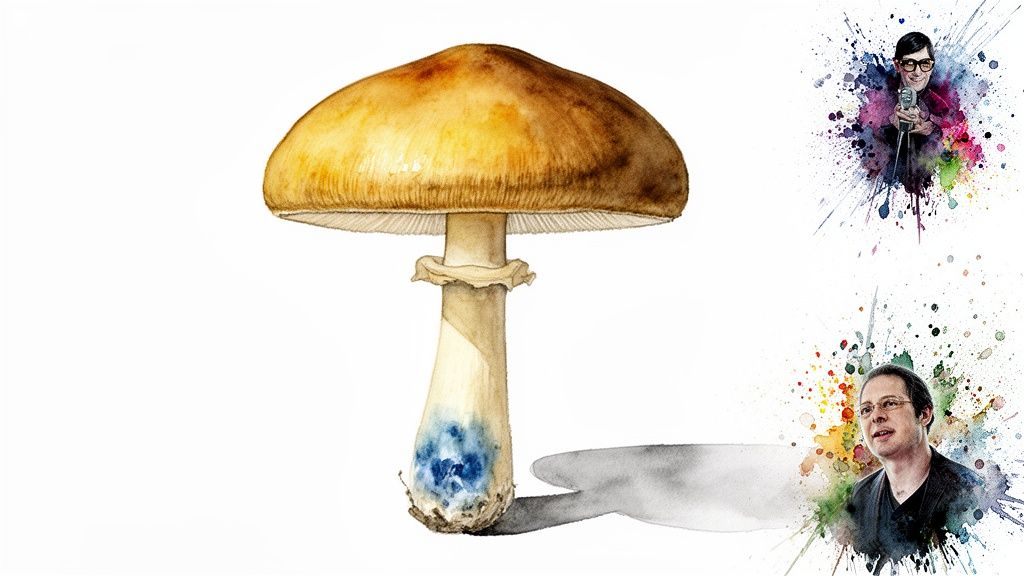
Often called the "gateway" species for aspiring psychonauts, Psilocybe cubensis is arguably the most recognized and widely cultivated psilocybin-containing mushroom in the world. Its popularity stems from its relative ease of cultivation, robust nature, and moderate to high potency, making it a reliable choice for both beginners and experienced users. This species is the standard for much of the psychedelic community and academic research, thanks to the pioneering work of figures like Terence McKenna and Paul Stamets.
Identification, Habitat, and Strains
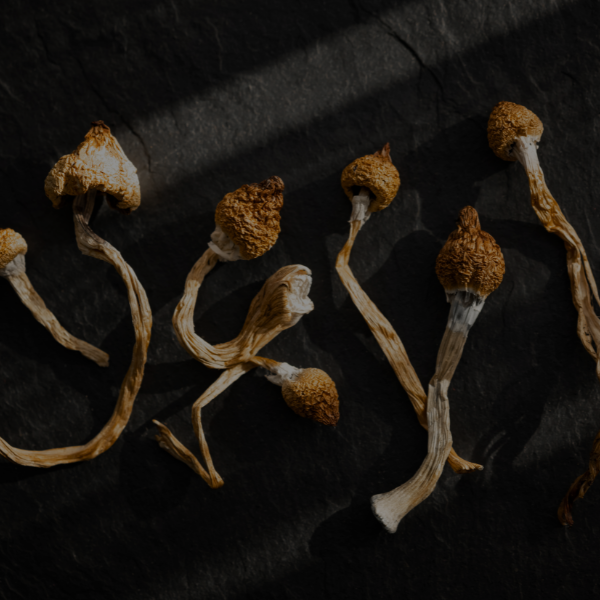
Psilocybe cubensis typically features a classic mushroom shape with a convex to flat, often caramel-brown cap that can fade to a lighter shade with age. A key identifying feature is its tendency to bruise a distinct bluish-green color when handled, a reaction indicating the presence of psilocybin. In the wild, it thrives in subtropical, humid climates, commonly found growing on the dung of large herbivores like cattle.
Due to its widespread cultivation, hundreds of unique "strains" or cultivars have been developed, each with slight variations in appearance, growth speed, and potency.
- Golden Teacher: An iconic, beginner-friendly strain known for providing insightful, philosophical experiences.
- B+: A popular cultivar celebrated for its large fruiting bodies and resilient, adaptable nature.
- Cambodian: A fast-colonizing strain reputed for its energetic and creative effects.
Explore our detailed guide to learn more about the diverse world of Psilocybe cubensis strains.
Dosage and Consumption Tips
For those new to this species, a starting dose is typically between 1.5 to 2 grams of dried mushrooms. It's crucial to prepare your "set and setting" beforehand, ensuring a comfortable, safe environment and a positive mindset. For a quicker onset (around 30-60 minutes), consume them on an empty stomach. Some users employ the "lemon tek" method, soaking ground mushrooms in lemon juice, which may intensify the experience and shorten its duration.
2. Psilocybe semilanceata (Liberty Cap)
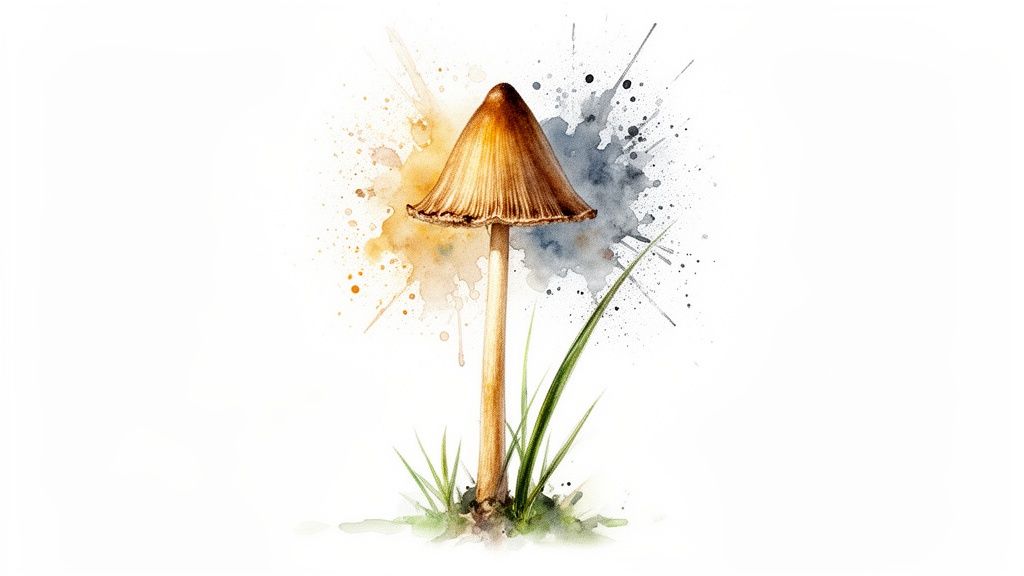
Known affectionately as the "Liberty Cap," Psilocybe semilanceata holds a special place in psychedelic history and is one of the most potent and widespread wild psilocybin mushroom species. Unlike the more commonly cultivated P. cubensis, Liberty Caps are notoriously difficult to grow indoors, making them a prized find for foragers. Their higher concentration of psilocybin offers a distinctly intense and often more visual and introspective experience, cementing their reputation among seasoned psychonauts.
Identification, Habitat, and Potency
Psilocybe semilanceata is a small, delicate mushroom easily identified by its conical or bell-shaped cap that rarely flattens with age and features a distinct, pointed nipple-like protrusion (an umbo). The cap color ranges from pale yellow to olive-brown and becomes sticky when moist. They grow in temperate, grassy areas like meadows, pastures, and lawns, often thriving in soil enriched by animal droppings but not directly on dung.
This species is among the most potent of the Psilocybe genus, with psilocybin concentrations that can be significantly higher than many P. cubensis strains. This makes precise identification and careful dosage essential.
- Geographic Range: Abundant across Europe, particularly in the UK, Ireland, and Scandinavia. Also found in the Pacific Northwest of North America and other temperate regions worldwide.
- Foraging Caution: Proper identification is critical, as several toxic look-alike species, such as those in the Conocybe genus, grow in similar habitats.
Dosage and Consumption Tips
Due to its high potency, a much smaller dose of Liberty Caps is required compared to other types of psilocybe mushrooms. First-time users should approach this species with extreme caution, starting with a maximum of 0.5 to 1 gram of dried mushrooms. The effects can last between 5-7 hours and are often described as profoundly spiritual and euphoric. As always, researching and preparing your set and setting is a vital step for a safe and meaningful journey. Consider post-experience integration practices to help process the insights gained.
3. Psilocybe cyanescens (Wavy Caps)
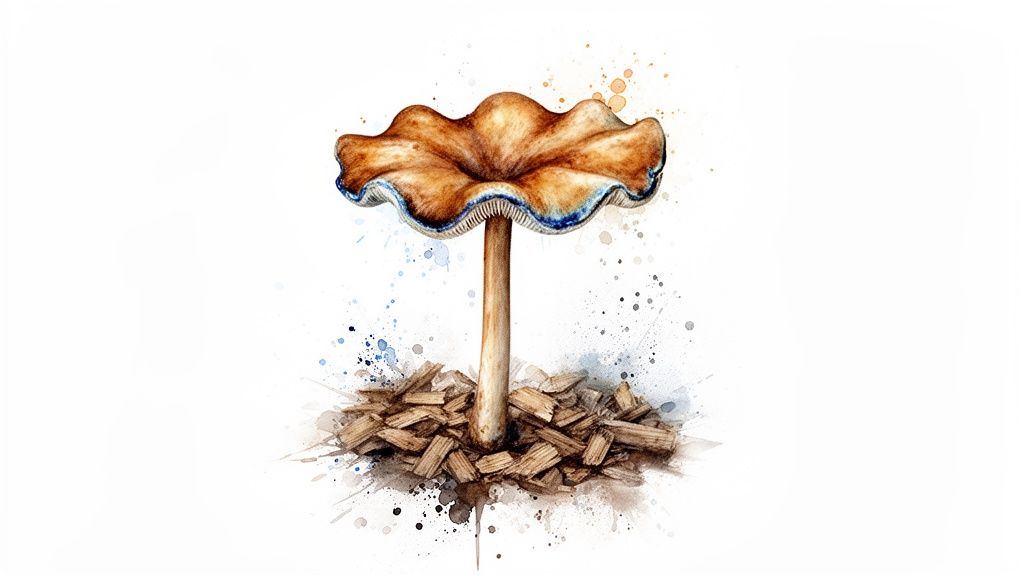
Known affectionately as "Wavy Caps," Psilocybe cyanescens is a highly potent species celebrated by experienced psychonauts for its profound and intensely visual psychedelic experiences. Native to the Pacific Northwest, this mushroom has gained a reputation for its powerful effects, which can be significantly stronger than the more common P. cubensis. Its high concentration of psychoactive compounds makes it a sought-after variety for those seeking a deeper, more complex journey.
Identification, Habitat, and Cultivation
The most distinctive feature of Psilocybe cyanescens is its caramel-brown to yellowish cap that becomes wavy or rippled at the edges as it matures, giving it its name. Like other psilocybin-containing mushrooms, it bruises a deep bluish color when handled. In the wild, it is a wood-loving species, frequently found in clusters on wood chips, mulch, and lignin-rich soils in temperate regions like Oregon, Washington, and British Columbia.
While originally foraged, cultivation techniques for this potent type of psilocybe are advancing, especially among specialty growers.
- Pacific Northwest Foraging: A cornerstone of the regional psychedelic community, found in urban landscaping and wooded areas.
- Outdoor Cultivation: Often grown in outdoor wood chip beds that mimic its natural habitat.
- Advanced Cultivators: Premium offerings are becoming available from growers who have mastered its specific cultivation requirements.
Dosage and Consumption Tips
Due to its high potency, caution is paramount when approaching Wavy Caps. A starting dose for a first experience with this species should be no more than 0.5 grams of dried mushrooms. Even experienced users often find that 0.75 to 1 gram is sufficient for a moderate to strong experience. The effects can last 5-8 hours, peaking around 90-120 minutes after ingestion. Given the intensity, it is highly recommended to have a trusted tripsitter present and to prepare grounding practices in a safe, controlled setting.
4. Psilocybe azurescens (Flying Saucers)
Revered and respected in the psychedelic community, Psilocybe azurescens holds the title as one of the most potent psilocybin-containing mushrooms in the world. Often nicknamed "Flying Saucers" due to their uniquely shaped caps, this species is known for delivering exceptionally profound and intense visionary experiences. Its high concentration of psychoactive alkaloids means it demands careful handling and is generally considered appropriate only for seasoned psychonauts.
Identification, Habitat, and Potency
Psilocybe azurescens has a distinct look, featuring a caramel-brown, broadly convex to umbonate (nipple-like) cap that becomes wavy and saucer-shaped as it matures. Like other psilocybin-containing species, it bruises a deep blue-black when damaged. In the wild, it is native to a small coastal region of the Pacific Northwest, particularly around Oregon and Washington, where it thrives in sandy soils and on decaying wood chips in dune grasses.
This species is renowned for its extremely high potency, containing some of the highest concentrations of psilocybin and psilocin recorded.
- Appearance: Distinctive "flying saucer" cap, caramel-brown color, and slender white stem.
- Habitat: Coastal dune grasses and woody debris in the Pacific Northwest.
- Potency: Considered one of the world's most potent magic mushrooms, often containing up to 1.8% psilocybin by dry weight.
Dosage and Consumption Tips
Due to its exceptional strength, approaching Psilocybe azurescens requires extreme caution. A microdose for this species might be a moderate dose for others. Experienced users should start with a very low dose, around 0.25 to 0.5 grams of dried mushrooms, to gauge their sensitivity.
Given the intensity and long duration (6-8+ hours) of the experience, a supervised, safe setting is highly recommended. Because of the profound nature of the journey it can facilitate, extensive integration work following the experience is considered mandatory by many to process the insights gained.
5. Psilocybe tampanensis (Philosopher's Stone)
Known famously as the "Philosopher's Stone," Psilocybe tampanensis holds a unique and revered place among the different types of psilocybe. While it can produce small, delicate mushrooms, its primary claim to fame is its consistent ability to form dense underground nuggets of mycelium called sclerotia. These sclerotia, often marketed as "magic truffles," offer a different pathway for psychedelic exploration, prized for their predictable potency, long shelf life, and introspective qualities.
The discovery of this species is relatively recent, first found in Tampa, Florida, in 1977. Every culture of P. tampanensis in circulation today is believed to have descended from that single wild specimen, highlighting its fascinating history. Its effects are often described as more cerebral and philosophical than visual, making it a favorite for deep personal reflection and creative problem-solving.
Identification, Habitat, and Sclerotia
The fruiting bodies of Psilocybe tampanensis are small and somewhat inconspicuous, with a convex, yellowish-brown cap and a thin stem. Like other psilocybin-containing mushrooms, they bruise blue when handled. However, the real treasure lies beneath the surface. The sclerotia are dense, lumpy, truffle-like structures that the fungus creates as a survival mechanism to store food and water.
In the wild, this species is exceptionally rare, found only in specific subtropical grasslands. Due to its unique properties, it is widely cultivated, not for its mushrooms, but for its sclerotia.
- Magic Truffles: In places like the Netherlands, these sclerotia are often sold as a psychedelic product.
- Cultivation Focus: Growers often prioritize conditions that encourage sclerotia formation over mushroom fruiting.
- Appearance: Sclerotia range in color from yellowish-brown to dark brown and have a firm, nutty texture.
Dosage and Consumption Tips
Dosage for P. tampanensis depends entirely on whether you are consuming the mushrooms or the sclerotia, which have different water content and potency by weight. The sclerotia are often consumed fresh. For a light to moderate experience with sclerotia, a typical dose is 5 to 10 grams fresh.
For precise microdosing, sclerotia can be dried and ground into a powder, with a standard microdose being 0.1 to 0.3 grams of dried material. Sclerotia can be stored for extended periods, especially when dried or kept in a freezer, retaining their potency for 6-12 months or longer. The onset of effects is typically around 45-90 minutes.
6. Psilocybe baeocystis (Oregon Bell)
Known colloquially as the "Oregon Bell," "Knobby Tops," or "Bottle Caps," Psilocybe baeocystis is a moderately potent species native to the Pacific Northwest of North America. It holds a special place among mushroom enthusiasts in the region, recognized for its distinct appearance and a balanced psychedelic experience. This species is often sought by intermediate users looking for an experience that bridges the gap between the familiar effects of Psilocybe cubensis and more intensely potent varieties.
Identification, Habitat, and Strains
Psilocybe baeocystis is characterized by its conic to bell-shaped cap, which is often dark olive-brown when moist and fades to a pale, buff color as it dries. The cap margin can be wavy, and a key identifier is the stem, which bruises a prominent blue or blue-green when handled. In its natural habitat, this species is a wood lover, commonly found growing in clusters on decaying conifer wood chips, bark mulch, and occasionally on lawns with high lignin content.
While not as widely cultivated as cubensis, dedicated mycologists have worked to preserve regional genetics, leading to a greater appreciation for its unique properties.
- Pacific Northwest Strains: Wild specimens from Oregon and Washington are prized for their authentic genetic profiles, adapted to cool, wet climates.
- Cultivated Varieties: Efforts to grow P. baeocystis indoors often focus on replicating its natural wood-based substrate to produce fruiting bodies true to their wild form.
Dosage and Consumption Tips
For intermediate users already familiar with other types of psilocybe, a typical starting dose for P. baeocystis is 1 to 1.5 grams of dried mushrooms. The effects can feel more introspective and visual than a comparable dose of cubensis. The onset usually occurs within 30 to 60 minutes, with the primary experience lasting 4 to 6 hours. As with any psychedelic journey, preparing your set and setting is paramount. Ensure you are in a safe, comfortable space with a positive mindset, especially when exploring a new species.
7. Psilocybe mexicana
Steeped in history, Psilocybe mexicana holds a place of profound ethnobotanical importance. This species was one of the first psilocybin-containing mushrooms introduced to the Western world, thanks to the pioneering research of R. Gordon Wasson and the subsequent isolation of psilocybin by Albert Hofmann in the 1950s. Revered by indigenous Mesoamerican cultures for centuries, it is often called "teonanácatl," or "flesh of the gods," highlighting its central role in spiritual ceremonies.
What makes this species particularly unique is its ability to produce both mushroom fruiting bodies and dense, subterranean nuggets of mycelium known as sclerotia, or "philosopher's stones." This dual nature offers versatile options for consumption and cultivation, securing its legacy as a cornerstone among the various types of psilocybe.
Identification, Habitat, and Sclerotia
Psilocybe mexicana typically has a small, conical or bell-shaped, brownish-yellow cap and a thin, delicate stem. Like other psilocybin-containing mushrooms, it bruises bluish when handled. In the wild, it grows in small groups in grasslands and mossy areas, particularly at high altitudes in Mexico and Guatemala. It is not a dung-loving species, preferring rich soils.
Its most notable feature is the production of sclerotia. These truffle-like structures are a survival mechanism for the fungus, storing nutrients and psychoactive compounds to endure unfavorable conditions.
- Historical Significance: This was the species from which Albert Hofmann first isolated and identified psilocybin and psilocin.
- Dual Production: Cultivators appreciate its ability to produce both traditional mushrooms and potent sclerotia.
- Gentle Experience: The effects are often described as more euphoric, gentle, and visually vibrant compared to more intense species.
Dosage and Consumption Tips
The presence of both mushrooms and sclerotia requires different dosage considerations. A typical starting dose for dried P. mexicana fruiting bodies is 1 to 2 grams. The sclerotia, while generally less potent by weight than many P. cubensis strains, offer a consistent and manageable experience. A beginner's dose for fresh sclerotia is around 5-10 grams, while a dried dose is much lower.
For sclerotia, many users start with a micro-dose of 0.1 to 0.3 grams (dried). The onset is similar to other species, taking effect in 30-60 minutes and lasting for about 4 to 6 hours. Its reputation for a warm, creative, and less overwhelming journey makes it an excellent choice for those seeking a more contemplative or spiritually focused experience.
8. Psilocybe natalensis
Emerging as a powerful contender from the grasslands of South Africa, Psilocybe natalensis is quickly gaining a reputation for its remarkable potency and unique experiential qualities. Often compared to its close relative Psilocybe cubensis, this species is celebrated by cultivators and psychonauts for its robust growth, generous yields, and a distinct lack of the "body load" some users report with other mushrooms. Its effects are frequently described as clearer, more euphoric, and visually vibrant, making it a sought-after alternative for experienced explorers.
Identification, Habitat, and Strains
Psilocybe natalensis typically grows in clusters and features a caramel to yellowish-brown cap that often becomes wavy at the edges as it matures. Its stipe (stem) is usually white and, like other psilocybin-containing species, it bruises a distinct bluish color when damaged. In its native habitat in the Natal region of South Africa, it is found growing in rich soils and on dung in grassy fields, thriving in subtropical conditions.
As it has been brought into cultivation, distinct strains are beginning to emerge. Cultivators prize it for its aggressive mycelial growth and resistance to contamination, making it a rewarding species to work with. The primary distinction among "strains" currently relates to isolating genetics that produce particularly large or potent fruiting bodies.
Dosage and Consumption Tips
Due to its high potency, a cautious approach is strongly recommended, especially for those accustomed to P. cubensis. A starting dose for a moderate experience is often considered 0.75 to 1.5 grams of dried mushrooms. For experienced users seeking a more profound journey, 1.5 to 2 grams is generally sufficient. As with other types of psilocybe, the effects typically begin within 30 to 60 minutes and can last for 4 to 6 hours. Preparing your set and setting is paramount to ensuring a positive and beneficial experience.
9. Psilocybe bohemica
A lesser-known but significant European species, Psilocybe bohemica is a wood-loving mushroom found primarily in the Czech Republic and surrounding central European regions. It gained scientific attention due to its consistent and often potent psilocybin content. Foragers and mycologists in Europe value this species for its distinct characteristics and reliable effects, considering it a noteworthy local variety among the different types of psilocybe.
This species is sometimes confused with the very similar Psilocybe serbica and Psilocybe arcana, with some mycologists even considering them varieties of the same species. However, P. bohemica stands out for its specific habitat preferences and consistent psychoactive properties.
Identification, Habitat, and Potency
Psilocybe bohemica typically has a small, conic to convex cap that is hygrophanous, meaning it changes color as it dries, shifting from a dark chestnut brown to a pale ochre or tan. The stems are slender, whitish, and, like many potent species, exhibit a strong blue bruising reaction when handled or damaged. This mushroom grows in troops or clusters on decaying wood debris, especially wood chips from deciduous trees like birch and alder.
Its potency is considered moderate to high, often reported to be stronger than that of the average P. cubensis. This makes it a species that commands respect and careful dosage consideration. The higher concentration of active compounds contributes to its reputation for providing profound and introspective experiences.
Dosage and Consumption Tips
Given its higher potency, a cautious approach is recommended for those unfamiliar with Psilocybe bohemica. A starting dose for a beginner would be around 0.5 to 1 gram of dried mushrooms. Experienced users may find 1.5 to 2.5 grams sufficient for a deep psychedelic journey. As it is a wild-growing species, potency can vary significantly between different patches and seasons.
Due to its woody habitat, it's essential to clean the mushrooms thoroughly before consumption to remove any soil or debris. Like other psilocybin-containing mushrooms, it can be consumed fresh, dried, or brewed into a tea. The tea method is often preferred as it can help reduce the potential for nausea associated with ingesting raw mushroom material.
10. Dataset Notes and Caution
This guide serves as an introduction to the diverse world of psilocybin-containing fungi. However, it's crucial to approach the information presented with a clear understanding of its context and limitations. The data on various types of psilocybe is aggregated from mycological studies, community reports, and anecdotal evidence, which requires careful interpretation. This section acts as a vital disclaimer, ensuring you navigate your mycological journey with awareness and caution.
Understanding the Data
The information provided for each species is a generalization and should not be treated as absolute. Potency can vary dramatically even within the same species due to genetics, substrate, and environmental conditions. Likewise, habitat descriptions point to where these mushrooms are typically found in nature, but this is not an exhaustive list of all possible environments.
- Potency is Approximate: The potency ranges mentioned are estimates based on available data. A mushroom's psilocybin and psilocin content can be influenced by how it was grown, harvested, and stored.
- Habitats Vary: While a species might prefer a specific substrate like wood chips or dung, exceptions are common in nature. Always rely on multiple features for identification.
- Individual Sensitivity Differs: The effects of psilocybin are highly personal. Factors like body weight, metabolism, mental state ("set"), and environment ("setting") significantly influence an individual's experience.
Responsible Exploration and Dosage
Responsible engagement is paramount. The dosage information provided is a general guideline intended for harm reduction purposes and is not medical advice. Always start with a much lower dose than you think you need when encountering a new species or even a new batch of a familiar one.
It is essential to be aware of and respect the regulations in your specific location. This guide is for educational purposes, aiming to provide a comprehensive overview for those interested in the subject. For a broader look at the fascinating world of psychoactive fungi, you can explore more about the different types of psychedelic mushrooms. Always prioritize safety, education, and mindful exploration.
10 Psilocybe Species: Comparison & Dataset Caution
| Item | Cultivation complexity 🔄 | Resources / Habitat ⚡ | Potency & Typical Effects ⭐📊 | Ideal use cases 💡 | Key advantages ⭐ |
|---|---|---|---|---|---|
| Psilocybe cubensis | 🔄 Low — forgiving, easy for home cultivation | ⚡ Low–moderate — dung/compost or commercial kits; subtropical origins | ⭐⭐ Moderate (0.5–1.5%) — consistent, balanced visuals/introspection; 4–6 h | Beginners, research, predictable dosing, microdosing | Reliable, abundant documentation and strains; predictable dosing |
| Psilocybe semilanceata (Liberty Cap) | 🔄 High — rarely cultivated, primarily wild | ⚡ Low availability — temperate meadows/pastures | ⭐⭐⭐ Higher potency per gram (0.5–1.3%) — refined visuals; 5–7 h | Experienced foragers, refined visual experiences | Higher potency with cultural/ethnobotanical significance |
| Psilocybe cyanescens (Wavy Caps) | 🔄 Moderate–High — wood-based substrates, specialized techniques | ⚡ Moderate — mulch/wood chips in temperate rainforests | ⭐⭐⭐⭐ Very high (0.5–1.7%) — strong, complex visuals; 5–8 h | Advanced users, visual-focused sessions, potency-focused microdosing | High potency and distinctive morphology; strong visual effects |
| Psilocybe azurescens (Flying Saucers) | 🔄 Very High — habitat-specific, difficult to cultivate | ⚡ Very limited — coastal dunes and specific soils; rare | ⭐⭐⭐⭐⭐ Extremely high (1.0–1.8%) — profound, long experiences; 6–8+ h | Expert psychonauts, supervised research on high-dose effects | Top natural potency; large fruiting bodies when available |
| Psilocybe tampanensis (Philosopher's Stone) | 🔄 Moderate — sclerotia production easier than fruiting | ⚡ Moderate — subtropical soil/substrate; sclerotia enable storage | ⭐⭐ Moderate (0.5–0.8%) — sclerotia similar potency; stable microdosing | Microdosing, discreet storage, controlled dosing studies | Sclerotia shelf-stability, precise portioning, easier storage |
| Psilocybe baeocystis (Oregon Bell) | 🔄 Moderate — wood-chip species, smaller delicate fruiting bodies | ⚡ Moderate — PNW wood chips/mulch; regional availability | ⭐⭐⭐ Moderately high (0.5–1.0%) — balanced visuals and introspection; 4–6 h | Intermediate users, regional foraging in PNW | Balanced effects between cubensis and more potent species |
| Psilocybe mexicana | 🔄 Moderate — cultivable; produces sclerotia (truffles) | ⚡ Moderate — subtropical highlands; sclerotia cultivation possible | ⭐⭐ Moderate (0.5–0.9%) — historical/ethnobotanical profile; 4–6 h | Ethnobotanical study, microdosing, cultural research | Historical significance; sclerotia option for stability and dosing |
| Psilocybe natalensis | 🔄 Low–Moderate — similar to cubensis but prefers warmer temps | ⚡ Moderate — dung substrates in subtropical African climates | ⭐⭐⭐ High (0.6–1.1%) — robust fruiting, 4–6 h | Users seeking higher potency with easy cultivation | High potency with good yields and faster fruiting cycles |
| Psilocybe bohemica | 🔄 High — wild, small and delicate, limited cultivation data | ⚡ Moderate — temperate European meadows; local occurrence | ⭐⭐ Moderate (0.5–0.8%) — predictable, modest visuals; 4–6 h | Local foragers and regional species enthusiasts | Represents local European psilocybe diversity; moderate potency |
| Dataset Notes and Caution | 🔄 Varies — strain, substrate and method affect outcomes | ⚡ Varies — habitat, regulations and identification differ by region | ⭐⭐ Variable — potency ranges approximate; individual sensitivity matters | Reference, safety guidance, research planning | Consolidated cautions, dosing approximations, and safety recommendations |
Navigating Your Mycological Journey with Confidence
Your journey into the vast and fascinating world of psychedelic fungi has now been equipped with a detailed map. We've navigated the diverse landscapes inhabited by the various types of psilocybe, from the ubiquitous and beginner-friendly Psilocybe cubensis to the potent and elusive Psilocybe azurescens. This exploration is more than just an academic exercise; it's the foundation for a safe, responsible, and deeply rewarding relationship with these remarkable organisms.
Understanding the subtle yet critical differences between species like the woodland-loving Psilocybe cyanescens and the grassland-dwelling Psilocybe semilanceata is paramount. This knowledge directly translates into confident decision-making, whether your path involves mycology research, cultivation, or personal exploration. The ability to distinguish key identification features, appreciate varying potency levels, and recognize specific habitats is the cornerstone of a mindful practice.
Key Takeaways for Your Continued Exploration
As you move forward, let's distill the core principles from our journey into actionable wisdom. Mastering these concepts will not only enhance your understanding but also significantly contribute to a positive and intentional experience.
- Identification is Non-Negotiable: The single most critical skill is accurate identification. The risk of misidentifying a psilocybin-containing mushroom for a toxic look-alike is real and carries serious consequences. Always cross-reference multiple features: spore print color (purplish-brown to black), bruising reaction (bluish), cap shape, gill attachment, and habitat. When in doubt, always err on the side of caution.
- Potency Varies Dramatically: Never assume that one gram of a species will produce the same effect as a gram of another. As we've seen, wood-loving species like P. azurescens and P. cyanescens can be exponentially more potent than a standard P. cubensis. Respect this variability by starting with a significantly lower dose when exploring a new species for the first time.
- Habitat Is a Major Clue: Understanding a mushroom's preferred environment provides invaluable context for identification. Whether it’s the wood chips favored by "Wavy Caps" or the cattle dung where "Cubes" thrive, habitat helps you narrow down possibilities and reinforces your identification process.
- Mindset and Setting Remain King: Regardless of the specific types of psilocybe you encounter, the principles of set and setting are universal. A positive mindset, a comfortable and safe environment, and a clear intention are the foundational elements that shape the nature of any psychedelic experience.
From Knowledge to Practice: Your Next Steps
The information presented in this guide is your launching point. True expertise comes from continued learning and careful, methodical application. Your next steps should focus on deepening this foundational knowledge. Consider investing in reputable field guides specific to your region. Engage with online mycological communities, such as forums and educational groups, to learn from the collective experience of others.
Most importantly, approach this field with a spirit of humility and respect. These fungi have been part of human culture and natural ecosystems for millennia. By learning to identify and understand them, you are participating in a rich, ongoing history. The value of this knowledge extends beyond simple categorization; it fosters a deeper connection to the natural world and empowers you to navigate your journey with the safety and confidence you deserve. This careful, educated approach is the hallmark of a true psychonaut and mycologist.
Ready to explore these fascinating fungi in a safe and curated way? The Magic Mushroom Delivery offers a premium selection of vetted products, from classic Psilocybe cubensis strains to innovative psilocybin-infused edibles, all sourced for quality and consistency. Let us be your trusted partner in navigating the world of psilocybin with confidence and convenience. Visit The Magic Mushroom Delivery to browse our collection and find the perfect match for your journey.