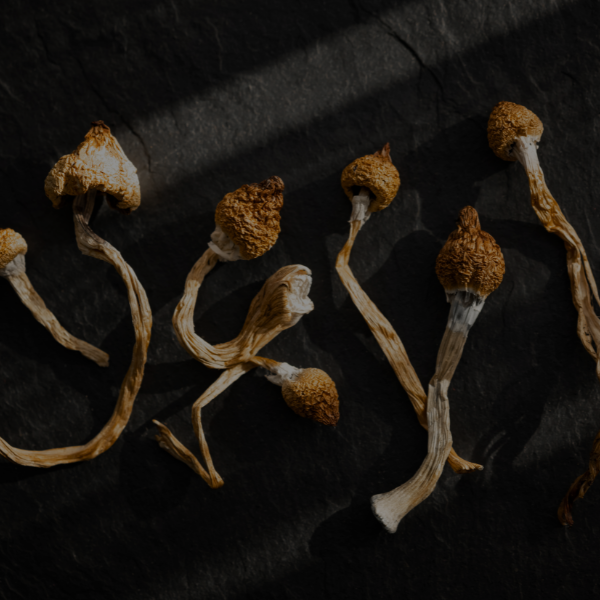

At its heart, the difference between psilocybin and psilocin is pretty straightforward, but it’s a crucial one to grasp: psilocybin is the stable compound you find in mushrooms, while psilocin is the active compound your body turns it into. Think of psilocybin as the raw ingredient and your metabolism as the chef—it’s only after the conversion that the real magic happens.
Unpacking The Psilocybin-Psilocin Relationship
When you consume magic mushrooms, you're mostly ingesting psilocybin. This compound is what’s known as a prodrug, which is just a technical way of saying it’s inactive until your body works its magic and transforms it into the substance that actually causes the psychedelic effects. This biological switch is the first step of any journey.
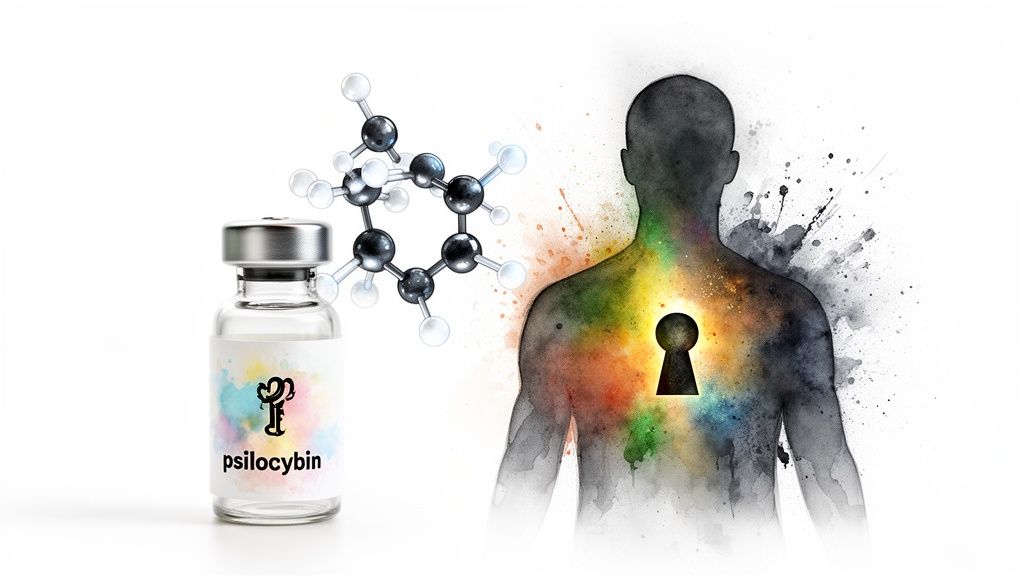
Getting this concept down is essential for anyone exploring psychedelics. It’s the reason for the delay between when you take mushrooms and when you start feeling the effects, and it's the foundation for understanding everything from dosing to managing the trip’s intensity.
The Key Takeaway
You consume psilocybin, but you experience psilocin. This fundamental concept shapes every aspect of the psychedelic journey, from the chemical stability of the products you choose to the timing and nature of the effects you feel.
Psilocybin is the stable molecule found in dried mushrooms, but it's psilocin that gets the job done by binding to serotonin receptors in the brain. This conversion is pretty efficient, and psilocybin’s elimination half-life is around 3 hours. Fun fact: because of its slightly different molecular weight, psilocin is actually about 1.4 times more potent than psilocybin. If you want to dive deeper, this research on ncbi.nlm.nih.gov offers a great look at the metabolic process.
Psilocybin vs. Psilocin At a Glance
To lay it all out clearly, here’s a quick side-by-side comparison. Think of this table as your cheat sheet for the fundamental differences before we get into the finer details.
| Attribute | Psilocybin (The Prodrug) | Psilocin (The Active Compound) |
|---|---|---|
| Primary Role | Stable precursor compound | The psychoactive agent |
| Stability | Highly stable, especially when dried | Unstable; degrades quickly with heat/oxygen |
| Psychoactivity | Inactive until metabolized | Directly responsible for psychedelic effects |
| Primary Source | Abundant in dried magic mushrooms | Created in the body from psilocybin |
This simple prodrug-to-drug relationship explains so much about the user experience, from why dried mushrooms last so long to why lemon tekking seems to hit faster. With this foundation, we can start to explore the more nuanced aspects of each compound.
Why Their Chemical Structures Matter
At first glance, the molecular structures of psilocybin and psilocin look almost identical. But one tiny difference—a single phosphate group—changes everything. It dictates their stability, how they interact with the world, and most importantly, how they work inside your body. Grasping this molecular detail is the key to understanding the practical differences between them.
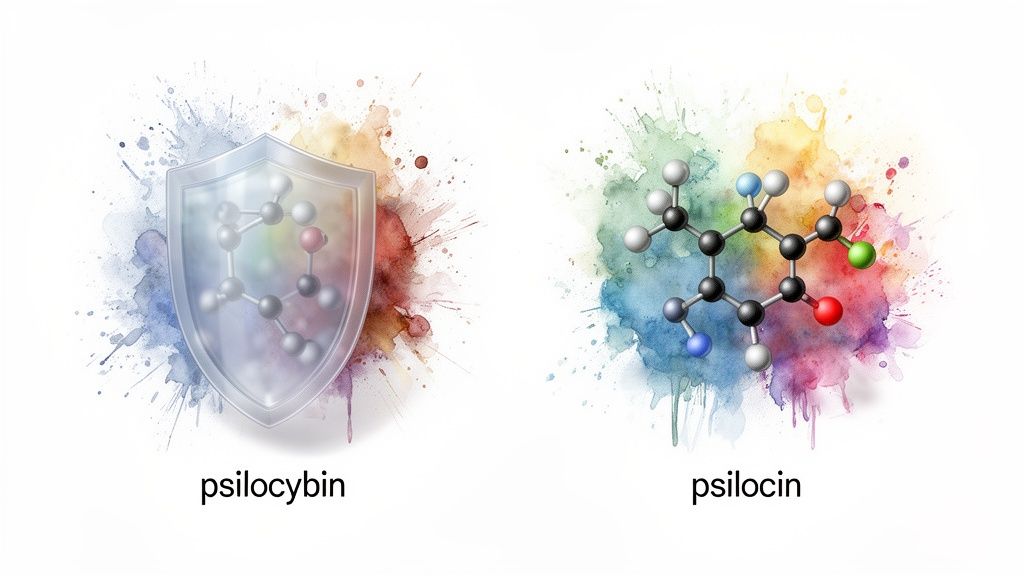
This isn't just an abstract chemistry lesson; it has direct, real-world consequences. It affects potency, shelf life, and the overall user experience, explaining why dried mushrooms can be stored for long periods while fresh ones are far more delicate.
Psilocybin: The Stable Guardian Molecule
Psilocybin’s defining feature is its phosphate group (PO₄), a small cluster of phosphorus and oxygen atoms. Think of this group as a protective shield or a molecular lock. This addition makes psilocybin a remarkably stable molecule, highly resistant to breaking down from oxygen, heat, or light.
This stability is exactly why psilocybin is the main compound you'll find in dried mushrooms. The drying process locks it in, allowing the mushrooms to keep their potency for months, or even years, if stored correctly.
But here’s the trade-off: that same protective shield stops psilocybin from interacting directly with your brain's serotonin receptors. Its "shield" gives it the wrong shape to fit the receptor's lock, which is why psilocybin itself isn't psychoactive. It first needs to be transformed inside the body to unlock its potential.
Psilocin: The Active But Fragile Key
When it comes to the psilocybin vs psilocin matchup, psilocin is the one that gets the job done. It lacks that phosphate group, giving it a slightly different chemical structure. This new shape is what allows it to bind perfectly with the brain's 5-HT2A serotonin receptors, acting as the "key" that starts the psychedelic experience.
The absence of that protective group, however, comes at a cost. Psilocin is a notoriously fragile and unstable molecule. Expose it to oxygen, heat, or light, and it degrades fast, often turning a bluish color as it breaks down. This vulnerability explains a few important things:
- Fresh vs. Dried: Fresh mushrooms might have more psilocin to start, but it breaks down so quickly after harvesting that their potency becomes unpredictable.
- Storage is Crucial: Storing any mushroom product improperly will lead to psilocin degradation, resulting in a major loss of potency.
- The "Blue Bruising" Effect: That blue color you see on bruised mushrooms? That's widely believed to be the psilocin oxidizing—a visual reminder of just how delicate it is.
The key takeaway is simple but profound: psilocybin’s phosphate group provides stability for storage, while its removal creates psilocin, the perfectly shaped molecule needed for psychoactivity. This elegant chemical trade-off—stability versus activity—is the central dynamic in the psilocybin vs psilocin relationship.
Ultimately, the journey from a stable precursor to an active compound is a fascinating bit of natural chemistry. The mushroom produces the durable psilocybin to ensure its longevity, while our bodies have the biological tools to remove the phosphate shield and release the powerful psilocin locked within.
The Metabolic Journey: From Ingestion To Effect
When you take magic mushrooms, you kick off a fascinating biological chain reaction that’s responsible for the entire psychedelic experience. The journey from the stable psilocybin molecule to the active psilocin isn't instant; it's a metabolic transformation that directly controls when your trip begins, how intense it feels, and how it unfolds. This conversion is the bridge between eating a mushroom and feeling its effects.
The process starts the moment psilocybin hits your digestive system. Your stomach and liver are loaded with enzymes, specifically alkaline phosphatases, that get to work right away. Their sole job is to perform a chemical reaction called dephosphorylation—basically, they snip off psilocybin’s protective phosphate group.
This metabolic step is the key that turns an inactive compound into the psychoactive psilocin molecule. It’s a pretty efficient process, which explains why the effects of shrooms usually start to creep in within 20 to 60 minutes.
Unlocking the Experience Inside Your Body
Think of your digestive system as a sophisticated processing plant. Psilocybin arrives like a locked package, and the enzymes are the specialized workers who know exactly how to open it. Once that phosphate lock is removed, psilocin is freed up, absorbed into your bloodstream, and can finally travel to the brain to do its thing.
How fast this happens can vary a lot depending on your personal metabolism, what you’ve eaten, and even how you consumed the mushrooms. A full stomach, for instance, can slow everything down, leading to a more gradual onset. On the other hand, an empty stomach usually lets the conversion happen much faster.
The conversion from psilocybin to psilocin isn't just a fun fact for chemistry nerds; it's the central mechanism that makes magic mushrooms work. Understanding this journey gives you the power to anticipate and even tweak the timeline of your experience.
Hacking the Timeline With a "Lemon Tek"
One of the most popular tricks in the psychedelic community for changing this metabolic timeline is known as "lemon tekking." The method is simple: grind up dried mushrooms and soak them in lemon or lime juice for about 20 minutes before drinking it all down. People who do this almost universally report a much faster come-up and a more intense, though sometimes shorter, trip.
The theory behind it is pure biochemistry. The highly acidic environment of the lemon juice is thought to mimic the conditions in your stomach. This acid bath essentially kickstarts the dephosphorylation process before the psilocybin ever enters your body, pre-converting it into psilocin.
- Faster Onset: Because you're doing some of the metabolic work externally, your body has less to do. This can slash the onset time from the usual 30-60 minutes down to just 10-20 minutes.
- Increased Intensity: When a bigger wave of psilocin hits your system all at once, the experience can feel much more potent and concentrated.
- Shorter Duration: The trade-off for this rapid ascent is often a shorter overall trip, as your body processes the readily available psilocin more quickly.
This community-driven technique is a perfect real-world example of the psilocybin vs. psilocin dynamic in action. It shows how playing with the conversion process can directly shape your journey. This insight is also crucial when thinking about dosage. For instance, studies show that higher doses of psilocybin not only lead to stronger peak effects but can also slow down motor responses. One study even found that 36% of participants reported intense feelings of fear, though these moments were usually manageable and didn’t cause lasting harm. You can dig into these findings over at the Drug Policy Alliance's resource page.
Comparing the Onset, Duration, and Intensity
When you get down to the practical experience, the biggest difference between psilocybin and psilocin is how they shape the timeline of your journey. While psilocin is always the final destination, the path your body takes to get there—whether through its own gradual metabolism or a faster, external process—has a massive impact on the onset, duration, and overall intensity of the effects.
Knowing this relationship helps you better anticipate and even steer your experience. Your consumption method directly controls how fast psilocybin converts to psilocin, which in turn dictates the entire vibe of the trip.
The Standard Psilocybin Journey
When you consume dried mushrooms or edibles the old-fashioned way, you're relying entirely on your body's internal machinery. This process is steady, reliable, and gradual.
After you ingest them, enzymes in your digestive system get to work, slowly dephosphorylating psilocybin into the psychoactive psilocin. This metabolic step acts as a natural buffer, leading to a gentle, climbing onset that usually starts within 30 to 60 minutes. The trip unfolds over several hours, typically lasting between four to six hours, with a peak that feels powerful yet manageable.
The Accelerated Psilocin Pathway
On the flip side, some methods are all about kickstarting that conversion process before the mushrooms even hit your stomach. This pre-conversion basically lets you bypass your body's slower metabolic timeline, delivering a more immediate and concentrated blast of psilocin to your system.
A classic example is the "lemon tek" technique. By soaking ground mushrooms in acidic lemon juice, you're essentially starting the conversion from psilocybin to psilocin outside your body. This approach radically alters the trip's characteristics.
This diagram shows the simple, three-step journey from ingestion to brain effect that happens inside your body with standard consumption.
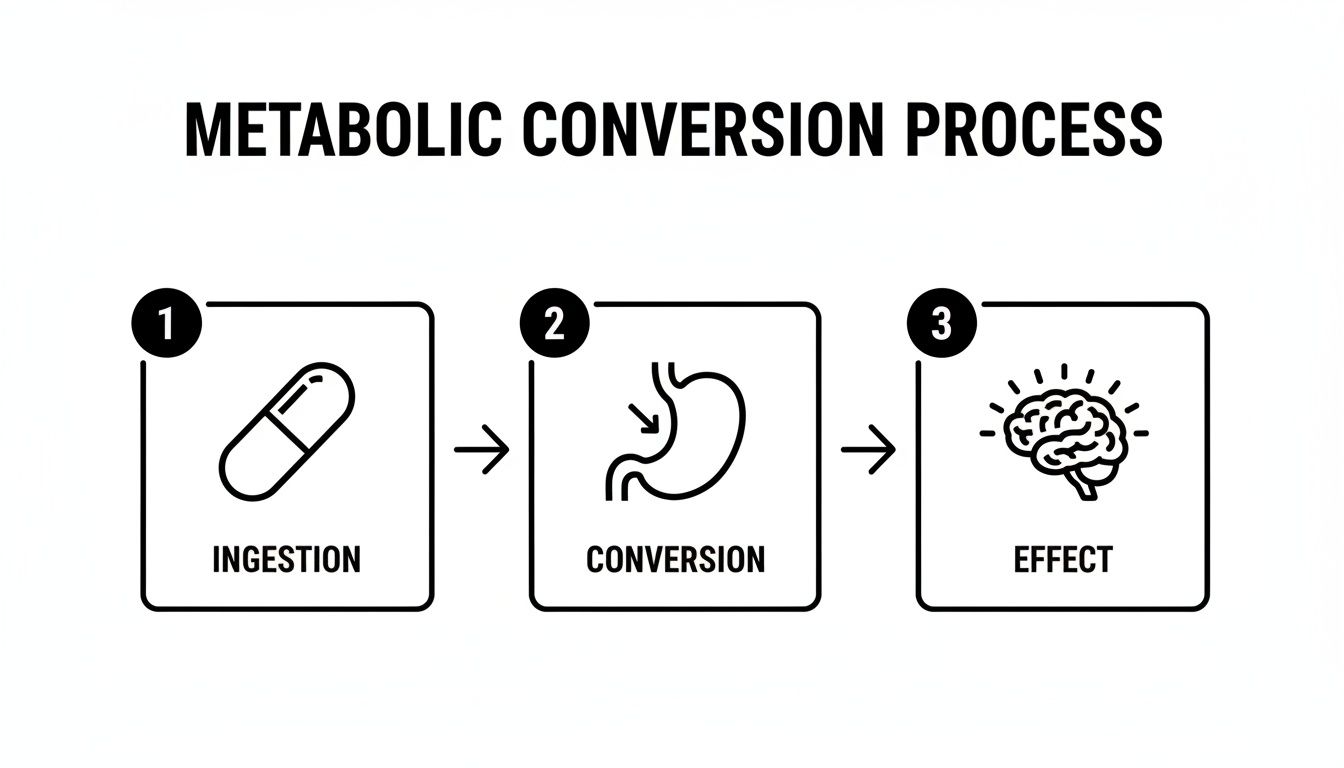
This just goes to show that the internal conversion step is the natural bottleneck for the onset of effects—a step that can be totally bypassed with other methods.
By understanding the conversion pathway, you gain control over the experience's timeline. Standard ingestion offers a gradual ascent, while accelerated methods provide a rapid launch, each suited for different intentions and levels of experience.
The choice between these two routes really comes down to personal preference and what you're looking to get out of it. One offers a slower, more drawn-out journey, while the other gives you a faster, more intense, and often shorter experience.
Comparing Psychedelic Timelines
To really spell out these differences, let's put the experiential timelines side-by-side. This table breaks down what you can generally expect from each approach, helping you decide which path makes the most sense for your goals.
| Experience Factor | Standard Psilocybin Ingestion | Accelerated Psilocin Conversion |
|---|---|---|
| Onset Time | Typically 30-60 minutes, giving you a gradual entry into the experience. | Much faster, often felt in as little as 10-20 minutes. |
| Intensity | A steady climb to a peak, which can feel more manageable and less overwhelming. | Often described as significantly more potent and intense due to the rapid influx of psilocin. |
| Duration | Generally lasts 4-6 hours, providing a more extended and unfolding journey. | The overall duration is often shorter, typically lasting around 3-4 hours. |
| Best For | Beginners or those seeking a longer, more contemplative, and gentler experience. | Experienced users looking for a powerful and profound journey within a shorter timeframe. |
As you can see, there's no single "best" way—it all depends on the kind of trip you're planning. Choosing the right method is the first step in setting yourself up for a safe and meaningful journey.
How This Affects Dosing and Product Choice
Alright, let's get down to what really matters: how does all this chemistry talk actually help you? Understanding the relationship between psilocybin and psilocin is more than just a science lesson—it’s the key to getting the experience you’re looking for, whether that's a gentle microdose or a full-blown journey.
This dynamic directly impacts the consistency, potency, and predictability of your dose. It’s why some products hit differently than others.
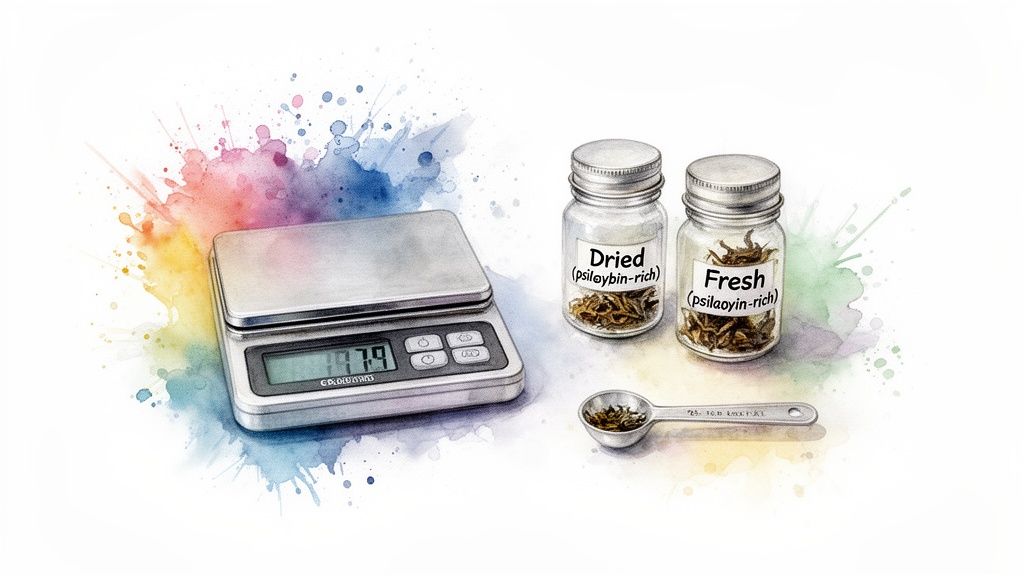
The format you choose—fresh, dried, or edible—plays a huge role in achieving a repeatable effect. Different products have different ratios of these two compounds, and that leads to very different outcomes.
Dried Mushrooms and Formulated Edibles
If you’re someone who values consistency, dried mushrooms and precisely formulated products like edibles or capsules are your best bet. Why? Because these products rely on the stability of psilocybin.
Because psilocybin is so tough, a dried mushroom holds its potency incredibly well over time. This stability is a massive advantage. It means 1 gram of a certain strain today should feel almost identical to 1 gram of that same strain next month. That kind of reliability is crucial for both therapeutic use and responsible recreation.
Formulated edibles take this a step further, guaranteeing an exact amount of psilocybin in every single piece.
The Fresh Mushroom Variable
Fresh mushrooms are a whole different ballgame. They contain plenty of psilocybin, but they also have a much higher amount of its active—and very unstable—cousin, psilocin. This makes their potency a lot more unpredictable.
The moment you pick a fresh mushroom, the psilocin starts to break down when it hits the air and light. This creates a couple of practical challenges:
- Inconsistent Potency: The psilocin-to-psilocybin ratio is always changing, making it tough to guess how strong the experience will be.
- Rapid Potency Loss: If you don’t use them quickly or store them perfectly, fresh mushrooms can lose a lot of their magic. You can explore more on whether shrooms lose potency to really dig into what’s happening here.
The core takeaway for dosing is this: stable psilocybin provides consistency, while unstable psilocin introduces variability. Your choice between dried, fresh, or formulated products should align with your goal for predictability.
This chemical nuance has a real, tangible effect on your experience. For instance, psilocin is about 1.4 times more potent than psilocybin by molecular weight. This little detail helps explain why methods like "lemon tekking" can feel so much stronger—it speeds up the conversion to psilocin, giving you a faster and more intense come-up.
For a company like The Magic Mushroom Delivery, which serves everyone from Oakland locals to customers nationwide, offering curated products like psilocybin-rich dried mushrooms, gummies, and coffees makes perfect sense. It caters to both newcomers and experienced users who are looking for predictable, reliable outcomes. While one study noted challenging trips occurred in 36% of participants, these experiences typically resolved without issue, showing a strong interest in well-guided use. You can read more about the findings in this PNAS study.
Understanding the Safety and Risk Profiles
When you're exploring the differences between psilocybin and psilocin, it's natural to think about safety. The good news is that, physiologically, psilocybin is considered quite safe. The real focus isn’t on physical harm but on the psychological side of things—making sure the experience is a positive and constructive one.
Since psilocin is always the compound that produces the effects, these safety rules apply across the board. It doesn't matter if you’re taking dried mushrooms, a fresh product, or a precisely formulated edible; the core practices for responsible use are always the same.
The Power of Set and Setting
The most important tools you have for navigating any psychedelic journey are set and setting. These two concepts are universally recognized as the absolute cornerstones of a safe and positive experience.
- Set (Mindset): This is all about your internal state. Think of it as your mood, your intentions for the journey, and the thoughts and expectations you're bringing with you. A calm, open, and curious mindset is the perfect foundation.
- Setting (Environment): This refers to your physical surroundings. A safe, comfortable, and familiar place where you won’t be disturbed is critical for feeling secure and allowing you to relax into the experience.
Getting your set and setting right can dramatically reduce the chances of having a challenging or anxious time, clearing the way for a more profound and insightful journey. The environment you shape for yourself directly influences the psychological outcome.
The distinction between psilocybin and psilocin is a chemical one; the responsibility for a safe experience is a human one. Prioritizing your mindset and environment is the most effective way to manage your journey and ensure your well-being.
Practical Steps for Responsible Use
Beyond creating the right atmosphere, a few practical steps can boost your safety and help you make smart choices. These aren't just casual suggestions—they're fundamental practices for everyone, from first-timers to seasoned explorers.
First and foremost, always start with a low dose. This is especially true if you are new to psychedelics or trying a product for the first time. You can always take more on another occasion, but you can never take less once it's down the hatch. This simple rule helps you understand your own sensitivity and avoid an overwhelmingly intense experience.
Choosing a comfortable and private environment is just as crucial. Doing so minimizes the risk of unexpected interruptions or outside stress that could throw off your state of mind. You can dive deeper into the science behind this by reading our guide on the powerful psilocybin effects on the brain and why a calm setting is so beneficial.
Finally, for new or particularly deep experiences, think about having a trusted and sober sitter with you. A sitter is simply a friend or guide who stays clear-headed to offer support and reassurance if you start feeling anxious or disoriented. Their calm presence can be an invaluable anchor, helping you navigate any choppy waters that might arise. By sticking to these common-sense principles, you can prioritize your well-being and approach your experience with confidence and respect.
Got Questions? Let's Clear Things Up
Diving into the world of psilocybin and psilocin can bring up a lot of questions. We've got you covered. Here are some straightforward answers to the most common things people ask, so you can feel confident you know what's what.
At its heart, the difference is simple but crucial. Psilocybin is the stable compound you find in the mushroom itself. Psilocin is the psychoactive molecule your body converts it into—it's what's actually responsible for the trip.
Which Is More Potent, Psilocybin or Psilocin?
If you're comparing them molecule for molecule, psilocin is the clear winner. After psilocybin loses its phosphate group during conversion, the resulting psilocin molecule is lighter and packs more of a punch. It's estimated to be about 1.4 times more potent than psilocybin.
But in the real world, this is mostly a technical detail. Since your body has to convert psilocybin into psilocin anyway, the total amount of psilocybin you take is what really dictates the strength of your experience.
Why Do Dried Mushrooms Have More Psilocybin?
Simple: psilocybin is a tough, stable molecule that holds up incredibly well during the drying process. Psilocin, on the other hand, is extremely fragile. It breaks down quickly when it's exposed to oxygen and heat.
Fresh mushrooms contain both compounds, but a lot of the psilocin is lost as soon as they're harvested and dried. This process locks in the psilocybin, making it the main compound you're getting and the reason dried mushrooms offer more consistent dosing.
Can You Take Psilocin Directly?
You could, but it’s not really a practical option for a couple of big reasons. Its instability makes it a nightmare to produce, store, and dose with any accuracy. Any product made with pure psilocin would degrade so fast it would be completely unreliable.
Psilocybin essentially acts as a perfect natural delivery system for psilocin. The mushroom and your body have it all figured out—the mushroom gives you the durable precursor, and your body handles the final conversion right when it's needed.
The relationship between these two compounds is a perfect example of natural efficiency. The mushroom creates a stable 'storage' molecule (psilocybin), and our bodies perform the final, simple conversion to unlock the active ingredient (psilocin).
How Does This Affect Drug Testing?
Knowing how the metabolism works is also important when it comes to drug testing. Because your body quickly turns psilocybin into psilocin, standard tests aren't looking for psilocybin—they’re looking for psilocin and its metabolites.
Even psilocin doesn't hang around for long, but the byproducts from its breakdown can be detected for a short window. How long depends on your metabolism, the dose you took, and how often you use them.
Does Psilocin Show Up in Urine?
Yes, psilocin and its metabolites are mainly flushed out of your system through urine. The compound’s natural instability can make testing tricky, but labs have a workaround. A good chunk of psilocin is excreted as a more stable glucuronide metabolite, which is much easier to detect.
For a test to be accurate, samples have to be handled carefully to avoid degradation from heat, light, or air. This chemical fragility is a huge factor in the toxicology of psilocybin mushrooms. Ultimately, getting a handle on the psilocybin vs. psilocin distinction helps you make smarter choices about your journey from start to finish.
Ready to explore high-quality, reliable mushroom products? At The Magic Mushroom Delivery, we offer a curated selection of dried mushrooms, edibles, and more, all sourced for consistency and potency. Browse our collection and find the perfect product for your needs at https://themagicmushroomdelivery.com.