
When you’re in the middle of an intense trip and just want it to end, the best thing you can do is remind yourself that the feeling is temporary. You can’t instantly stop a psilocybin experience, but you can manage it. The most effective approach is to remain calm, change your scenery, and use grounding techniques while your body metabolizes the psilocybin, a process that usually wraps up in 2-6 hours.
Understanding Your Shroom Experience Timeline
Before you can navigate an intense experience, it helps to know what's actually happening in your body and mind. Honestly, the most powerful tool you have when you feel overwhelmed is knowing that the effects are temporary and follow a pretty predictable pattern. This isn't about slamming the brakes on a trip, but rather riding it out with confidence by understanding its natural course.
The whole journey unfolds in stages, each with its own vibe and duration. Knowing where you are in this process can be a huge relief. It gives you a mental map and reinforces the fact that a return to your normal self is just around the corner. The best way to "sober up" is simply to let your body do its thing.
The Three Stages of a Psilocybin Journey
A typical psilocybin experience breaks down into three main phases:
- The Onset: This is the beginning, usually kicking in 20-30 minutes after you’ve taken the mushrooms. You might notice small shifts, like colors seeming a bit brighter or a light, floaty feeling in your body.
- The Peak: This is the main event, arriving about 1-2 hours in. It’s the most intense part of the journey, where the full effects are happening. This can mean major visual and auditory changes, along with deep emotional or philosophical thoughts.
- The Comedown: This final stage starts around 2-3 hours after the peak. The effects begin to slowly fade over the next few hours. You'll feel yourself becoming more grounded and clear-headed as time goes on.
This timeline gives you a solid visual for what to expect.
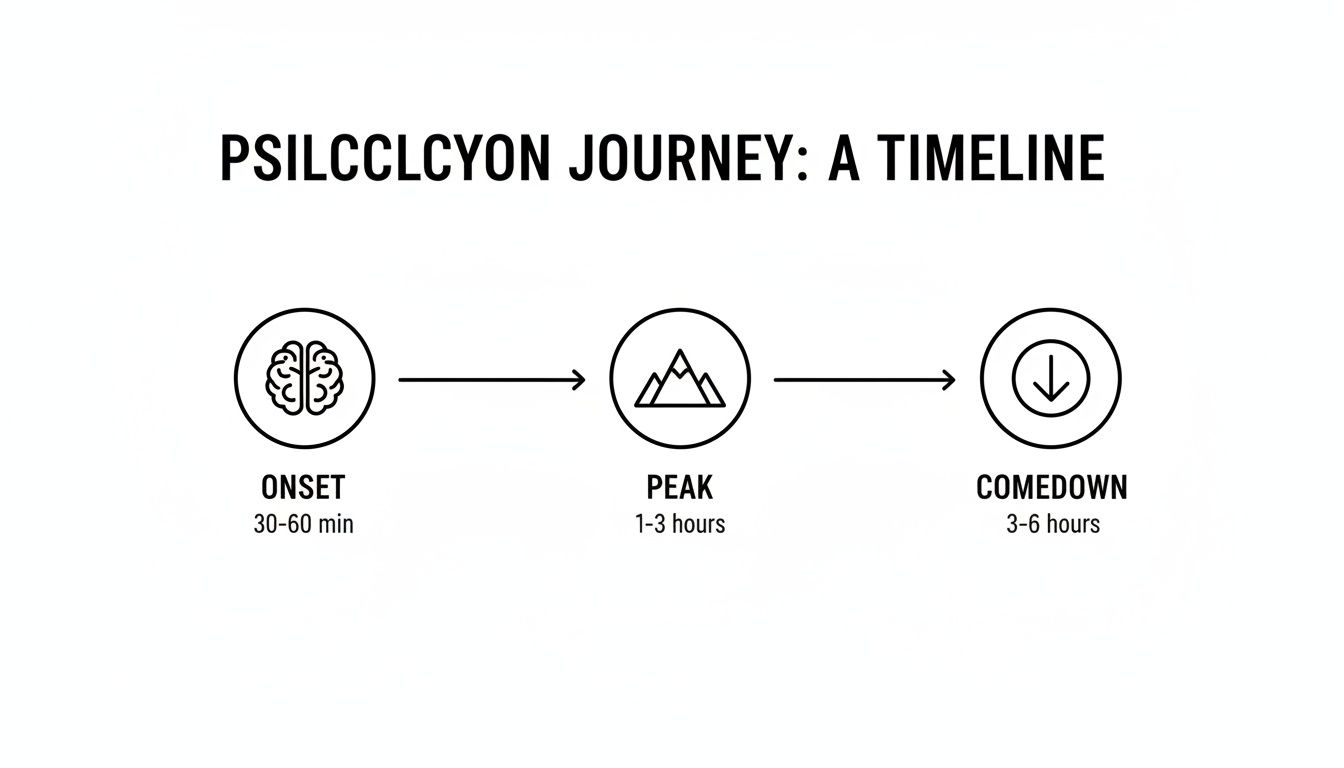
If you're feeling overwhelmed, just remember that the peak is relatively short. It gives way to a longer, much gentler comedown, which can be a very reassuring thought.
Key Takeaway: You're on a ride with a clear beginning, middle, and end. Trusting this timeline helps you relax into the process instead of fighting it.
A Typical Psilocybin Experience Timeline
Use this table as a quick reference to figure out where you are in the journey and what to expect next.
| Stage | Time After Ingestion | What You Might Feel |
|---|---|---|
| Onset | 20-30 minutes | Subtle shifts in perception, light body sensations, slight mood changes. |
| Peak | 1-2 hours | Intense visual/auditory effects, deep introspection, strong emotions. |
| Comedown | 3-6 hours | Effects gradually fade, feeling more grounded, clarity returning. |
Knowing these stages can make all the difference in turning a challenging moment into a manageable one.
The science backs this up. Psilocybin effects generally peak within 1-2 hours and the whole experience lasts 2-6 hours as your body metabolizes it pretty quickly. In fact, about 66% of the compounds are out of your system in the first 3 hours. By the 24-hour mark, psilocybin is often undetectable in urine for most people.
If you're curious about the nitty-gritty of how psilocybin works in the body and what affects its duration, check out our detailed guide on how long psilocybin stays in your system. Understanding the mechanics can really demystify the experience and bring some peace of mind.
Creating a Calm and Supportive Environment
When a mushroom trip gets too intense, your surroundings can either crank up the anxiety or act like a soothing balm for your mind. This is where the classic concept of "set and setting" becomes incredibly real and practical. Adjusting your setting mid-experience is one of the most powerful moves you can make to get your feet back on solid ground.
Think of it like this: your environment is the volume dial for your trip. A loud, chaotic room with a blaring TV and bright, flashing lights is going to turn that volume all the way up. On the other hand, a quiet, comfortable space can dial it way down, helping you find your center again.
Adjusting Your Physical Space
You don't need to do anything drastic; simple changes to your environment can make a world of difference. The goal is just to cut down on overwhelming sensory input and swap it out for things that feel calming.
Here are a few easy, actionable ideas:
- Change Rooms: Feeling exposed or overwhelmed in the living room? Try moving to a cozier bedroom. Sometimes just changing your scenery is enough to press the reset button on your mental state.
- Modify the Lighting: Harsh overhead lights can be jarring. Turn them off and switch to a soft, warm lamp. Dim lighting can seriously reduce visual overstimulation and create a much more tranquil vibe.
- Switch Up the Sound: If chaotic music or a loud TV is playing, change it immediately. Calming instrumental tracks, ambient nature sounds, or even complete silence can be incredibly grounding.
Imagine you're feeling a wave of anxiety while an action movie is on. Just pausing it, dimming the lights, and putting on a gentle piano playlist can completely transform the mood of the room—and your mind—in just a few minutes.
A supportive setting isn’t about creating a perfect space. It’s about comfort. A soft blanket, a glass of water, and a quiet corner can be the most powerful tools you have when a trip gets turbulent.
The Role of a Supportive Friend
Having a trusted friend by your side—often called a "trip sitter"—can make navigating a challenging moment so much easier. Their job isn't to guide your experience but simply to be a calm, reassuring presence. A good sitter is like an anchor to reality, reminding you that you're safe and that these intense feelings will pass.
When you ask for support, be clear about what you need. It might be as simple as asking them to sit quietly with you, grab you a glass of water, or just be in the room. Often, their calm energy is more helpful than anything they could possibly say.
Of course, the best way to handle a tough trip is to prevent it in the first place. For a deeper dive into setting yourself up for success from the very beginning, check out our guide on how to have a good mushroom trip.
Ultimately, by curating a peaceful environment and leaning on a trusted friend, you create a safe container for your experience. This allows you to relax into the journey, knowing you have the support system you need if things get bumpy.
Practical Techniques for Grounding Yourself
When a mushroom trip gets too intense, it can feel like you're lost in a storm of racing thoughts and overwhelming sensations. The secret to getting through these moments isn't about fighting the trip, but about anchoring yourself back to reality. Grounding techniques are simple, physical actions that pull your focus out of the internal chaos and back into your body and your immediate surroundings.

These methods work by creating a sensory distraction. Introducing a strong, simple physical sensation can interrupt the mental feedback loop that's causing you distress. This gives your nervous system a much-needed break and a chance to calm down, reminding you that you are safe and in control of your body, even when your thoughts feel like they’re miles away.
Engage Your Senses to Reconnect
Sensory grounding is one of the fastest ways to pull yourself back to the here and now. The goal is to focus on one concrete sensation at a time, which helps quiet the mental noise and gives you an immediate point of stability.
Here are a few powerful sensory exercises that work wonders:
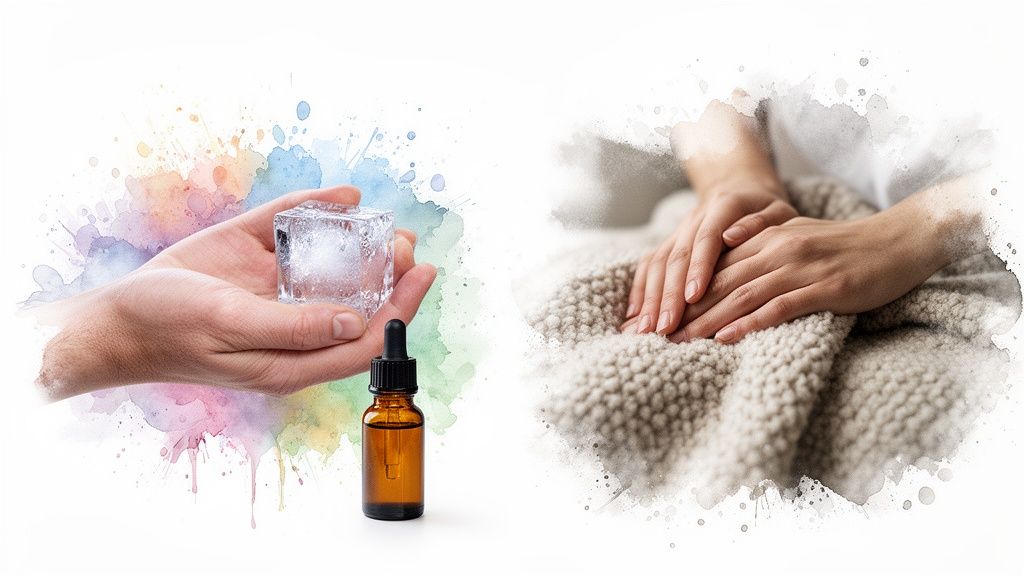
- Touch: Grab something with a distinct temperature or texture. An ice cube is perfect for this—its intense cold is almost impossible to ignore. You could also wrap yourself in a soft, heavy blanket and focus only on the feeling of its weight and fabric against your skin.
- Smell: Scent is directly wired to the memory and emotion centers in the brain. Keep a calming essential oil like lavender or chamomile nearby. Just open the bottle and take a slow, deep breath, concentrating only on that specific aroma.
- Taste: Pop a sour candy in your mouth or, if you're feeling brave, bite into a slice of lemon. That sharp, powerful taste can cut right through confusing thought patterns and demand your immediate attention, anchoring you in a physical experience.
These might seem like small actions, but their impact can be massive. They serve as a potent reminder that you are physically present, which is a powerful thought when you’re trying to figure out how to sober up from shrooms and feel more like yourself again.
Use Your Breath and Body
When anxiety starts to creep in, your breathing often gets shallow and fast. Consciously slowing it down sends a direct signal to your brain that it's okay to relax. This is where intentional breathing and gentle movement become your best friends for self-regulation.
Your body is your anchor in a turbulent sea of thought. By focusing on simple physical actions like breathing or stretching, you can gently guide your mind back to a place of calm and control.
One of the most effective techniques is box breathing. It’s incredibly easy to remember, even when you feel disoriented. Just follow this simple pattern: inhale for four seconds, hold for four seconds, exhale for four seconds, and hold again for four seconds. Repeating this cycle helps regulate your heart rate and soothes your entire nervous system.
Gentle movement is another fantastic way to release nervous energy. No need for a full workout—just stand up and do some simple stretches. Reach your arms over your head, try to touch your toes, or slowly roll your neck and shoulders. Even just walking slowly around a safe, familiar room can re-establish that crucial connection between your mind and body, helping you feel more grounded and in control.
When you’re in the middle of an intense psilocybin experience, your gut reaction might be to do something—anything—to make it stop. But some reactions can pour gasoline on the fire, turning a challenging moment into a full-blown panic.
Knowing how to respond versus how to react can be the difference between navigating a rough patch and getting lost in it. This isn't about fighting the experience. It's about supporting yourself through it. The goal is to ease up on resistance and anxiety, not to force a sobriety that simply isn't possible, which almost always backfires. Gentle, simple actions are your best friends here.
Sometimes, the best way to figure out what to do is to see what not to do. Here’s a quick guide to help you choose supportive actions when you’re feeling overwhelmed.
Quick Guide for Managing an Intense Experience
| Do This | Avoid This |
|---|---|
| Sip cold water | Mixing with alcohol or cannabis |
| Change your environment | Making big decisions |
| Use grounding techniques | Trying to "fight" the feeling |
| Practice self-compassion | Focusing on negative thoughts |
| Listen to calming music | Staring at screens or chaotic media |
Remember, the goal is to soothe, not to solve. Let's dig a little deeper into these points.
Positive Actions to Take
When things feel like too much, your focus should be on simple, comforting activities. These are small anchors that help soothe your nervous system and remind your brain that you are fundamentally safe.
Sip Cold Water: Staying hydrated is always smart, but the cool sensation of water can be incredibly grounding. Pay attention to the feeling of the cold liquid as you swallow. It’s a simple, physical sensation you can focus on.
Change Your Scenery: If a room starts to feel tense or the walls feel like they’re closing in, just get up and move. Stepping outside for a breath of fresh air or just walking from the living room to a quiet bedroom can completely reset your mental state. A change of scenery can work wonders.
Practice Self-Compassion: Be kind to yourself. It’s okay to feel overwhelmed. Remind yourself, out loud if you need to, "This feeling is temporary, and I am safe." Hearing your own voice say these words can be a powerful tether to reality.
Unhelpful Reactions to Avoid
Knowing what not to do is just as important. Certain reactions are like throwing fuel on the fire, cranking up the anxiety and making the experience much more difficult than it needs to be.
Trying to forcefully "sober up" or fight the effects often creates a cycle of resistance and anxiety. The most helpful approach is to accept the temporary nature of the experience and focus on comfort and safety.
Steer clear of these common mistakes:
Mixing Substances: Whatever you do, don't introduce alcohol or cannabis into the situation. These substances can intensify the experience in unpredictable ways, increasing confusion and paranoia. It's a recipe for a bad time.
Making Big Decisions: Your perception of reality is altered right now. This is absolutely not the time to send that risky text, make a big purchase, or try to have a serious conversation. Put your phone on silent and postpone any major life choices until you’re back on solid ground.
Trying to 'Fight' It: Resisting the effects is like trying to swim against a powerful current—it's exhausting, and it gets you nowhere. The more you fight, the more anxious you will become. The key is to surrender and flow with it.
Keep in mind that how you take mushrooms can influence the intensity and duration of your trip. Understanding the different methods is a key part of responsible preparation. To learn more, feel free to check out our guide on how to consume magic mushrooms.
Ultimately, embracing gentle actions and avoiding reactive mistakes will help you navigate even the most challenging moments with far greater ease.
Knowing When Professional Help Is Needed
Let’s be clear: most difficult mushroom experiences are not medical emergencies. They feel overwhelming, but they almost always fade with time. Still, it’s crucial to know how to spot the difference between a challenging trip and a genuine crisis.
The goal is always to provide a safe, supportive space. But sometimes, making that space truly safe means calling in professionals. Knowing when to make that call is the most responsible thing you can do.
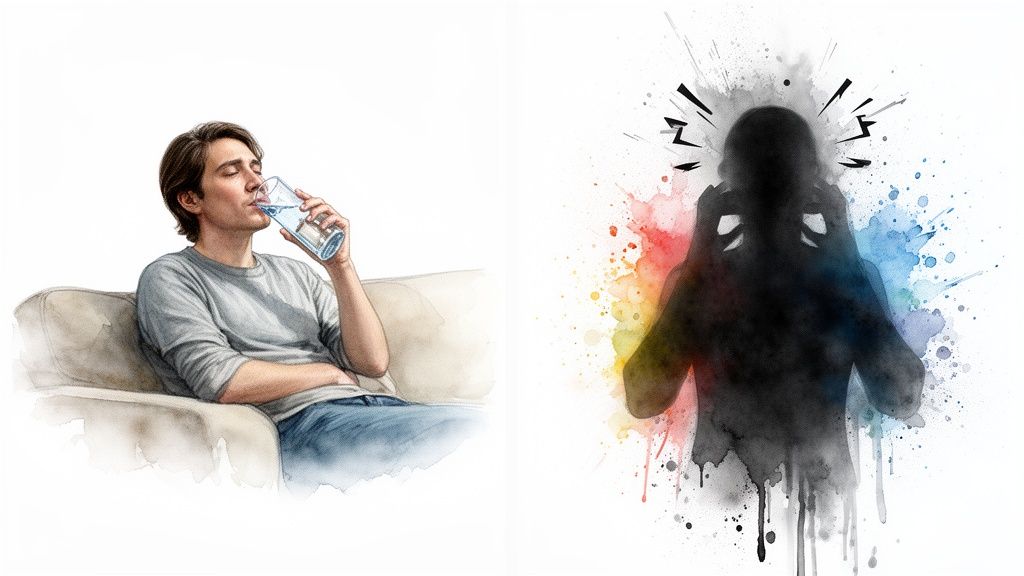
Remember, the body knows what to do. It’s already working to metabolize the psilocybin on a predictable schedule. Clinical trial data shows that 80-85% of people are back to their baseline within 6 to 12 hours after the peak.
As these findings on psilocybin duration from the National Institutes of Health highlight, the intense part of the journey typically lasts about six hours before it naturally starts to wind down. Time really is the main ingredient for sobering up.
Clear Signs to Seek Help
When someone is at immediate physical risk, you need to act. Don't second-guess yourself or worry about overreacting—safety comes first.
Keep an eye out for these specific, non-negotiable warning signs:
- Prolonged Unresponsiveness: They can't be woken up or are unconscious for more than a brief moment.
- Seizures: Any seizure, no matter how short, is an automatic call for medical help.
- Dangerous Behavior: This is when deep paranoia turns into action. Are they trying to run into traffic? Are they becoming physically aggressive toward themselves or others?
- Signs of Allergic Reaction: Watch for trouble breathing, swelling in the face or tongue, or a sudden, widespread rash. These could signal an anaphylactic reaction.
Communicating with Emergency Responders
If you have to call 911, staying calm and communicating clearly is your most important job. When you talk to the dispatcher, stick to the observable facts.
Key Tip: Be direct. Lead with the most urgent medical symptom. Instead of starting with the substance, say, "My friend is having a seizure," or "They are having trouble breathing." You should mention that they've taken a substance, as it’s critical for treatment, but the immediate physical danger is the priority.
Your own calm demeanor can help prevent the person in distress from panicking even more. It also ensures the first responders get the information they need to provide the right care. In these moments, being responsible is the best support you can offer.
Frequently Asked Questions About Shroom Trips
When you're navigating a mushroom trip, especially a challenging one, a million questions can pop into your head. Getting clear answers beforehand can make all the difference, giving you the confidence to handle whatever comes your way. We've gathered some of the most common concerns people have when they're in the middle of a trip and need some grounding advice.
Think of this as your quick-reference guide—a pocket companion for you or a friend who's providing support.
Can I Eat Or Drink Something To Stop a Shroom Trip Faster?
This is easily the question we hear most often. The short answer is no—there isn't a magic food or drink that can act as an "off switch" for a psilocybin experience. Your body simply needs time to metabolize the compounds, and that's a process you can't really speed up. You might hear anecdotal tips about orange juice or sugary snacks, but there’s no science to back this up. Any effect is most likely a placebo.
Instead of trying to force it, the best thing you can do is support your body. Sipping on water is a great idea to stay hydrated. If you feel up to it, a light, simple snack like some fruit or crackers can be comforting.
The most important thing is to avoid alcohol and caffeine. These can seriously ramp up anxiety and complicate the trip, which is the last thing you want when you're trying to come down.
Focus on comfort, not a cure. The most effective way to sober up from shrooms is to create a safe environment and allow time to pass naturally. Trying to force it often creates more stress.
How Long Until I Feel Completely Normal Again?
The most intense part of a shroom trip usually lasts somewhere between four to six hours. Once you're past that peak, you'll start to feel much more sober and connected to reality.
That said, it’s completely normal to feel a lingering "afterglow" or just be mentally and emotionally tired for the next 12 to 24 hours. Most people find that after a full night's sleep, they're pretty much back to their baseline self.
Be gentle with yourself. The best thing you can do is plan for a chill day afterward. Stay hydrated, eat a good, nourishing meal, and give your body and mind the space to recover fully.
What Is The Best Thing a Friend Can Do To Help Me?
Having a supportive friend, or "trip sitter," is an absolute game-changer during a difficult experience. The most powerful tool they have is simply their calm, reassuring presence. They don't need to be a therapist or a shaman—they just need to be a safe anchor to reality.
Here are a few incredibly helpful things a friend can do:
- Manage the Environment: Simple things make a huge difference. Dimming the lights, turning off a chaotic TV show, or putting on some soft, instrumental music can dramatically reduce sensory overload.
- Offer Comfort: Small gestures like offering a glass of water or a warm blanket can make someone feel incredibly safe and cared for.
- Provide Gentle Reassurance: Reminding the person that they are safe and that what they're feeling is temporary is so grounding. Simple phrases like, "You're doing great," or "This will pass," are perfect.
- Listen Without Judgment: The goal isn't to interpret or analyze the trip. Just being a compassionate, non-judgmental listener is more than enough.
Ultimately, the sitter's calm energy is their most important contribution.
Will I Have a Hangover From Shrooms The Next Day?
Psilocybin doesn't cause a hangover in the traditional way alcohol does. You're not going to wake up with a pounding headache or waves of nausea that are a direct result of the mushrooms.
However, it's very common to feel emotionally sensitive or mentally tired the day after. Some people describe this as a beautiful, reflective "afterglow," while others might just feel a bit drained and foggy. This is a normal part of the process as your mind and body integrate the whole experience. Good aftercare is key here—prioritize rest, eat well, hydrate, and maybe spend some quiet time in nature.
At The Magic Mushroom Delivery, we are dedicated to providing not only high-quality, organic products but also the educational resources you need for a safe and informed experience. Explore our curated selection of mushroom products today.
Find your ideal product at https://themagicmushroomdelivery.com.