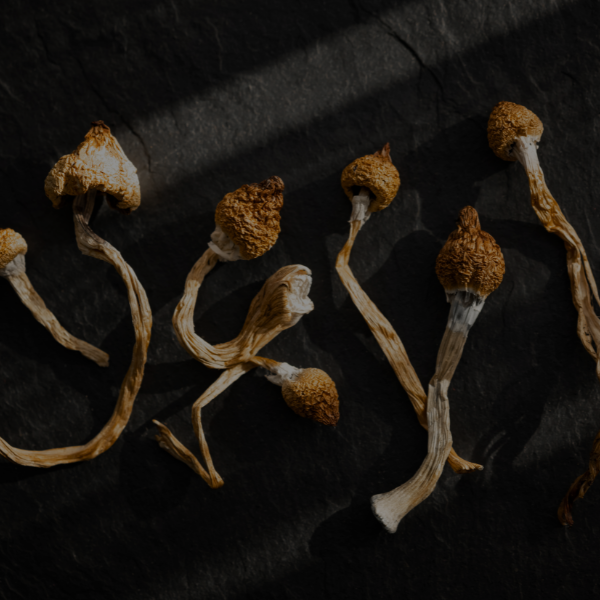

When it comes to storing your shrooms, there’s one golden rule: keep them cracker-dry, cool, dark, and in an airtight container. Nail this, and you're set. This simple approach is the absolute best way to preserve their quality and potency by shielding them from their four biggest enemies: heat, light, moisture, and oxygen.
Why Proper Mushroom Storage Is So Important
Before we jump into the "how-to," let's quickly cover why this matters so much. Getting your storage right is the single biggest factor in making sure your experience is consistent and reliable every time. The active compounds are pretty delicate and will start to break down when they're exposed to the elements.
Think of it this way: good storage protects your investment. It ensures the product you have today will have the same quality weeks or even months from now. The whole game is about creating a stable, controlled environment.
The Four Enemies of Potency
Your mission, should you choose to accept it, is to shield your mushrooms from four key threats. Each one chips away at their quality over time.
- Moisture: This is the most immediate danger. Even a tiny bit of humidity can invite mold and bacteria, which will ruin your supply in a hurry.
- Oxygen: Oxidation is just a fancy word for a chemical process that breaks down the active compounds. Limiting air exposure slows this way down.
- Heat: Warm temperatures are like an accelerator pedal for degradation. A cool spot for storage is non-negotiable.
- Light: Direct light, especially UV rays from the sun, is a notorious potency killer. Darkness is your friend here.
The goal isn't just about keeping your shrooms from going bad; it's about preserving the very essence that makes them special. A cool, dark, dry, and airtight space is the foundation for making them last.
This isn't just word of mouth, either. Science backs it up. The proven method for preserving active compounds long-term is drying mushrooms completely and storing them in a cool, dark place. In fact, one analysis showed that dried biomass kept in the dark at room temperature preserved up to 100% more of its active compounds compared to samples that were stored improperly.
This principle of preservation applies to all kinds of mushrooms, including the ones known for their many functional mushrooms benefits. This guide will walk you through exactly how to create that perfect storage environment for whatever products you have.
Achieving the Perfect Cracker-Dry Texture
Let’s get one thing straight: the single most important step for storing your mushrooms long-term has nothing to do with fancy jars or the temperature of your freezer. It all comes down to getting them perfectly, completely, bone-dry. We’re talking cracker-dry, where the mushroom is so brittle it snaps instantly when you try to bend it.
Any moisture left behind is your worst enemy. It’s an open invitation for mold and bacteria to move in, which will ruin your entire stash in no time. Even a tiny bit of lingering moisture can compromise a whole batch, so this is the one step you absolutely cannot rush.
Why Your Oven Is Not the Answer
It’s tempting, I know. You might think you can speed things up by tossing them in your kitchen oven on low. This is one of the most common and damaging mistakes people make. Ovens, even on their lowest setting, have terrible heat consistency and can easily get too hot.
When that happens, you’re not just drying your mushrooms anymore—you’re cooking them. This starts to break down the delicate active compounds you’re trying to preserve in the first place. If you want to store your shrooms properly, you have to avoid high heat at all costs. Gentle, consistent airflow at a low temperature is the only way to go.
The Best Tools for the Job
So, what's the right way to get that perfect snap without destroying quality? Your best bet, hands down, is a food dehydrator. These gadgets are literally built for this job, designed to circulate air at a steady, low temperature to gently pull the moisture out over several hours.
- Keep the Temp Low: Set your dehydrator somewhere between 95°F and 115°F (35°C to 46°C). This is the sweet spot for removing water without causing any heat damage.
- Give It Time: This isn’t a quick process. Depending on how big and thick your mushrooms are, it could take anywhere from 4 to 12 hours. Patience is your friend here.
- Do the Snap Test: You’ll know they’re done when you can snap a stem cleanly in two. If it bends or has a leathery feel, it needs more time in the dehydrator.
No dehydrator? No problem. Air-drying is another solid option, it just takes a bit more time and the right environment. Just lay your mushrooms out on a screen or a rack and point a small fan at them to keep the air moving. This method can take a few days, and it’s critical to do it in a room with low humidity.
The "snap test" is your definitive quality check. If a mushroom bends, it's not ready. If it shatters like a cracker when you apply pressure, you've nailed it and successfully prepped it for long-term storage.
Seriously, skipping this drying stage is the number one reason stored mushrooms go bad. By taking the time to make sure they are completely free of moisture, you’re setting yourself up for successful, long-lasting preservation. Every other storage step you take is built on this critical foundation.
Once your mushrooms are perfectly cracker-dry, the next make-or-break step is picking the right container and finding the perfect storage spot. Think of it as building a fortress against the enemies of potency: air, moisture, light, and heat. This is where you lock in all that hard work and ensure your supply stays fresh for the long haul.
It might be tempting to just toss them in a plastic baggie and call it a day, but trust me, that's a huge mistake. Most plastic bags are slightly permeable, which means they'll slowly let in tiny amounts of air and humidity. Over time, that's enough to ruin everything.
Airtight Containers Are Your Best Friend
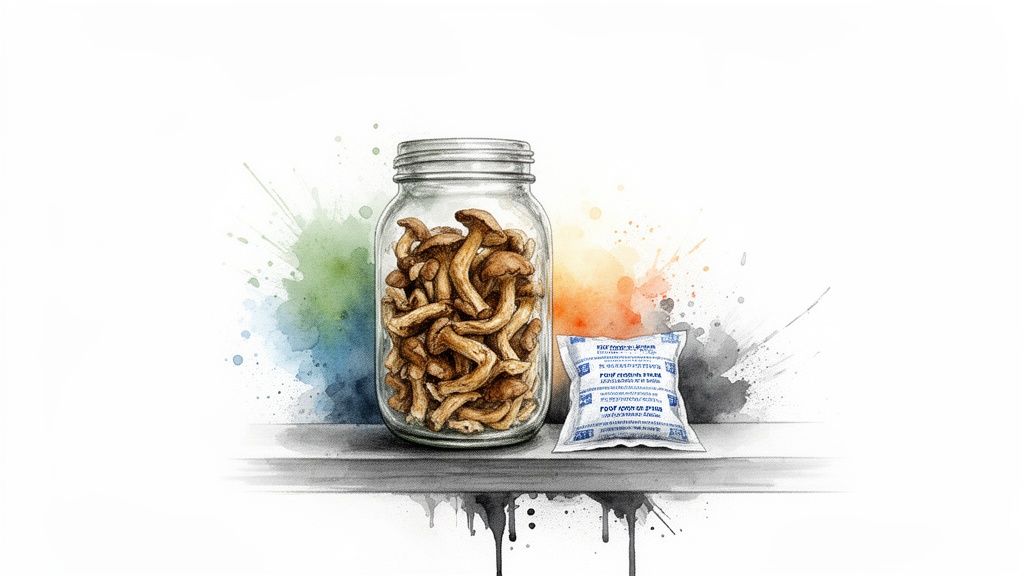
For the most reliable and straightforward storage, you can't go wrong with an airtight glass mason jar. Glass is a fantastic material because it's completely non-porous and won't react with your mushrooms in any way. When you screw that lid on tight, you're creating a solid barrier against oxygen and humidity. It's a simple, effective, and endlessly reusable solution.
Here's a pro tip: always toss a food-grade desiccant packet into the jar. You know, those little silica gel packets you find in beef jerky or vitamin bottles? They're your secret weapon. These packets act like a tiny dehumidifier, tirelessly absorbing any rogue moisture that might be lingering or that gets in when you open the jar.
This visual guide shows the three signs of a mushroom that's perfectly ready for storage.

Nailing this "cracker dry" texture—where they snap cleanly with zero bend—is the absolute non-negotiable first step. Without it, even the best container won't save them.
The Ultimate Tool for Long-Term Preservation
If you're really serious about making your mushrooms last as long as humanly possible, investing in a vacuum sealer is a game-changer. These devices physically suck all the oxygen out of the bag before creating a perfect heat seal. By removing the oxygen, you slam the brakes on oxidation, which is one of the main culprits behind potency loss.
Vacuum sealing is the gold standard, especially if you plan on stashing your supply for more than a few months. It creates an incredibly stable environment that can keep your mushrooms preserved for a year or even longer.
To give you a clearer picture, here’s how the most common storage methods stack up against each other.
Mushroom Storage Methods Compared
| Storage Method | Controls Oxygen | Controls Moisture | Controls Light | Estimated Shelf Life |
|---|---|---|---|---|
| Plastic Ziploc Bag | Poor | Poor | Poor | 1-2 weeks |
| Glass Jar | Good | Fair | Poor | 2-6 months |
| Glass Jar + Desiccant | Good | Excellent | Poor | 6-12+ months |
| Vacuum Sealer | Excellent | Excellent | Good (if opaque bag) | 1-2+ years |
As you can see, simply adding a desiccant pack dramatically improves the performance of a standard glass jar, but vacuum sealing is in a league of its own for long-term storage.
"Think like a vampire when choosing a storage location. A cool, dark, and dry spot is perfect. Any exposure to light or heat will actively work against your preservation efforts, no matter how good your container is."
Finding the Perfect Hiding Spot
Once your mushrooms are sealed up tight, the final piece of the puzzle is location. Where you keep the container is just as critical as the container itself. You're looking for a place that's consistently cool, dark, and dry.
A few great options include:
- The back corner of a bedroom closet
- An unused drawer in a dresser
- A shelf in a cool pantry, far away from the stove or other appliances
On the flip side, there are places you should absolutely avoid. The cabinet above your stove is a terrible choice because of the constant heat fluctuations. A bathroom cabinet is another no-go due to the high humidity. Consistency is key, so find a stable, undisturbed spot and let your perfectly stored mushrooms rest.
Long-Term Storage: The Fridge vs. Freezer Debate
When you need to keep your mushrooms fresh for six months or longer, you’ll inevitably face the classic storage question: fridge or freezer? Let's settle it right now. For properly dried mushrooms, the freezer is the undisputed champion, capable of preserving them for a year or even more. It’s simply the best way to store shrooms for the long haul.
But there’s a catch, and it’s a big one. This method only works if your mushrooms are completely cracker-dry and, ideally, vacuum-sealed. This combo is non-negotiable because it stops ice crystals from forming inside the mushrooms. Ice crystals are the enemy—they shred the mushroom's delicate structure from the inside out and ruin its integrity.
Why the Freezer Wins for Longevity
Freezing is so effective because it slams the brakes on the molecular activity that causes things to break down. When you combine the oxygen-free environment of a vacuum seal with the deep cold of a freezer, you’re essentially hitting the pause button. This creates a state of near-perfect stasis that preserves the mushroom’s quality far better than any other method.
There's one golden rule here: never, ever freeze fresh or even partially dried mushrooms. The water still trapped inside will expand as it freezes, rupturing cell walls and causing a ton of damage. Once they thaw, you'll be left with a mushy mess, and this cellular damage will have tanked their quality for good.
Freezing is a powerful preservation tool, but only for the bone-dry. Trying to freeze anything with moisture still inside will do more harm than good, leading to a rapid decline in quality upon thawing.
The Role of the Refrigerator
So, where does the humble refrigerator fit into all this? The fridge is a solid choice for short-to-mid-term storage, keeping things good for up to a few months. It's definitely a step up from leaving them on a shelf, as the cool, dark environment helps slow down the degradation process.
Think of the fridge as a good holding area, not a long-term vault. It’s perfect if you know you’ll be using your supply within a couple of months. For anyone looking to keep their mushrooms pristine for longer, the freezer is the way to go. If you want a deeper dive into timelines, you can learn more about how long do mushrooms last in our detailed guide.
To break it down, here are the key differences:
- Freezer: The go-to for 6-12+ months. It demands perfectly dry, vacuum-sealed mushrooms to prevent ice damage. This is the ultimate method for long-term preservation.
- Refrigerator: Best for 1-3 months. Works well for keeping dried mushrooms in an airtight jar but isn't built for preserving them over many months.
Ultimately, choosing between the fridge and freezer comes down to your timeline. If you're planning to preserve your supply well into the future, the little bit of extra prep for freezer storage is an investment that pays off.
How to Properly Store Edibles and Capsules
Not everyone is working with whole dried mushrooms. If you've got infused products like chocolates, gummies, or capsules, they need their own storage game plan to stay fresh and effective. The golden rules still apply—keep things cool, dark, and dry—but how you get there is a little different for each product.
Infused sweets like chocolates and gummies have two main enemies: heat and air. Heat is the obvious one. A warm room can turn a beautiful chocolate bar into a gooey puddle in no time. Air exposure, or oxidation, is more subtle; it slowly breaks down the active compounds while also messing with the flavor and texture.
Storing Infused Chocolates and Gummies
The best move here is to keep these treats in their original airtight packaging. If you've already torn it open and it won't seal again, transfer them to a small, airtight container. A little glass jar or a food-grade silicone bag works perfectly.
Once they're sealed up, the refrigerator is your best friend. The consistent cool temperature stops any melting and puts the brakes on degradation. You can freeze them for the long haul, but just know that it can sometimes make gummies a bit tough or cause chocolate to "bloom," which is that harmless whitish coating you sometimes see.
The fridge really hits the sweet spot for storing edibles. It's cool enough to prevent melting and preserve potency, but you don't have to worry about the texture changes that can happen in the freezer.
And hey, if you get inspired to create your own infused goodies, proper storage is just as vital. You can find some great ideas and methods by checking out different psychedelic mushroom recipes that are perfect for making treats built to last.
Protecting the Potency of Capsules
Capsules are a bit more resilient, but they still need to be shielded from the elements—especially humidity. Just think of them like any other supplement or medication you have. Moisture is the number one problem, as it can weaken the capsule shell and degrade the active ingredients packed inside.
To keep your capsules in top-notch condition, just follow these simple tips:
- Keep them in the bottle: Don't get fancy. Always store capsules in their original, tightly sealed bottle.
- Don't toss the desiccant: That little silica packet isn't just for decoration. It's in there to soak up moisture, so leave it be.
- Find a cool, dark cabinet: A spot in your pantry or a medicine cabinet (as long as it's not the one in the bathroom!) is perfect. Steer clear of the bathroom cabinet, where steam from the shower creates a humid nightmare for capsules.
By protecting your edibles and capsules from their specific kryptonite—heat for chocolates, humidity for capsules, and air for both—you're making sure they stay just as effective and tasty as the day you got them. It all comes down to good storage habits.
How to Spot Spoilage and When to Discard
Knowing when your mushrooms have turned is absolutely crucial, and thankfully, your own senses are the best tools you have for the job. No matter how perfectly you followed the storage steps, you should always give your shrooms a quick inspection before you use them.
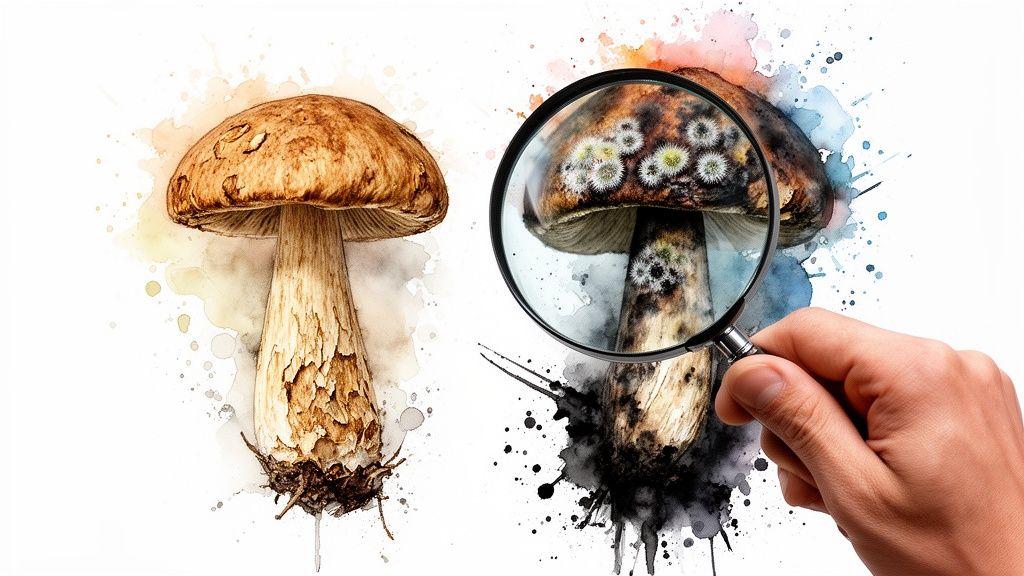
Start with a visual check. You're looking for any obvious signs of mold, which usually shows up as fuzzy spots of white, green, or even black. Other red flags are a slimy texture or any significant dark discoloration that wasn't there when you first stored them.
Next, trust your nose. Properly stored dried mushrooms should have a subtle, earthy smell. If you pop open your container and get hit with a musty, sour, or distinctly rotten odor, something has gone wrong in storage.
We live by a simple rule that keeps everyone safe: "When in doubt, throw it out." It's just never worth the risk to consume something you're unsure about.
This approach lets you make a confident and safe call on the quality of your stored mushrooms. Always trust your instincts on this one.
Frequently Asked Questions About Storing Shrooms
Even when you follow the instructions to a T, questions are bound to pop up. Think of this as your quick-reference guide for the most common storage puzzles we see. We'll get you the scannable answers you need to get it right every time.
How Long Do Shrooms Last if Stored Perfectly?
If you’ve absolutely nailed the storage process—we’re talking cracker-dry shrooms tucked into an airtight container with a desiccant, then hidden away in a cool, dark spot—you can easily expect them to hold onto their quality for at least one full year.
Want to push that timeline even further? For those playing the long game, vacuum-sealing your supply before freezing it is the undisputed gold standard. This method can potentially keep your mushrooms viable for two years, maybe even more.
Should I Store Ground Mushroom Powder Differently?
Yes, and you need to be extra vigilant about it. When you grind mushrooms, you dramatically increase the surface area that’s exposed to oxygen. This puts the degradation process into overdrive, meaning that powder will lose its magic much faster than whole dried mushrooms.
Because of this, you must keep your mushroom powder in a genuinely airtight container. A vacuum-sealed one is even better. All the rules about keeping things cool, dark, and dry become even more critical here. My advice? Treat ground powder like it has a ticking clock and plan to use it sooner rather than later for the best experience.
What's the Biggest Mistake People Make When Storing Shrooms?
Hands down, the single most common—and most destructive—mistake is not getting them completely dry in the first place. Storing mushrooms with even a hint of moisture left inside is a guaranteed recipe for disaster.
That lingering humidity is the perfect invitation for mold and bacteria to move in, and they can ruin an entire batch with shocking speed. The "cracker-dry" snap isn't just a friendly suggestion; it's the most crucial checkpoint in this whole process.
For everything from premium products to trusted educational guides, count on The Magic Mushroom Delivery for a quality experience. You can explore our curated selection today and see the difference for yourself.