
If you want to get the most out of your magic mushrooms, you have to know how to store them properly. It really all boils down to three simple rules: keep them dry, keep them in the dark, and keep them cool. Get these three things right, and you’ve cracked the code to preserving their quality for the long haul.
The Three Pillars of Mushroom Preservation
Storing your shrooms correctly isn’t some complicated science, but it does demand a bit of attention to detail. Just think of it as protecting your investment. The biggest enemies you're up against are moisture, light, and heat. Control these, and you'll dramatically extend the life and integrity of your stash.
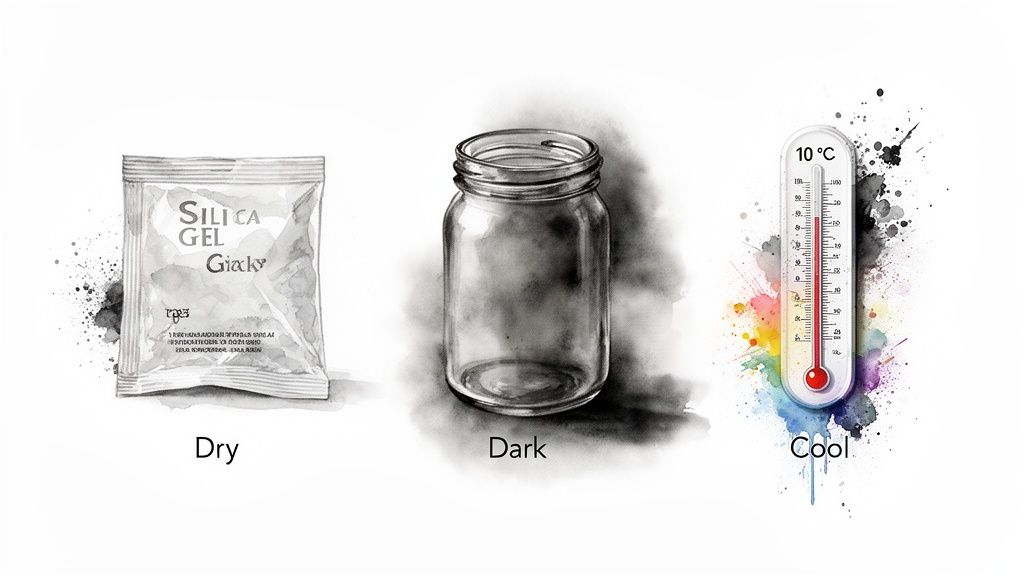
Let’s get into why each of these pillars is so non-negotiable.
Keeping Them Dry
Moisture is, without a doubt, public enemy number one. Fresh mushrooms are over 90% water, which basically turns them into a five-star resort for mold and bacteria. Not what you want.
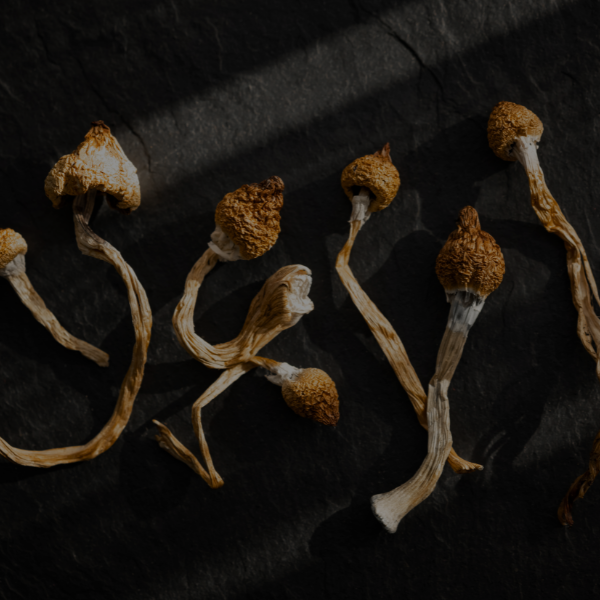
To stop this from happening, they must be dried out until they're "cracker-dry." That means they literally snap when you try to bend them. Any moisture left behind will kickstart the degradation process, quickly making them unusable. This is why thorough drying is the absolute first step you have to take before you even think about long-term storage.
Shielding Them from Light
Sunlight, or any direct light for that matter, is a killer for the sensitive compounds in mushrooms. This breakdown happens way faster than most people realize, chipping away at the quality of your supply over time.
The fix is simple. Use an opaque container or just stash them in a dark spot like a cupboard, drawer, or closet. It’s a low-effort move that pays off big time in protecting them from light exposure.
The core idea here is straightforward: the less your mushrooms are exposed to the elements, the longer they'll keep their original quality. Treat them like a high-end spice—keep them sealed up and shielded from environmental stress.
Maintaining a Cool Temperature
Finally, we have heat. Heat is another major adversary because it speeds up the natural breakdown of the active components in your mushrooms. A cool, stable environment puts the brakes on these chemical reactions in a big way.
A fridge or freezer offers top-tier temperature control, but even a cool pantry or a corner of the basement is leagues better than a warm shelf in your kitchen.
This isn't just theory; it's been proven in labs. Studies show that at warmer temps (around 40°C), the active compounds can be almost completely gone in just a few weeks. In some trials, samples left at room temperature saw their active ingredient levels plummet to nearly zero in a month, while the freezer-stored samples were perfectly stable. If you're interested, you can check out the full data on how temperature affects psilocybin here. This makes it crystal clear why finding a cool spot for your mushrooms is an absolute must.
To make this even easier to remember, here's a quick rundown of the foundational concepts.
Core Principles of Mushroom Storage at a Glance
| Principle | Goal | Why It Matters |
|---|---|---|
| Dry | Prevent mold and bacterial growth | Moisture is the primary cause of spoilage and degradation. |
| Dark | Protect active compounds from light | UV light breaks down sensitive compounds, reducing quality. |
| Cool | Slow down chemical degradation | Heat accelerates the natural decay of active ingredients. |
Nailing these three principles—dry, dark, and cool—is the entire game. It's the difference between having a potent, well-preserved supply and a disappointing, wasted batch.
Mastering the Art of Drying for Longevity
The road to successful long-term storage starts with one make-or-break step: drying. Fresh mushrooms are over 90% water, and getting that moisture out is the only way to stop the mold and bacteria that will otherwise ruin your stash in a hurry. You’re aiming for that perfect "cracker-dry" state, which is the absolute foundation for preserving their potency and quality.
This isn’t just about tossing them on a towel and hoping for the best. The goal is total dehydration without damaging the mushroom itself. When you nail this part, you're setting yourself up for storage that can last for many months, if not years.
Choosing Your Drying Method
You’ve got a few solid options here, and the best one really comes down to what gear you have, how much patience you’ve got, and the size of your harvest.
Food Dehydrator: This is the gold standard, and for good reason. A good dehydrator gives you precise temperature control and steady airflow, which is exactly what you need for even, gentle drying. Keep the temperature low, somewhere between 95°F and 115°F (35°C to 46°C), to protect the sensitive compounds inside.
Air Drying with a Fan: This is a simple, low-tech, and surprisingly effective method. Just spread your mushrooms out on a mesh screen or rack and get a fan blowing over them. It might take a few days, but it’s incredibly gentle on the mushrooms. It’s also a great first step before you finish them off with a desiccant.
Desiccants (Silica Gel): This is the perfect finishing move. After air-drying your mushrooms for a day or two, toss them into an airtight container with a hefty layer of food-grade desiccant packets. The silica gel is like a magnet for moisture and will pull out every last bit, ensuring they get completely brittle.
A word of warning: steer clear of the oven. Even at its lowest setting, an oven’s heat is usually too high and uneven. You risk cooking the mushrooms, which is the fastest way to degrade their quality. Always stick to the low-and-slow methods for the best results.
The Science of Gentle Drying
The environment you dry your mushrooms in matters more than you might think. Research has shown that drying mushrooms in the dark at room temperature is one of the best ways to preserve their key compounds. One study found that storing fresh mushrooms in the light caused a significant drop in quality, while a dark, room-temp drying process kept total degradation under 10%. You can dig deeper into the stability of psilocybin during drying and storage to see why this has become the go-to protocol.
What does this mean for you? A dark, well-ventilated closet with a fan can be a surprisingly perfect setup. It creates the ideal conditions for preservation, locking in as much of the original potency as possible before they even see the inside of a jar.
How to Know When They Are Perfectly Dry
The final test is beautifully simple: are they cracker-dry? That’s the magic phrase everyone in the know uses to describe the perfect level of dryness for long-term storage.
Grab a mushroom and try to bend it.
- If it bends or has any give: It’s still holding onto moisture. Give it more time.
- If it snaps cleanly in two: Perfection. It's fully dry and ready to be stored.
There should be absolutely zero flexibility. Even a tiny bit of moisture left can become a breeding ground for mold once sealed in an airtight container. Once they pass the snap test, you can confidently pack them away for the long haul.
Getting this drying phase right is the most critical step in determining how long your mushrooms last. To learn more about what to expect shelf-life-wise, check out our full guide on how long different mushroom products last.
Choosing the Right Airtight Storage Container
Once your mushrooms are bone-dry, the next mission is to protect them from their two biggest enemies: oxygen and light. This is where a good airtight container becomes non-negotiable. It’s what stands between you and a degraded, useless stash. You're looking for a true hermetic seal that locks freshness in and keeps the destructive elements out.
This step is all about shifting from preparation to preservation. The container you pick will directly decide how long your mushrooms keep their kick. Let's look at the best ways to shield them from the outside world.
Glass Mason Jars The Classic Choice
You really can't go wrong with glass mason jars. They're a timeless, super-effective solution for mushroom storage. The two-part lid system creates an incredible airtight seal that keeps both oxygen and moisture from getting anywhere near your stash. Plus, they’re reusable and easy to clean, making them a solid, sustainable choice for the long haul.
The only real downside? They're clear. To get around this, just stash your jars somewhere dark, like a cupboard, a drawer, or a box tucked away in a closet. This simple step prevents light from breaking down the active compounds.
Mylar Bags Ultimate Discretion and Protection
If you want unbeatable light-blocking power, Mylar bags are the way to go. These foil-lined bags are completely opaque, offering 100% protection from light. They're also fantastic at creating an airtight seal, especially if you use a heat sealer to lock them up tight.
A huge plus for Mylar is how flexible and discreet they are. They take up way less room than bulky jars and don't scream "I've got shrooms in here!" For best results, I always recommend tossing in an oxygen absorber before you seal them up.
Pro Tip: When you're sealing a Mylar bag, press out as much air as you can before you apply the heat. If you don't have a dedicated heat sealer, a household iron or even a hair straightener can work in a pinch to create a surprisingly durable, long-lasting seal.
Vacuum-Sealed Bags The Gold Standard for Oxygen Removal
Planning on storing your mushrooms for a year or more? Vacuum sealing is, without a doubt, the gold standard. This method physically sucks nearly all the oxygen out of the package, which dramatically grinds the degrading oxidation process to a halt.
Vacuum-sealed bags are also your best friend if you decide to freeze your shrooms, as they prevent freezer burn like nothing else. The only thing to watch out for is that the process can be a little rough on delicate, cracker-dry mushrooms, sometimes crushing them into powder. To avoid this, you can "pulse" the vacuum sealer to gently remove air without full pressure. Or, my personal favorite trick: put the shrooms in a mason jar first, then vacuum seal the entire jar for double the protection.
Before your mushrooms are ready for any of these containers, remember that they must be perfectly dried. This visual guide is a quick recap of that essential process.

This graphic walks you through the path to achieving that perfect 'cracker-dry' state—a must for any effective, long-term storage plan.
Using Oxygen Absorbers and Desiccants
No matter which container you settle on, adding a desiccant packet is always a smart move. Think of it as an insurance policy. A small, food-grade silica gel pack will soak up any tiny bit of moisture you might have accidentally trapped inside.
For Mylar bags and mason jars, I also like to throw in an oxygen absorber. These little packets chemically trap any remaining oxygen, taking your preservation game to the next level.
- Silica Gel Packets: Absorb moisture.
- Oxygen Absorbers: Remove oxygen.
Using both together delivers a powerful one-two punch against spoilage. Just make sure you’re using food-grade versions and follow the instructions—oxygen absorbers start working the second they hit the air and have a limited lifespan. Picking the right container and pairing it with these tools will ensure your mushrooms stay potent and preserved for as long as possible.
Long-Term Strategies for Refrigeration and Freezing
When you're looking to store mushrooms for several months or even years, cold storage is your best friend. But don't just toss them in any old drawer—the refrigerator and freezer play very different roles, and getting it wrong can wreck your stash. Understanding how to use each one is key for anyone serious about long-term preservation.
The fridge provides a cool, dark, and stable spot that’s perfect for medium-term storage. By keeping your properly dried and sealed mushrooms here, you seriously pump the brakes on the natural breakdown process. It’s a huge upgrade from a closet, buying you many more months of potency.
The Golden Rule of Freezing Mushrooms
When you move to the freezer for the long haul, there's one absolute, non-negotiable rule: only freeze mushrooms that are cracker-dry. Seriously, don't even think about freezing fresh ones. Since they’re mostly water, the freezing process creates ice crystals that shred their cellular structure, turning them into a sad, degraded mush when they thaw.
This isn't just about looks; it triggers a massive loss of potency. One analysis of fresh Psilocybe zapotecorum stored at -20°C for just 24 hours saw its psilocybin content crash from 1.29% to a tiny 0.08%. You can actually see this breakdown happen—the intense bluing as the mushroom thaws can signal that up to 90% of the good stuff is gone. If you want to dive deeper, you can read more about these findings on tryptamine degradation to see why this rule is so important.
How to Properly Prep Shrooms for the Freezer
To get the most out of your freezer, prep work is everything. Your mission is to build an impenetrable fortress against freezer burn and moisture.
- Make Sure They're Cracker-Dry: First thing's first. Your mushrooms must snap cleanly when you bend them. Any leftover moisture will form ice crystals and sabotage your whole stash.
- Vacuum Seal for the Win: The best move you can make is using a vacuum sealer. It yanks out almost all the oxygen, stopping oxidation and preventing freezer burn from messing with the texture and potency.
- Create a Double Barrier: For some extra peace of mind, you can put your mushrooms in a mason jar or Mylar bag with a desiccant packet first, and then vacuum seal the whole container. It’s a dual-layer defense system.
When you seal them up this way, dried mushrooms can hold their own in the freezer for a year or even longer. This method essentially puts them in suspended animation, hitting pause on the degradation clock.
Refrigerator Storage for Easy Access
If you know you'll be dipping into your stash more often, the refrigerator is usually the smarter choice. Constantly freezing and thawing, even with dried products, can introduce condensation if you're not super careful. The fridge hits that sweet spot—cooler than room temperature but not as harsh as the freezer.
The same basic rules apply for fridge storage:
- Use an airtight container, like a classic glass jar.
- Toss in a food-grade desiccant packet to soak up any sneaky humidity inside.
- Seal that jar up tight to keep fridge smells out.
Follow these cold storage tips, and you can confidently pick the right method for your needs. Whether you’re shooting for multi-year preservation in the freezer or just want easy access from the fridge, mastering these techniques will keep your mushrooms in prime condition.
Storing Various Mushroom-Infused Products
Dried mushrooms are one thing, but what about all the other ways you can enjoy them? When psilocybin is infused into chocolates, gummies, or capsules, the storage game changes a bit. Now, you’re not just protecting the mushrooms themselves, but also the product they’re mixed into. Getting this right is the key to keeping your edibles fresh and your capsules potent.
Every product has its own kryptonite. Chocolates melt, gummies turn into a sticky mess, and capsules can be ruined by a little bit of humidity. The goal is simple: create a stable environment that keeps both the product's texture and its psychoactive compounds perfectly preserved.
Storing Mushroom Chocolates and Gummies
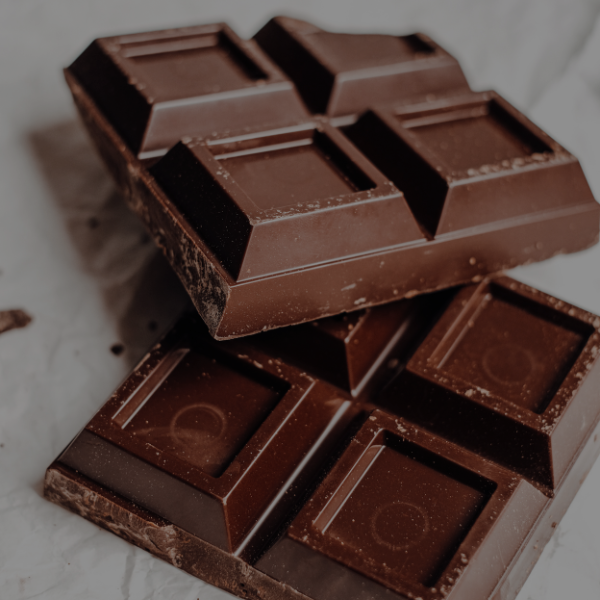
Edibles like chocolates and gummies are a fan favorite, but they're incredibly sensitive to heat and moisture. The biggest enemy of a mushroom chocolate bar is heat. Once it melts, the temper is ruined, and you're left with a chalky, crumbly bar that's just not the same. Gummies have a similar problem—get them too warm or humid, and they'll fuse into one giant, sticky blob.
Luckily, preventing this is easy. Just follow these simple rules:
- Keep Them Cool: The refrigerator is your best friend here. It keeps both chocolates and gummies firm and stops any melting or stickiness in its tracks.
- Use an Airtight Container: Store them in a sealed container or keep them in their original resealable packaging. This is crucial for stopping them from absorbing moisture or, worse, the smell of last night's leftovers.
- Keep Them Dry: Moisture is always the enemy. An airtight container does double duty by keeping out condensation, which protects the quality of the edible and its active ingredients.
A cool, dark pantry might work in a pinch if you plan on consuming them within a few days. But for anything longer, the stable, cold environment of a refrigerator is the only way to go. This simple step makes a massive difference in how long they'll last.
Protecting Microdose Capsules and Powders
Microdose capsules and powders are all about precision, but their biggest weakness is humidity. The gelatin or vegetable cellulose shells of capsules can get soft and stick together if they’re exposed to moisture, which can ruin the contents. Powders are just as vulnerable and can start clumping, making it impossible to get an accurate dose.
Your number one priority here is an all-out defense against moisture.
- Original Packaging is Best: Always keep capsules in the bottle they came in. These containers are specifically designed to be airtight and protect against humidity.
- Don't Toss the Desiccant: Most quality capsule products come with a small desiccant packet inside. Leave it in there! It's your first and best line of defense against any sneaky moisture.
- Store in a Cool, Dark Place: Think medicine cabinet or a dry pantry drawer. Steer clear of bathrooms or kitchens where steam and constant temperature changes are the norm.
When stored correctly, capsules can easily maintain their potency for well over a year, making them a super reliable choice for long-term use.
Preserving Infused Honeys, Teas, and Extracts
Other unique products like infused honey, teas, and extracts have their own storage needs. Honey is a fantastic natural preservative, but it can still crystallize or absorb moisture if it's not sealed up tight. Mushroom teas, just like any other dried tea, will lose their aroma and potency fast if left exposed to air and light.
For these items, it’s all about a tight seal and a stable environment. An airtight jar tucked away in a cool cupboard is usually all you need. If you're dealing with potent liquids, like a psilocybin mushroom extract, always store them upright in a cool, dark place to prevent any leaks and maintain their chemical stability.
To make things even easier, here’s a quick-reference chart to help you keep all your mushroom products in perfect condition.
Storage Guidelines for Common Mushroom Products
This table breaks down the best ways to store the most common mushroom-infused products, giving you a clear idea of their shelf life and what to watch out for.
| Product | Best Storage Method | Estimated Shelf Life | Key Considerations |
|---|---|---|---|
| Chocolates | Refrigerator, airtight container | 6-12 months | Prevent melting and odor absorption. |
| Gummies | Refrigerator, airtight container | 6-12 months | Avoid stickiness and clumping. |
| Capsules | Cool, dark place; original bottle with desiccant | 1-2 years | Keep dry to prevent clumping and degradation. |
| Infused Honey | Cool, dark pantry; sealed jar | 1-2+ years | Prevent crystallization and moisture absorption. |
| Mushroom Teas | Cool, dark pantry; airtight tin or bag | 1 year | Protect from light and air to retain freshness. |
Following these simple guidelines ensures that no matter which product you choose, you'll get the freshness and potency you paid for every single time.
Recognizing the Signs of Spoilage
Even if you follow every storage rule to the letter, you still need to know how to spot shrooms that have gone bad. This is your last line of defense, making sure what you’re about to take is safe. Honestly, your own senses—sight, smell, and touch—are the best tools you have for the job.

Trust your gut on this. If something just seems off, it probably is. The golden rule here is simple but it will never steer you wrong: when in doubt, throw it out.
Visual Red Flags
Your first check should always be a quick visual inspection. Properly dried mushrooms have a very specific look, and anything that deviates from that is a potential warning sign. Keep an eye out for these obvious giveaways of contamination.
- Fuzzy Spots: This is the big one. Look closely for any fuzzy patches on the surface. They can show up as white, green, blue, or black and are a dead giveaway for mold.
- Discoloration: A little bit of blue bruising is totally normal and expected. What you don't want to see are dark black spots or slimy-looking patches, which usually point to bacterial growth.
- Slimy Texture: If your shrooms feel even slightly damp, soft, or slimy, moisture has gotten in and ruined them. They should always be brittle and snap like a cracker.
Sniff and Touch Tests
What you see is only part of the story. Your sense of smell and touch will give you the rest of the critical clues you need.
A quick sniff can tell you everything. Well-preserved mushrooms have a faint, earthy smell, almost like dried leaves. If you open your container and get hit with a foul, sour, or musty odor, that's a clear sign of bacteria or mold having a party in there. That bad smell is an unmistakable signal to toss them immediately.
The same goes for texture. Every piece should be consistently brittle. If you find any that feel pliable or spongy, moisture is present, and spoilage isn't far behind. Don't risk it—any softness is a major red flag.
The ultimate safety rule is non-negotiable. Compromising on freshness is never worth the risk. A small amount of lost product is a tiny price to pay for peace of mind.
The Power of Labeling
One of the easiest habits you can get into to prevent spoilage is simply labeling your stash. Always jot down the date you stored your shrooms right on the container.
This tiny step makes it easy to keep track of your inventory and use a “first in, first out” system. By using your older batches first, you dramatically reduce the chances of anything sitting around long enough to go bad. It's a simple organizational habit that makes a huge difference in making confident and safe decisions every single time.
Common Questions About Storing Shrooms
Even with the best guide, you'll probably have a few questions pop up as you're getting your shrooms ready for storage. We'll tackle some of the most common ones here, giving you clear, straightforward answers to help you dial in the finer points of preservation. Think of this as your go-to for those last-minute details.
Our goal is to give you the confidence that your methods are solid, ensuring your supply stays in prime condition from the moment you store it until you’re ready to enjoy it.
How Can I Tell If My Shrooms Are Dry Enough for Storage?
The gold standard here is what's known as "cracker-dry." This is the non-negotiable test. A mushroom is ready for storage when it snaps cleanly and audibly if you try to bend it, just like a saltine cracker. There should be absolutely zero flexibility or softness.
If it bends or feels even a little bit pliable, it's still holding onto moisture. Any leftover water is the number one enemy, as it’s a direct invitation for mold and spoilage once you seal them in an airtight container. If they don't pass the snap test, just give them more drying time.
For anyone just starting out, the most reliable method is to dry your mushrooms completely until they're cracker-dry. Then, seal them up in a glass mason jar with a food-grade desiccant packet. Stash the jar in a cool, dark spot like a cupboard or closet, and you've got a simple, effective setup that offers excellent protection for months.
Is It Safe to Use an Oven to Dry Mushrooms?
Simply put, using a standard kitchen oven to dry your mushrooms is a really bad idea and something you should definitely avoid. The main problem is heat control. Even on the absolute lowest setting, most ovens are way too hot and will end up cooking the mushrooms. This degrades their sensitive compounds and seriously reduces their potency and overall quality.
Ovens also don't provide the kind of consistent, gentle airflow you need for proper dehydration. You often end up with mushrooms that are scorched in some spots and still damp in others. It's much better to stick to safer, more effective methods:
- A food dehydrator gives you precise, low-temperature control, which is ideal.
- Air-drying with a fan is a gentle and effective low-tech option that gets the job done.
These methods protect the mushroom’s integrity, ensuring you get the best results for long-term storage. After all, the way you prepare and store your mushrooms is just as important as how you choose to use them. If you need some ideas, you can explore different approaches in our guide on how to consume magic mushrooms.
At The Magic Mushroom Delivery, we provide a curated selection of premium, organic mushroom products delivered right to your door. Explore our collection of chocolates, gummies, capsules, and more to find the perfect match for your wellness journey. https://themagicmushroomdelivery.com