
When you're living with chronic pain, it can feel like a lonely, uphill battle. It's a fight that often pushes people to look for safer, more lasting solutions than what conventional medicine alone can offer. The search for effective natural remedies for chronic pain isn't just about dodging side effects; it's about finding a way to get to the root of the problem and heal from the inside out.
Think of this guide as your roadmap to understanding and using these powerful alternatives.
Beyond Pills: Understanding Chronic Pain and Natural Relief
When pain sticks around for months, or even years, it stops being a simple physical feeling. It becomes a much more complex beast. Chronic pain actually rewires your nervous system, keeps your body in a state of constant inflammation, and takes a serious toll on your mental and emotional health. It's less like a fire alarm warning you of an injury and more like constant, buzzing static that gets in the way of everything.
Traditional treatments often just try to turn down the volume on that static. A truly holistic strategy, on the other hand, aims to find the source of the interference and restore balance to your entire system. That takes more than just popping a pill.
A Roadmap to Holistic Relief
This guide breaks down a whole range of evidence-based natural strategies, with each one tackling pain from a different angle. We'll walk through several key areas to help you build a personalized plan that actually works for you:
- Herbal Remedies and Supplements: We're talking about potent plant-based compounds that can dial down inflammation and calm discomfort.
- Functional Mushrooms: These are unique fungi that can support nerve health and help your body better manage stress.
- Mind-Body Therapies: These are techniques designed to retrain how your brain interprets and responds to pain signals.
- Lifestyle and Physical Modalities: This covers the foundational habits and hands-on therapies that get to the physical source of your pain.
It's no surprise so many people are looking for better options. Chronic pain is a massive global health issue, affecting roughly 20% of adults worldwide. Here in the United States, that number jumps to about 50 million adults. Of those, nearly 19.6 million are dealing with "high-impact" pain—the kind that seriously messes with their daily lives. It’s a huge burden on individuals and the entire healthcare system. You can explore more data on the prevalence of chronic pain and its impact on society.
The best path forward is almost always one that combines the best of both worlds—blending effective natural remedies with conventional medical care, all under the watchful eye of a healthcare professional.
Our goal here is to give you the knowledge you need to create your own comprehensive pain management plan. Once you understand how these natural tools work, you can make informed choices that get you closer to a life with less pain and more freedom.
Tapping Into Nature’s Medicine Cabinet: Herbal Remedies & Supplements
Think of the chronic inflammation behind your pain as a low-grade fire, constantly smoldering inside your body. It never quite goes out, and those embers are always sending out signals that keep your pain pathways firing. The great news? Nature has handed us a powerful toolkit of plant-based compounds that can help cool things down.
Diving into herbal remedies and supplements is a way to work with your body's own systems. Unlike some conventional drugs that can feel like a sledgehammer, these natural options often work more subtly, helping nudge your body back toward balance over time. And it's a path more and more people are walking.
A 2010 survey of Americans with chronic pain really put this into perspective. It found that a staggering 94% used vitamins and minerals, and 60% used herbal or botanical products to help manage their condition. That shows a massive reliance on natural remedies for chronic pain as a core part of a daily strategy. You can read more about the study on natural product usage here.
This isn't just about masking symptoms. As the map below shows, chronic pain is a complex beast, tied up with not just physical sensations but also how our nervous system is wired and our mental state.
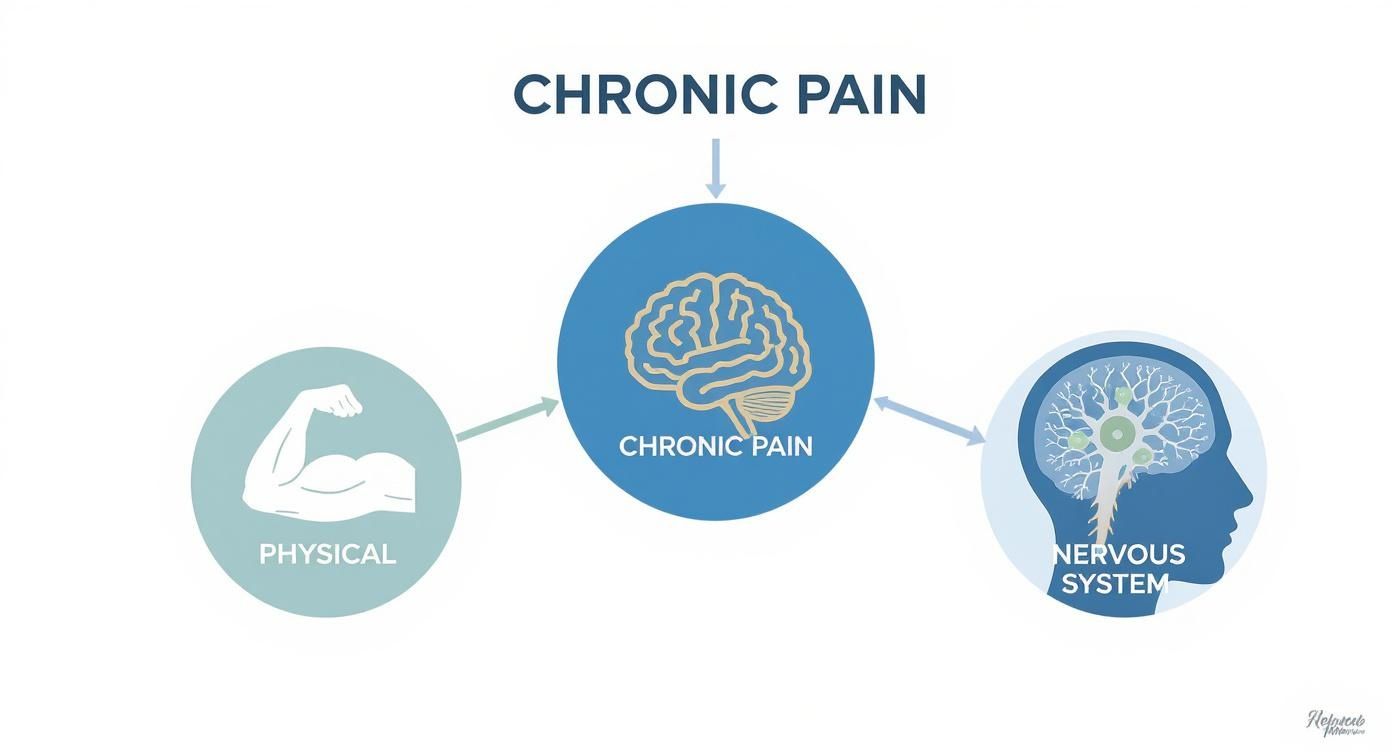
This is precisely where natural anti-inflammatories can shine, offering a multi-pronged approach that addresses the physical, nervous, and mental sides of the equation.
The Powerhouse Spice: Turmeric and Curcumin
One of the most heavily researched and effective natural anti-inflammatories has to be turmeric, that brilliant yellow spice you know from Indian cooking. Its real magic comes from its active compound, curcumin. Curcumin gets to work by blocking specific inflammatory enzymes and pathways in the body, in a way that’s surprisingly similar to how some anti-inflammatory drugs function.
Imagine inflammation as a long line of dominoes. Once the first one falls, it sets off a chain reaction that ends in pain and swelling. Curcumin is like a steady hand that steps in and stops that very first domino from tipping over, preventing the whole cascade before it starts.
There's a catch, though. Curcumin on its own isn't absorbed very well by our bodies. To really be effective, it needs a helping hand. That's why you'll almost always see it paired with black pepper (which has piperine) or formulated with fats in high-quality supplements to seriously boost its absorption.
Ginger: A Soothing Spice with Serious Science
Another staple from the kitchen spice rack with some potent medicinal chops is ginger. We’ve used it for centuries to calm upset stomachs, but its benefits for pain management are just as impressive. Ginger is packed with compounds called gingerols and shogas, which have powerful anti-inflammatory and pain-relieving effects.
Research has shown ginger can be a game-changer for osteoarthritis and muscle pain. It works by pumping the brakes on the production of prostaglandins—chemicals that act like messengers for pain and inflammation. In that sense, it's a bit like an NSAID, but it's often much kinder on the body for long-term use. You can easily get more ginger in your life through teas, adding it fresh to meals, or by taking it as a more potent supplement.
Other Key Herbal Allies
To give you a clearer picture of some of the top contenders, this quick-reference table breaks down a few leading herbal remedies, what they're best for, and what you need to know.
Comparing Top Herbal Remedies for Pain Relief
| Herbal Remedy | Primary Use for Pain | How It Works | Key Safety Note |
|---|---|---|---|
| Devil's Claw | Osteoarthritis pain, especially in the hip and knee. | Believed to reduce inflammation and block pain signals. | Can cause stomach upset; avoid if you have ulcers or gallstones. |
| Boswellia | Inflammatory conditions like arthritis. | Contains acids that may inhibit leukotrienes, which are key drivers of inflammation. | Generally well-tolerated, but can interact with NSAIDs. |
| White Willow Bark | General pain and fever relief, similar to aspirin. | Contains salicin, which the body converts into a substance similar to aspirin's active ingredient. | Do not take with aspirin or if you have an aspirin allergy. |
These are just a few of the many powerful botanicals that researchers are exploring for pain relief.
One thing to always keep in mind: "natural" doesn't automatically mean "safe for everyone." Many herbs and supplements can interact with prescription drugs, like blood thinners or diabetes medications. It is absolutely essential to talk with your doctor before adding anything new to your routine.
When you're ready to choose a supplement, look beyond the flashy label. Seek out products that have been third-party tested for purity and potency. This is your best bet for ensuring you're getting a high-quality product that actually contains what it claims to—and nothing it shouldn’t. By being a smart consumer and teaming up with your healthcare provider, you can safely explore these plant-based options and build a more robust, sustainable plan for managing your pain.
Exploring Functional Mushrooms for Pain and Inflammation
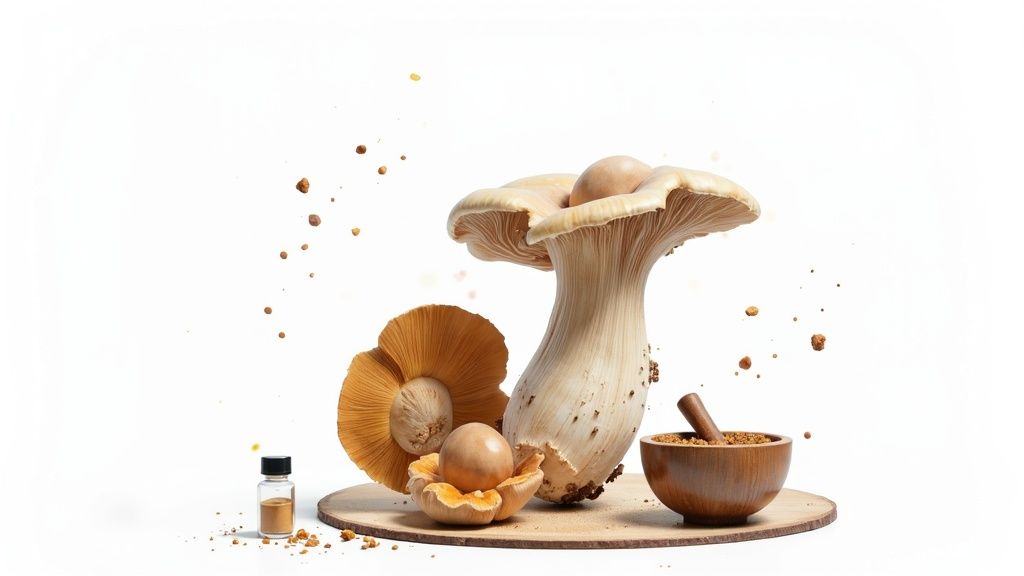
While herbs and spices pack a powerful anti-inflammatory punch, another class of natural allies is getting some serious buzz for chronic pain management: functional mushrooms. These aren't the kind you toss into a stir-fry. We're talking about a unique group of fungi known as adaptogens, which, true to their name, help your body adapt to and manage physical and mental stress.
When you're dealing with chronic pain, your body is bombarded by constant stress signals, which can crank up your symptoms. Functional mushrooms step in by helping to regulate that stress response, which can have a ripple effect on both inflammation and how you perceive pain. They offer a unique angle on finding natural remedies for chronic pain by building up your body's overall resilience.
Reishi: The Mushroom of Calm
Often called the "mushroom of immortality," Reishi (Ganoderma lucidum) is legendary for its calming vibes and its ability to fight inflammation. It’s loaded with potent compounds called triterpenes, which are known to dial down inflammatory pathways in the body. You can think of Reishi as a skilled negotiator for your immune system, helping to soothe overactive responses that fuel chronic pain and swelling.
But it doesn't stop there. Reishi also promotes better sleep and eases anxiety. Since we know that poor sleep and high stress are a recipe for amplified pain, bringing Reishi into the mix can create a positive feedback loop, helping to finally break that exhausting pain cycle. Its gentle, supportive nature makes it a fantastic foundational mushroom for any holistic pain strategy.
Functional mushrooms don't just mask pain; they work to rebalance the systems that contribute to it. By addressing inflammation, nerve health, and the body's stress response, they offer a multi-targeted approach to long-term relief.
Lion's Mane for Nerve Support
If your pain is rooted in nerve damage or dysfunction, like neuropathy, Lion's Mane (Hericium erinaceus) is a really promising option. This strange-looking, shaggy mushroom is celebrated for its ability to support brain and nerve health. It contains unique compounds called hericenones and erinacines that stimulate the production of something called Nerve Growth Factor (NGF).
Imagine your nerves are like electrical wires with frayed insulation. NGF is like the specialized repair crew that comes in to patch up that insulation, helping signals travel more smoothly and cutting down on the painful misfires that cause tingling and numbness. By encouraging nerve repair, Lion's Mane gets to a root cause of certain types of chronic pain instead of just dulling the symptoms.
The Role of Psilocybin in Pain Perception
On the cutting edge, new research is exploring how certain psychoactive compounds in mushrooms might fundamentally change the brain's relationship with pain. Compounds like psilocybin are being studied for their potential to "reset" the neural pathways that get stuck in a chronic pain loop. This process, often explored through controlled, tiny doses, is thought to help the brain forge new, healthier connections.
This approach isn't about numbing pain but about rewiring how the brain actually processes and perceives it. If you're curious to learn more about the nuances of this method, our guide on microdosing with psilocybin mushrooms takes a detailed look at how these compounds are being used.
Choosing a Quality Mushroom Supplement
The mushroom supplement market has absolutely exploded, and frankly, not all products are created equal. To make sure you're getting something that's both effective and safe, you have to be a savvy shopper. Here’s what to look for:
- Fruiting Body vs. Mycelium: The good stuff—the most potent compounds—is concentrated in the fruiting body (the part of the mushroom you can actually see). A lot of cheaper supplements are made from mycelium (the root system), which is often grown on grain and is far less potent.
- Extraction Method: For your body to even access these beneficial compounds, they have to be properly extracted. Look for supplements that use a dual-extraction method (using both hot water and alcohol) to ensure you're getting the full spectrum of active ingredients.
- Third-Party Testing: Any brand worth its salt will send its products to an independent lab to verify purity and potency. Always look for a Certificate of Analysis (COA) to confirm the product is clean and free from heavy metals, pesticides, and other junk.
By keeping these quality markers in mind, you can confidently add functional mushrooms to your pain management toolkit. When used as part of a collaborative plan with your doctor, they can become a powerful piece of your journey toward a life with less pain.
Retraining Your Brain: How Mind-Body Therapies Tame Pain

Chronic pain isn't just a physical signal from an injured body part; it's an entire experience created and processed by your brain. Over time, the brain can get stuck in a "pain loop." Its neural pathways become so good at signaling pain that they keep firing even after the original injury has faded.
Mind-body therapies are powerful natural remedies for chronic pain precisely because they target this brain-based component. They help you rewire your response to discomfort and fundamentally change your relationship with it.
Think of your brain's pain response as a path worn deep into a forest floor. The more you use it, the wider and easier it is to follow, making it the default route. Mind-body practices are like forging new, healthier trails, allowing the old pain pathway to slowly fade from overuse.
These techniques empower you to break the cycle of suffering. They teach you that while pain might be a fact, the anxiety and distress that often accompany it don't have to be. It's all about building mental resilience from the inside out.
Finding Stillness with Mindfulness Meditation
Mindfulness meditation is one of the most direct ways to retrain your brain's pain response. It teaches you to observe your pain sensations with a curious detachment, rather than getting swept up in the usual emotional storm of fear, frustration, and anxiety.
This practice creates a crucial separation between the physical sensation of pain and the mental "suffering" that amplifies it. Instead of fighting the pain, you learn to sit with it, acknowledging it without judgment, and watching it come and go like a wave.
Remarkably, studies show that regular mindfulness can actually change the structure and function of brain regions involved in pain processing. You're effectively learning to turn down the volume on pain signals.
By learning to observe pain without reacting, you reclaim control. The pain no longer defines your entire experience; it becomes just one of many sensations you are aware of in any given moment.
For beginners, guided meditation apps are a fantastic starting point. Even just 5-10 minutes a day can kickstart meaningful shifts in how you perceive and manage chronic discomfort.
Moving with Intention: Yoga and Tai Chi
For someone dealing with chronic pain, the idea of exercise can seem completely counterintuitive. But gentle, mindful movement is a cornerstone of effective pain management. Practices like yoga and tai chi are so much more than physical exercise; they are moving meditations that blend breath, awareness, and gentle motion to soothe the nervous system and improve how your body functions.
- Yoga: This practice combines physical postures, breathing exercises, and meditation to boost flexibility, ease muscle tension, and calm the mind. Restorative yoga is especially helpful, using props to support the body in gentle poses that allow for deep relaxation and release.
- Tai Chi: Often described as a slow, graceful martial art, tai chi involves a series of flowing movements that improve balance, strength, and body awareness. Its low-impact style makes it a great choice for those with joint pain or mobility challenges.
Both yoga and tai chi help release endorphins—the body's natural painkillers—while also tamping down the stress hormones that can make you more sensitive to pain. They teach you to trust your body again, helping you move with confidence instead of fear.
Reshaping Thoughts with Cognitive Behavioral Therapy
Cognitive Behavioral Therapy (CBT) offers a structured, practical way to dismantle the negative thought patterns that pour fuel on the fire of chronic pain. It's built on a simple yet profound premise: our thoughts, feelings, and behaviors are deeply intertwined.
A negative thought like, "This pain is never going to end," can trigger feelings of hopelessness. That hopelessness can then lead to behaviors like avoiding activity, which only makes the pain and stiffness worse.
CBT helps you spot these destructive cycles and actively challenge them. A therapist can guide you in developing new coping strategies, like pacing your activities to prevent flare-ups or reframing your internal monologue to be more supportive and realistic.
Interestingly, guidance on how to have a good mushroom trip often highlights the critical role of mindset, showing how our internal state can shape an entire experience. This same principle is what makes CBT so effective. It’s a proactive strategy for taking back control from the inside.
Building a Foundation with Lifestyle and Physical Therapies
While supplements and mind-body techniques are fantastic for working on pain from the inside, a truly solid strategy needs to include the physical side of the equation. We’re talking about hands-on therapies and daily habits that build a strong, resilient foundation.
These approaches are all about correcting imbalances, cooling inflammation at the source, and tapping into the body’s incredible ability to heal itself. They are essential natural remedies for chronic pain because they get to the structural and systemic issues that can keep you feeling stuck.
And let's be real, the search for better options is more critical than ever. Chronic pain affects a staggering 1.5 billion people around the globe, with about 100 million of them right here in the United States. When you consider that opioid misuse rates for chronic pain can hover between 21% and 29%, the need for safer, foundational therapies becomes crystal clear. You can discover more insights about innovative chronic pain treatments to see why this shift is so important.
Hands-On Therapies for Targeted Relief
Sometimes, the most direct way to get relief is to bring in a trained professional who can physically work on the problem areas. These therapies are designed to manipulate soft tissues, get nerve pathways firing correctly, and improve how your body moves to ease the ache.
Acupuncture: This ancient practice of inserting tiny, thin needles into specific points on the body isn't just theory. From a modern scientific view, acupuncture is believed to stimulate nerves, which in turn can trigger the release of endorphins—your body’s own painkillers. It also seems to influence the parts of the brain that register and process pain signals, making it particularly useful for things like migraines, low back pain, and osteoarthritis.
Therapeutic Massage: This is so much more than a spa day. A skilled therapeutic massage therapist can zero in on stubborn muscle knots, release deep-seated tension, and boost circulation to painful spots. By breaking up those tight adhesions and calming down muscles that are stuck in "on" mode, it helps bring back proper movement and takes the strain off your system.
Physical Therapy: Think of a physical therapist as a movement coach for your body. They'll create a personalized program of exercises and stretches to shore up weak muscles, improve your flexibility, and correct postural habits that are often the real culprits behind nagging back and neck pain. It’s all about re-educating your body to move in a healthier, more efficient way.
The Power of an Anti-Inflammatory Diet
What you put on your plate has a direct and profound impact on the level of inflammation coursing through your body. Seriously, think of food as medicine. Every single meal is a choice—an opportunity to either fan the flames of inflammation or help put them out.
Switching to an anti-inflammatory way of eating is one of the most powerful moves you can make for your health. The idea is simple: eat more whole, nutrient-packed foods and cut way back on the processed stuff that triggers an inflammatory response.
Shifting your diet is not about restriction; it's about empowerment. By choosing anti-inflammatory foods, you are actively creating an internal environment that supports healing and reduces pain sensitivity from the inside out.
Building Your Anti-Inflammatory Plate
You don't have to overhaul your entire life overnight. Making small, consistent changes really adds up over time. Here’s a simple guide to what you should be eating more of and what to dial back on.
Foods to Eat More Of:
- Fatty Fish: Salmon, mackerel, and sardines are swimming in omega-3 fatty acids, which are potent inflammation fighters.
- Leafy Greens: Think spinach, kale, and collards. They're loaded with antioxidants that combat cellular stress.
- Berries and Cherries: These fruits get their beautiful colors from compounds called anthocyanins, which have been shown to dial down inflammation.
- Nuts and Seeds: Almonds, walnuts, and flaxseeds deliver a dose of healthy fats and more anti-inflammatory goodness.
- Olive Oil: The good stuff—extra virgin olive oil—contains a compound called oleocanthal, which has effects surprisingly similar to ibuprofen.
- Spices: Turmeric and ginger are true superstars here, known for their ability to block inflammatory pathways in the body.
Foods to Reduce or Avoid:
- Processed Sugars: Found in sodas, candy, and most commercial baked goods, sugar is a major trigger for inflammatory messengers called cytokines.
- Refined Carbohydrates: White bread, pasta, and pastries can cause blood sugar to spike, which promotes inflammation.
- Trans Fats: Often lurking in fried foods and processed snacks, these are one of the biggest drivers of systemic inflammation.
When you combine these hands-on therapies with a mindful, anti-inflammatory diet, you create a powerful one-two punch for managing pain long-term. These strategies don't just work in isolation—they support each other, helping your body heal, grow stronger, and become far more resilient to the challenges of chronic pain.
Putting it All Together: Your Safe and Collaborative Pain Management Plan
Deciding to bring natural remedies into your care plan is a huge step toward taking back control. But it’s not something to jump into blindly. The best results always come from a smart, safe approach built on a partnership between you and your healthcare provider.
It's easy to think "natural" means "harmless," but that's a dangerous assumption. Many herbs, supplements, and even functional mushrooms pack a powerful biological punch. They can absolutely interact with your prescription medications, so keeping an open line of communication with your doctor isn't just a good idea—it's non-negotiable.
Your Collaborative Care Checklist
Before you start any new therapy, you need to have a real, informed conversation with your medical team. Think of it less as asking for permission and more like building a strategic alliance for your health.
When you're looking at different natural remedies for chronic pain, it’s crucial to see the whole board. For instance, while psilocybin is generating a lot of buzz for pain management, its use is complex. Our article on whether magic mushrooms are legal offers some important context on that front.
Use these questions to kickstart a productive chat with your provider:
- Potential Interactions: "I'm thinking about trying turmeric (or Reishi). Is there any chance it could interfere with my blood pressure medication or blood thinners?"
- Dosage and Form: "What's a safe dose to start with for this, and does it matter if I take it as a capsule, tea, or tincture?"
- Monitoring Progress: "How will we know if this is working? What specific changes should I be looking for?"
- Red Flags: "Are there any side effects I should watch out for? What's a sign that I should stop immediately and give you a call?"
The idea here isn't to ditch your conventional treatments. It’s about enhancing them. A truly integrated plan uses every tool in the toolbox, creating a support system that attacks your pain from all angles.
Tracking Your Journey and Spotting Red Flags
Once you start adding new remedies, you become the lead detective of your own body. A simple journal can be your best tool. Track your pain levels, energy, mood, and any new or unusual symptoms. This data is gold during your follow-up appointments.
Stay alert for any sudden or severe changes. Red flags that demand an immediate call to your doctor include things like sharp, unexplained stomach pain, signs of an allergic reaction (like hives or trouble breathing), or if your primary symptoms suddenly get much worse.
By staying vigilant and keeping that conversation with your doctor going, you can navigate your path to relief both safely and effectively.
Got Questions About Natural Pain Relief? Let's Talk.
When you start looking into natural ways to manage chronic pain, a lot of questions pop up. It's a big world of options, and getting clear, honest answers is the first step to feeling confident and safe as you move forward.
One of the first things people wonder is how long it takes for these remedies to kick in. This is where you have to shift your mindset a bit. Unlike a painkiller that offers quick, temporary relief, natural approaches work more like a slow-building foundation. With something like turmeric, you might need to take it consistently for several weeks before you really feel a dent in your inflammation. The same goes for mind-body therapies; it takes regular practice to rewire how your brain perceives pain. The whole point is consistency and patience—these methods aren't about masking symptoms but addressing the root causes.
Can I Ditch My Prescriptions?
This is a big one, and the answer needs to be crystal clear: never, ever stop or change the dose of any medication your doctor has prescribed without having a conversation with them first. It’s a tempting thought, but it's not safe to go it alone. Many people do successfully dial back their reliance on pharmaceuticals by integrating natural remedies, but it has to be a team effort with your doctor. They can help you create a safe plan to taper off, watch for any potential interactions, and make sure you're getting the best of both worlds.
Are All "Natural" Products Safe to Use?
Finally, let's talk about safety. The supplement aisle can feel like the Wild West because it isn't regulated as tightly as the pharmaceutical industry. That means quality can be all over the map. To stay safe, you have to become a savvy shopper. Look for brands that volunteer for third-party testing from reputable organizations like NSF International or USP. If you're buying herbal or mushroom products, ask for a Certificate of Analysis (COA). This document is your proof that what's on the label is actually in the bottle and that it's free from contaminants.
At The Magic Mushroom Delivery, we’re serious about quality and transparency. All our functional mushroom products are lab-tested, so you can feel confident incorporating them into your wellness plan. Take a look at our curated selection of capsules, edibles, and more to find a natural option that feels right for you.